

Why cleaning errors show up fast in busy butcheries
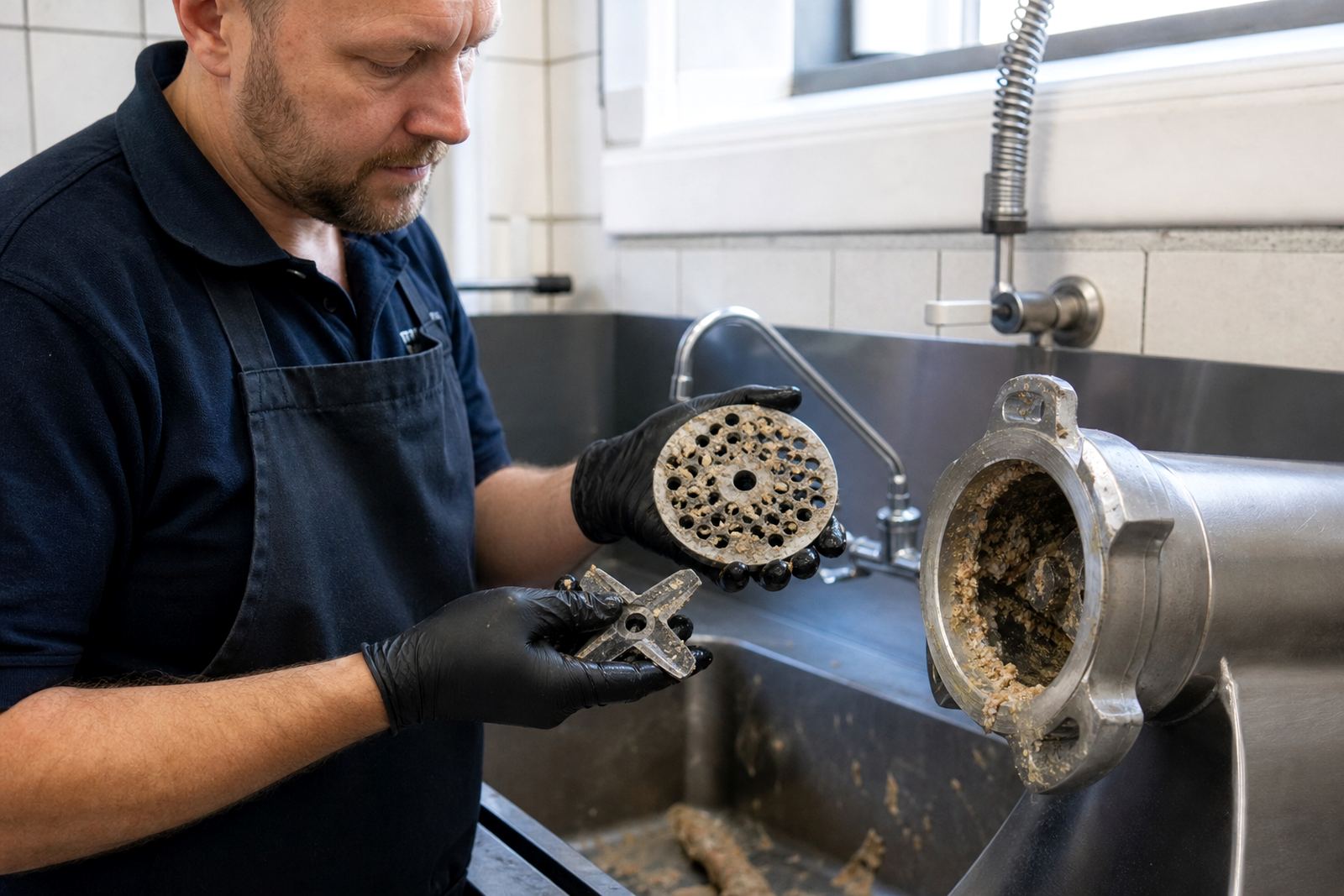
In a busy butchery, cleaning is often done in a rush between prep, packing and customer orders. That is where problems start. A quick wipe may look neat, but if meat residue, fat and moisture are left in the wrong places, the machine can start to smell, cut poorly or work harder than it should. In Bloemfontein and other inland towns, dust can also settle on surfaces quickly, while coastal humidity in Durban or Cape Town can leave parts damp for longer. Both conditions call for proper drying and regular checks.
Good cleaning is not about using more water or more force. It is about removing waste safely, reaching the hard spots and putting the machine back together the right way. If you treat cleaning as part of normal care, not a quick afterthought, you reduce downtime and help the equipment stay steady during everyday use.
The biggest mistake is cleaning before isolating the machine
One of the most common mistakes is reaching in too soon. Before any cleaning starts, the machine must be switched off and isolated according to safe workshop practice. That means no one should be able to start it by accident while hands are near blades, plates or feed areas. Guards and covers must be replaced properly after cleaning, not left loose for later.
Operators sometimes skip this step because the machine looks harmless once it has stopped. It is not. A mincer with residue inside or a bandsaw with a sharp blade still needs careful handling. PPE should be worn, especially gloves that suit the task, aprons and eye protection where splashing can happen. A small bit of caution saves a serious injury.
- Switch off and isolate power before opening covers or removing parts.
- Keep hands clear of blades, cutters and feed areas.
- Use PPE that matches the cleaning task.
- Put all guards back in place before testing the machine again.
Using too much water can do more harm than good
Many people think a stronger hose or heavier rinse means a better clean. In practice, too much water can push grime into places that are not easy to dry. It can also leave moisture around fittings, switches and moving parts. On mincers and bandsaws, that can lead to staining, early wear or trouble at the next start-up.
Use water carefully and in a controlled way. Remove visible waste first, then clean surfaces with the right method for the material and the area. After that, dry the machine properly, paying attention to joints, edges and under-panel spaces. If your site has limited water pressure or load shedding interrupts the routine, it helps to keep a clear cleaning sequence so no step gets missed.
- Do not flood electrical areas or control points.
- Dry corners, seals and hidden edges after cleaning.
- Check for standing water under trays or around the base.
- Keep cloths and brushes clean so you are not spreading residue back onto the machine.
Why harsh chemicals can damage parts and finishes
Another mistake is using strong chemicals because they seem faster. Harsh cleaners can affect seals, coatings and some plastic or rubber parts. They may also leave smells or residues where meat is handled. For food preparation equipment, the aim is to clean thoroughly without leaving anything behind that should not be there.
Read the label carefully and use only products that are suitable for the surfaces you are cleaning. If the machine has a finish that marks easily, test gently and avoid abrasive scouring pads. A hard scrub may make one section look clean, but it can scratch surfaces and create spots where dirt collects later. That is how cleaning starts to take longer, not shorter.
Leaving blades, plates and knives wet after washing
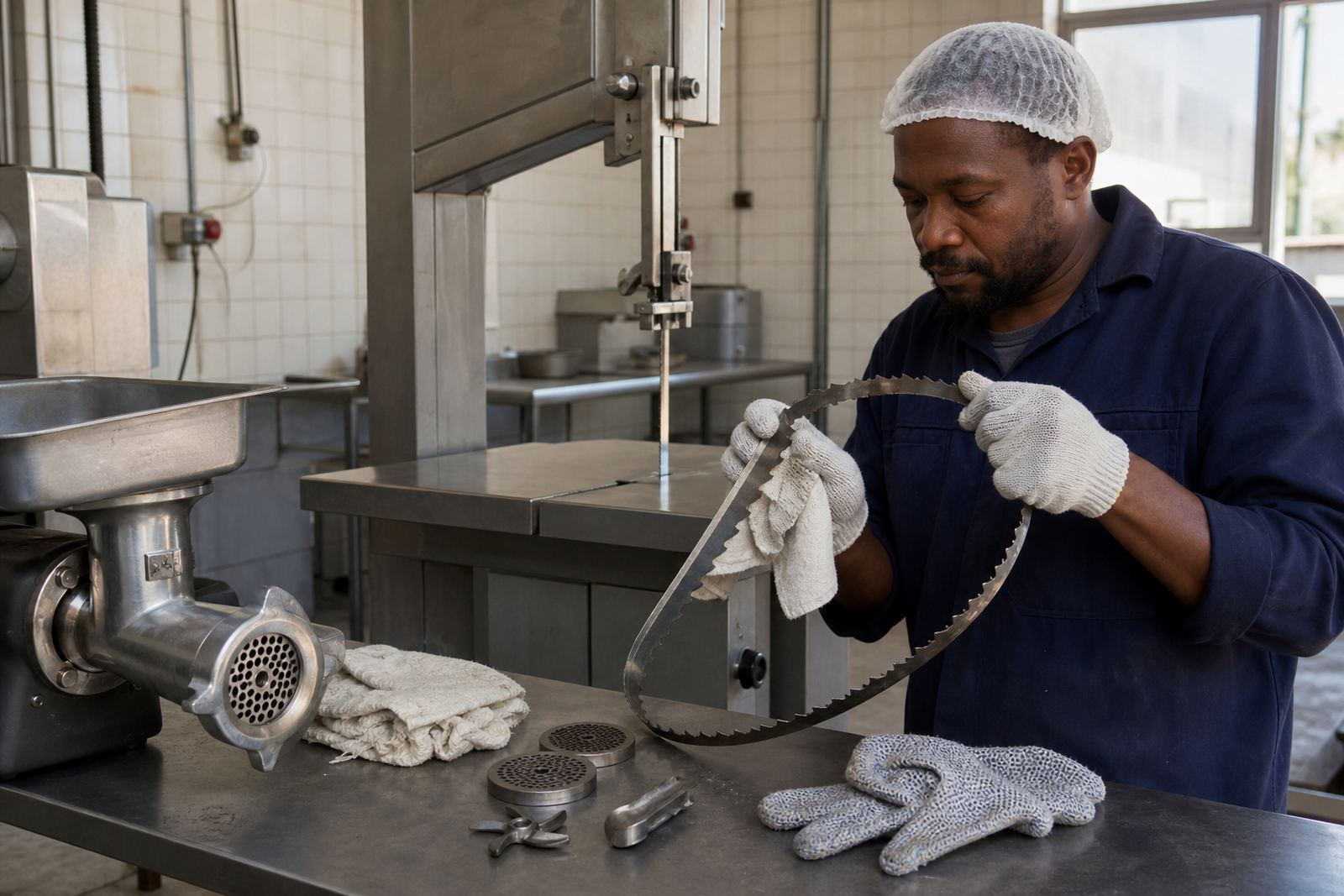
Moisture left on working parts is a common cause of trouble. After washing, bandsaw blades, mincer plates and knives should be dried fully before reassembly and storage. If parts are stacked while damp, they can stain, stick together or develop rough edges that affect cutting quality. In coastal air, this can happen faster than many people expect.
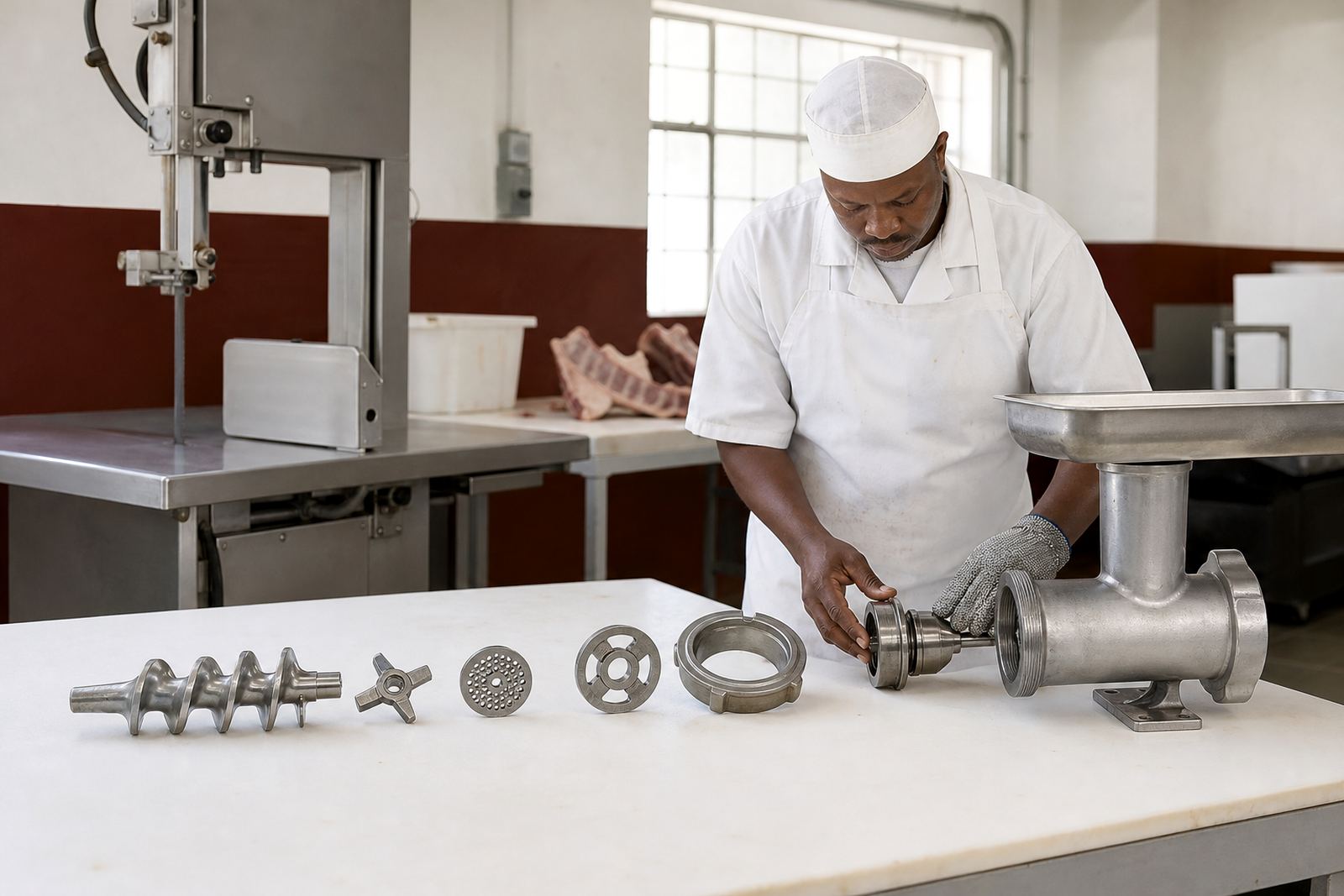
Careful drying also makes inspection easier. Once the parts are dry, you can spot cracks, uneven wear or damage that would be missed on a wet surface. The person cleaning should check that every part fits back correctly, because a plate or knife installed the wrong way can affect the performance of the whole machine.
- Dry parts before putting them away.
- Store cleaned items in a dry, covered place.
- Inspect for wear while the parts are off the machine.
- Do not force parts back into position if they do not seat properly.
Skipping the final check can undo the whole clean
A lot of cleaning problems are only noticed after the machine is put back together. A loose fastener, missing guard or leftover fragment can cause noise, poor cutting or a stoppage later in the day. That is why the final check matters just as much as the wash itself. It should be part of the routine, not a last thought.
Before the next use, the machine should be checked for correct assembly, clean surfaces, dry parts and free movement where expected. Listen for unusual sounds, watch for anything rubbing and make sure the feed area is clear. In a commercial shop in Bloemfontein or on a home butchery setup in Kroonstad, the same rule applies: if the machine is not ready, do not force it into service.
A simple cleaning routine that saves time later
The best cleaning routine is the one that gets done the same way every time. Start by isolating the machine, remove waste, clean the accessible surfaces, wash the removable parts carefully, dry everything properly and then reassemble with a final check. If staff know the order, there is less room for shortcuts and fewer missed spots.
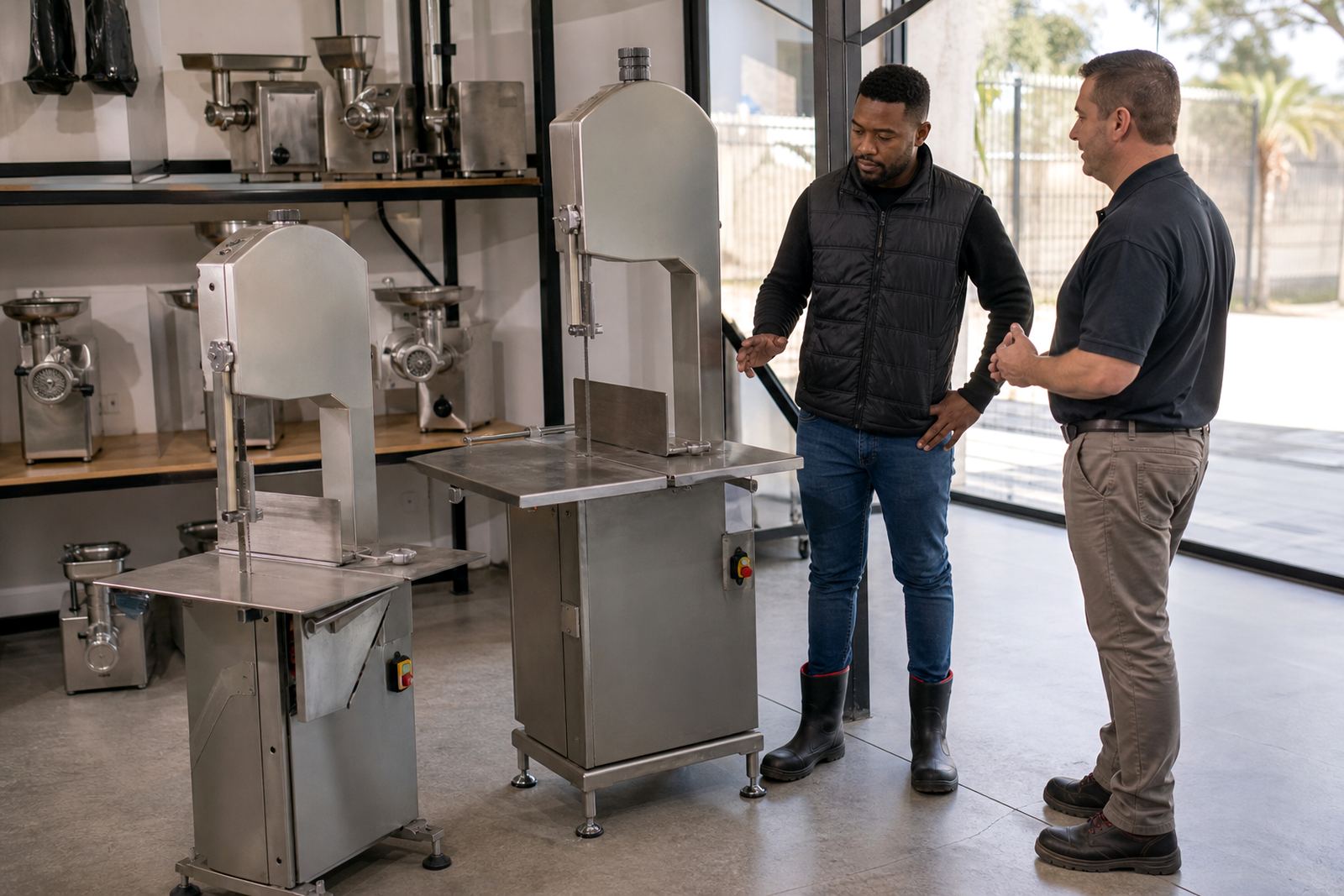
Regular servicing also helps. When a bandsaw or mincer is inspected on schedule, worn parts, dull edges and small faults can be dealt with before they become bigger problems. MorCut Butchery supports commercial and home butchers across Bloemfontein, Johannesburg, Pretoria, Durban, Cape Town, Kimberley, Welkom and Kroonstad with delivery, setup, servicing, parts supply and operator training. When cleaning is done properly and maintenance stays on track, the machine is easier to manage and more dependable day to day.