

Start With A Cleaner Work Area Before The First Cut
If the room is already untidy by midday, the end of the shift will be harder than it needs to be. A simple habit like clearing offcuts, packaging and loose tools during the day keeps fat, meat scraps and dust from building up around the machines. That matters in Bloemfontein too, where dry air can leave fine dust on surfaces, while coastal towns have the opposite problem and deal with sticky moisture that holds grime in corners.
Keep the floor around the bandsaw and mincer as open as possible. When boxes, trays and spare boards are stacked too close to the machine, cleaning takes longer and you are more likely to miss a patch under the frame. A clear space also makes it easier to move safely with wet boots, soap and rinse water after closing.
It helps to assign a quick tidy-up before the final rush is over. One person can sweep the floor, another can collect trays, and another can start sorting knives, plates and small parts for cleaning. When this becomes part of the daily routine, the full wash-down does not feel like a second shift.
Set Up Your Bandsaw For Easier Wash-Down
A bandsaw that is used carefully is usually easier to clean than one that is left wet and messy all day. Keep the guard in place during use, and avoid overloading the cutting area so meat debris does not get pushed into hard-to-reach spots. After operation, switch off the machine, isolate the power and remove any loose product before washing begins.
Wipe down the visible surfaces as soon as practical, while residue is still soft. That is often quicker than letting blood, fat and crumbs dry onto the frame and covers. Pay attention to the blade area, guide sections, drip points and the base where splash marks collect. A soft brush and cloth are usually better than scraping with hard tools, which can damage finishes and leave rough edges that trap dirt.
At the end of the day, check that the blade area is clear, the guards are secured again and no cleaning cloths or tools have been left inside the machine. In a busy shop, a missing cloth or bolt can slow the next opening and create an unnecessary safety risk.
- Keep the area around the saw free of packing, plastic wrap and cardboard
- Use a dedicated brush for the blade area and another for the frame
- Dry surfaces after washing to reduce rust and water marks
- Inspect guards and fittings before switching the machine back on
Reduce Mincer Build-Up Before It Becomes A Scrubbing Job
Mincers are often the slowest machines to clean when product is left inside for too long. The best way to cut cleaning time is to empty the hopper regularly during the day and avoid leaving mince or trimmings sitting in the machine between batches. Small pauses in production are better than a hard-packed chamber at closing time.
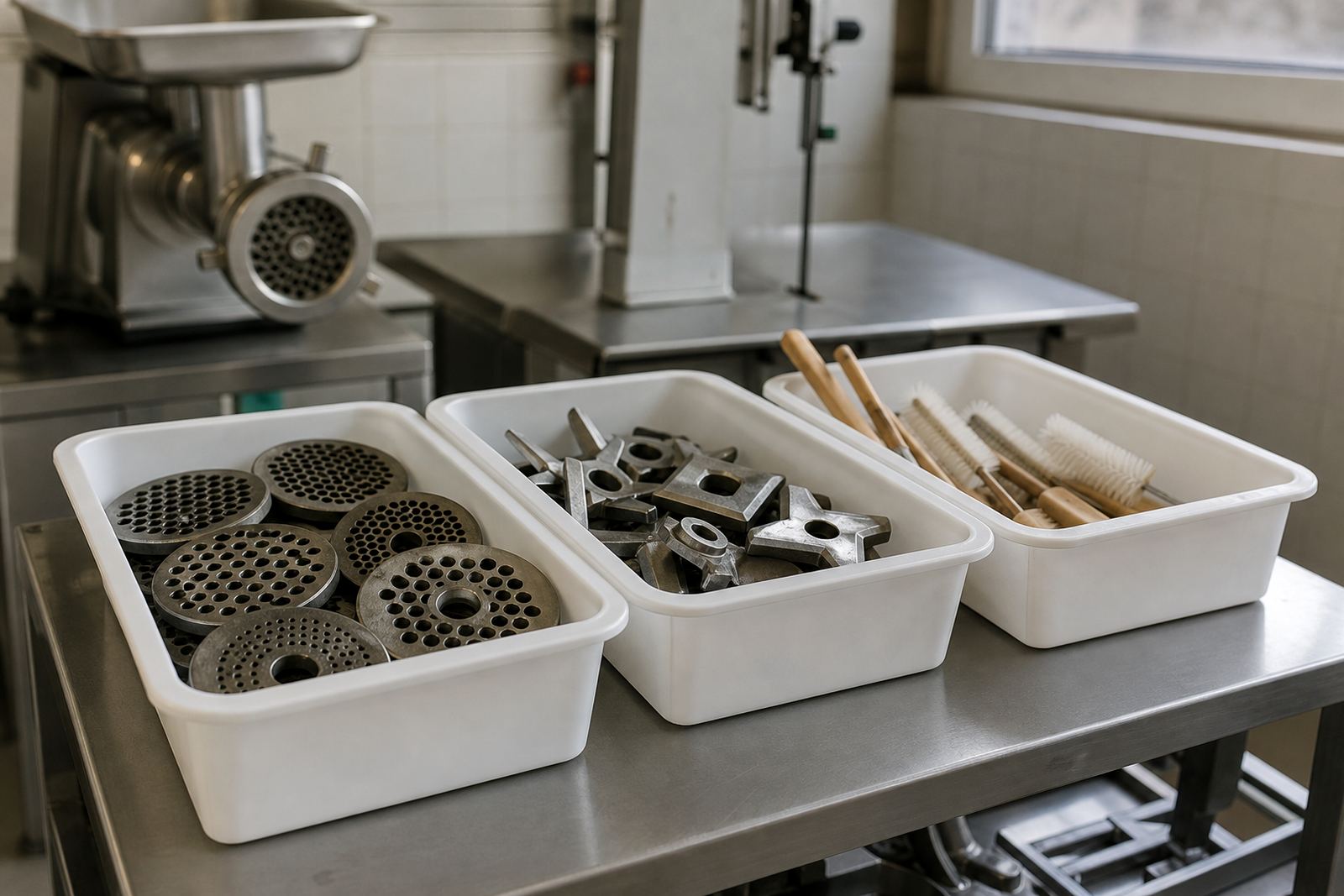
When the mincer is no longer needed, run it down properly and strip the removable parts in the correct order. Keep the plate, knife and other parts together so they do not get mixed up or lost. A clean tray or labelled container near the washing sink makes this much easier. It is also wise to clean parts immediately after stripping them, before residue dries and sticks.
Use gloves and other PPE during cleaning, especially when handling sharp components or using detergents and hot water. The point is not just speed. It is also to avoid cuts, slips and contact with chemicals that can irritate skin. A faster clean is only useful if the team can repeat it safely every day.
- Clear the hopper often during service hours
- Keep plates and knives together as a set
- Wash removable parts straight after stripping them
- Dry parts well before reassembly to help prevent corrosion
Use One Cleaning Station Instead Of Chasing Tools Around The Room
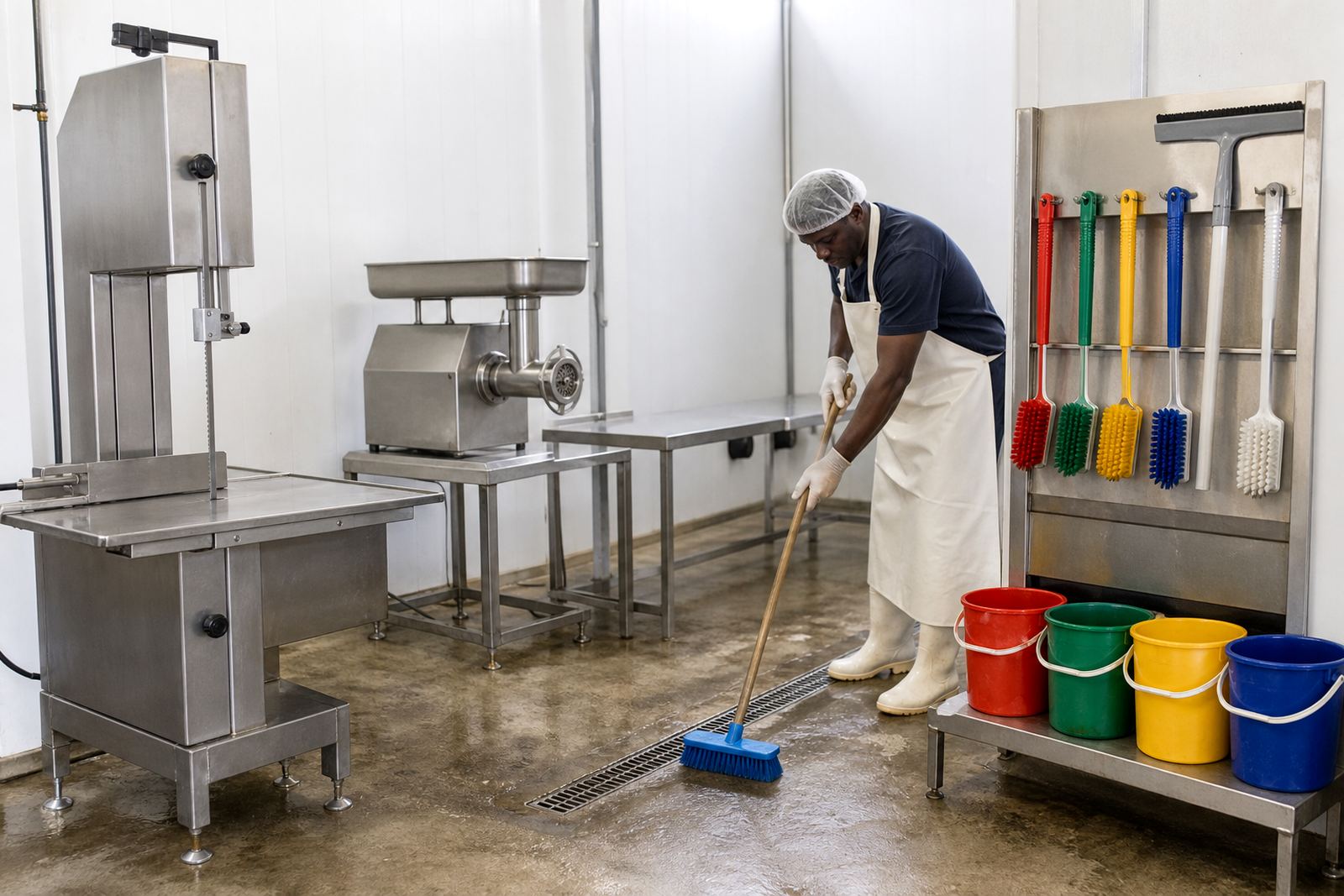
Many butcheries lose time not because the equipment is difficult to clean, but because the cleaning gear is spread everywhere. A single station near the wash area helps the team work faster. Keep brushes, cloths, sanitiser, gloves, a scraper, spare buckets and drying cloths in one place so nobody has to hunt for them after closing.
If your room is set up properly, the cleaning station should be close enough to the machines to save steps, but not so close that it gets wet from overspray. In older premises, especially where drains are slow or floors are uneven, having a well-marked cleaning point can stop water from running back into the working area. That saves time and reduces repeat mopping.
Label containers clearly and keep the same layout every day. A fixed place for each item means new staff can follow the process without asking where everything is. It also helps during load shedding or after-hours cleaning when the room is quiet and the team needs to move efficiently with limited light and less support.
Choose Cleaning Habits That Protect The Machine Too
Fast cleaning should never mean rough cleaning. Harsh scraping, excess water and poor drying can shorten the life of a bandsaw or mincer and create more work later. Good habits protect both the machine and the people using it. Cleaning is quicker when the equipment is maintained properly because parts fit better, surfaces stay smoother and there is less trapped residue.
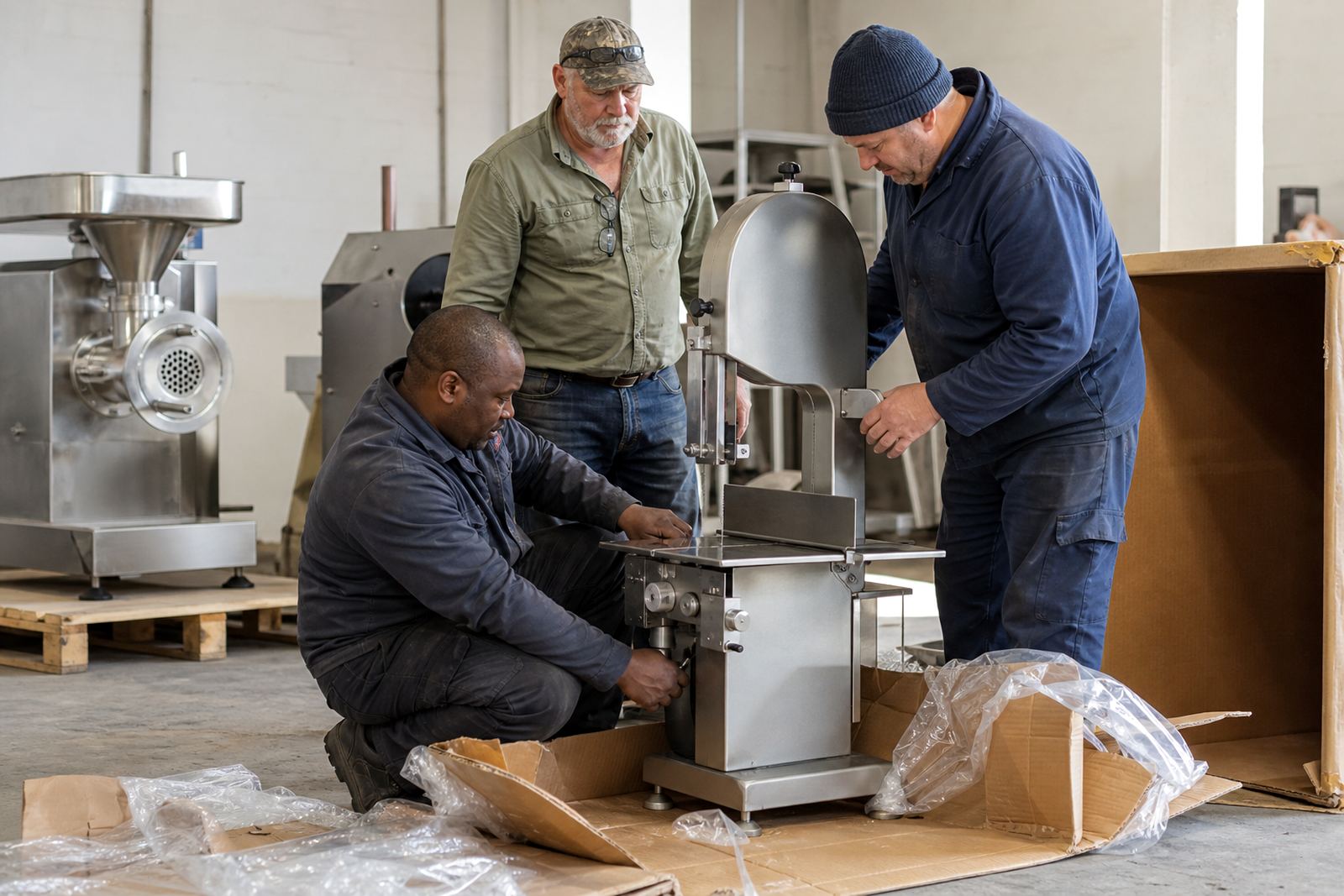
Pay attention to small faults as they appear. A loose cover, dull blade, worn plate, damaged gasket or noisy bearing can all make cleaning harder because grime settles around the problem area. If the machine is making a different sound or the cut is no longer clean, do not wait until the end of the month to look into it. Early servicing can save time on the wash-down floor and reduce breakdown interruptions.
For shops that work from Monday to Saturday in places like Johannesburg, Pretoria, Durban or Cape Town, a preventive routine helps keep closing time under control. If you service equipment regularly, replace worn parts on time and keep the machine aligned, cleaning becomes part of the day rather than a last-minute battle.
Train The Team To End The Day The Same Way Every Time
Clean rooms are not built on one big effort. They are built on repeatable habits. Every person on the team should know the order of closing, from clearing product out of the machine to wiping surfaces, washing components, drying parts and checking guards before lock-up. When everyone follows the same sequence, the job is faster and fewer things get missed.
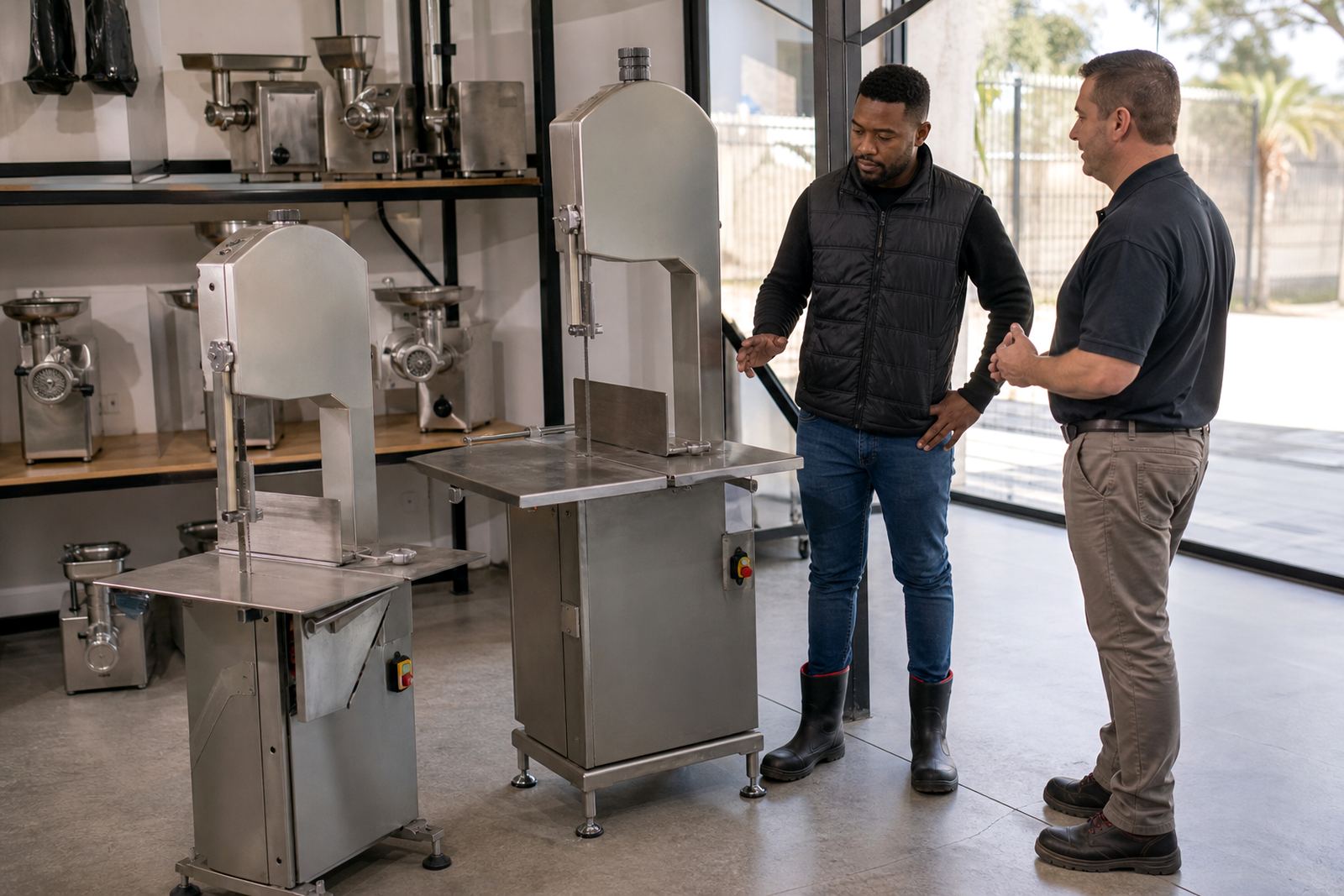
A short cleaning demonstration can make a real difference, especially in family-run butcheries or new setups where different people may use the same equipment. Show staff how to strip the mincer properly, how to brush the bandsaw without forcing water into the wrong places, and how to store clean parts so they are ready for the next shift. Even one practical session can save a lot of time over the month.
In Bloemfontein, where many small businesses run on tight schedules and need to finish before the evening rush home, a clear cleaning routine keeps the room in order without dragging out closing time. The same approach works for commercial shops and home butchers alike: keep it simple, keep it consistent and do the little jobs before they become big ones.