
Why daily cleaning matters more than a once-a-week rush
A bandsaw works in a messy part of the shop, so blood, fat and fine meat particles build up quickly. If that residue is left overnight, it can harden, smell and make the next shift slower because more effort is needed just to get started. Daily cleaning also helps the operator spot loose parts, dull blades and worn seals before they become a bigger problem.
In a Free State shop, where cold rooms and cutting areas may be running through load-shedding schedules, it is tempting to leave the machine for later. That usually creates more work the next morning. A short clean at close of trade is easier than trying to remove baked-on residue after it has sat through the night.
The goal is not only hygiene. Clean machinery is easier to inspect, easier to service and less likely to give trouble when the shop is busy.
Start with safe isolation and the right cleaning routine
Before anyone wipes down a bandsaw, the machine must be switched off and isolated properly. That is where many problems start, because a worker assumes the blade has stopped and reaches in too soon. Keep the routine the same every day so no step gets skipped when the shop is under pressure.
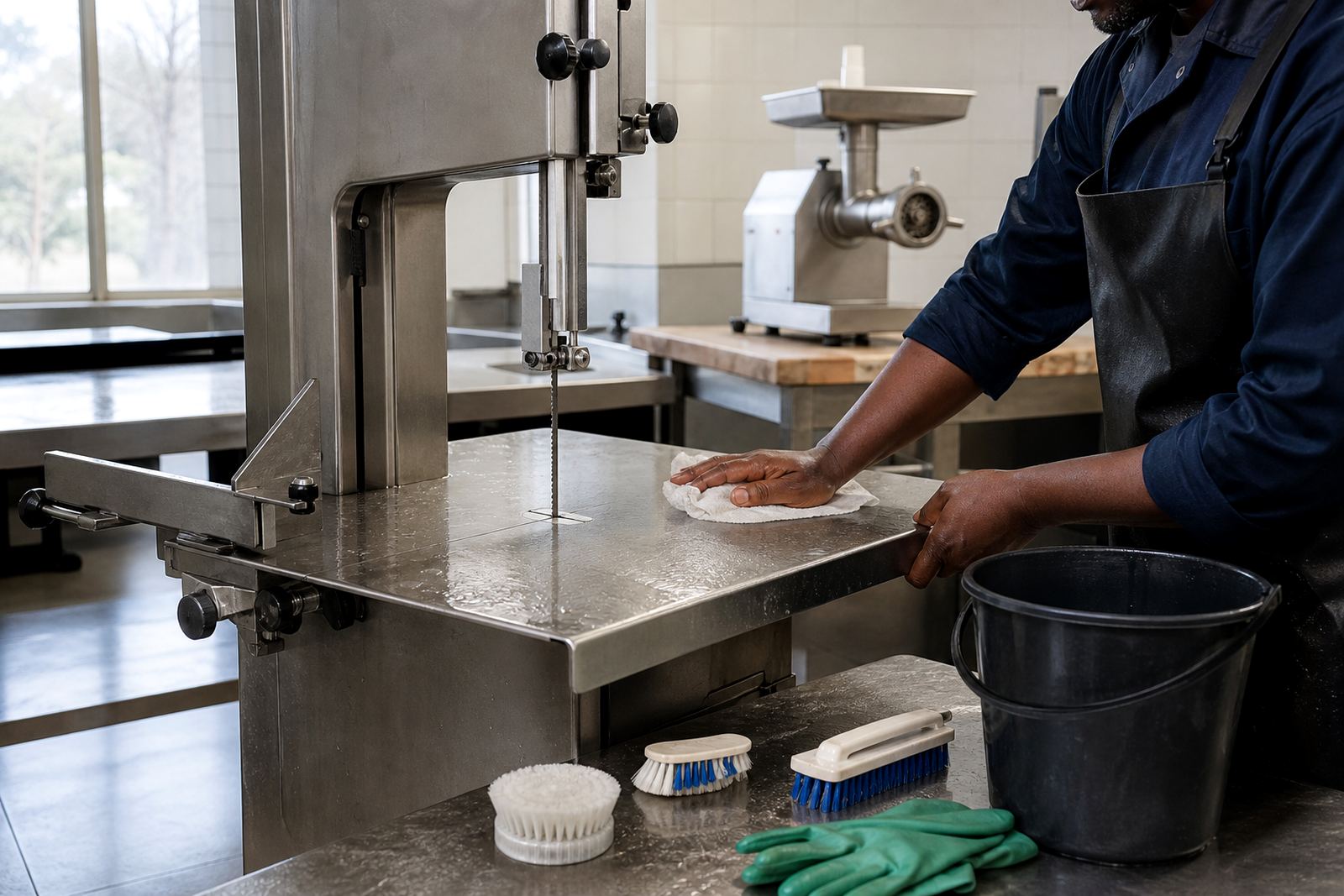
Use cleaning tools that suit a food area, and avoid rough methods that scratch working surfaces. A soft brush, cloths and approved cleaning agents are usually enough for daily use. The aim is to clear residue without forcing liquid into areas that should stay dry. Water around electrical parts is never a good idea, especially in a humid coastal store in Durban or a busy prep room in Cape Town.
- Wear gloves and other basic PPE when handling residue and cleaning agents.
- Keep hands away from the blade edge and any moving parts.
- Do not hose the machine down unless the manufacturer’s guidance allows it.
- Dry surfaces properly so moisture does not sit on metal parts overnight.
Pay attention to the blade area, guides and guards
The blade area deserves the most care because that is where residue collects fastest. Clean around the blade path, the guides and the covers without trying to force anything. If fat and meat scraps are left in those areas, the blade can run poorly and the cut can become less consistent. It can also make the machine harder to open and close when the next shift begins.
Guards should always go back in place after cleaning. They are there for a reason, and even a short job should not begin until they are secure. If a guard does not sit properly, or if it looks bent or loose, report it before the machine goes back into service.
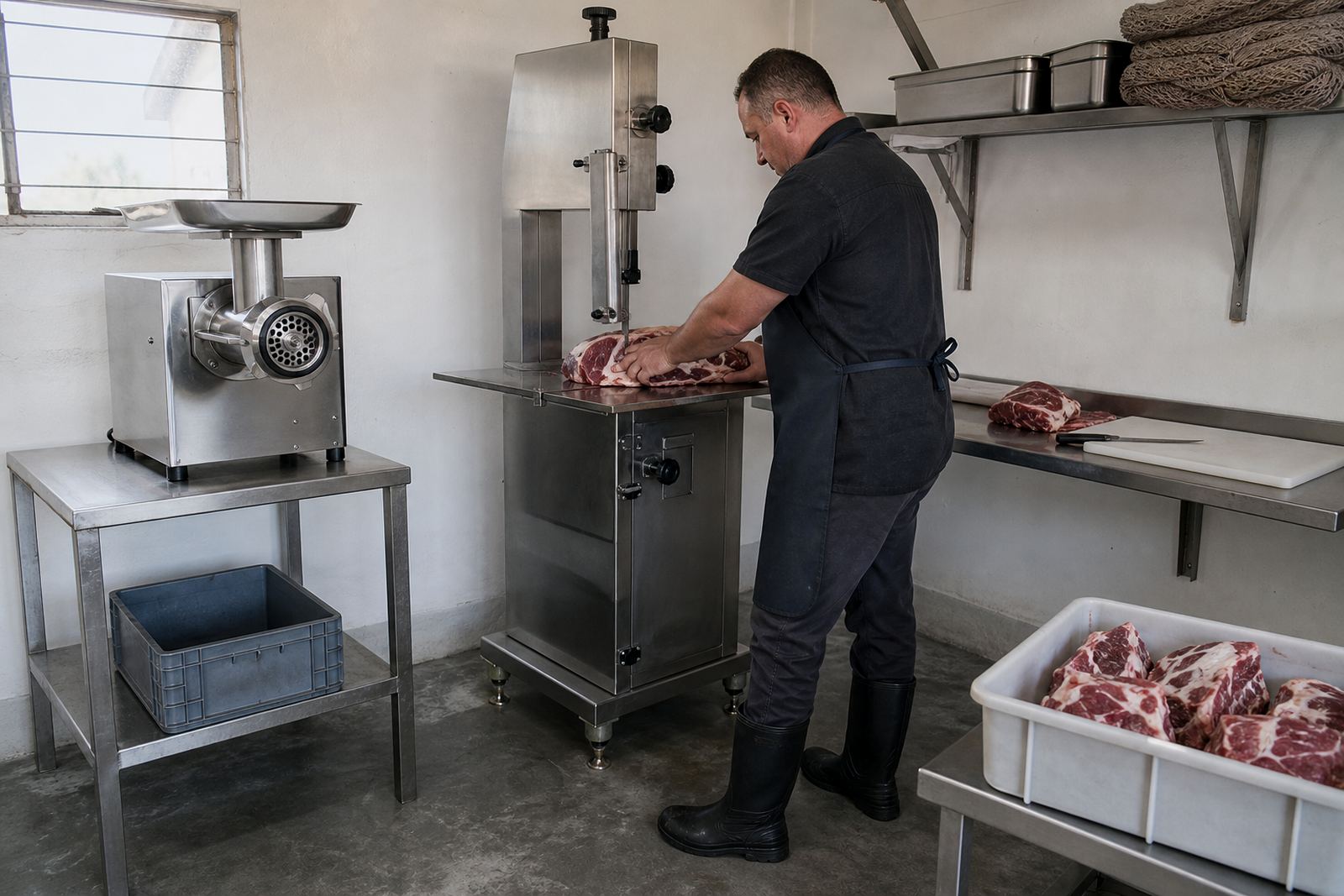
On a busy butcher floor in Bloemfontein, one operator might clean while another packs orders. That is where a clear routine helps. Everybody knows what gets cleaned, what gets checked and what must be left to the service team.
How daily cleaning helps the machine last longer
Good cleaning habits do more than keep the machine looking tidy. They help protect moving parts from build-up that can increase wear over time. Less build-up means less strain on seals, less chance of contamination and fewer reasons for an unplanned stop during a busy period.
A machine that is cleaned every day is also easier to service. When the workshop technician arrives, they can see the real condition of the parts instead of working through a layer of grease and residue. That makes inspections quicker and helps with early detection of issues that may need blade replacement, plate and knife change, or a proper workshop check.
For shops serving both retail customers and wholesale orders, this matters a great deal. A single breakdown during peak trade can disrupt the whole day, especially if the machine was already struggling under poor cleaning habits.
A simple end-of-day checklist for butchers
A short checklist keeps the process practical. It is easier for staff to follow a routine when the steps are written down and done in the same order every evening. The exact method may vary a little from one machine to another, but the main principles stay the same.
- Switch off, isolate and confirm the machine is safe to clean.
- Remove meat residue, fat and loose scraps from the working area.
- Clean the blade zone, guards and external surfaces with suitable tools.
- Wipe dry and leave no standing moisture on the machine.
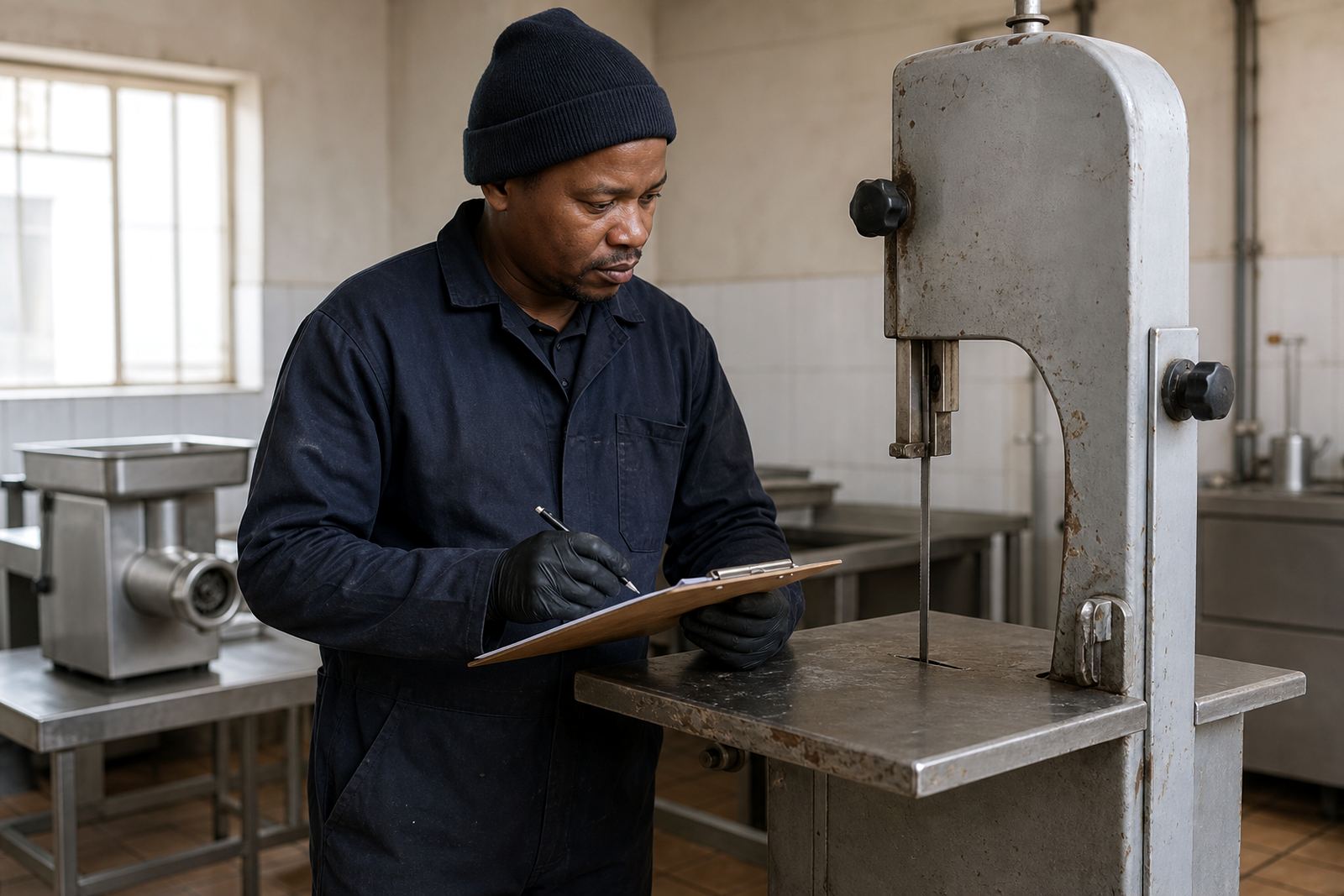
- Check for damage, loose parts or unusual wear.
- Replace all covers and guards before closing the area.
If more than one person uses the machine, the checklist should be part of the handover. A small note in the closing routine can prevent confusion later, especially in a shop where shifts change and the pressure is on to clear orders before the day ends.
When cleaning is no longer enough
Some problems do not go away with cleaning alone. If the blade is cutting unevenly, the machine makes unusual noise, or parts look worn even after proper cleaning, it may be time for servicing. That is when preventive maintenance becomes valuable. It is better to sort out a small issue early than wait for a breakdown callout on a Friday afternoon.
For butchers in Pretoria, Kimberley, Welkom or Kroonstad, a reliable service plan can make day-to-day work easier. The same applies for shops in Johannesburg, Durban and Cape Town where trade can be heavy and the machine may run for long periods. A clean machine still needs regular inspection, blade care and the right parts when something reaches the end of its working life.
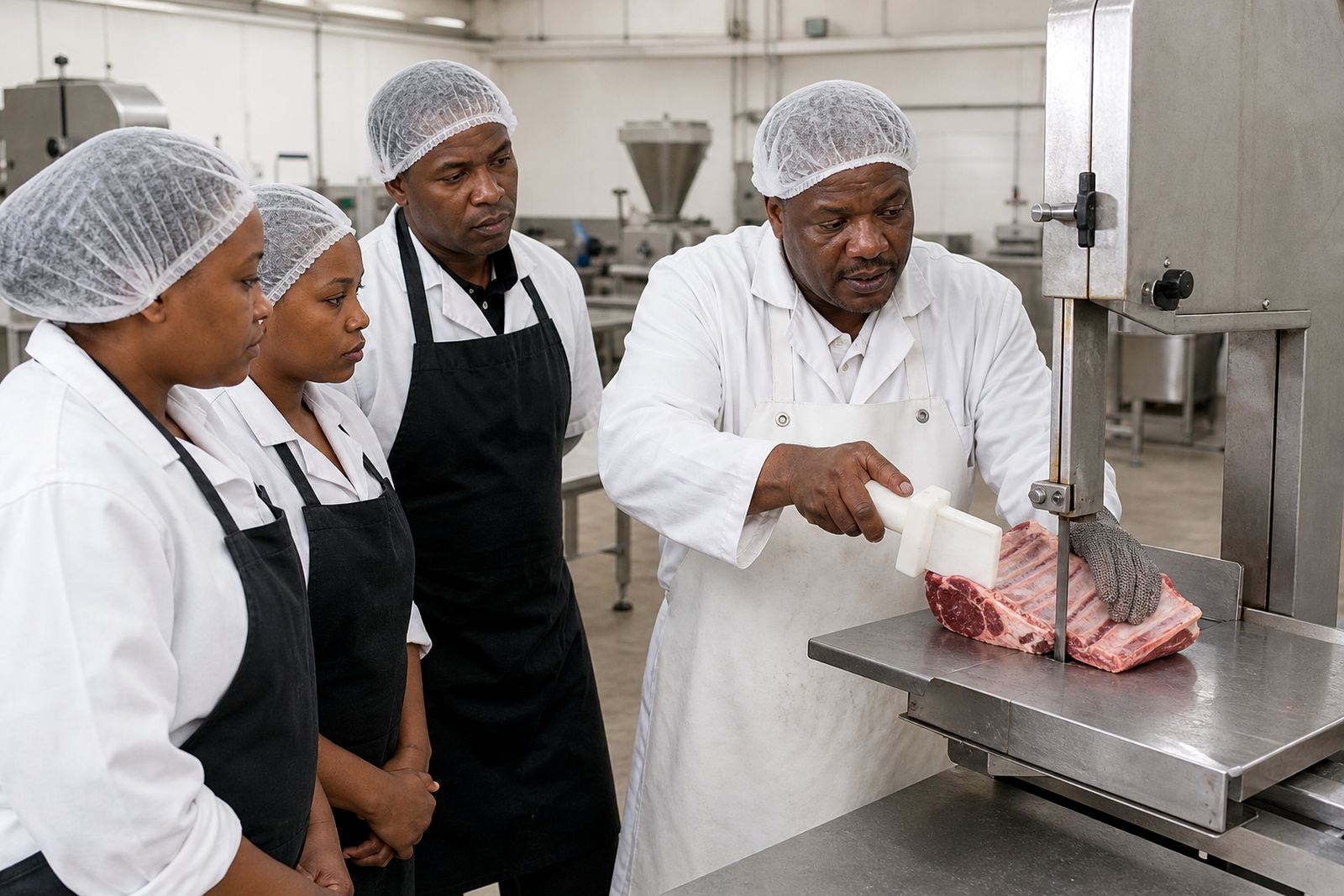
MorCut Butchery supports commercial and home butchers with delivery, setup, servicing and training across South Africa. If your team needs help with cleaning routines, operator training or a workshop check, the enquiry form on our contact page is the right place to start.