

Separate raw work from clean work
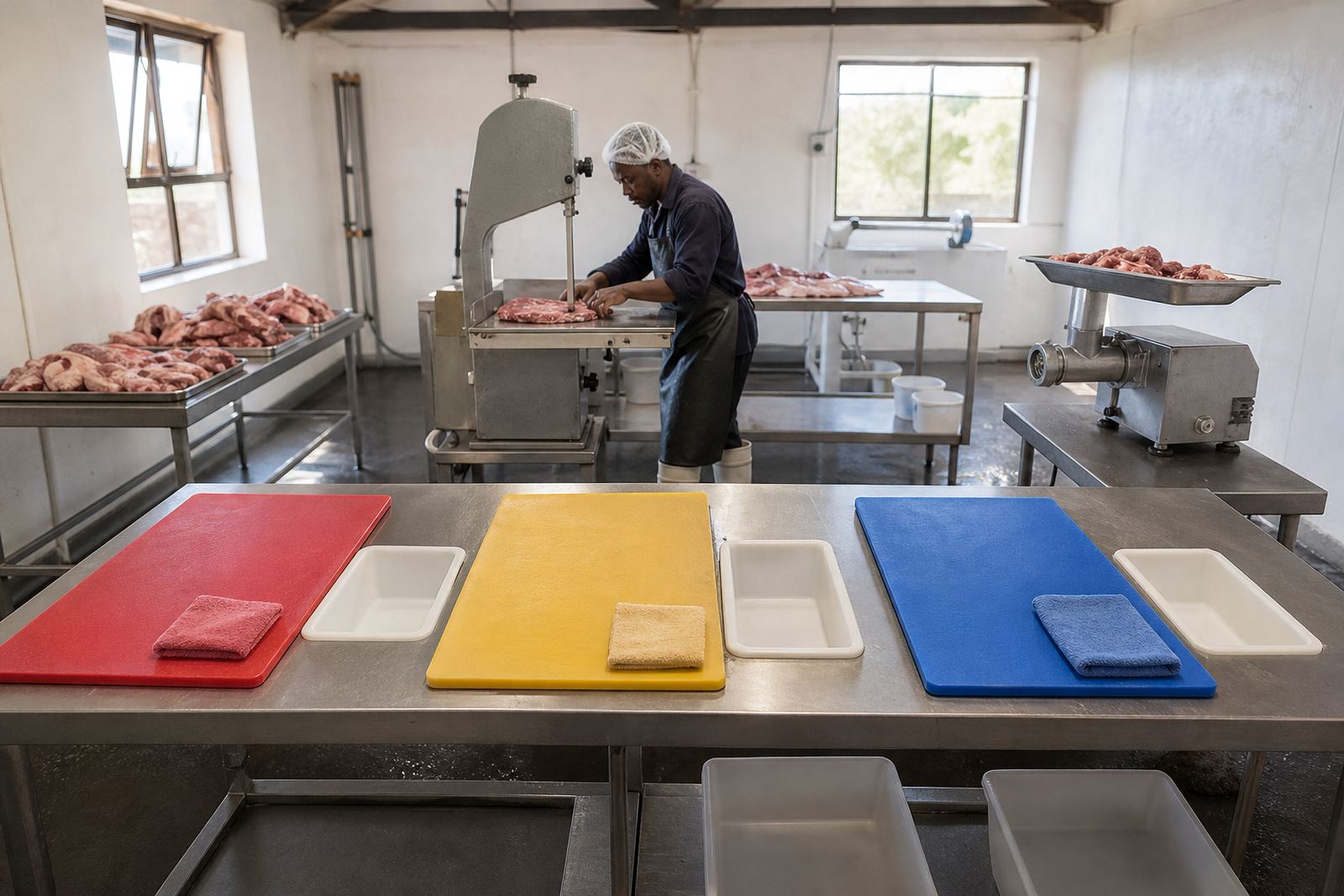
Cross mess starts when raw meat, dirty tools and clean surfaces all move through the same space without a clear system. The easiest fix is to set up separate zones for receiving, cutting, mincing, packing and washing up. Even in a small shop in Bloemfontein, a simple layout can cut down on slip ups and help staff work faster without crowding each other.
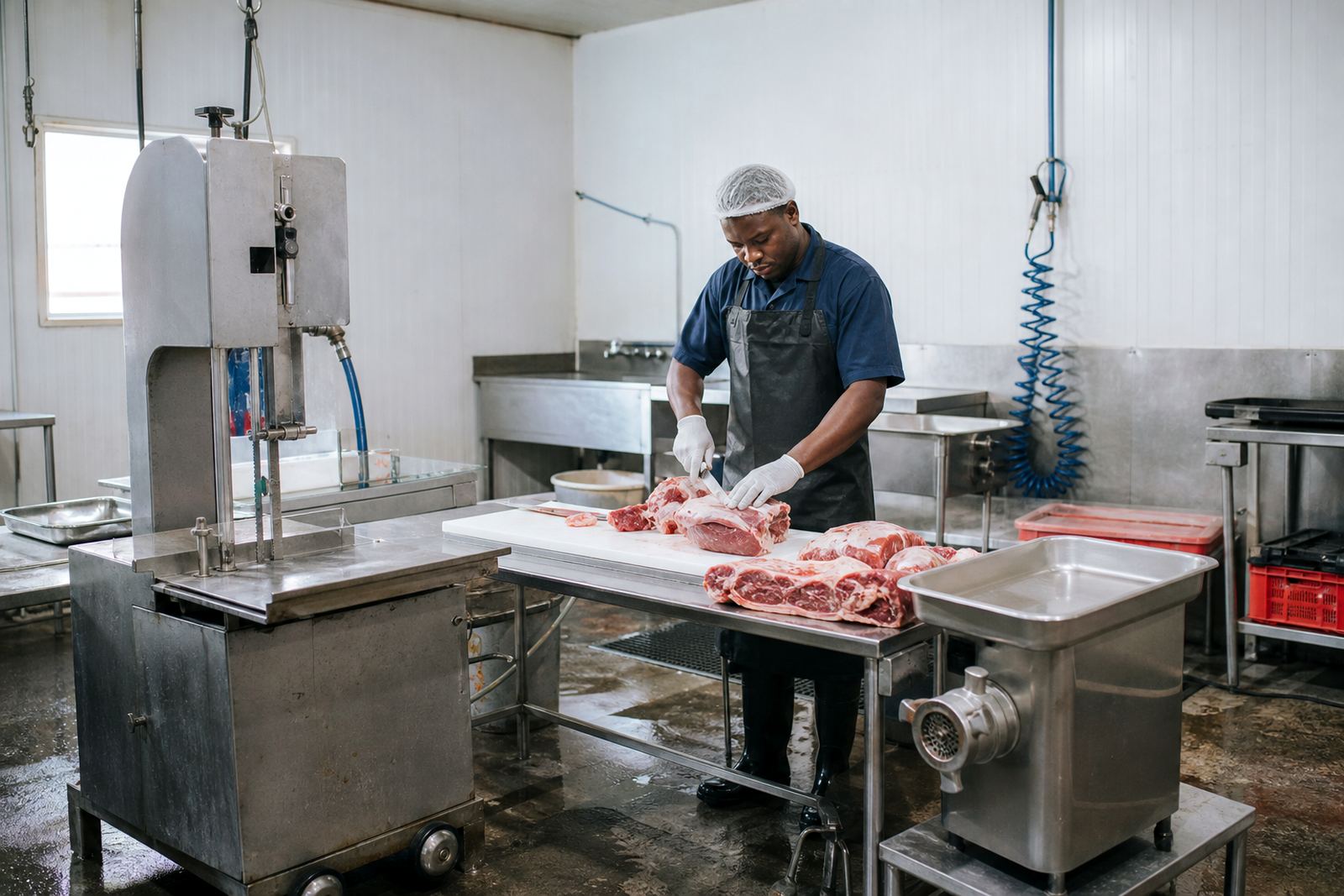
Keep raw product away from the final packing area and keep a clear route for waste and offcuts. If the same table has to do too many jobs, the risk of drips, splashes and hand-to-surface transfer goes up quickly. Good zoning does not need fancy fittings, just discipline and a place for everything.
- Use one table for raw handling only
- Keep packing materials in a dry clean area
- Move waste out of the work zone often
- Store cleaning cloths and PPE separately from food contact items
Bandsaws need a clean routine before and after use
A bandsaw is a busy machine and the blade, guides and table can pick up residue during a normal shift. If cleaning is left to the end of the day, build up can spread from one batch to the next. That is why a quick wipe down between jobs matters, especially when switching from one carcass section to another. Guards must stay in place, and staff should never reach near a moving blade.
Daily care should include removing visible residue, checking that the blade area is clear, and making sure the machine is dry before it is put away. In humid coastal areas like Durban and Cape Town, moisture can linger on metal parts and create avoidable wear. A little extra attention after cleaning helps reduce the chance of rust or a dull blade the next morning.
- Switch off and isolate the machine before cleaning
- Use proper PPE such as gloves and apron protection
- Check blade alignment and tension as part of the routine
- Dry all contact surfaces fully before restart
Mincing should happen in a controlled sequence
Mincers are useful, but they can also move product through the shop very quickly which is exactly why the process needs to stay controlled. Feed only clean, prepared meat into the machine and keep the surrounding bench clear. Do not mix returned product with fresh stock, and keep seasoning or additives in a separate prep step, not on the same dirty surface.
When batches are small, it is easier to keep track of what has been handled and what still needs washing, weighing or packing. A good habit is to finish one product line before starting the next. That keeps flavour, texture and hygiene where they should be. It also helps staff avoid unnecessary handling that slows down the line and creates more mess.
For home butchers working from a garage or compact prep room in Kimberley, Welkom or Kroonstad, the same rule applies. A tidy sequence beats a crowded setup every time, and it is easier to train new staff when the process is simple.
Cleaning supplies and tools should never share the same path as meat
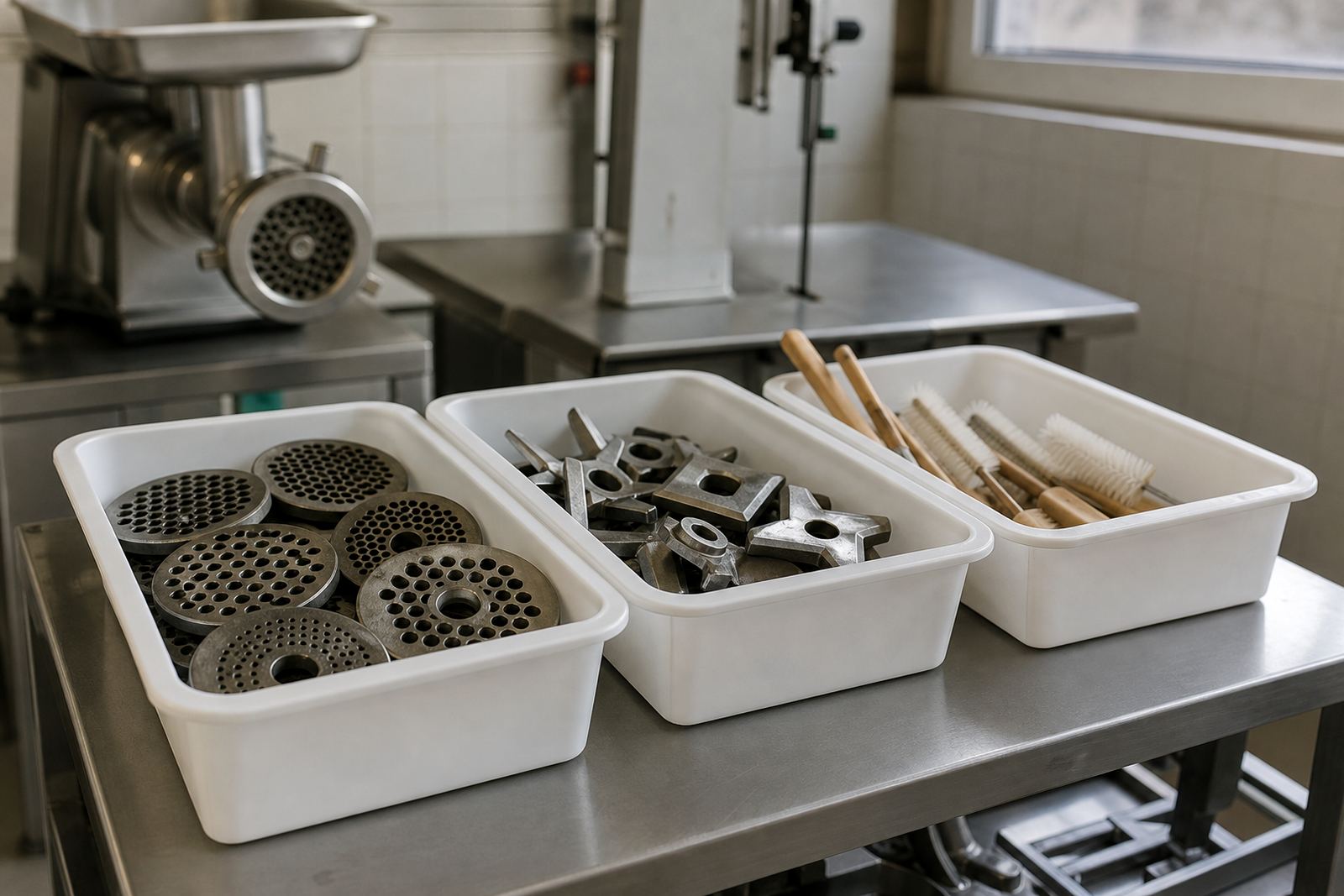
It sounds obvious, but many cross mess problems come from shared movement rather than the machine itself. A sponge used on a floor, a cloth used on a table, or a bucket left near the prep bench can all carry dirt back into the working area. Cleaning tools need their own storage point and should be rinsed, dried and replaced often.
Where water use is high, plan the wash area so splashing stays away from the clean prep side. In some municipal settings, especially where drainage is strict, the washdown point must stay tidy to avoid blockages and overflow. That matters in busy shops, because a blocked drain can slow the whole day and create a health risk fast.
- Store mops, buckets and cloths away from food prep benches
- Use colour coding if your team can manage it consistently
- Keep detergent and sanitiser in marked containers
- Rinse and air dry tools before storing them
Training the team is part of hygiene control
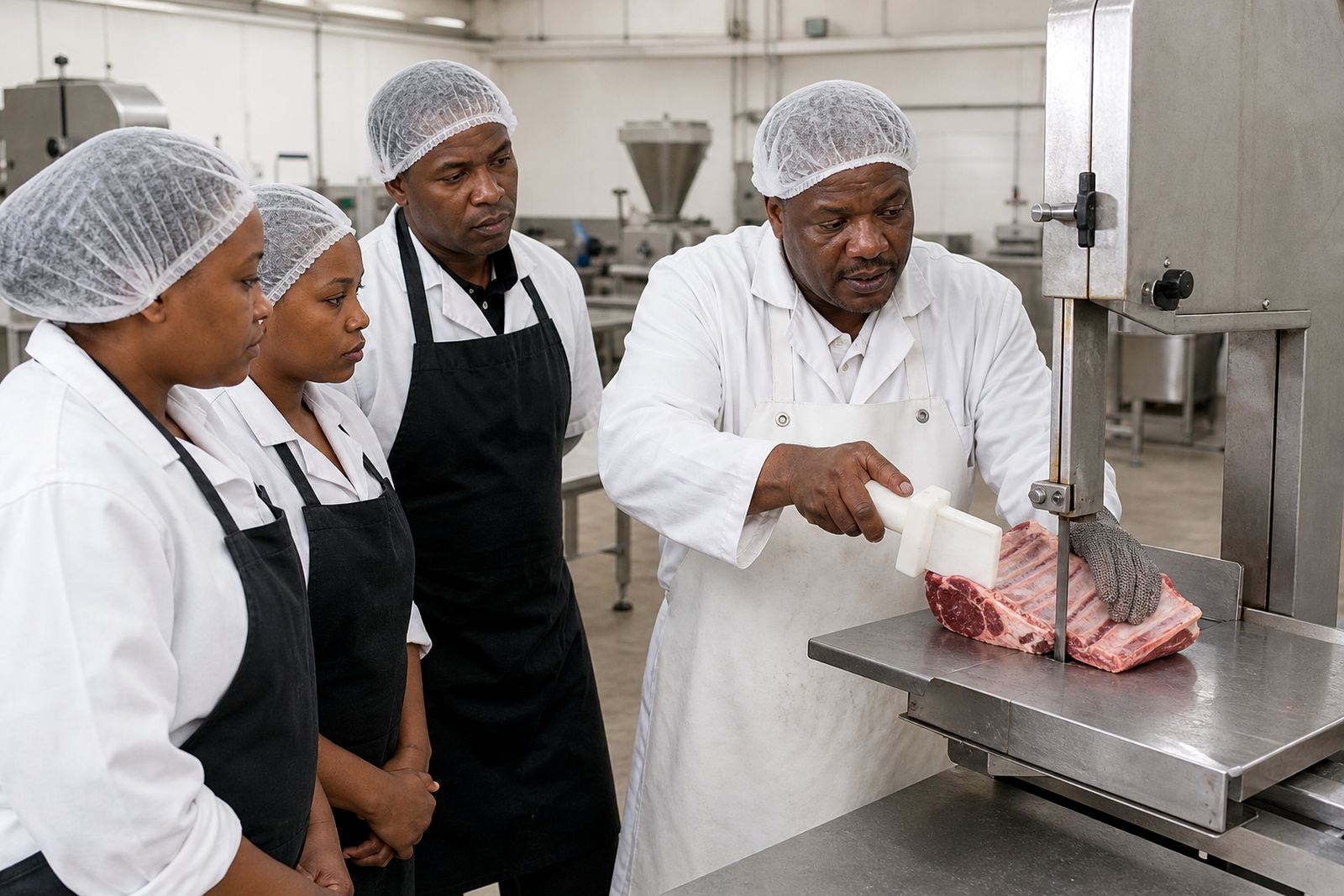
Even the best prep layout will fail if staff are not trained to follow it. New workers should be shown where to place raw stock, where clean knives go, when to wash hands and how to move between tasks without carrying contamination across the room. Training should be short, practical and repeated often enough to stick.
A simple walk through on the first day helps more than a long explanation later. Show the operator how to clean the bandsaw safely, how to strip the mincer for washing, and where to place parts while they dry. MorCut Butchery often sees that once a team has a clear routine, the whole shop becomes easier to manage, with fewer interruptions and less waste.
It also helps to assign one person to check that surfaces are cleaned before the next batch starts. In a small team, that one habit can stop a lot of avoidable problems before they turn into complaints or stock loss.
Maintenance keeps the system working day after day
Good layout and good cleaning only hold their value if the equipment is kept in proper working order. Blunt blades, worn plates, tired seals and loose parts can all create extra mess during normal use. Regular servicing helps the machines stay steady, which means less splatter, fewer jams and less time spent cleaning up after avoidable faults.
Preventive maintenance is especially useful in places where load-shedding or stop start production can interrupt the working rhythm. When a machine is switched on and off often, staff sometimes rush the cleanup or skip a check. That is when cross mess creeps in. A routine service schedule, combined with the right spare parts and prompt repair work, keeps the prep area under control.
For butcheries in Bloemfontein and across South Africa, the aim is simple: keep clean work clean, keep raw work contained and keep the machine in serviceable condition. That approach supports better hygiene, smoother production and fewer last minute breakdowns.
If you need help with setup, servicing or operator training, MorCut Butchery supplies and supports bandsaws and mincers from Hamilton in Bloemfontein, with delivery and servicing across Johannesburg, Pretoria, Durban, Cape Town and nearby Free State towns. Clients can reach the team through the enquiry form on the contact page.