

Why PPE matters before the first cut
In a butchery, the day starts before the knives come out. Floors get wet, crates are moved around, cold rooms are opened and closed, and equipment is switched on while everyone is trying to get the morning order moving. That is when PPE makes a real difference, because small slips often happen during routine work, not only during the heavy cutting jobs.
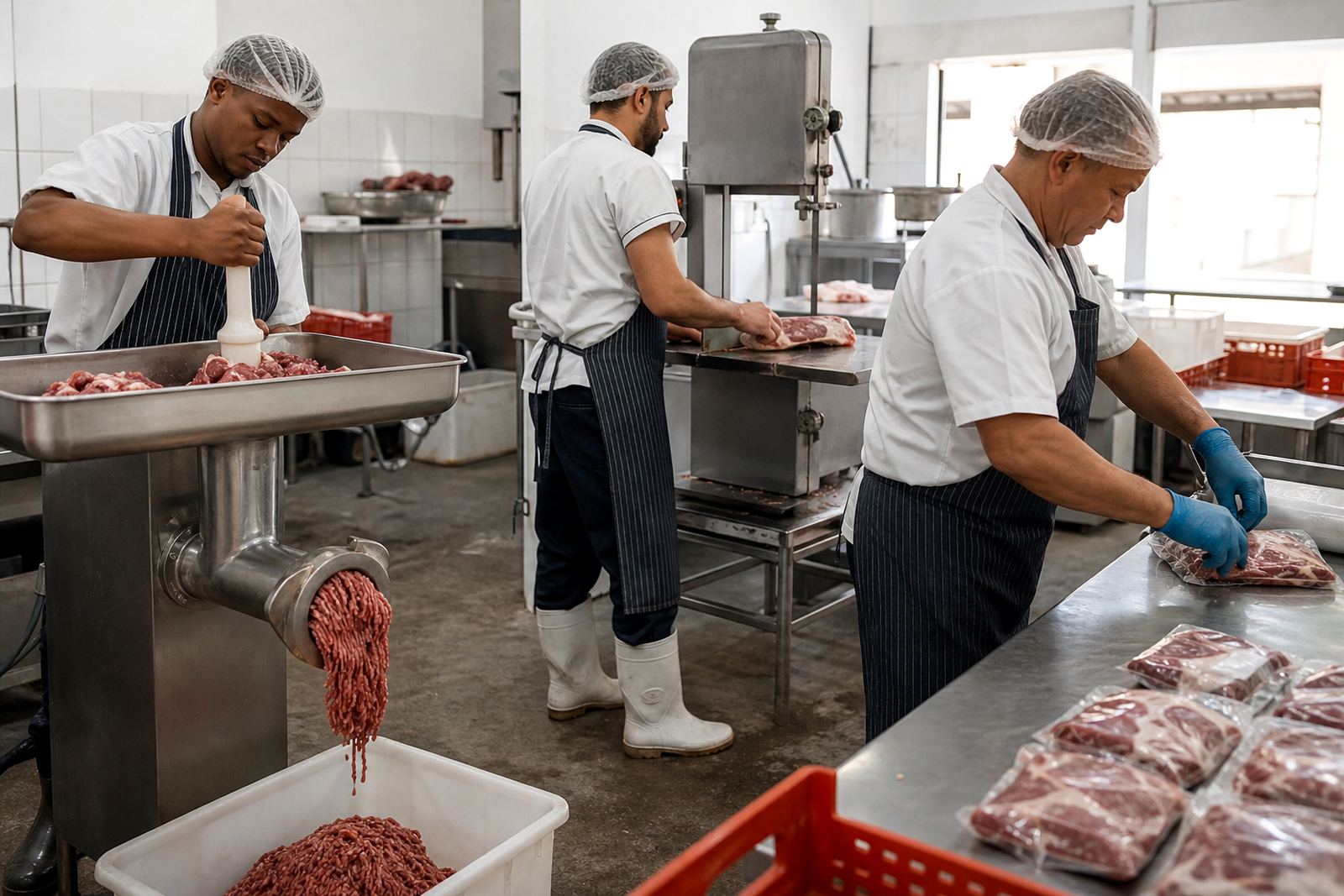
For commercial butchers in Bloemfontein and home operators working from a garage or small prep room, PPE should match the task. A clean apron, proper footwear, hand protection where suitable, and eye protection for splash risk all help reduce injuries and make the work space more orderly. It also supports better hygiene, which matters when raw meat, bones, cleaning chemicals and packaging are all handled in the same area.
The point is not to load staff with gear they will not wear. The point is to choose practical protection that fits the job, is easy to clean, and does not slow people down. If the kit is uncomfortable or awkward, it usually ends up hanging on a hook instead of being used.
Gloves that help without getting in the way
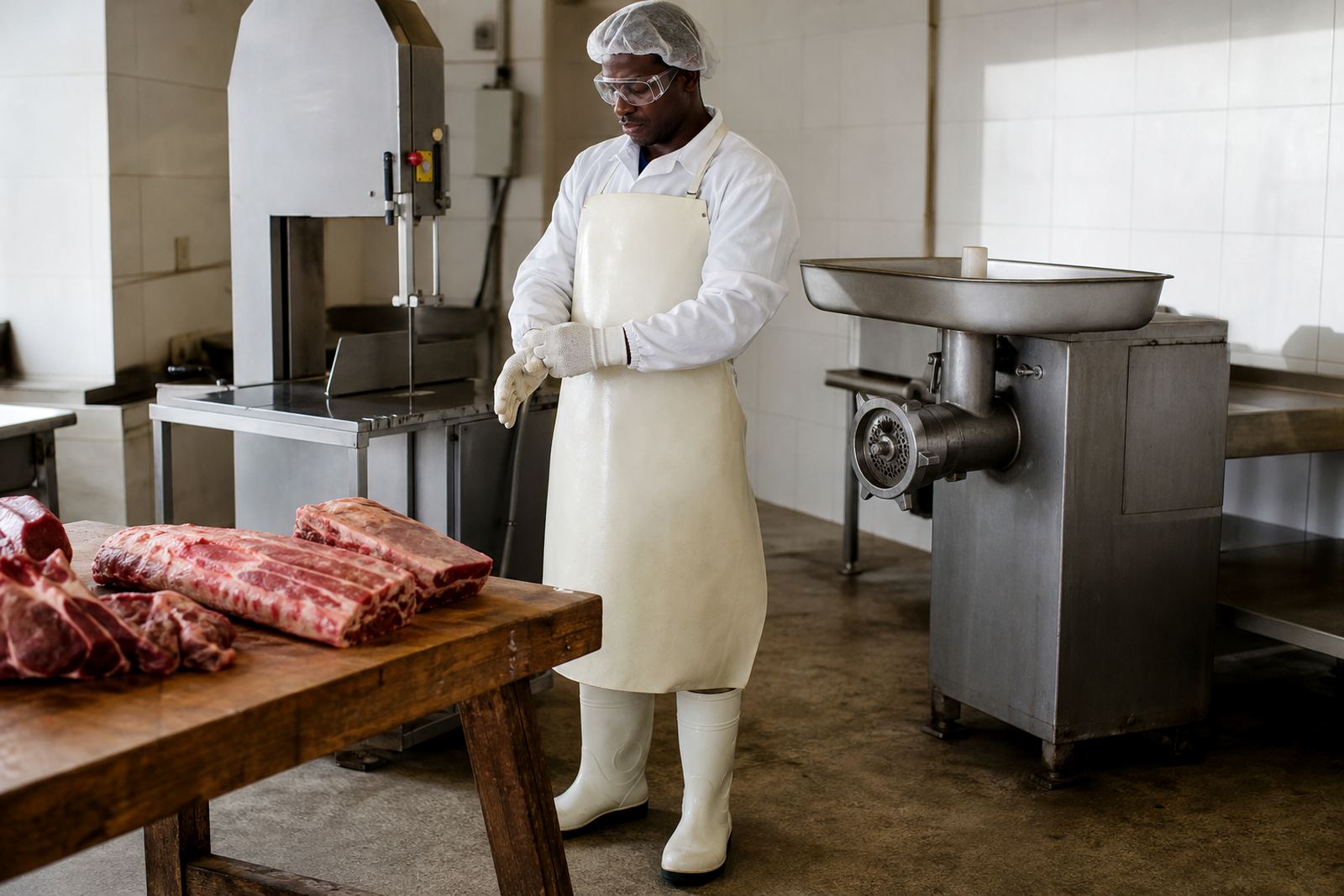
Gloves are useful, but only when they are used for the right purpose. A butcher working with sharp tools still needs full control and feel, so gloves must be chosen carefully. In some jobs they are there for grip or hygiene, in others for added protection when handling cold product, washing down surfaces or moving trays. One size does not suit every task.
Gloves should be checked regularly for tears, loose seams and worn fingertips. A glove that has split on one side can be worse than none because it creates false confidence. Replace damaged pairs straight away and keep spares in a dry, clean place away from grease and heat. If the glove is meant for cut resistance, that protection is only useful when it is worn properly and paired with safe knife handling.
- Use gloves that suit the task, not just the price.
- Keep spare pairs for busy periods and cleaning duties.
- Change gloves when they are torn, wet inside or heavily soiled.
- Do not use damaged gloves near blades or moving machine parts.
In a small butcher shop in Kroonstad, for example, the morning rush may involve unpacking, trimming and weighing in one short stretch. Having the right gloves within reach saves time and helps the team keep moving with less fuss.
Aprons and overalls for daily prep work
Aprons are one of the simplest forms of PPE, yet they are often treated as an afterthought. A good apron helps keep clothing clean, protects against splashes and makes it easier to stay hygienic through the day. In meat prep areas, that matters because moisture, fat and cleaning agents can all end up on clothing very quickly.
Choose aprons that are easy to wash down and dry properly. A heavy apron that stays damp until the next shift is not a good choice for busy prep areas. It can smell bad, become uncomfortable and simply get ignored. Staff should also have a clear routine for putting on clean gear at the start of the day and changing it when needed after dirty jobs.
For operators who work near a bandsaw or mincer, an apron does not replace safe technique or machine guards. It is only one layer. The best habit is to keep the apron neat, tied properly and free from loose ends that can catch on equipment. That small detail matters more than many people realise, especially in a tight work space.
Boots and non-slip footing in wet prep rooms
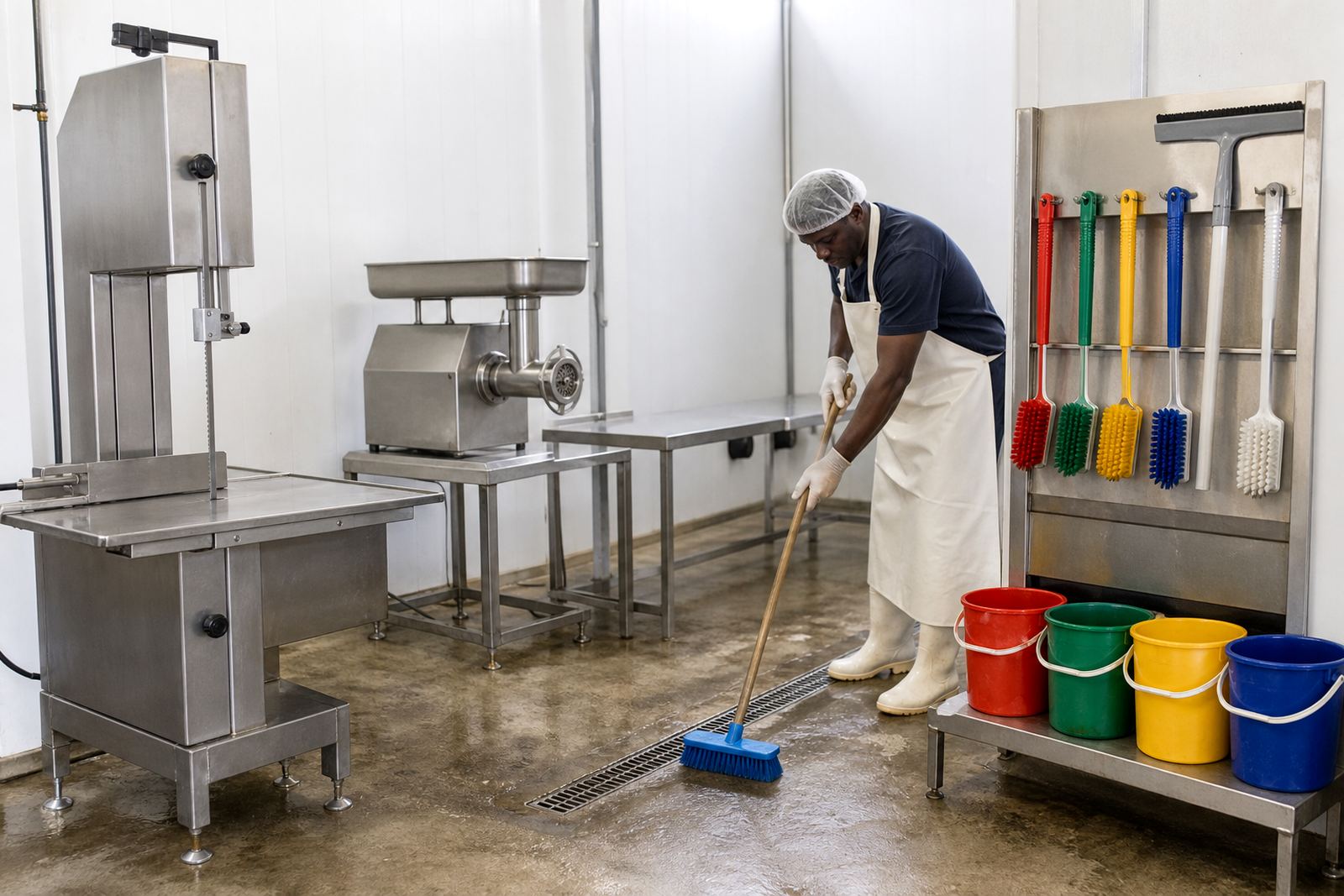
Feet are often the first place where trouble starts in a butchery. Wet floors, meat juices, ice, wash water and cleaning chemicals can create a dangerous surface fast. A proper pair of boots with a non-slip sole and closed construction is one of the most practical PPE items in the room. It supports posture too, which becomes important when staff stand for long periods on hard flooring.
Boots should be kept clean and inspected for worn soles, cracks and damage around the toe area. If the sole is smooth, the boot is no longer doing its job. In coastal towns such as Durban and Cape Town, moisture and humidity can also shorten the life of footwear if it is not cleaned and dried properly after use. That applies to inland areas too, especially where wash-downs happen daily and the floor stays damp for long stretches.
- Keep boots dry between shifts.
- Check grip before starting work on wet floors.
- Replace footwear with worn soles or broken seams.
- Do not wear open shoes in prep rooms or near processing equipment.
Good footing supports good habits. When people feel stable, they move more carefully around sharp tools, cold rooms and moving trolleys. That reduces the chance of a simple slip turning into a lost day.
Eye protection when splashes and debris are possible
Eye protection is often skipped until someone gets a splash in the face. In a butcherie, that can happen during cleaning, high-pressure washing, mixing, trimming or any task where liquid, grit or small particles may fly back. Clear protective eyewear is a sensible choice for those jobs, especially when chemicals are used in cleaning routines.
Eye wear should fit properly and stay clean. Smudged or scratched lenses make work harder, and staff are more likely to remove them halfway through the shift if they are uncomfortable. Keep them in a clean place, not thrown onto a table with blades, keys and packaging tape. They should be part of the standard prep routine, much like the apron and boots.
Where a team is working on cleaning demonstrations or operator training, it helps to explain why eye protection is needed rather than simply telling people to wear it. If staff understand the risk, they are more likely to keep using it when no one is watching.
Keeping PPE ready in a busy South African butchery
PPE works best when it is easy to reach and easy to maintain. That means storing items in clean lockers or shelves, not mixed in with dirty cloths, broken fittings and spare packaging. It also means building a simple routine for washing, drying, checking and replacing gear. A few minutes spent on care each day can prevent unnecessary spending later on.
For shops handling both retail and prep work, it helps to assign responsibility. One person can check gloves, another can keep aprons in order, and someone else can look after boots, eyewear and replacement stock. That sort of system makes a real difference in places where staff are busy and load shedding can interrupt the normal routine. If the area is not well lit or the team is rushing, poor habits creep in quickly.
MorCut Butchery works with commercial and home butchers across Bloemfontein, Johannesburg, Pretoria, Durban, Cape Town and surrounding towns, so we understand that the best PPE advice is practical. It should suit the size of the operation, the amount of cleaning needed, and the kind of cutting, trimming and machine work being done. Safety is not complicated, but it does need consistency.
A practical checklist before the shift starts
Before opening the door or switching on equipment, the team should do a quick PPE check. It takes little time and can prevent injuries that slow the whole day down. The checklist does not need to be fancy, just consistent.
- Are gloves clean, dry and undamaged?
- Is the apron in good condition and tied properly?
- Are boots clean, closed and still gripping the floor?
- Is eye protection available for cleaning or splash risk?
- Is the PPE stored where staff can reach it quickly?
- Has damaged gear been removed from use straight away?
When PPE becomes part of the opening routine, it stops feeling like extra admin and starts becoming normal workplace discipline. That is the standard worth aiming for in any butchery, whether the team is handling a small home order or a full commercial prep run.