

Start with the parts that wear first
In a busy butchery, the same items usually need attention first: bandsaw blades, mincer plates, knives, seals, belts and fittings that take daily strain. The trick is not to stock everything. It is to keep the parts that stop work when they fail. A simple list based on your own usage pattern is usually enough.
If you run a small shop in Bloemfontein or supply meat from a farm stall near Kimberley, your turnover may differ from a high-volume operation in Johannesburg. That changes how often parts need replacing. Keep notes on what is changed, when it was changed and why. Over a few months, the pattern becomes clear.
- Blade changes for bandsaws
- Plate and knife changes for mincers
- Belts, seals and fasteners that show wear
- Cleaning items and food-safe lubricants where suitable
Match your stock to your service rhythm
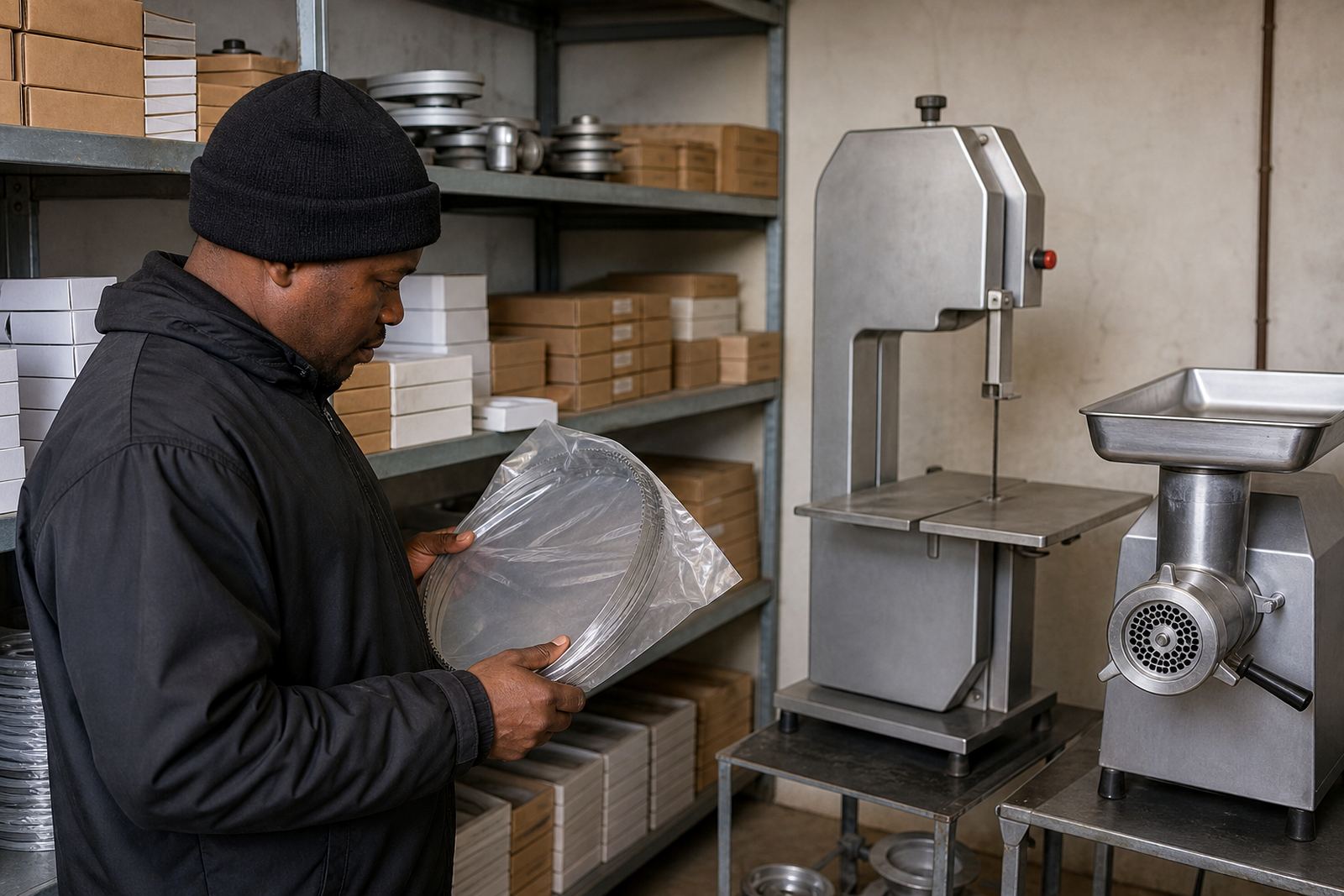
Parts planning works best when it follows your servicing routine. If a machine is booked for preventive maintenance, check the likely wear items at the same time. That avoids a second visit for a missing gasket or blunt cutting set. It also helps if your team keeps a small shelf of fast-moving spares instead of looking for them when the machine has already stopped.
For butchers in Pretoria, Durban or Cape Town, delivery times can affect how long a repair takes. Coastal humidity in places like Durban and Cape Town can also put extra pressure on storage, so spare parts should be kept dry and clean. A sealed container, a tidy rack and clear labels are often enough.
- Keep one record for each machine
- Store parts in a dry, dust-free place
- Label new stock by machine type and use
- Review stock after each service visit
Keep blades, plates and knives ready for safe work
Cutting parts do the heavy work, so they deserve the most attention. Dull or damaged blades and cutting sets can slow production and create unnecessary strain on the operator. They can also make cleaning harder because worn surfaces collect residue more easily. Replace them before they become a problem, not after a breakdown.
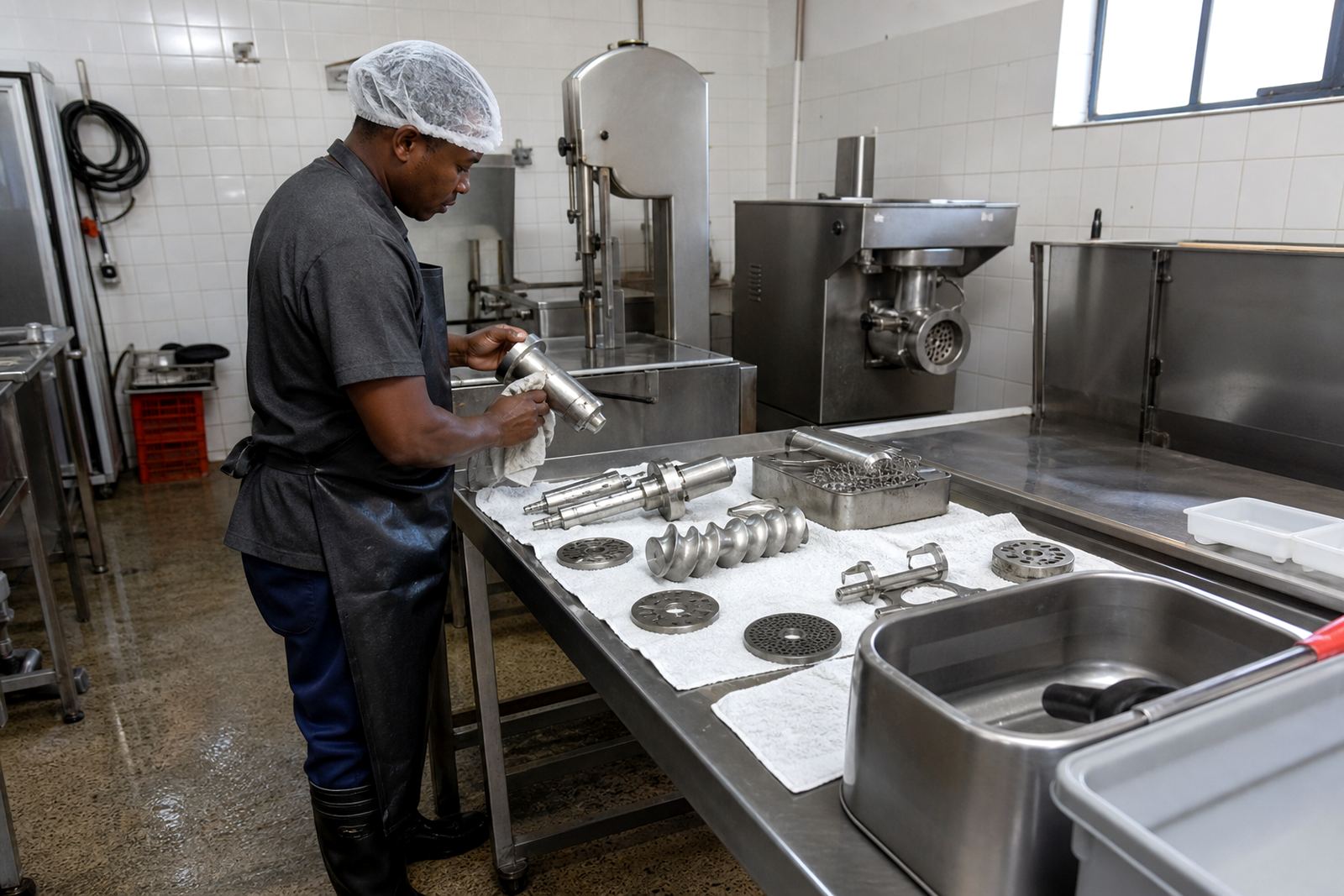
Good care starts with simple habits. Clean cutting parts after use, dry them properly and inspect them before refitting. Never bypass guards, and always use the right PPE when handling sharp components. If a part feels loose, bent or uneven, take it out of service until it has been checked. That small pause is better than a bigger repair later.
Build a small parts list around your actual machine use
A spare-parts plan should reflect how your butchery works day to day. A home butcher in Welkom will not need the same stock as a commercial shop supplying customers across Bloemfontein and Kroonstad. Start with the machines you use most and the parts that are most likely to interrupt work. Then keep the list short enough to manage properly.
It helps to divide parts into urgent, useful and optional. Urgent items are the ones that stop the machine. Useful items reduce delay during service. Optional items are good to have but not essential for the next repair. This approach keeps cash tied up where it matters most.
- Urgent: blades, plates, knives and damaged seals
- Useful: belts, switches, fixings and spare fittings
- Optional: extras for scheduled maintenance or backup use
Use servicing visits to check what is missing
A parts plan works best when it is part of the service conversation. During Bandsaw Servicing or Mincer Servicing, ask what has worn, what should be replaced soon and what should be kept on hand. That way, the next callout or installation is less likely to stall because one small item is missing. It is a practical approach for shops in Hamilton, Bloemfontein and across South Africa.
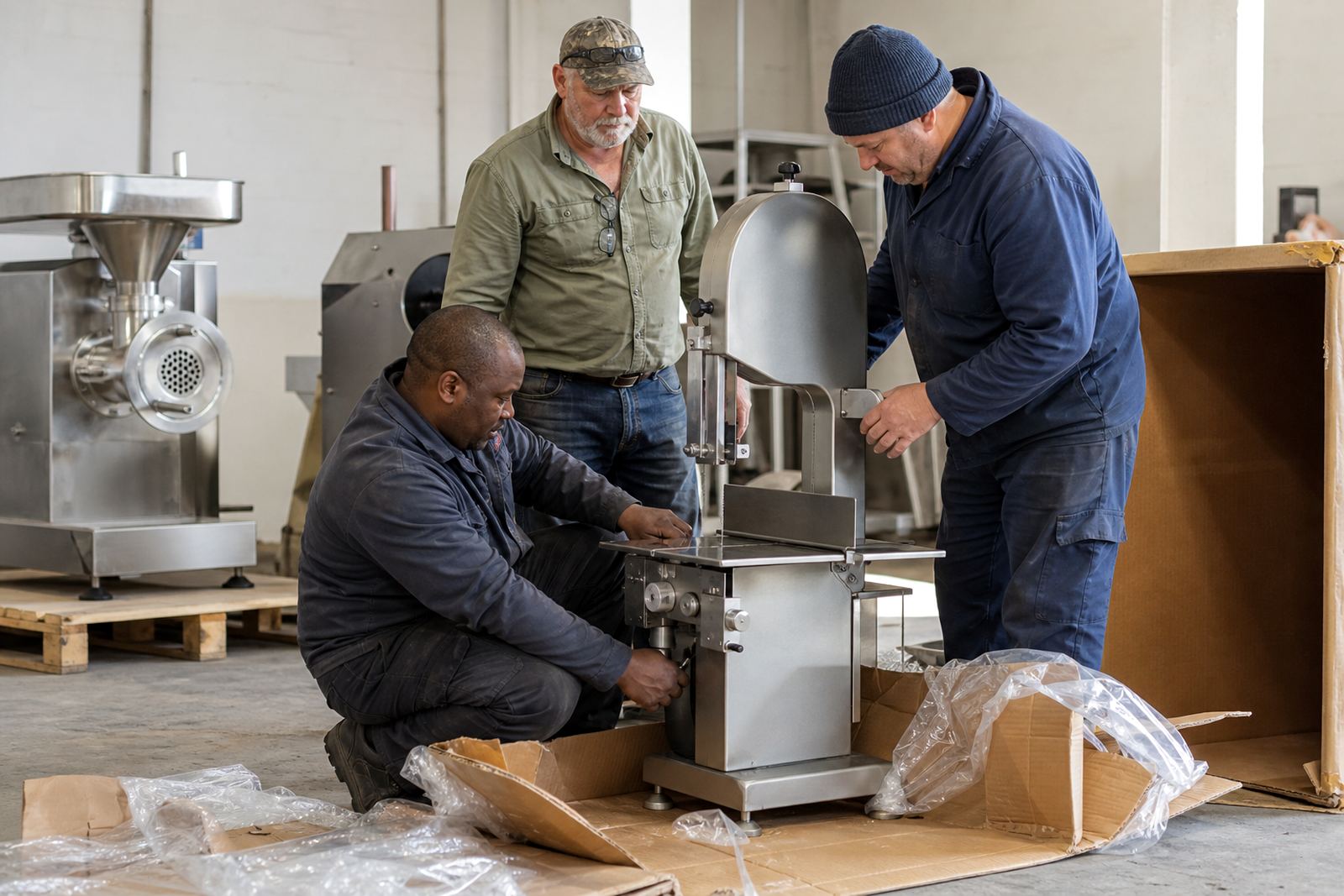
Where possible, combine servicing with Delivery and Setup, Parts Supply, or a breakdown callout. If a machine is already being opened, it makes sense to check the parts around it at the same time. Willem Jacobus Smit and the service team would normally look at wear signs, cleanliness and fit before recommending what should be kept in stock.
A Bloemfontein example that saves time later
Picture a butchery in Bloemfontein that uses one bandsaw and one mincer every day. The owner waits until a blade is blunt or a plate is badly worn before ordering anything. The result is predictable: a delay while the part is sourced, cleaned and fitted. Now compare that with a shop that keeps the common wear items on site and updates its list after every service visit. The repair still happens, but the downtime is shorter and staff can plan around it.
That same approach works for smaller home butchers too. You do not need a full storeroom. You need the right parts, stored well, and a habit of checking them before a busy weekend or holiday rush. On the parts side, that simple discipline saves more time than most people expect.
At MorCut Butchery in Hamilton, Bloemfontein, the team works with commercial and home butchers from Bloemfontein to Johannesburg, Pretoria, Durban, Cape Town, Kimberley, Welkom and Kroonstad. The enquiry form on our contact page is the place to request parts advice, servicing, training or a breakdown check.