
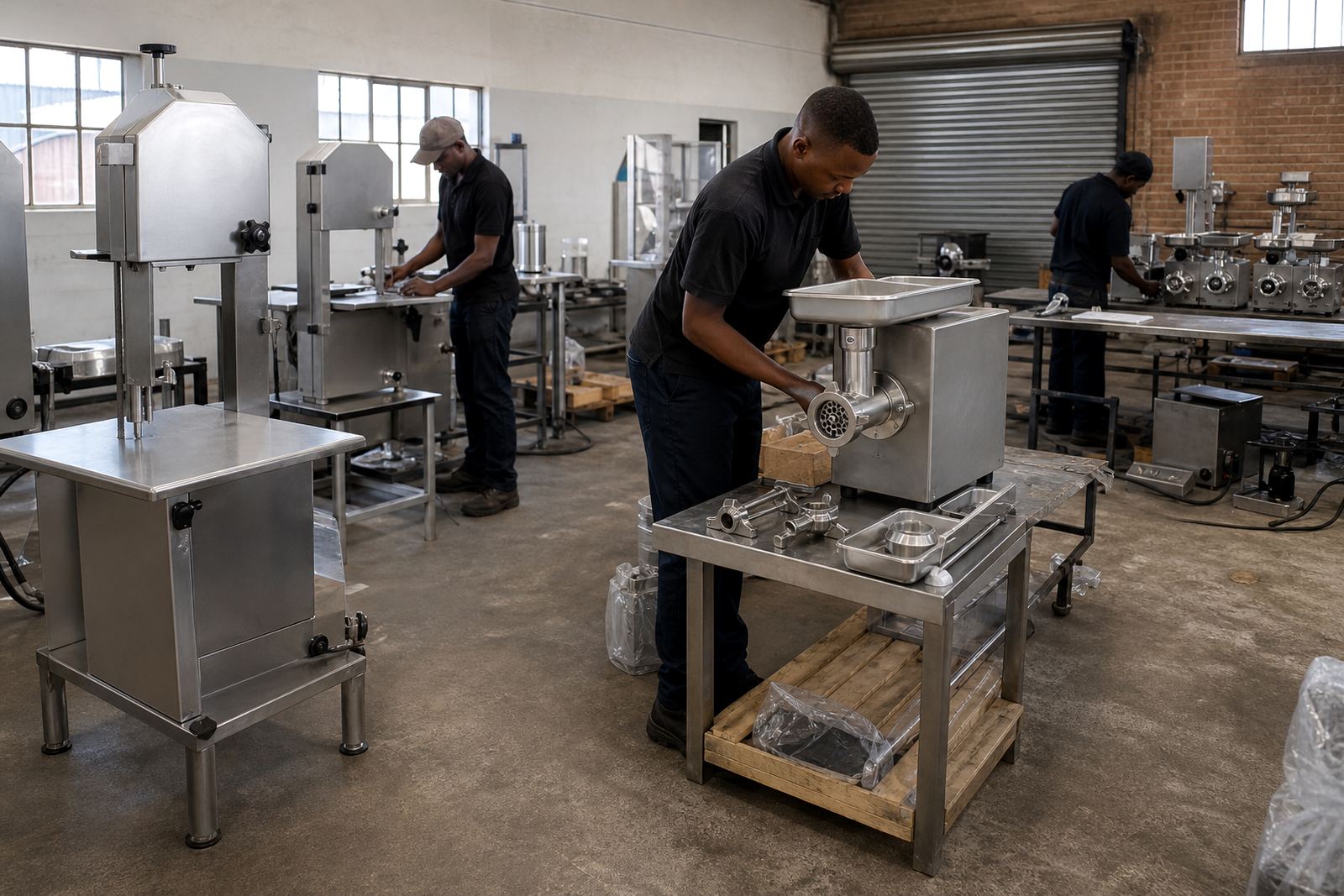
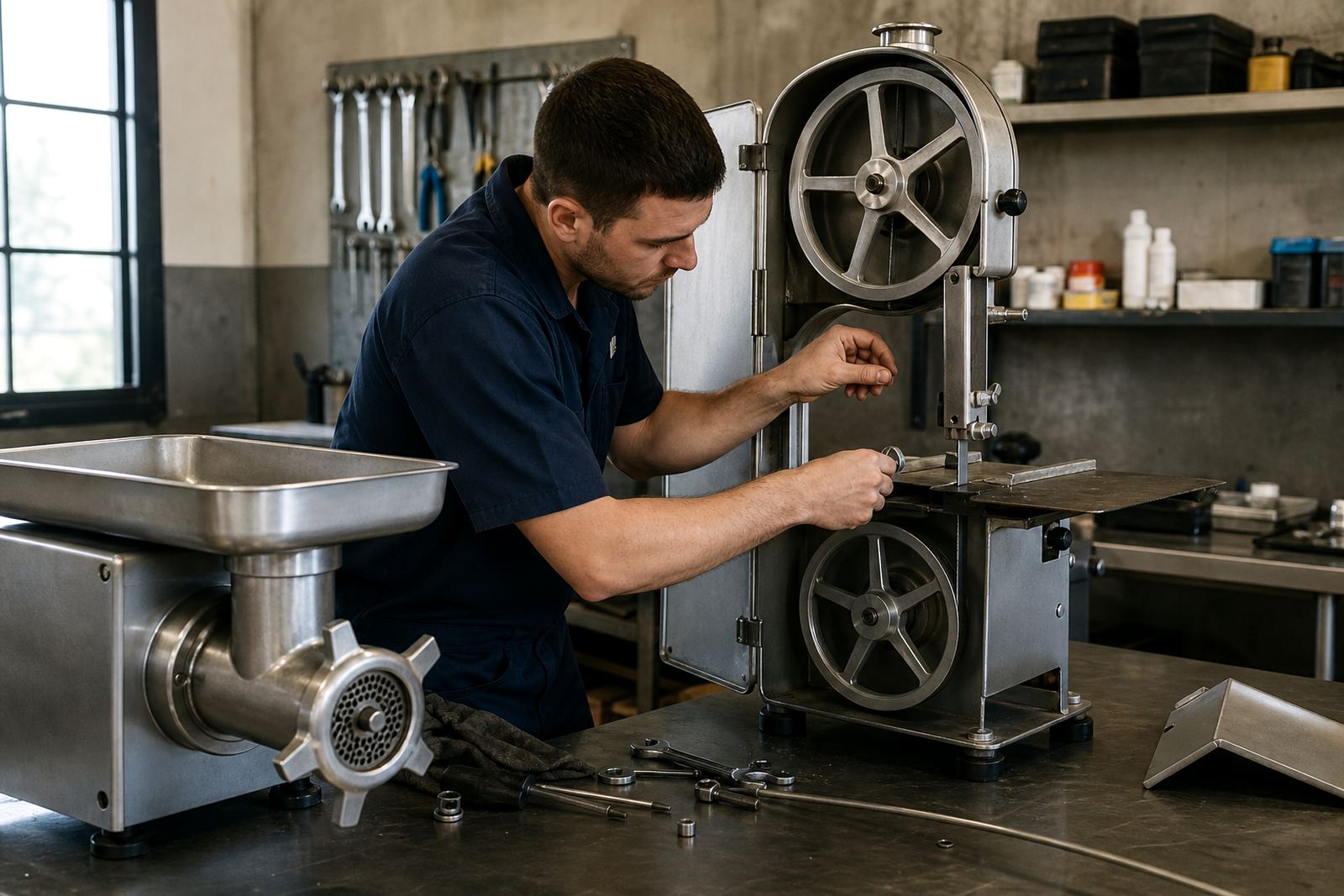
Why the last 20 minutes matter more than the first hour
The end of the shift is when small problems become tomorrow’s headache. Fat build-up, meat residue, loose scraps and damp cloths can all cause bad smells, slippery floors and extra wear on equipment if they are left overnight. A proper closing routine is not about making the place look neat for the sake of it. It is about protecting the machine, the product and the people who open the shop again in the morning.
For commercial and home butchers alike, the same principle applies. Once the day’s work is done, the goal is to leave the bandsaw and mincer clean, dry and switched off in a safe way. That habit reduces downtime, makes servicing easier and cuts down on avoidable breakdowns. In a place like Bloemfontein where dust can settle quickly and temperatures swing through the day, the difference shows up fast.
Start with power off, guards in place and PPE on
Before any cleaning begins, make sure the machine is properly switched off and cannot start by accident. Guards must stay in place unless a trained person is carrying out a task that requires removal. Gloves, apron, eye protection and suitable footwear are not optional when handling sharp parts, residue or cleaning chemicals. A hurried clean can turn into a cut or slip in seconds.
It helps to set a fixed order for the close-down. When staff follow the same sequence each time, nothing gets missed and nobody has to guess what comes next. If one person is tired after a long Friday trade, the routine still carries the job through.
- Switch off and isolate power before cleaning
- Remove loose product and waste first
- Keep hands away from blades, knives and moving parts
- Use PPE that suits the task
- Never spray water into electrical areas
Bandsaw close-down: clear, clean and dry
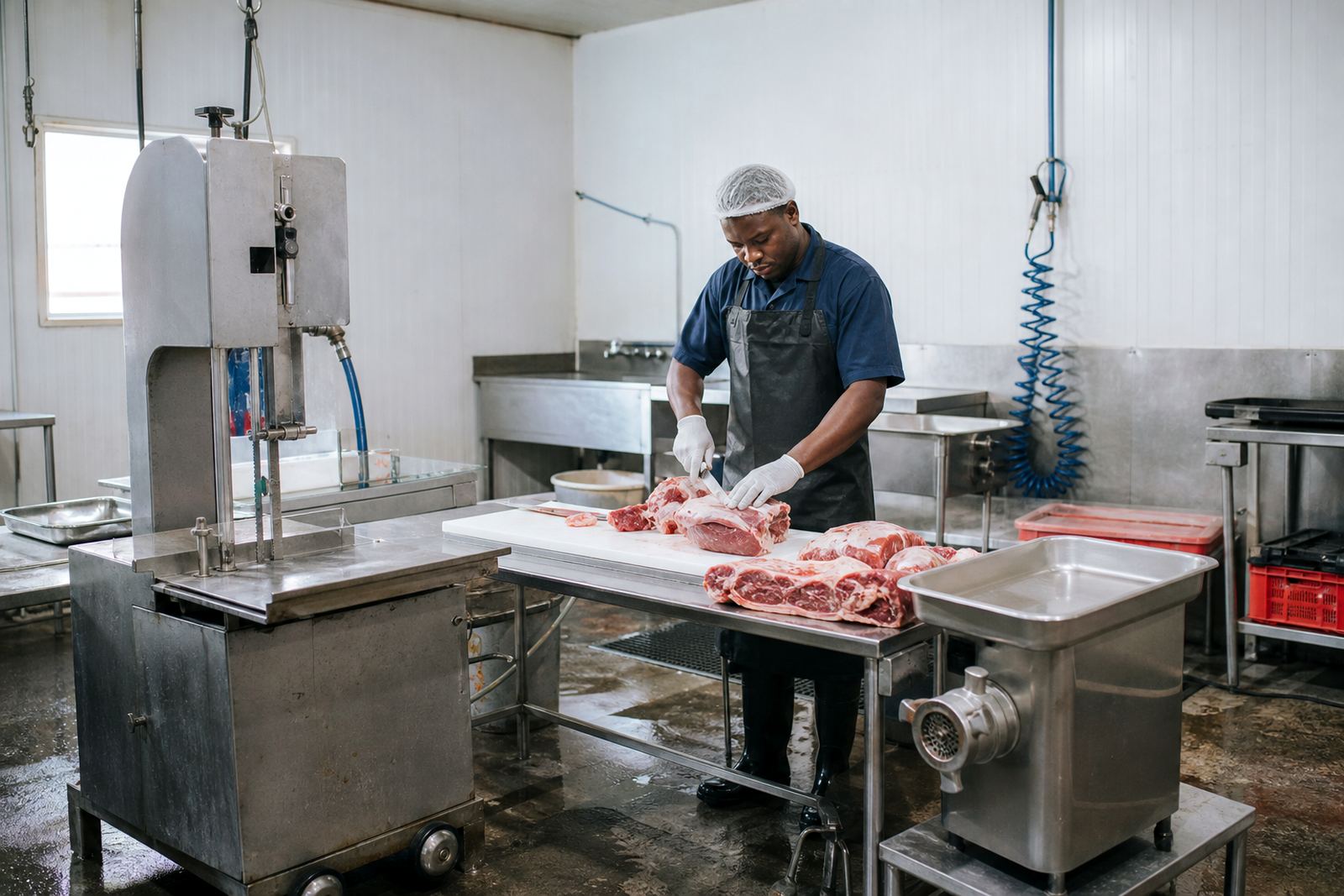
On a bandsaw, the main aim is to remove all visible residue from the table, guides, blade area and surrounding surfaces. Use cleaning methods that suit food equipment and avoid soaking parts that should stay dry. Pay attention to spots where meat fibres and fat can collect, because those areas often harden overnight and take longer to remove the next day.
Blade condition also matters. If the blade shows damage, dullness or rough cutting, note it before the next shift rather than forcing one more day out of it. A blade that is not cutting properly can increase strain on the machine and make the operator work harder than necessary. After cleaning, leave the area dry and check that all covers and guards are back in position.
- Wipe down contact surfaces and remove trapped residue
- Check the blade path for build-up
- Inspect guards and fittings before closing up
- Leave the machine dry to reduce corrosion risk
Mincer clean-out: protect the plate, knife and feed area
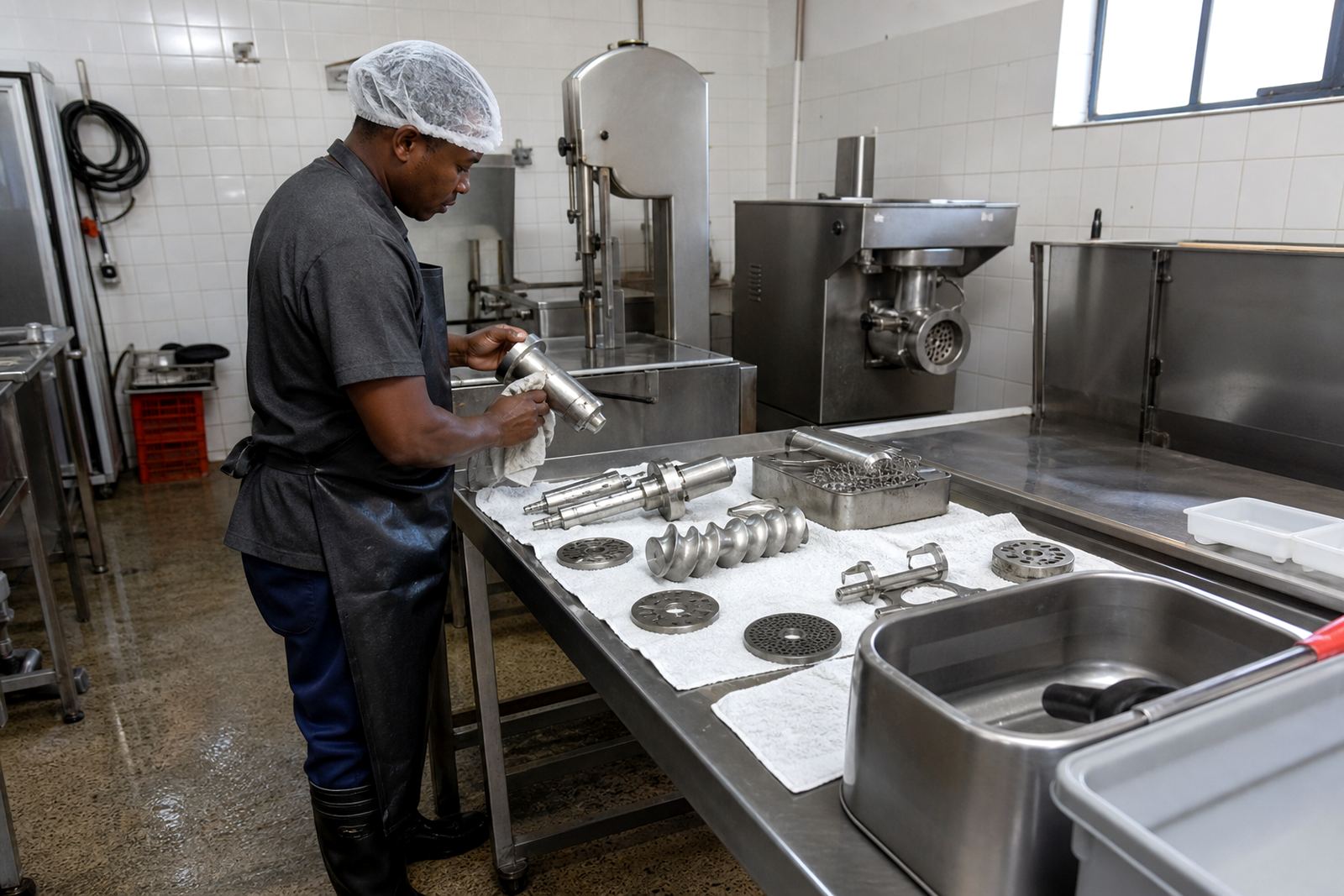
A mincer needs careful handling at the end of the day because product left inside can spoil and create unnecessary wear. Remove the working parts according to the machine’s procedure, then clean each piece thoroughly and dry it well before storage. The plate and knife should be checked for wear, nicks or any sign that the cut is no longer even. If those parts are damaged, the machine may still run but the output quality will suffer.
Good cleaning also helps with hygiene inspections and makes the morning start-up smoother. Staff should never rush the reassembly step. If the parts go back in the wrong order or are not seated properly, the machine may perform badly or become unsafe. Take a minute to check the fit, then store small parts where they will not be lost overnight.
- Strip the machine only as far as the maker’s instructions allow
- Clean and dry the plate, knife and feed area
- Inspect for wear before storing parts
- Do not leave moisture on metal surfaces
Waste, floors and counters should be finished before the machine is covered
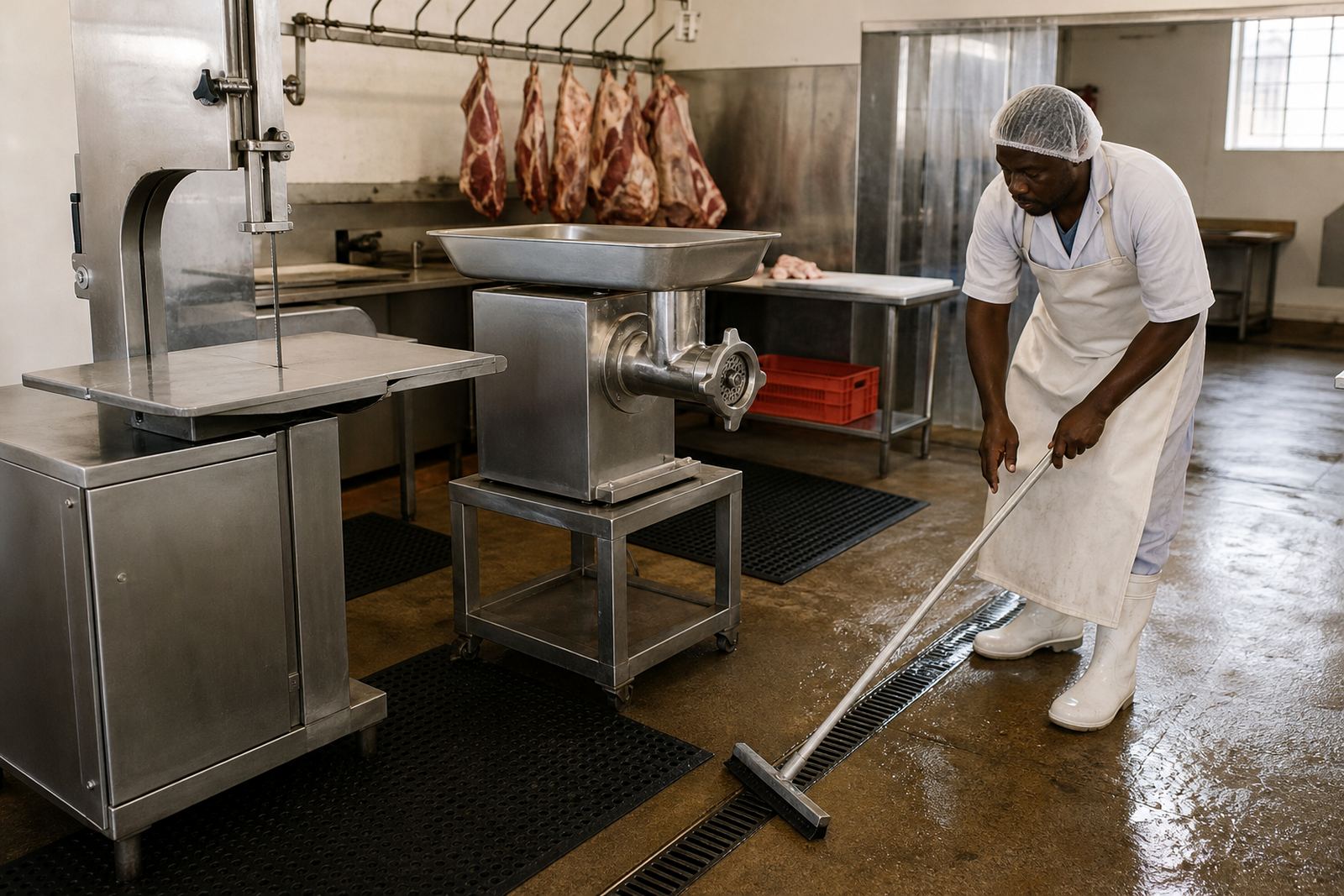
It is easy to focus on the equipment and forget the surrounding area. Floors, counters, drains and bins all form part of the closing routine. Meat scraps and fat on the floor can attract pests, create odours and make the next morning’s start unsafe. Wet mopping should be done carefully so water does not run into sockets or pool around the machine base.
In a busy shop in Bloemfontein or Welkom, a late close can tempt staff to leave the last sweep for the morning. That usually costs more time later. Once the machine is cleaned, the whole work area should be dry, cleared and ready for opening. If there are municipal hygiene rules or inspection requirements in the area, a tidy close also makes life easier during checks.
Keep a simple checklist near the closing point
A written checklist removes guesswork and helps every staff member close the same way. It does not need to be complicated. The best list is short, clear and placed where the team can see it. For shops with more than one operator, this also helps when different people are working different shifts.
Here is a practical closing list many butchery teams can adapt to their own floor:
- Remove product from bandsaw and mincer
- Switch off and isolate power
- Clean and dry all food-contact surfaces
- Inspect blade, plate, knife and guards
- Dispose of waste and clean the area around the machine
- Store removable parts safely
- Report any fault, unusual noise or rough cutting
That final report step matters. A small fault noted at closing can be handled before it becomes a breakdown callout the next day.
Training the team so the routine sticks
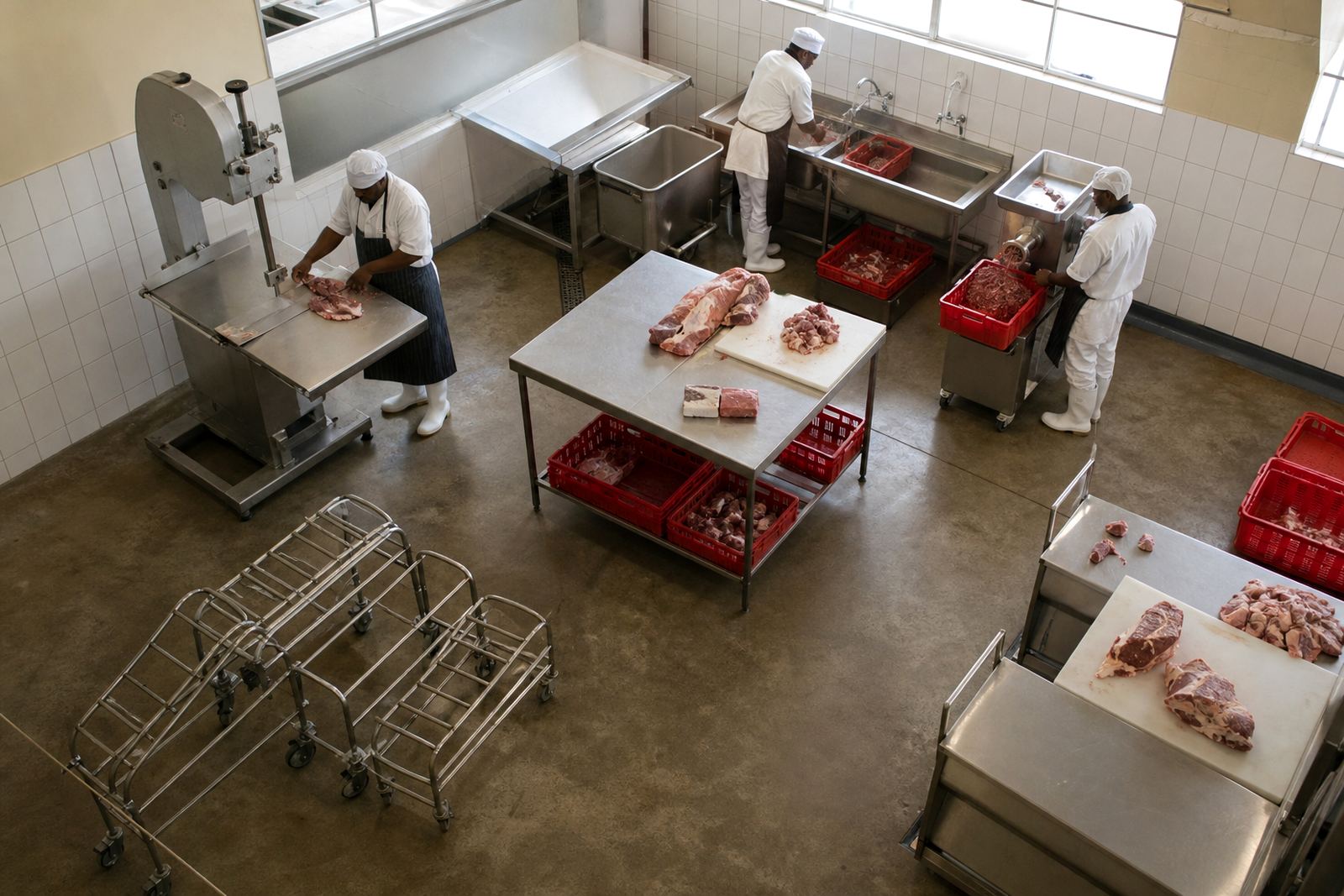
Even the best routine fails if only one person knows it. Staff training should cover the correct cleaning sequence, safe handling, basic inspection and who to call when something looks off. New workers often copy whatever they see, so the first example they receive is important. A clean, disciplined close by the senior team usually sets the tone for everyone else.
MorCut Butchery works with commercial and home butchers across South Africa, including Bloemfontein, Johannesburg, Pretoria, Durban, Cape Town, Kimberley, Welkom and Kroonstad. From the base in Hamilton, Bloemfontein, the focus is on practical support for bandsaws and mincers, from installation and servicing through to cleaning demonstrations, blade replacement, plate and knife change, breakdown callouts and preventive maintenance. If your team needs help tightening up the close-down process, it is often the small habits that make the biggest difference.
A good closing shift routine should be calm, repeatable and clear. Done properly, it keeps the machine ready, the room cleaner and the next morning less stressful. That is good business, plain and simple.