

Start With A Room That Can Be Cleaned Properly
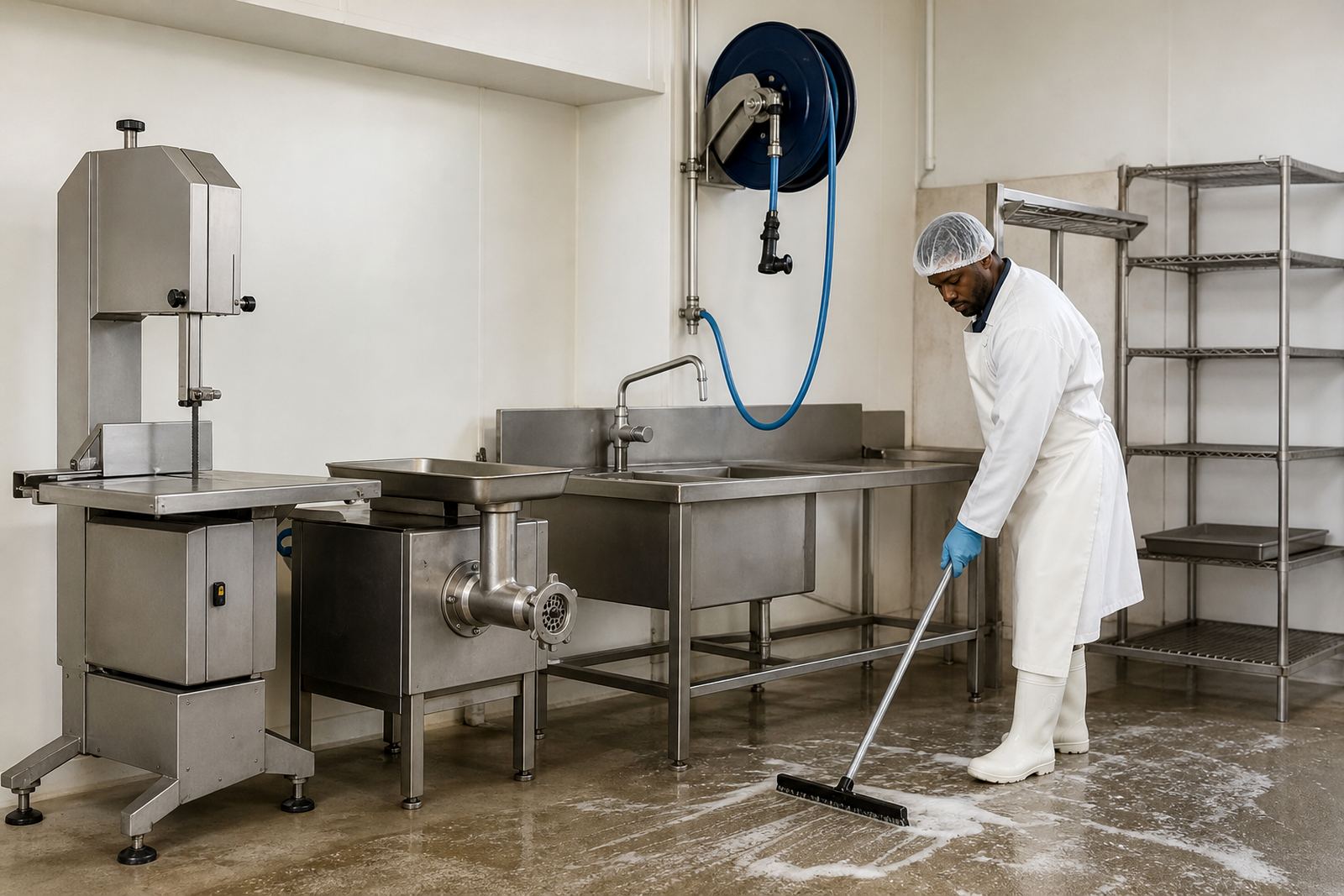
Farm-based meat rooms work best when the layout supports cleaning from the first day. Smooth surfaces, good drainage, covered waste bins and clear walkways all make the job easier. If blood, fat and water collect in corners or under equipment, the room becomes harder to keep right and the work slows down. In a Free State winter morning, a cold floor can hide wet patches, so it helps to check every surface before production starts.
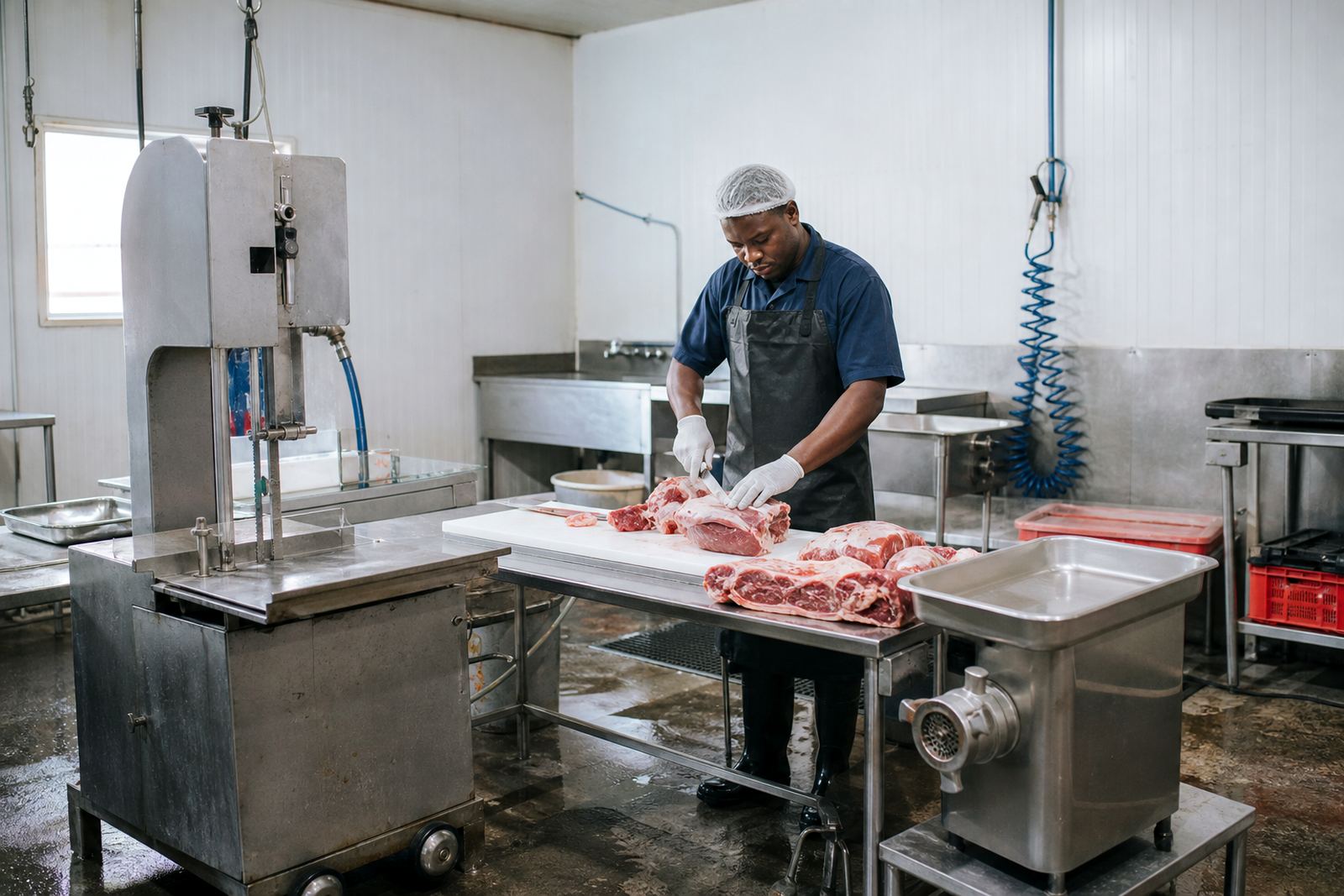
Keep raw meat handling, washing and packing areas separated as far as the room allows. Even in a small setup, a simple one-way work flow reduces cross contamination. That means dirty items do not pass back through clean areas and tools do not get mixed between tasks. If you are working from a farm near Bloemfontein or on a plot outside Kroonstad, the room must still meet the same basic cleaning discipline as a larger shop.
Daily Cleaning Routines That Actually Get Done
The most useful cleaning plan is the one that staff can follow under pressure. Break the room into sections and assign each one a task. Clean at the start of the shift, during breaks and again at the end of the day. Wipe down contact surfaces, wash removable parts properly and dry everything before it goes back into use. A wet room left overnight often smells stale by morning and can attract flies if doors are opened often.
- Remove visible meat residue before washing down.
- Use separate cloths or brushes for contact and non-contact areas.
- Rinse and dry trays, tables and hand tools after every session.
- Check floor drains for blockages so water does not sit in puddles.
- Store detergents and cleaning tools in a marked place, not near meat.
Small habits matter. A quick rinse is not the same as proper cleaning, and it is easy for a busy team to think a room looks fine when grease is still on a handle or under a machine base.
How Bandsaws And Mincers Fit Into Hygiene Control
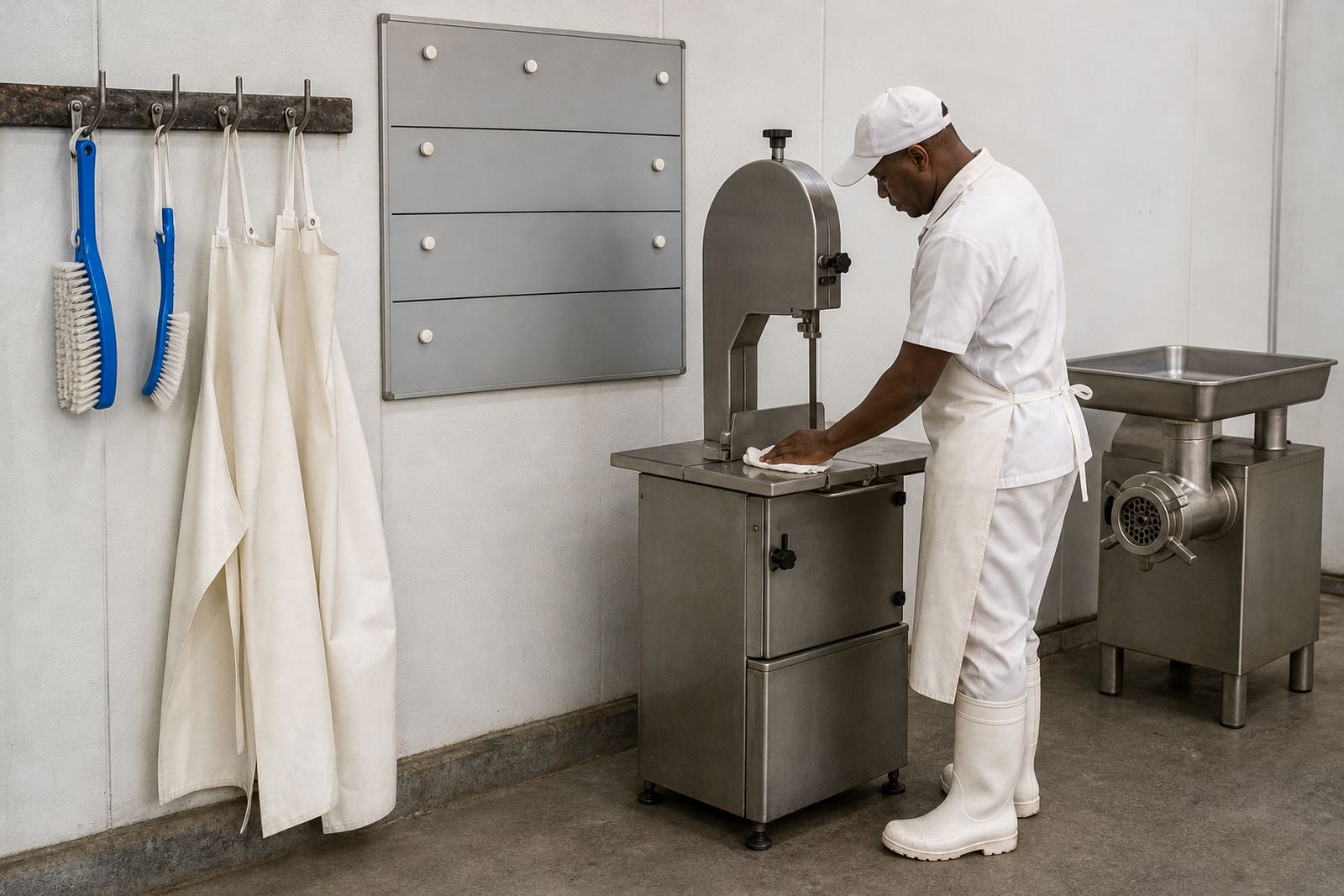
In a farm room, bandsaws and mincers need regular care because they touch product directly and are used often. Guards should stay in place, operators should wear suitable PPE, and the machine must be switched off before cleaning begins. Never rush blade or plate work while the unit is still live. That kind of shortcut usually leads to injury or a poor clean, and both are expensive.
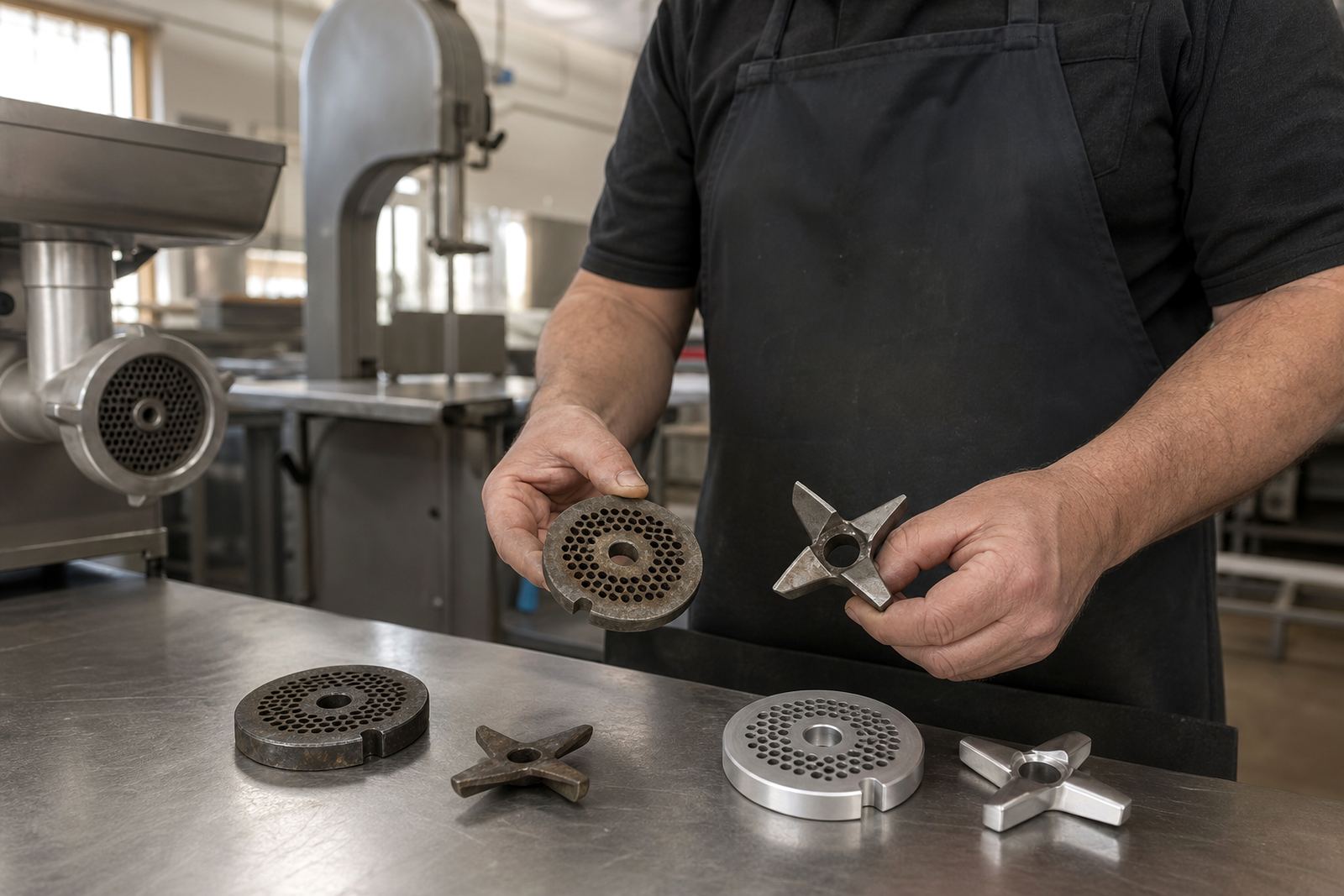
A bandsaw should be cleaned after use, with special attention to bone dust, fat and trapped residue around the guide areas. A mincer needs clean changeover between batches, especially when different cuts are being processed. Plates and knives must be handled carefully and stored in a clean dry spot. If a machine sits in a room with high humidity near the coast, or in a dusty outbuilding inland, the cleaning routine needs to be more regular because grime builds up faster. MorCut Butchery supplies and services these machines from Hamilton in Bloemfontein, with delivery and setup support to places like Johannesburg, Pretoria, Durban and Cape Town, so local conditions can be considered when planning care.
Water, Drainage And Waste Need Their Own Plan
Good hygiene is not only about wiping surfaces. It also depends on where water goes and how waste leaves the room. If a farm room has poor slope on the floor, water can sit under equipment and make cleaning harder. Waste bins should be emptied often, lined where needed and kept closed when not in use. Offcuts and packaging should not build up beside the work area, because that brings smell and pests into the room.
In some municipal areas, waste removal times and dumping rules must be respected, so it pays to plan collection before the room fills up. A simple schedule for wash-down, waste removal and final inspection can prevent most problems. If drains back up after a heavy rinse, stop and fix the cause. It is better to delay a batch than to keep working in dirty water.
Training Staff For Cleaner, Safer Work
Even the best room will struggle if the team does not follow the same steps every day. Training should cover hand washing, PPE use, equipment shutdown, safe blade handling and the reason each task matters. A staff member who understands why cleaning order matters is more likely to do it properly when the morning is busy or power is erratic. In parts of South Africa, load-shedding can interrupt the usual rhythm, so people need a clear restart routine after power returns.
- Show new staff how to strip and reassemble equipment safely.
- Explain which parts are food-contact parts and which are not.
- Use a simple cleaning checklist signed off at the end of shift.
- Keep spare blades, plates and knives in a labelled clean storage area.
- Refresh training after breakdowns, maintenance or staff changes.
Teams in Bloemfontein, Kimberley and Welkom often work with limited space, so the room must be organised well or people will make their own system and that usually creates confusion.
A Local Example From A Free State Farm Room
A small farm processing room outside Bloemfontein may handle carcass cutting in the morning, mincing in the afternoon and packing at the end of the day. If the same room is used for stock feed tools or general storage, hygiene can slip quickly. The fix is usually practical rather than expensive: mark off the meat handling zone, remove unused items, place cleaning tools at the entrance and set a firm end-of-day wash-down routine. That one change can make the room easier to control and less stressful for the team.
Where equipment needs attention, it helps to work with a supplier that can handle servicing, parts and on-site setup without fuss. MorCut Butchery assists commercial and home butchers with installation, servicing, blade replacement, plate and knife change, breakdown callouts, preventive maintenance, parts supply and operator training. Clients get in touch through the enquiry form on the contact page, which keeps the process straightforward for farms across the Free State and beyond.
Keep The Standard The Same Every Day
Farm room hygiene is not about one big clean when inspection is due. It is about repeating the same sensible steps every day so the room stays safe, workable and ready for production. If the cleaning plan is simple, the staff can follow it. If the machine care is steady, the room runs better. And if waste, drainage and storage are handled properly, the whole operation becomes easier to manage.
For farms and small processing rooms, the goal is plain: clean well, dry well, store well and check everything before the next batch starts.