

Why Assembly Order Matters After Cleaning
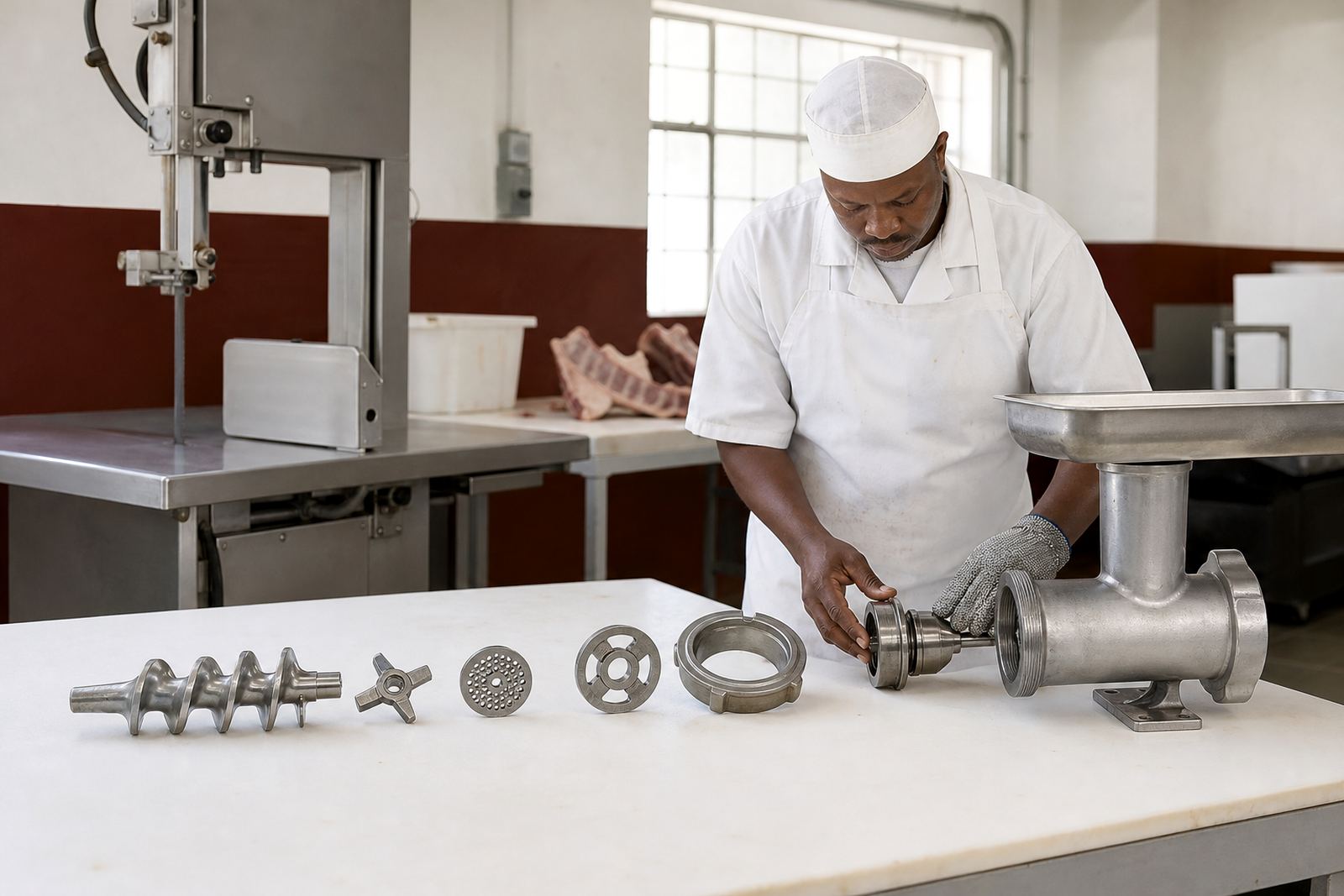
A mincer looks simple on the outside, but the cutting set works as a matched group. The knife, plate, worm and retaining parts all need to sit correctly so the meat is fed, cut and discharged as intended. If the order is wrong, the machine may strain, the cut can become uneven, and the operator may force the feed instead of letting the machine do the work.
This is especially important in a busy butchery where equipment is cleaned at the end of trade and needed again the next morning. In Bloemfontein, where many shops run from early deliveries to late afternoon service, a rushed reassembly can cost time before the doors even open. A calm, correct rebuild is part of good daily discipline, not a once off repair step.
The Usual Reassembly Sequence to Follow
Different models may vary slightly, but the working order is usually straightforward. Keep the parts clean, dry and free of meat fibres before you start. Check the opening, plate holes and knife faces for damage or heavy wear before putting anything back in place.
- Fit the worm or feed screw correctly in the housing.
- Place the knife so the cutting edges face the right way against the plate.
- Align the plate flat and seated properly.
- Secure the retaining ring or locking nut without over tightening.
- Turn the machine by hand first, if the unit allows it, to confirm smooth movement.
If a part feels hard to seat, stop and check it rather than forcing it. A wrong fit can cause chatter, poor mincing and faster wear on plates and knives.
What To Check Before You Switch On
Before power is restored, make a quick inspection part of the routine. It takes only a minute or two and can prevent a bigger problem later. Look at the guard, the pusher, the feed area and any visible fasteners. Make sure the machine is dry, stable on its base and clear of loose cleaning cloths or tools.
- Hands should stay away from the throat and moving parts at all times.
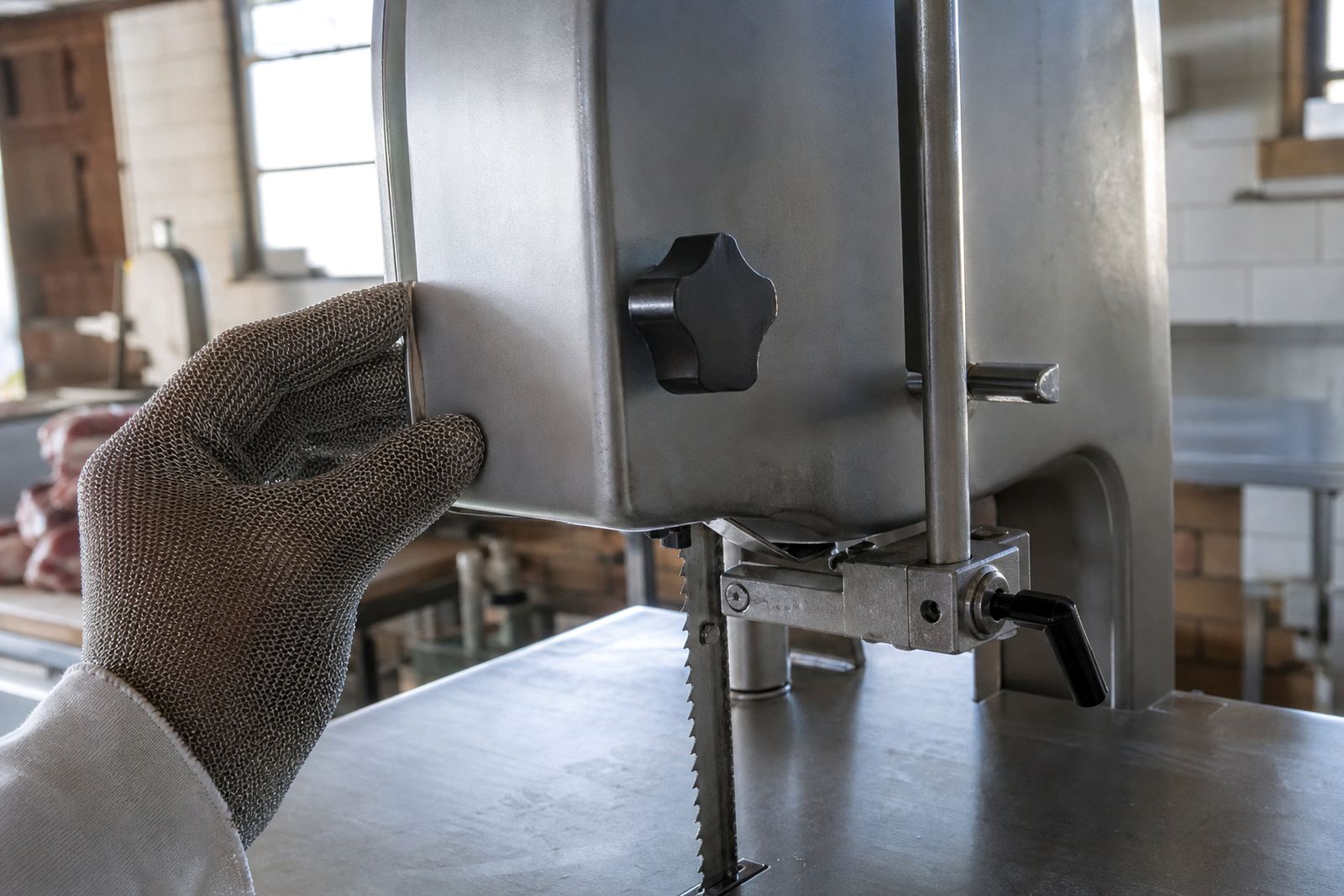
- Use PPE where needed, especially cut resistant gloves when handling blades and plates.
- Do not run the machine with damaged cutting parts or a loose locking ring.
- Keep children and non operators away from the work area.
- If there is any unusual noise, stop and inspect before continuing.
Power interruptions can also catch a shop out. If the machine has been stopped during a load shedding period, do a fresh check before starting again, especially if the unit was left partially stripped for cleaning.
Common Mistakes That Cause Trouble
Most mincer issues after cleaning come from small, avoidable mistakes. A plate fitted back to front, a knife sitting off centre, or product left in the threads can all lead to bad results. Sometimes the machine is blamed when the real issue is that one part has not seated properly.
Another common problem is mixing worn parts with new ones without checking the fit. A heavily worn plate can affect the cut even if the knife is new. The same applies to a pitted blade, bent screw or damaged retaining ring. The system works best when the parts are matched and in good condition.
For home butchers and small shops in places like Welkom or Kroonstad, it is tempting to finish cleaning quickly and move on. That is where the trouble starts. A few extra minutes spent checking the order can save a whole afternoon of frustration.
Care Tips That Extend Working Life
Good cleaning does more than improve hygiene. It also helps the machine last longer. Dry the parts after washing, store them carefully and keep cutting edges protected from knocks. Rust marks and blunt edges often come from poor drying or loose storage rather than heavy use alone.
When a mincer is used daily, put parts under regular inspection rather than waiting for a breakdown. If the meat begins to come out unevenly, if the feed feels harder than normal, or if the machine makes new sounds, it may need servicing. Preventive maintenance is usually far easier than a last minute callout during a busy trading week.
- Clean and dry parts immediately after use.
- Store plates and knives together in a marked container.
- Keep threads and locking parts free of grease build up.
- Arrange servicing before faults become serious.
Local Support For Shops And Home Users
From our base in Hamilton, Bloemfontein, we supply and support butchers across South Africa, including Johannesburg, Pretoria, Durban and Cape Town, with delivery and setup where needed. We also work with commercial operations and home users who want dependable equipment and practical guidance on day to day use.
For a small shop in Bloemfontein, a proper assembly routine can be the difference between opening on time and losing the first hour of trade. For a larger butcher in Pretoria or Durban, the same discipline helps keep the line moving and reduces avoidable wear. If parts are missing, worn or not seating as they should, it is better to sort that out early than push the machine harder than necessary.
When To Ask For Help
If the mincer will not assemble correctly, do not force the components. A stubborn fit, repeated clogging, poor cut quality or visible wear on the knife and plate usually points to a part that needs attention. It may be a simple replacement, or it may need a proper inspection from someone who works with these machines every day.
MorCut Butchery helps with parts supply, servicing, installations, operator training and breakdown callouts. If you are unsure about the correct assembly order after cleaning, use the enquiry form on our contact page and ask for assistance. A correct rebuild protects the machine, the operator and the quality of the mince leaving the counter.