
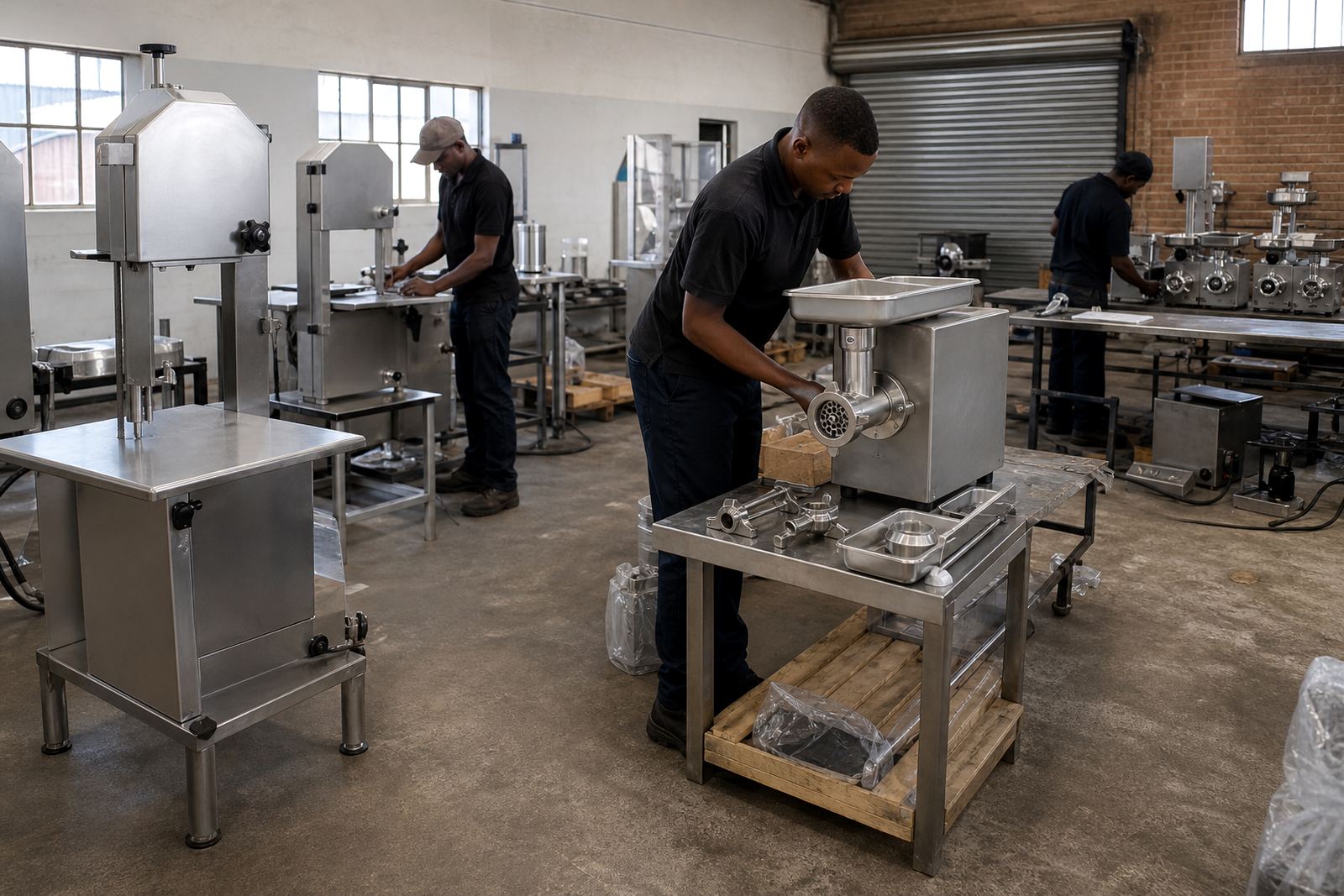
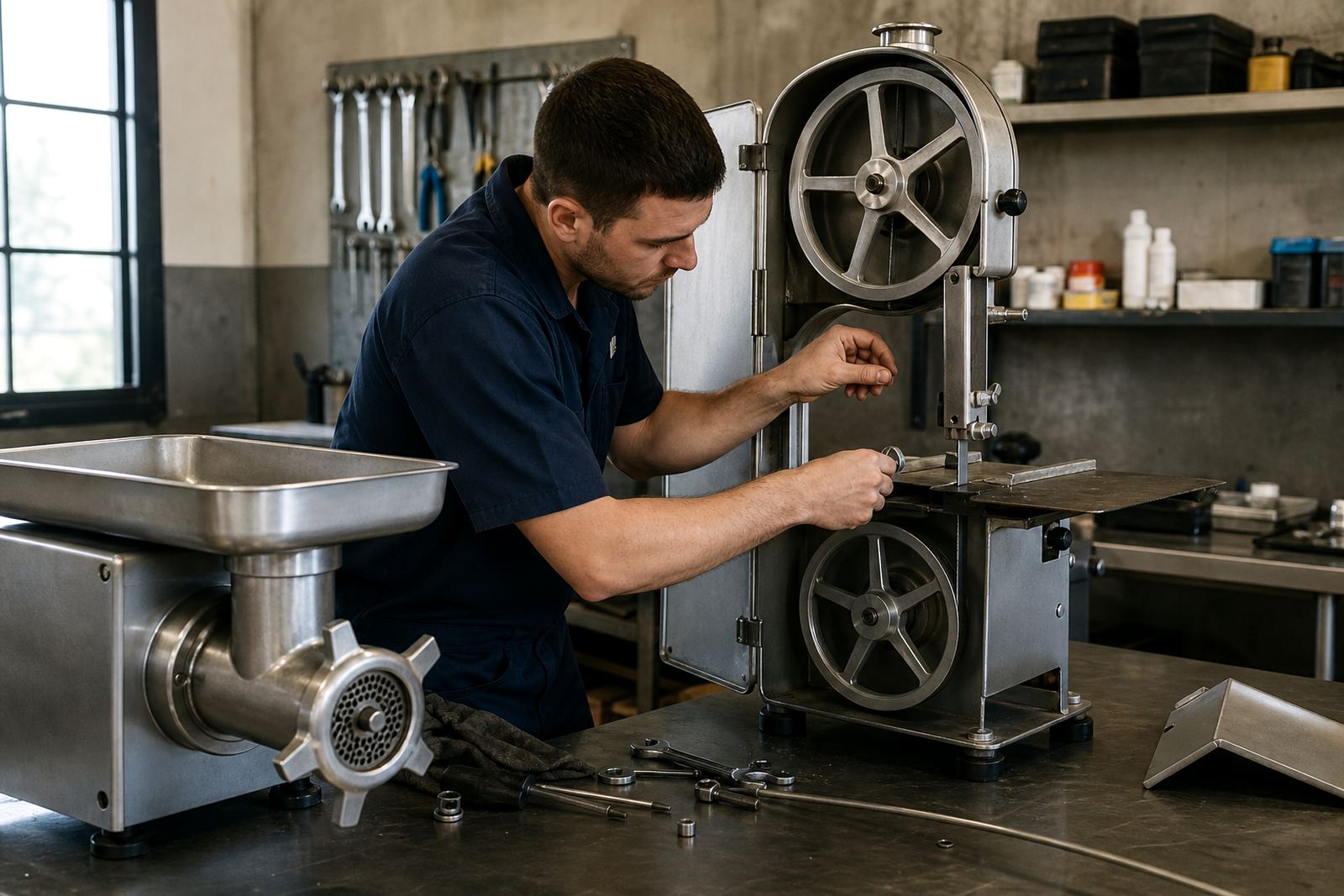
Start With A Clean Bench And A Clear Floor
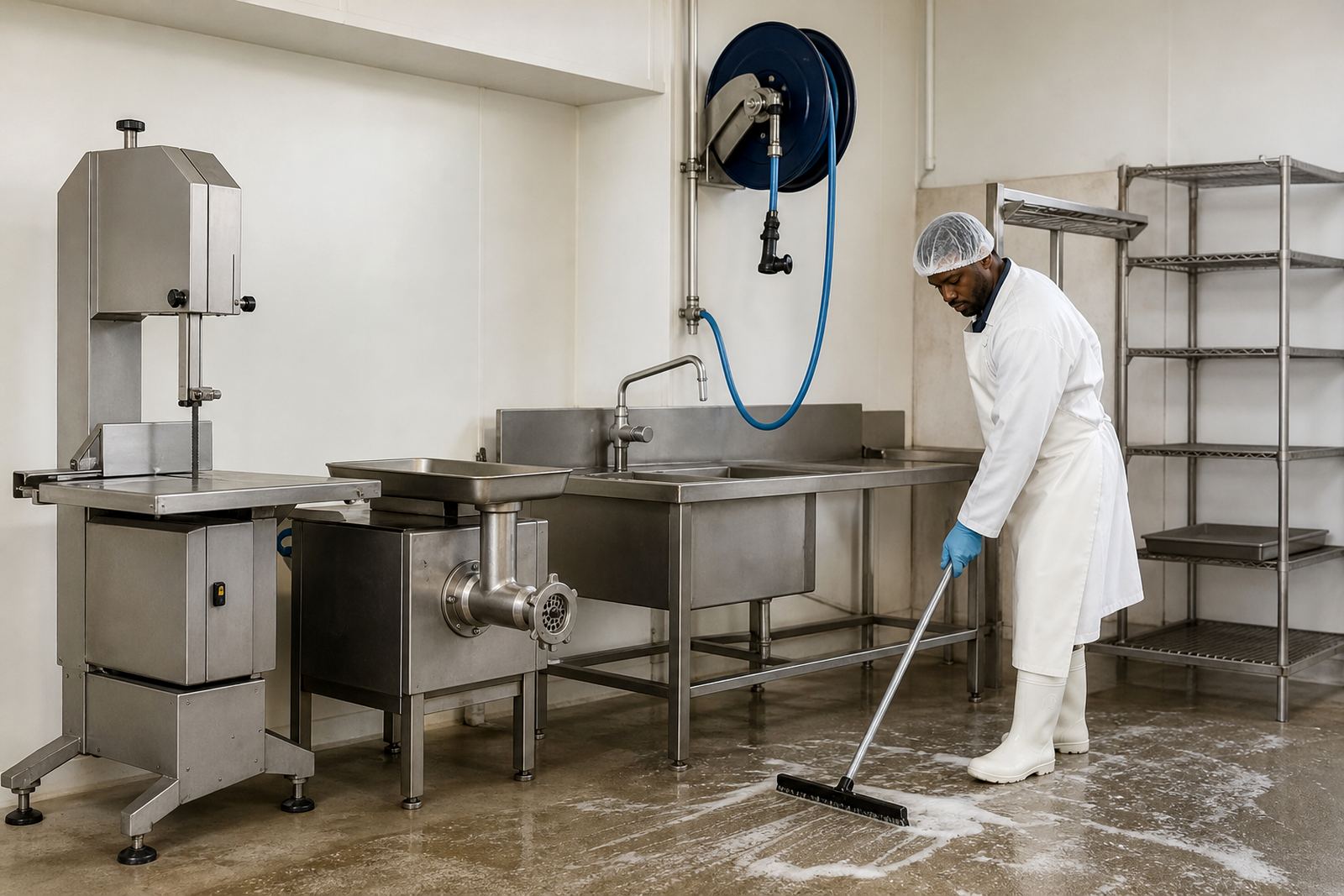
Before either machine is switched on, look at the work area first. Floors should be dry, drains clear, and any fat, water or offcuts removed from around the machine stands. In Free State winter mornings, condensation and cold metal can make surfaces slippery, so a quick wipe-down matters as much as the machine check.
Keep the area around the bandsaw and mincer open enough for safe movement. Knives, trays, packing material, cleaning cloths and spare parts should not be left where an operator can reach over moving parts. Good housekeeping is not extra work, it is part of the start-up routine.
- Remove waste from the previous shift
- Dry the floor around the machine base
- Check that lighting is bright enough for safe work
- Make sure there is space to feed product and collect cut meat
Check Guards, Covers And Switches Before Power Is Applied
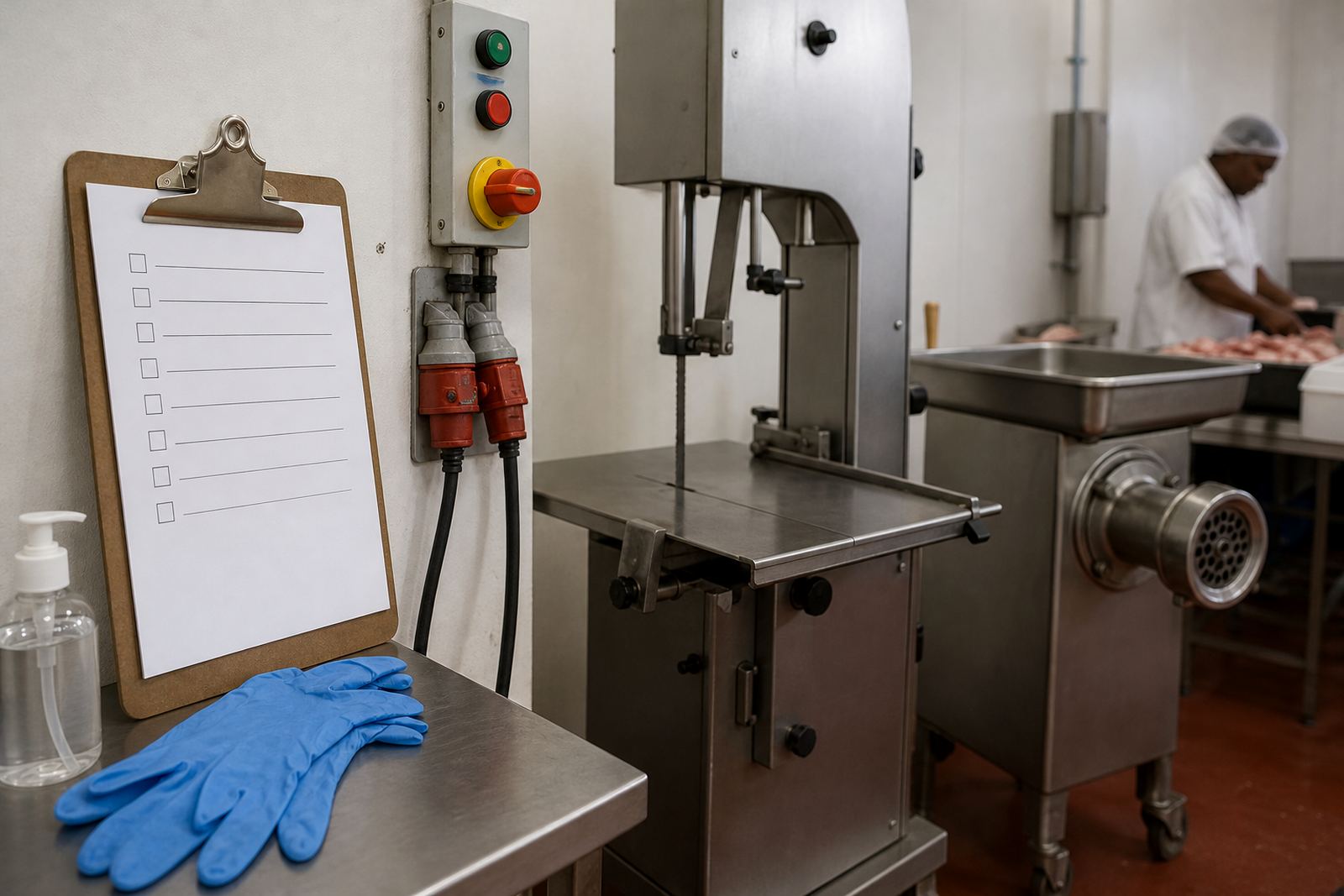
Every morning, confirm that all guards and covers are in place before the machine is plugged in or switched on. A bandsaw should never be started with a missing guard, and a mincer should only be used once the feed opening, pusher and cover are secure. If a guard was removed for cleaning or a parts change, it must be fitted back properly first.
Look at the power switch, plug and cable as well. Frayed cords, loose plugs and damaged switches can cause downtime or a shock risk, especially where equipment is moved around for cleaning. In some parts of Johannesburg and Pretoria, load-shedding and power restoration can also mean surges, so it is worth checking that the machine was left off before power returned.
- Confirm all guards are fitted
- Check that the stop switch works and is easy to reach
- Inspect cables, plugs and sockets for damage
- Make sure the machine was left in the off position overnight
Inspect Blades, Plates And Knives For Wear
Cutting parts decide how safely and efficiently the machine will work that day. A blunt bandsaw blade can force staff to push harder than needed, while a worn mincer plate or knife can give poor output and unnecessary strain on the motor. If the cut looks rough, the mince is uneven, or the machine sounds different from usual, stop and inspect before the rush starts.
Do not wait until the middle of a busy Saturday to deal with a dull blade or worn cutting set. Parts should be changed as soon as they stop giving a clean result. It saves time, helps protect product quality and lowers the chance of a breakdown callout later. That is especially useful for small butchers working in Kimberley, Welkom or Kroonstad where every trading hour counts.
- Check the bandsaw blade for damage, rust or poor tension
- Inspect the mincer plate and knife for wear or nicks
- Replace cutting parts that no longer give a clean finish
- Keep spare parts in a dry, labelled place
Do A Quick Clean Before The First Batch
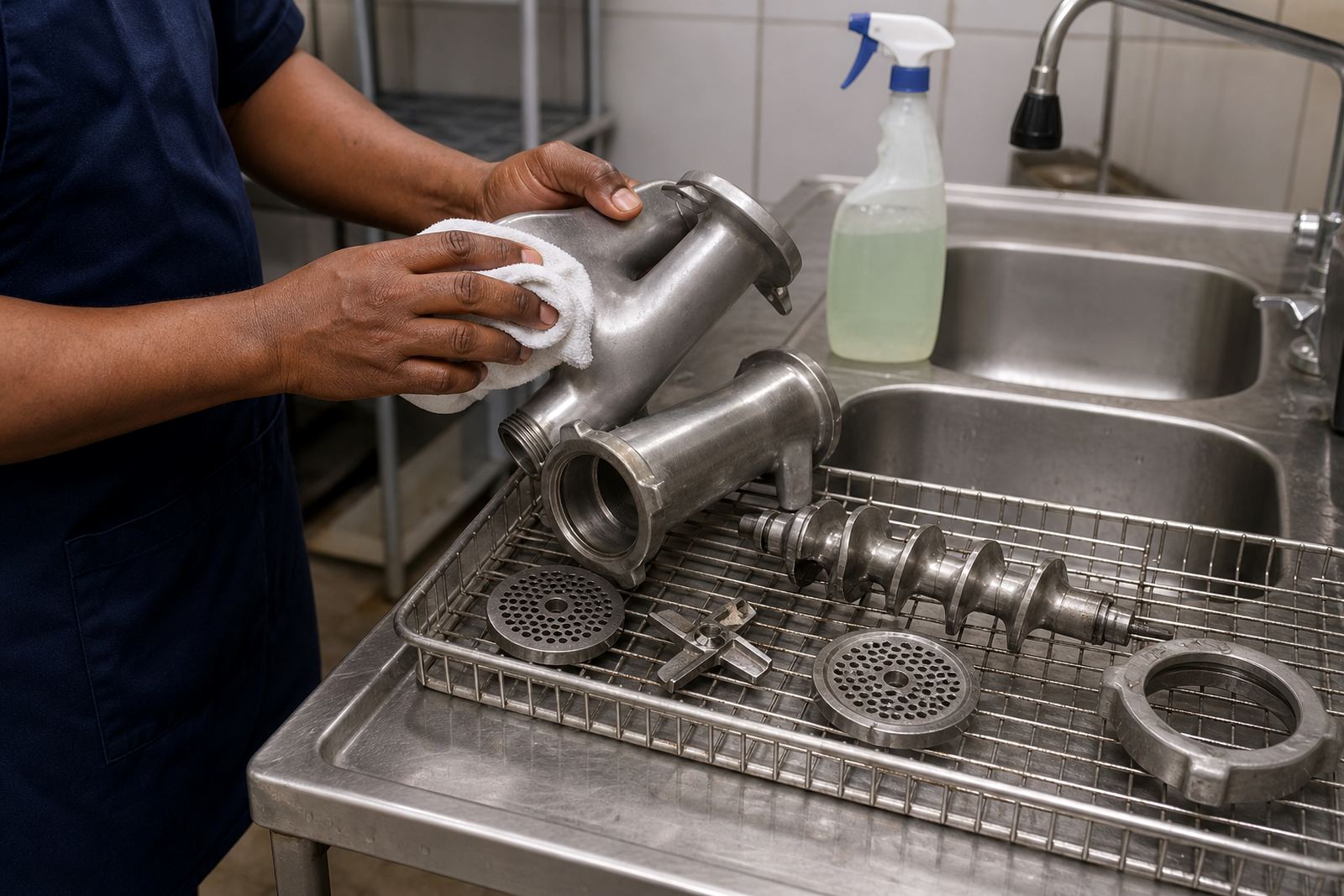
A proper clean does not begin at closing time only. Before the day starts, wipe food contact surfaces, feed trays and surrounding areas so that yesterday’s residue is not carried into today’s work. For mincers, this means checking that the throat, worm area and nearby surfaces are clean and ready. For bandsaws, make sure sawdust, bone dust and fat have been removed from the table, housing and splash points.
Use cleaning methods that suit the equipment and the site. Water should not be sprayed into areas where it can enter electrical parts. In coastal places like Durban or Cape Town, moisture and salt air can speed up corrosion, so dry the machine thoroughly after cleaning. In Bloemfontein’s drier climate, dust and fine particles still need to be cleared daily because they build up in working parts and around switches.
- Clean food contact surfaces before use
- Dry the machine fully after washing
- Avoid spraying electrical parts
- Remove residue from corners and under trays
Confirm Safety Gear And Operator Readiness
No machine should be started until the operator is ready too. Check that aprons, gloves where required, eye protection and slip-resistant footwear are in use. Loose clothing, dangling jewellery and unrestrained hair can catch on moving parts and should be dealt with before work begins. The person on the machine should also know where the stop control is and how to respond if product jams.
This is also the time to confirm who is working on which machine. If more than one person is on the floor, each operator should know their own task and the path for moving meat in and finished product out. A rushed handover at 6 am is how mistakes happen, especially when the phone rings and the queue starts building.
- Wear the correct PPE for the task
- Keep loose items away from moving parts
- Make sure the stop control is easy to reach
- Assign one trained operator per machine where possible
Record Small Faults Before They Become A Stop-Work Problem
Morning checks are not only for catching major faults. A strange noise, a slow start, a loose cover or a poor cut should be written down and reported straight away. Small issues often turn into longer downtime once the day gets busy. That is why many shops in Bloemfontein and the surrounding supply areas keep a simple fault book beside the prep area.
If the same issue comes back day after day, the machine may need servicing, a parts change or a callout from a technician. Preventive maintenance is usually cheaper than waiting for a breakdown, and it keeps the machine ready for regular work. MorCut Butchery supports bandsaw servicing, mincer servicing, blade replacement, plate and knife change, parts supply and operator training across South Africa.
A Bloemfontein Morning Example You Can Copy
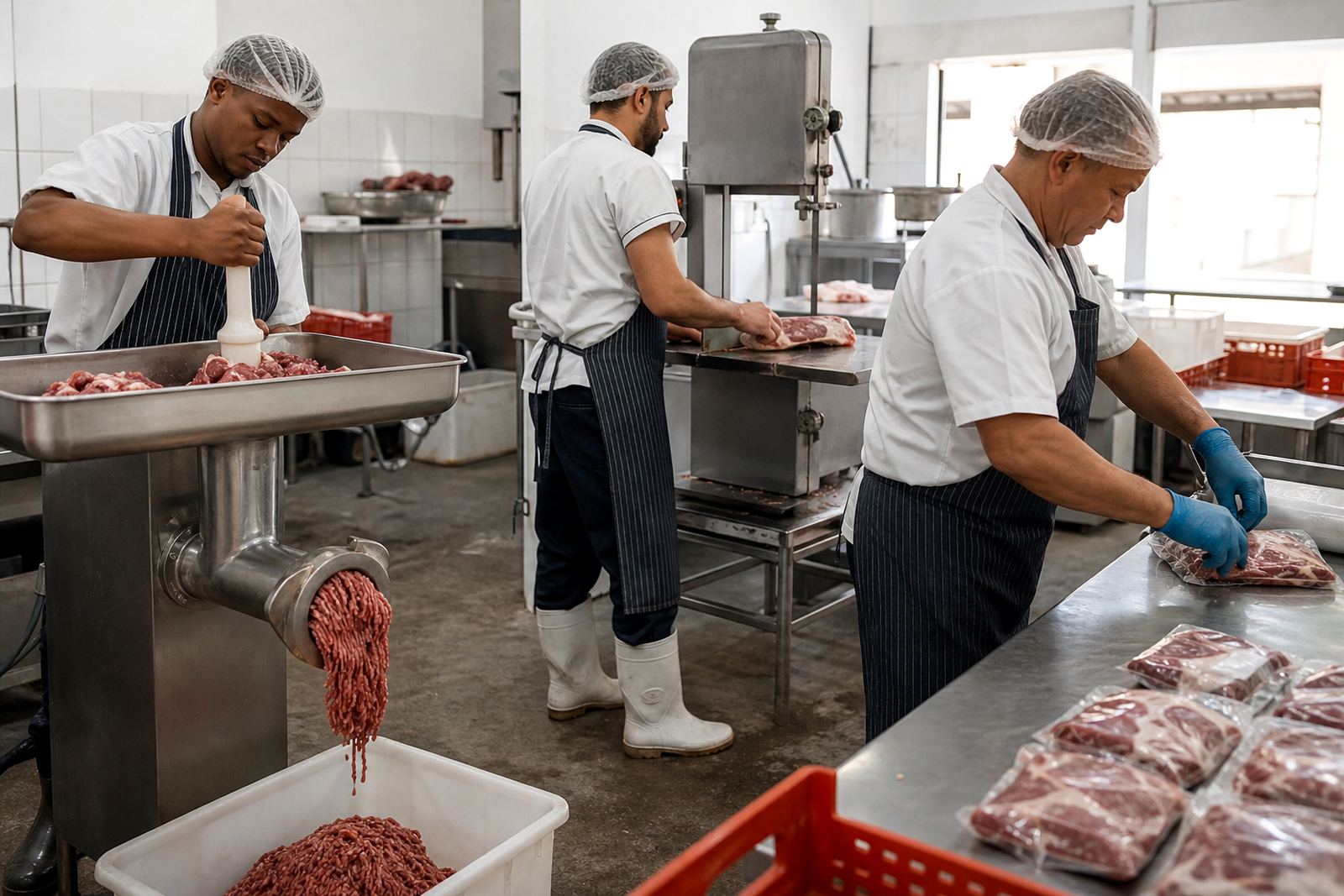
Picture a busy butchery in Hamilton, Bloemfontein, opening before the first customers arrive. The floor is dry, the bandsaw table is wiped, the mincer parts are clean, and the operator has already checked the guards and switches. A quick test shows the blade cuts cleanly and the mincer runs without strain, so the team can begin production with fewer interruptions.
That same routine works just as well in Johannesburg, Pretoria, Durban or Cape Town, whether you are running a home butchery or a larger commercial operation. The exact equipment may differ, but the morning habit stays the same: clean, inspect, test, record and only then start work. Simple steps done early are what keep the rest of the day steady.