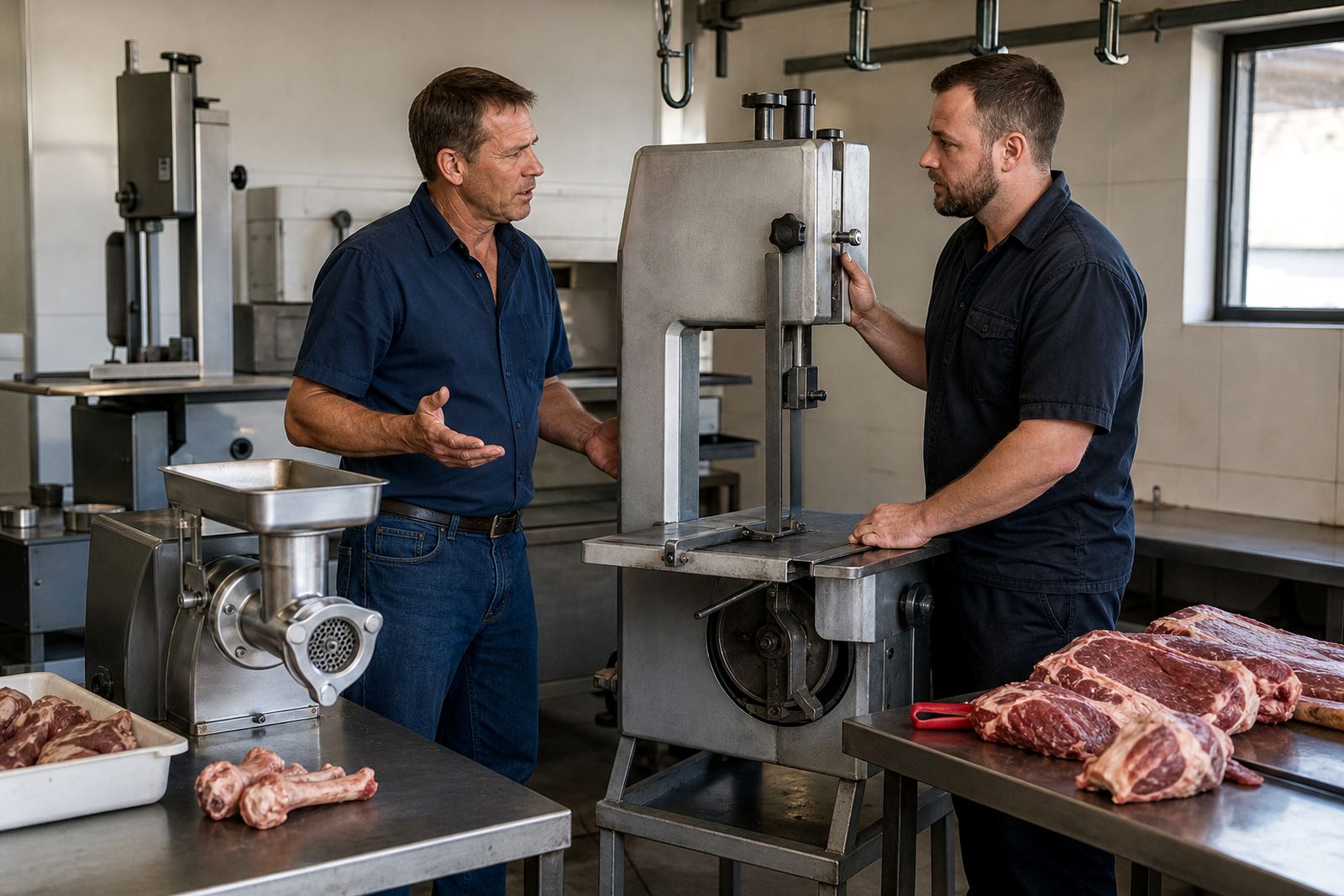


Why blade care matters in a working butchery
In a busy butchery, blades work hard. They touch bone, fat, sinew and cold meat, then they are washed, dried and put back to work again. If that care falls away, you start seeing rough cuts, extra waste and a machine that feels harder to control. Good blade care is not about being fussy, it is about keeping the process steady and the product looking right.
For bandsaws, the blade needs to track properly, stay clean and be checked often for wear. For mincers, the plate and knife must work as a matched set so the mince comes through evenly. When the cutting edges are dull or dirty, the machine has to work harder and the operator has to push more, which is never ideal in a hot room or during a rush. In places like Bloemfontein, where winter mornings can be dry and summer dust can creep in, a quick daily check goes a long way.
Daily checks before the first cut
A few minutes before opening can save a lot of trouble later. Start with a visual check and make sure the blade area is clean, dry and free from loose pieces of tissue or packaging. On a bandsaw, confirm that the guards are in place and that the blade is seated properly. On a mincer, check that the plate and knife are fitted correctly and that nothing is wobbling or sitting crooked.
- Look for visible dull spots, chips or bends on cutting edges.
- Make sure all guards are fitted before switching on.
- Check that the area around the machine is dry to reduce slipping.
- Use the right PPE, including gloves where suitable and protective clothing for the task.
- Keep cleaning cloths, brushes and tools close by so you do not leave residue on the machine.
If something does not look right, do not force it into service. A quick pause is better than a noisy breakdown halfway through a queue. This is especially important in smaller shops where one machine may carry the full load for the day.
Cleaning routines that protect the cutting edge
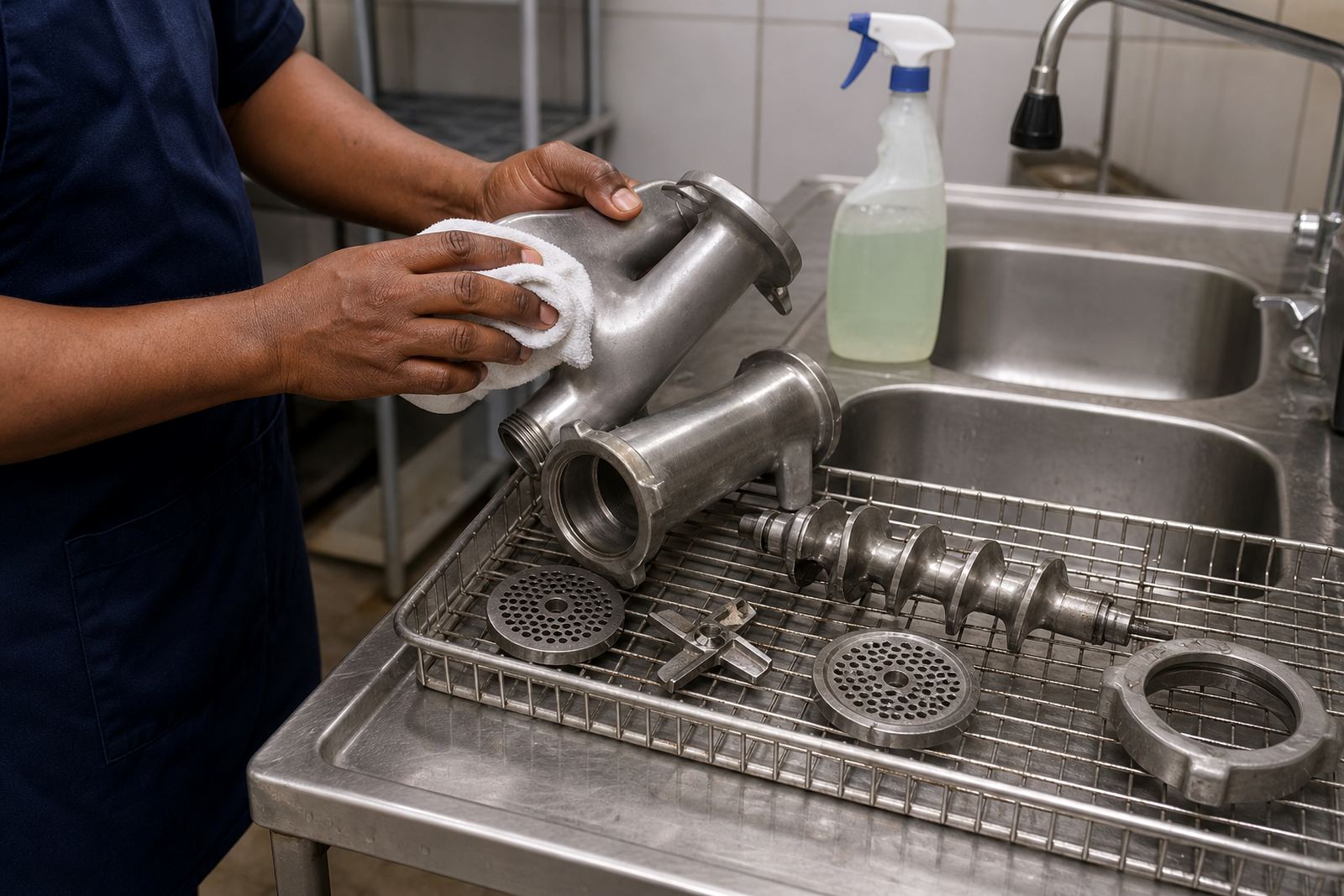
Cleaning is where many blades are damaged without anyone noticing. A blade that is scrubbed too harshly, left wet, or stored with residue on it will wear faster. After use, clean the machine according to the maker's instructions and remove all meat particles, fat and moisture. Pay close attention to corners, seams and the blade housing where dirt can hide.
Drying matters just as much as washing. In coastal centres like Durban and Cape Town, humidity can encourage rust if wet parts are put away too soon. Even inland, a damp blade can develop trouble overnight. Wipe parts dry and store them in a clean, covered place. If your cleaning area is busy, make sure staff do not stack trays, tubs or cartons against the machine where airflow is blocked.
- Use a soft brush rather than anything that can scratch the edge.
- Do not leave blades soaking unless the equipment guide clearly allows it.
- Rinse away cleaning residue so it does not sit on the metal.
- Inspect for signs of rust after washing and dry again if needed.
When to replace a bandsaw blade or mincer set
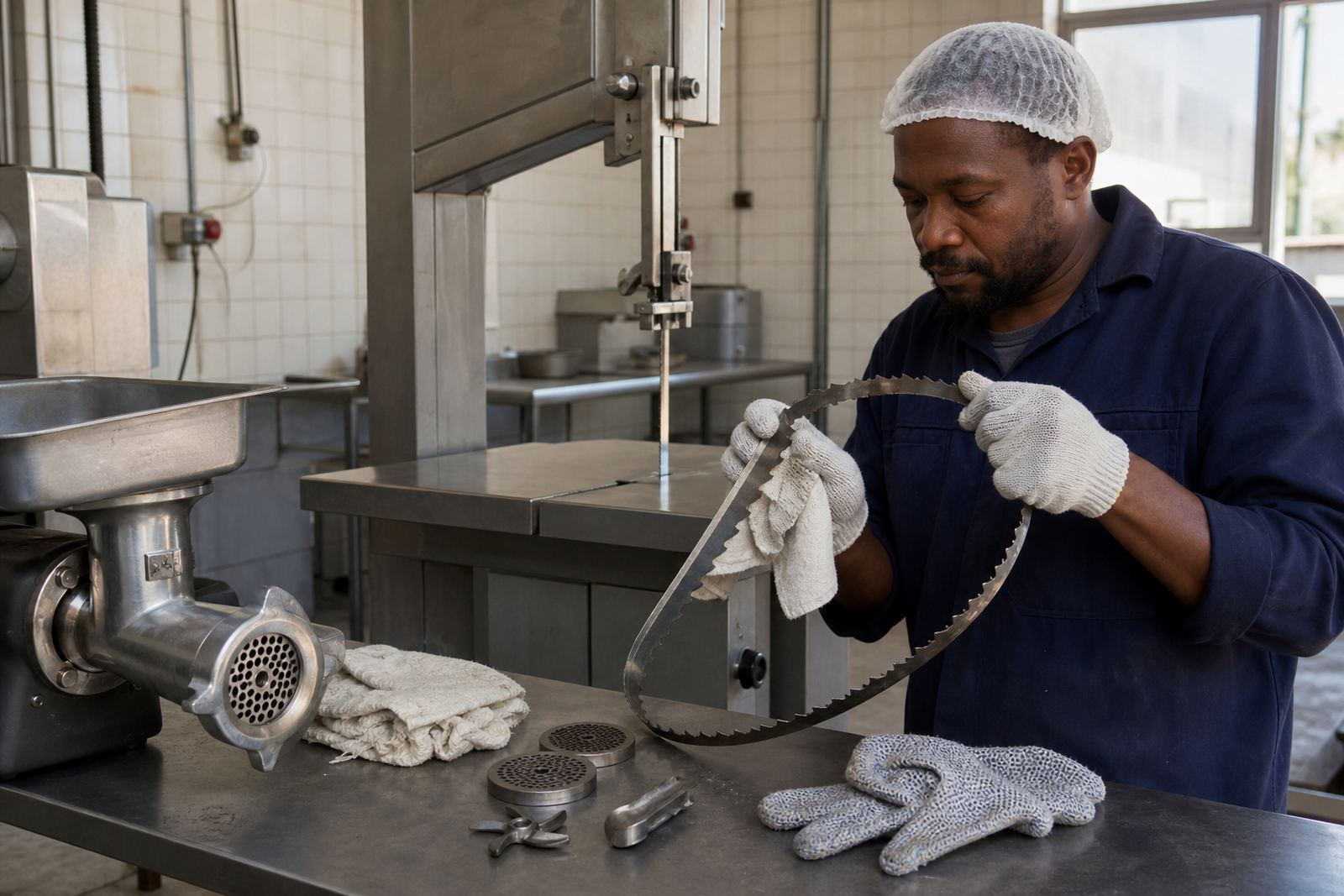
No blade lasts forever. If you notice tearing instead of cutting, more noise than usual or extra pressure needed to get the same result, it may be time to replace the cutting part. On a bandsaw, a blade that drifts, snags or leaves an uneven finish should be checked before it causes more damage. On a mincer, the plate and knife should be changed as a pair when wear becomes clear, because one worn part can spoil the performance of the other.
Some butchers try to stretch parts too far, especially when trading is tight or supplies are delayed. That can work against you. In Johannesburg or Pretoria, where shops may process high volumes, worn cutting parts can slow service quickly. In smaller towns like Kroonstad or Welkom, a tired blade can still cause the same waste, just with fewer hands available to catch the problem. If the cut quality has changed, treat that as a signal, not a small inconvenience.
- Replace when the cut becomes rough or uneven.
- Change matched parts together where required.
- Do not keep using damaged or bent cutting parts.
- Schedule a check if the machine starts straining or making unusual noise.
Safe handling habits that protect staff and equipment
Blade work should always be handled with care. A sharp edge is useful, but it must be respected. Keep hands clear of the cutting path and only handle blades when the machine is switched off and secure. Use proper lifting and removal methods so you do not drop or nick the blade during cleaning or replacement. A small knock can affect how the edge performs.
Training helps keep this routine consistent. Staff should know how to remove parts, how to fit them back correctly and what to look for during cleaning. A short demonstration can prevent repeated mistakes and save time for the whole team. In a butcher shop, one careless moment can affect the entire morning shift, so it helps to build good habits early.
- Switch off and isolate the machine before any maintenance.
- Wear the right gloves and protective gear for handling and cleaning.
- Keep children and untrained staff away from the working area.
- Return blades and parts to their proper place after cleaning.
A simple maintenance rhythm for busy shops
The easiest way to manage blade care is to make it part of the normal routine. Daily checks keep the machine ready. Weekly attention can catch wear before it becomes a bigger issue. Monthly servicing helps confirm that guards, fittings and cutting parts are all doing their job. For shops that trade hard, especially over weekends or before holidays, preventive maintenance is often cheaper than emergency repairs.
A Bloemfontein shop serving a Saturday rush may notice by midday that the bandsaw is not giving the same finish it had on Monday. That does not always mean the whole machine is at fault. Often it is the blade, the fit, or the build-up left behind after repeated use. A sensible routine, with clean parts and proper replacement intervals, keeps things moving and reduces stress on the operator too.
At MorCut Butchery in Hamilton, Bloemfontein, we work with commercial and home butchers across South Africa who want practical support on blade care, servicing and setup. From supply and delivery to installation, training and breakdown callouts, the aim is straightforward: cleaner cuts, steadier operation and fewer avoidable stoppages.