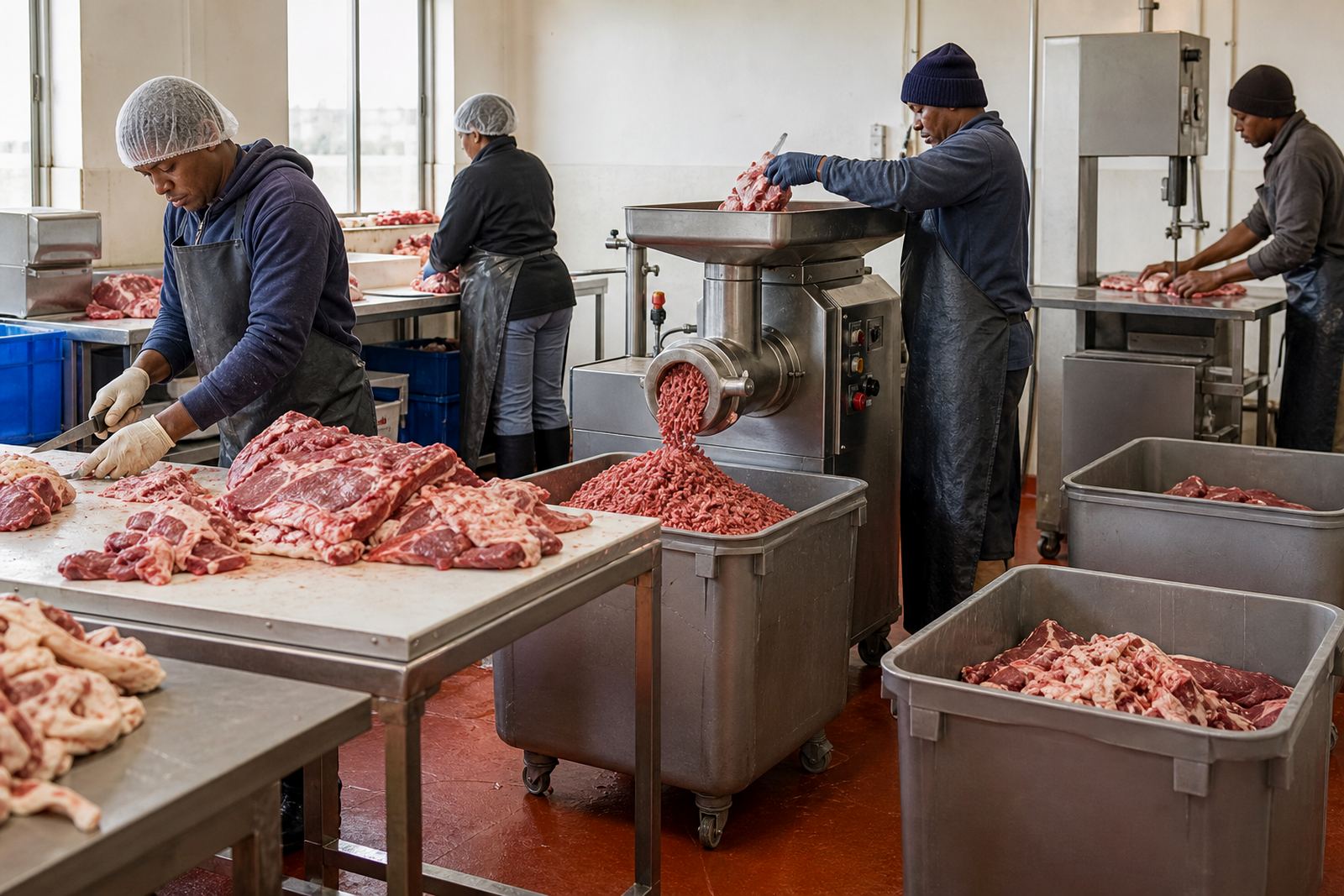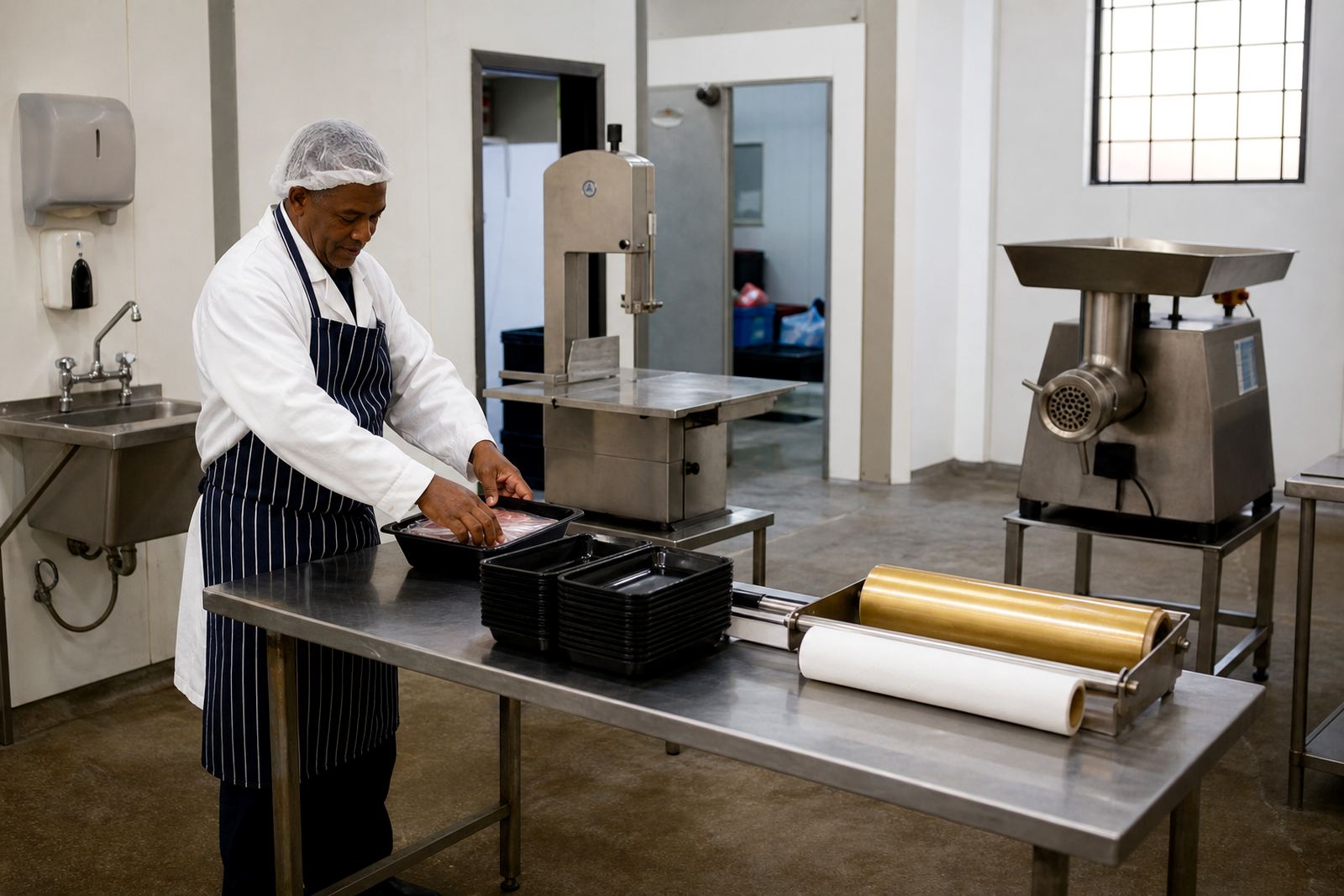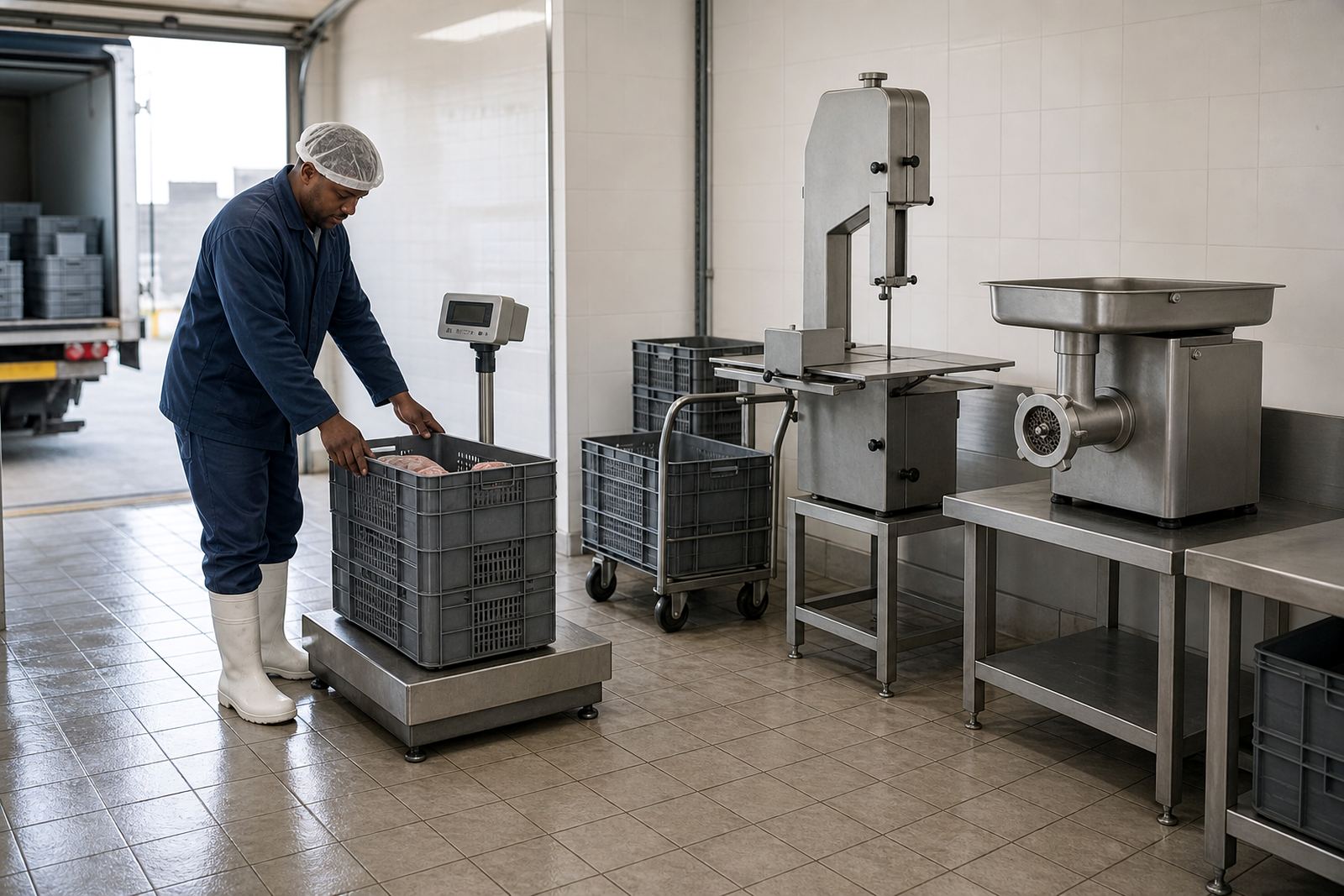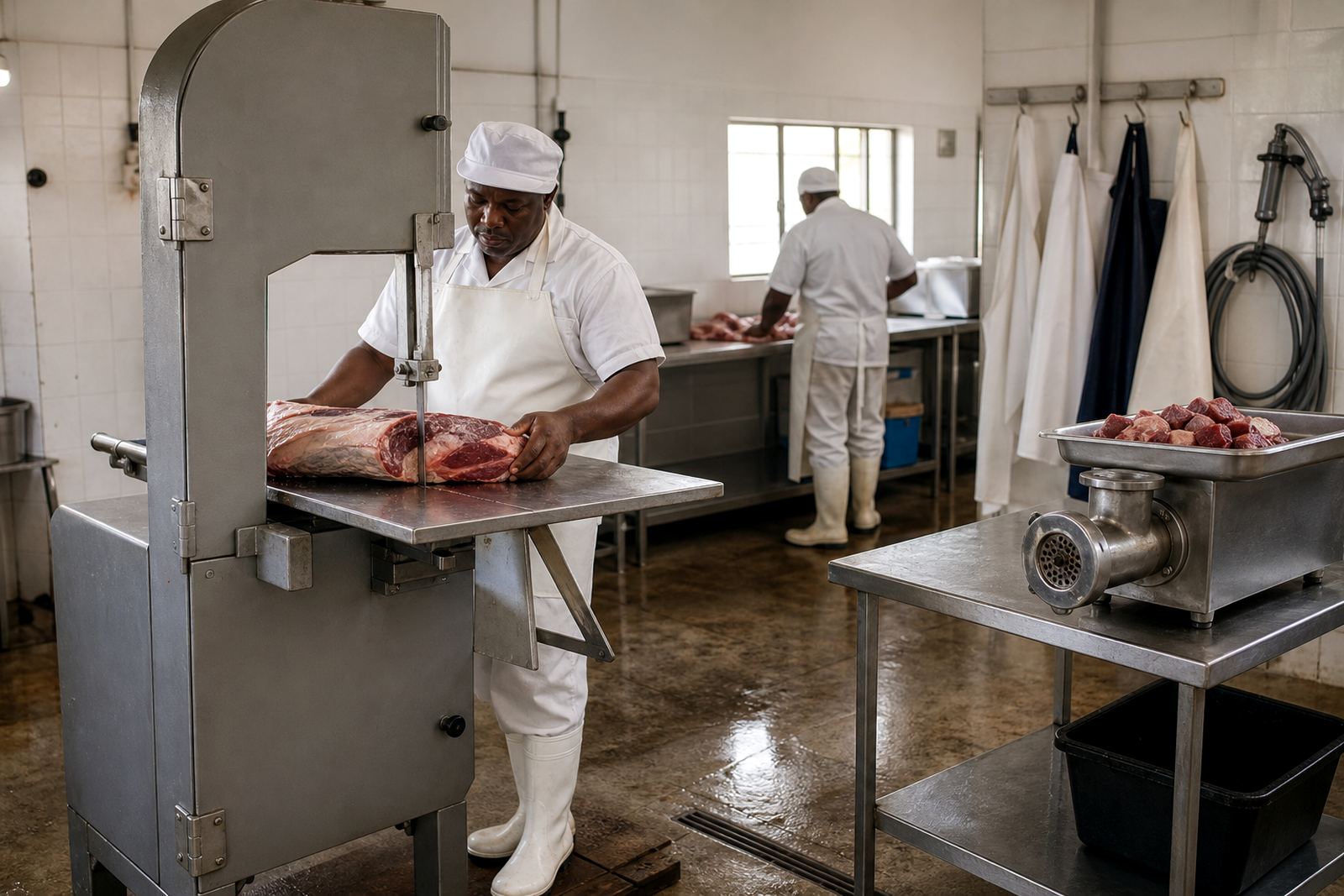


Built for daily butchery cutting
A heavy duty bandsaw is made for frequent meat cutting where speed, control and a straight finish matter. In a commercial cutting room it helps you handle carcass portions, bone-in work and general breakdown tasks without pushing the operator too hard. For home butchers and small processors, it gives a safer and neater result than trying to manage the same work by hand.
These machines are suited to butcheries, meat rooms, farm shops and processing areas in Bloemfontein, Johannesburg, Pretoria, Durban, Cape Town and surrounding towns. They are also useful where the work load changes through the week and you need equipment that can keep up during busy periods, then still clean down properly at closing time.
Sizes and options to consider
Heavy duty bandsaws are not one-size-fits-all. The right choice depends on the space available, the type of meat you cut and how many people use the machine during the day. Some buyers need a compact floor unit for a smaller shop, while others want a larger machine with a wider cutting area and stronger handling for regular commercial use.
- Floor standing or compact format, depending on your room layout
- Fixed or movable table arrangements for easier loading
- Blade and frame setup matched to the work you do most often
- Manual feed control for accurate handling during cutting
- Options that suit single-operator or shared work areas
When choosing a model, think about the mix of bones, frozen product and general portioning you expect to do. A machine that suits one shop in Hamilton may not suit a larger outlet in Pretoria or a busy supply point in Durban, so it is worth matching the saw to the actual routine.
Where a bandsaw works best
These machines suit butcheries that need a dependable cutting point in a clean, controlled area. They are common in wholesale rooms, retail butcheries, meat prep areas and smaller operations that want consistent portioning. If your team works under time pressure, a well selected bandsaw can make daily cutting easier to manage and reduce strain on the operator.
For coastal areas like Cape Town and Durban, regular cleaning matters even more because moisture and salt in the air can affect metal parts over time. In inland towns like Bloemfontein, Kimberley, Welkom and Kroonstad, dust and dry conditions can also build up around moving parts. Either way, the machine should be cleaned properly and checked often, not just when something goes wrong.
- Commercial butcheries with regular carcass processing
- Home butchers needing cleaner, safer controlled cuts
- Meat rooms and supply points with limited floor space
- Operations that want repeatable cutting with less waste
Installation, power and site readiness
Before installation, the site should have enough floor space, a level base and easy access for cleaning around and behind the machine. You also need to plan for safe operator movement, nearby wash-down access and enough room to load product without crowding. In busy shops, poor placement can slow the whole room and create avoidable risks.
Power needs depend on the model and the work area setup, so it is important to confirm the electrical supply before ordering. In areas where load-shedding affects trade, many buyers also ask how to plan their processing time around available power. If you are fitting the saw into an existing butchery, it helps to check the supply, switch gear and local municipal rules before delivery day. We also assist with setup guidance so the machine is ready for practical use, not just placed in the room.
- Check floor space and operator movement before delivery
- Confirm electrical supply and switch gear requirements
- Allow room for cleaning, loading and safe blade access
- Plan around load-shedding and peak trading hours
Care, cleaning and servicing
Good care keeps a bandsaw working properly and helps it stay safe for daily use. The blade, guides, table area and guard points should be cleaned after use, then checked for wear before the next shift. If cleaning is rushed, fat and meat residue can build up and affect cutting quality, which is where many avoidable faults begin.
Simple routine care usually includes cleaning after use, checking blade condition, keeping guards in place and making sure the machine is not run by people who have not been trained. Operators should wear the right PPE and keep hands clear of the cutting path. If the saw starts cutting poorly, making unusual noise or leaving rough edges, it is time for servicing rather than forcing another shift through it.
- Clean all food contact areas after every use
- Keep guards fitted and use PPE at all times
- Check blade wear, tension and alignment regularly
- Book preventive maintenance before faults become downtime
What to check before you order
Before placing an order, it helps to confirm the kind of work the saw must handle, the room where it will sit and who will operate it each day. A machine for a small home setup will be judged very differently from one used in a commercial prep room. The better the brief, the easier it is to match the right machine and accessories to your needs.
It also helps to think about parts and support. Blade replacement, cleaning demonstrations, servicing and breakdown callouts all matter when you rely on the machine for business. If you are in Bloemfontein, Johannesburg, Pretoria, Durban, Cape Town, Kimberley, Welkom or Kroonstad, we can help with supply, delivery and setup support so the installation is practical from the start.
- Type of meat and cutting routine
- Available floor space and power supply
- Operator experience and training needs
- Need for spare blades, servicing or callouts
Key facts
| Machine type | Heavy duty butchery bandsaw for commercial and home use |
|---|---|
| Typical use | Meat portioning, carcass breakdown and controlled bone-in cutting |
| Configuration options | Varies by model, including table layout and cutting area setup |
| Power needs | Confirm supply requirements before installation |
| Care requirements | Cleaning, blade checks, guard use and routine servicing |
| Support available | Delivery, setup, training, preventive maintenance and breakdown callouts |