

A Practical Table for the Pack and Move Stage
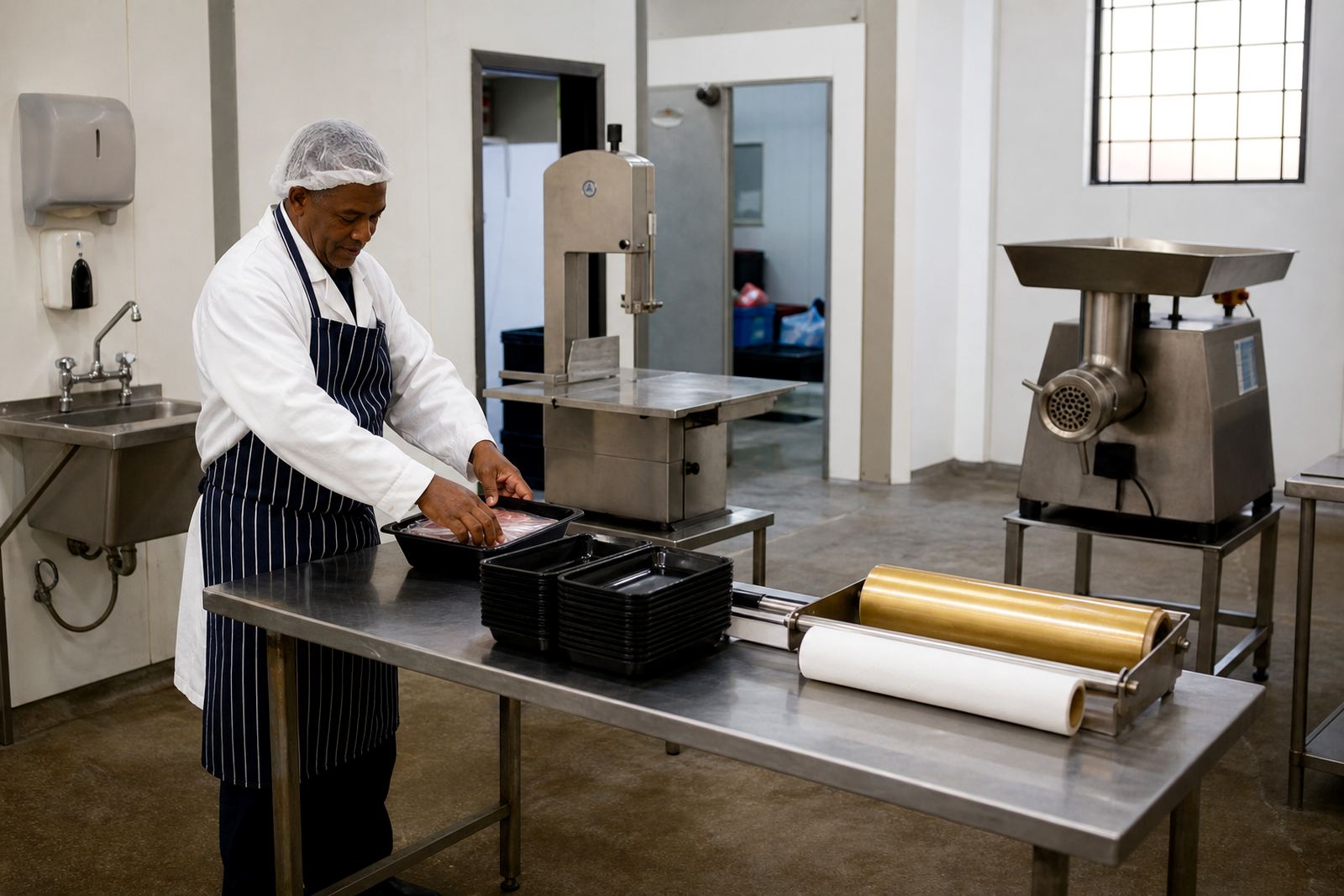
Packing tables are used after the main cutting or mincing work is done, when product needs to be grouped, checked, wrapped and moved on to the next step. They are built for easy cleaning and steady daily use, with a work top that supports containers, trays and small tools without wobble. In a butchery, that matters because the packing area often becomes the busiest part of the room during peak trading hours.
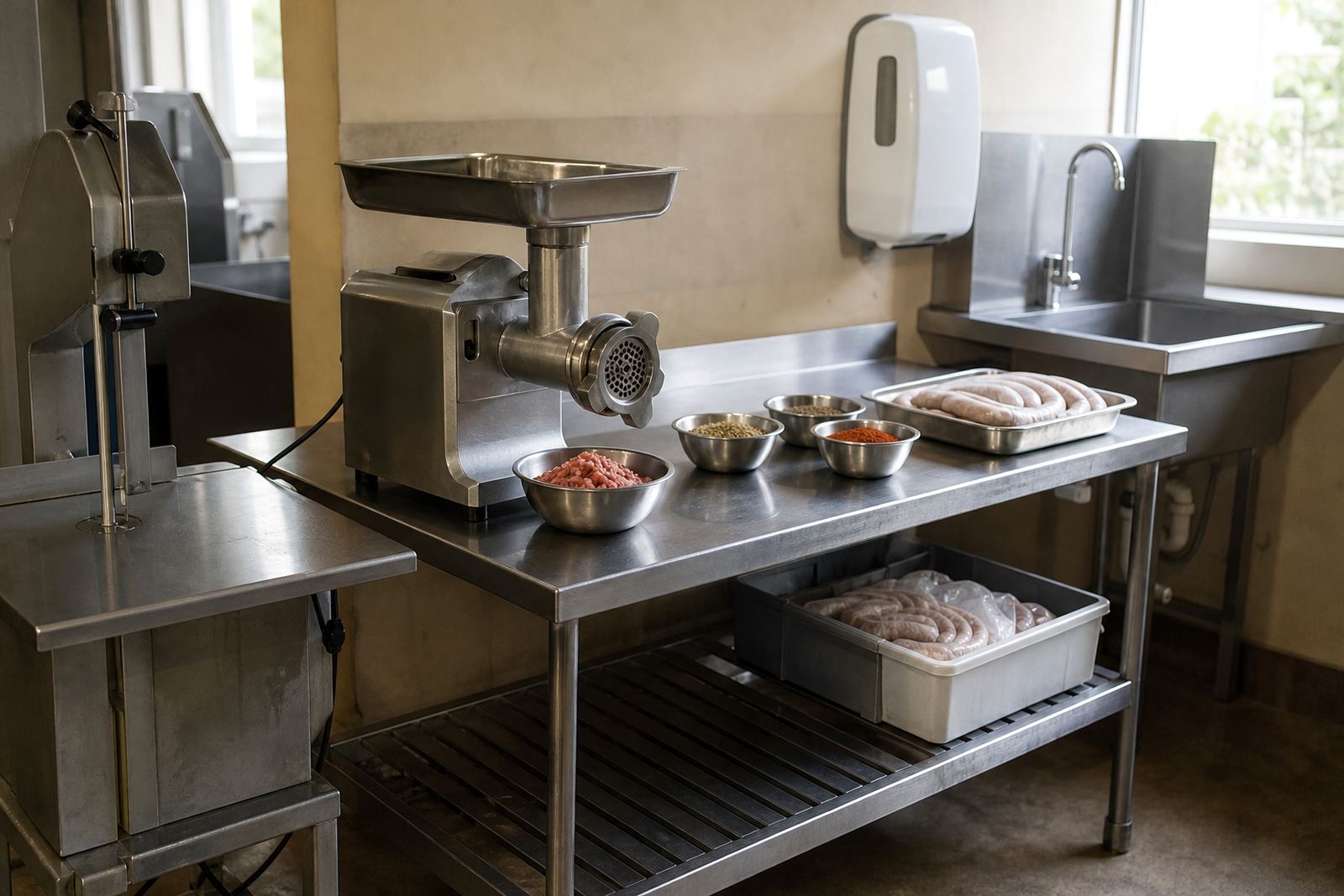
These tables suit commercial butcheries, home butchers working from a registered prep space, and smaller operations that need a proper surface instead of using mixed household furniture. They are also useful where space is tight and the packing point must sit close to a fridge, scale or wrapping area. Good layout helps keep the room moving, and cuts down on unnecessary steps between the bandsaw, mincer and final packing station.
Sizes and Layout Options That Fit the Room
Packing tables are normally chosen to suit the space available and the number of staff using them. Some sites need a compact table for one person and a small tray flow, while others need a longer surface for sorting larger volumes. The right height and length should let staff work comfortably without bending too much or crowding the packing line.
- Single-user or multi-user workstations
- Open under-shelf or plain leg frame layouts
- Stainless steel tops for wash-down areas
- Galvanised or powder coated frames where suitable
- Optional lower shelf for trays, wrapping materials or crates
- Custom sizing to fit narrow prep rooms or larger production floors
For Bloemfontein, Johannesburg, Pretoria, Durban and Cape Town, we help customers match the table to the room, the workflow and the floor space already in use. A table that is too small slows the pack line down, while one that is too large can block movement and make cleaning harder.
Where Packing Tables Suit Best
These tables suit shops and prep rooms that handle meat after cutting, mincing or portioning. They are commonly used near chilling areas, wrapping stations and dispatch points. In a commercial butchery, the table should sit where staff can move product quickly without crossing wet floors or busy foot traffic. In a smaller setup, it helps to place the table near the cleaning point so the same surface can be wiped down between tasks.
Packing tables are also a good fit for establishments that need tidy separation between raw handling and final presentation. In coastal towns like Durban and Cape Town, choosing materials that clean down easily helps with humidity and day to day moisture. In Free State towns like Bloemfontein, Welkom and Kroonstad, the focus is often on practical space use and a hard wearing surface that can handle daily movement in and out of the prep room.
- Butchery packing and wrapping areas
- Back-of-house prep rooms
- Small home butchery operations
- Independent shops and local meat rooms
- Rooms with limited counter space
Installation, Power and Site Readiness
Packing tables do not need power or gas, which makes them simple to place and easier to move than powered equipment. Even so, the room still needs proper planning. The floor should be level, the surface should be stable, and there must be enough space around the table for cleaning and staff movement. If the table is going next to a mincer, bandsaw or wrapping point, the layout should keep cables, plugs and wet cleaning areas separated as far as possible.
Where the table is part of a larger setup, our team can assist with delivery and setup through our South African service areas. That includes Bloemfontein Supply, Johannesburg Delivery, Pretoria Delivery, Durban Delivery, Cape Town Delivery, Kimberley Supply, Welkom Supply and Kroonstad Supply. For better room planning, we also advise on how the table should sit with the rest of the butchery line, especially where municipal cleaning requirements and food handling controls must be followed.
Cleaning, Care and Routine Servicing
A packing table should be cleaned after use and checked regularly for loose fittings, worn feet or surface damage. Food residue must not be left to build up on corners, joints or under shelves. Use the correct cleaning products for the material, and avoid harsh handling that can scratch the work top or lift the finish on the frame. In wet rooms, dry the table properly after wash-down so moisture does not sit on the surface longer than needed.
- Wipe down after each packing session
- Check screws, bolts and feet for movement
- Inspect welds and joints during routine cleaning
- Keep the area free of clutter and old packaging
- Use gloves and other PPE when cleaning near sharp tools
While a packing table itself does not need mechanical servicing, it should form part of the wider maintenance routine for the butchery. Our team also supports related equipment with servicing, breakdown callouts, preventive maintenance and operator training. That matters in shops where the same staff handle the table, the bandsaw and the mincer in one shift.
What To Check Before You Order
Before placing an order, measure the available floor space carefully and think about how the table will be used during a normal trading day. A good packing table should suit the number of staff, the size of trays or containers used, and the route product takes from cutting to final pack. It should also leave enough space for easy cleaning around and underneath the frame.
It helps to confirm the work top material, frame finish, shelf layout and whether you need a compact or larger format. If the table is going into a room that already has a bandsaw, mincer or cold room nearby, the final position should be planned with the whole workflow in mind. If you are not sure what fits best, our sales team can help you choose a practical option that suits the room and the daily load.
- Room measurements and doorway access
- Height and working comfort for staff
- Top material and finish for cleaning needs
- Open frame or shelf below
- How the table will fit with nearby equipment
- Delivery address and setup requirements
Key facts
| Product type | Packing table for sorting, packing and prep work |
|---|---|
| Use | Post-cutting and post-mincing work surface |
| Top options | Stainless steel or other suitable hygienic surface options |
| Frame options | Steel frame layouts for commercial or home butchery use |
| Power or gas | Not required |
| Ordering | Choose size, finish, shelf layout and delivery area |