

What Receiving Scales Do in a Busy Butchery
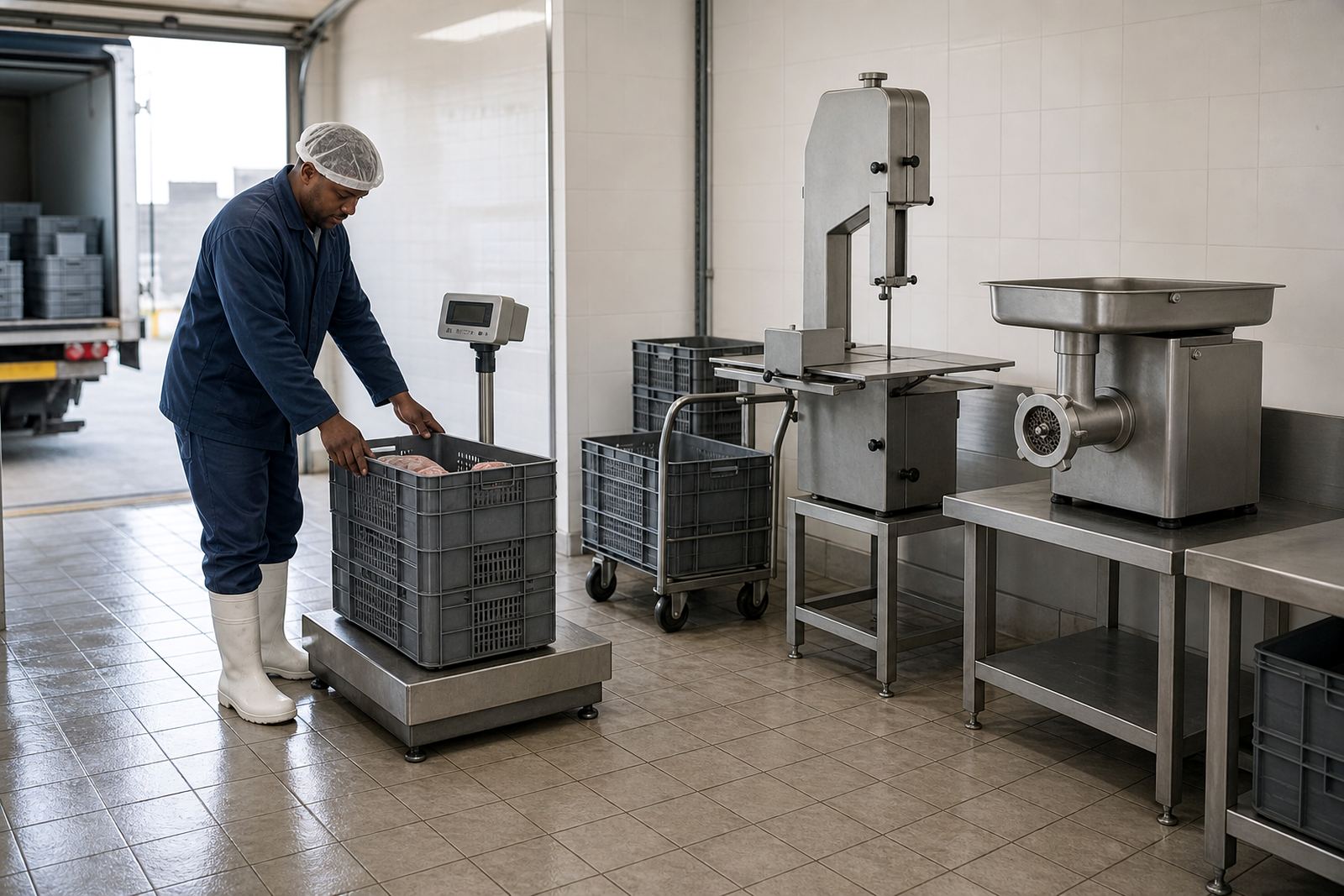
Receiving scales are used at the point where stock arrives, gets checked and is prepared for the work area. In a butchery, that usually means weighing cartons, trays, primal cuts, trim and other incoming items before they are put away or sent on for cutting. The aim is simple, keep records accurate, reduce waste and make sure the prep room stays orderly.
These scales are handy for both commercial and home butchers because they help with intake control as well as daily organisation. When stock arrives from suppliers, or when product is moved between cold room, prep bench and display area, a scale gives you a quick check on weight and consistency. That matters in a trade where margins are tight and meat handling has to stay clean and calm, especially when the power is unstable during load-shedding and the workflow has to carry on without confusion.
Sizes and Options That Suit Different Workspaces
Receiving scales are available in different platform sizes and display styles to suit smaller home setups, medium butcheries and busier commercial receiving points. Some units are compact for tighter prep areas, while others are built with a wider platform for heavier crates, cartons and bulk stock. A separate display can be useful where the operator stands a little away from the weighing point, and a backlit readout helps in dim rooms or early morning receiving.
- Compact platform options for smaller prep rooms and limited counter space
- Mid-size platforms for regular incoming stock and everyday use
- Wider weighing surfaces for cartons, trays and mixed deliveries
- Digital readouts for quicker checks and easier reading
- Simple tare function for containers, liners and trays
- Stainless or easy-clean finishes for food areas
When choosing, think about the size of the items you receive most often, how much room you have near the cold room or prep bench, and whether the scale will be moved around or kept in one place. In many Bloemfontein and Free State butcheries, space is often used carefully, so a practical footprint matters just as much as weighing capacity.
Where Receiving Scales Fit Best
Receiving scales work well at the back entrance, in the prep room, near the cold room or at a separate stock check point. They are useful wherever goods are checked before being stored or processed. For commercial butcheries, this can mean a dedicated receiving area that keeps raw product away from retail counters. For home butchers, it might be a small clean corner with enough room for a tray, a sanitiser spray bottle and a scale stand.
They also help with day-to-day organisation. If you are portioning, separating trim or checking stock against an order, a scale makes the process more controlled. That can save time when the team is busy and stops people from guessing weights. In humid coastal towns like Durban or salt-air environments near Cape Town, keeping the unit off wet floors and wiping it down properly after use helps it last longer. In municipal areas where inspection and hygiene standards are taken seriously, a tidy receiving station also helps support cleaner working habits.
- Best for incoming stock checks and prep-room sorting
- Useful beside a cold room or receiving door
- Suitable for retail back areas and small production rooms
- Helpful where stock records and order checks must stay accurate
Installation, Power and Day-to-Day Setup
Most receiving scales are straightforward to place and do not need complicated installation. The main things to get right are a level surface, enough space around the unit and a clean area that is easy to maintain. If the scale is digital, it will need a reliable power source or batteries, depending on the model. In places where load-shedding is part of the daily routine, a unit that can run on battery backup or low-power use is often easier to manage.
There is usually no gas requirement for a receiving scale, but you should still plan the setup carefully. Keep the unit away from dripping water, direct spray and busy foot traffic. If the floor is uneven, the readings can become unreliable, so a proper stand or fixed position is worth considering. The scale should sit where product can be loaded and removed without strain, and where staff can clean under and around it. If you are setting up in Bloemfontein, Johannesburg, Pretoria, Durban, Cape Town or smaller centres like Kimberley, Welkom and Kroonstad, the same rule applies: keep the area practical, dry and easy to reach.
Care, Cleaning and Servicing That Keep Readings Steady
Receiving scales need regular cleaning because they are used around raw meat, packaging, ice and moisture. Wipe the platform after each use with a food-safe cleaner and dry it properly. Do not hose the unit down unless it is designed for that, and avoid letting liquid sit around the display or buttons. A scale that is cleaned daily and checked often will usually stay more dependable than one that is left with crumbs, fat or packing debris on the platform.
Basic servicing should include checking for damage to the load area, verifying that the display is easy to read and making sure the unit still returns to zero correctly. If readings start to drift, or if the scale is not sitting flat, it should be looked at before it causes stock errors. For butcheries that rely on regular receiving, preventive maintenance can save time and avoid hassle when orders are moving fast. General safety matters too, keep guards in place where relevant, wear PPE when handling raw product and train staff to clean up spills straight away.
- Clean and dry after each receiving session
- Check for level placement and stable readings
- Keep liquids away from the display and controls
- Arrange servicing if the readings become inconsistent
What to Check Before You Order
Before ordering a receiving scale, think about where it will sit, what you will weigh most often and how the team will use it. Check the size of the platform against your usual trays and cartons, the power arrangement in the room and whether you need a simple display or a separate readout. It is also worth considering how easy the scale is to clean, because a unit that is awkward to wipe down can slow the whole routine.
You should also confirm whether you need a model for light daily receiving or a more practical setup for repeated stock handling. If the unit is going into a busy butchery, ask about delivery and setup support, as well as servicing and parts availability. When ordering, it helps to be clear about the room size, the type of stock handled and whether staff need training on correct use and care. That way, the scale arrives suited to the job rather than being adjusted after the fact.
- Platform size and available floor space
- Power supply or battery use
- Display visibility in your work area
- Ease of cleaning and daily maintenance
- Expected stock type and daily workload
- Need for setup, training or servicing support
Supplied for Butcheries Across South Africa
From Hamilton in Bloemfontein, MorCut Butchery supplies receiving scales for commercial and home butchers who want cleaner stock handling and better prep-room control. We work with butcheries in Bloemfontein and across South Africa, including Johannesburg, Pretoria, Durban and Cape Town, with delivery and setup support where required. The same applies to branch and supply areas such as Kimberley, Welkom and Kroonstad.
Clients get in touch through the enquiry form on our contact page, and we can assist with product choice, delivery planning and general care advice. If your receiving area needs a practical weighing solution that fits the way your butchery works, we can help you choose a scale that matches the space, the workload and the daily routine.
Key facts
| Use | Incoming stock handling, prep-room organisation and stock checks |
|---|---|
| Typical format | Compact, mid-size or wider platform options |
| Display | Digital readout or separate display, depending on model |
| Power | Mains powered or battery-supported options, model dependent |
| Finish | Easy-clean surfaces suited to food handling areas |
| Best fit | Commercial butcheries, home butchers and receiving points |