

Westdene Brief And Space Limits
The client wanted a practical home butcher setup that could handle regular processing without taking over the whole work area. The room in Westdene had limited floor space, a single main prep point and a need to keep walking paths clear for safe movement around the equipment.
The brief was straightforward: fit a bandsaw and mincer in a way that made sense for home use, keep cleaning access open, and avoid placing the machines where splashes or busy foot traffic would become a problem. In Bloemfontein, where summer dust and winter dryness both affect cleaning routines, it also made sense to plan for simple wipe-downs and quick end-of-day wash-up.
- Client type: home butcher
- Area: Westdene, Bloemfontein
- Main need: compact layout with easy cleaning access
- Focus: safe use, service access and practical workflow
What We Supplied And Set Up
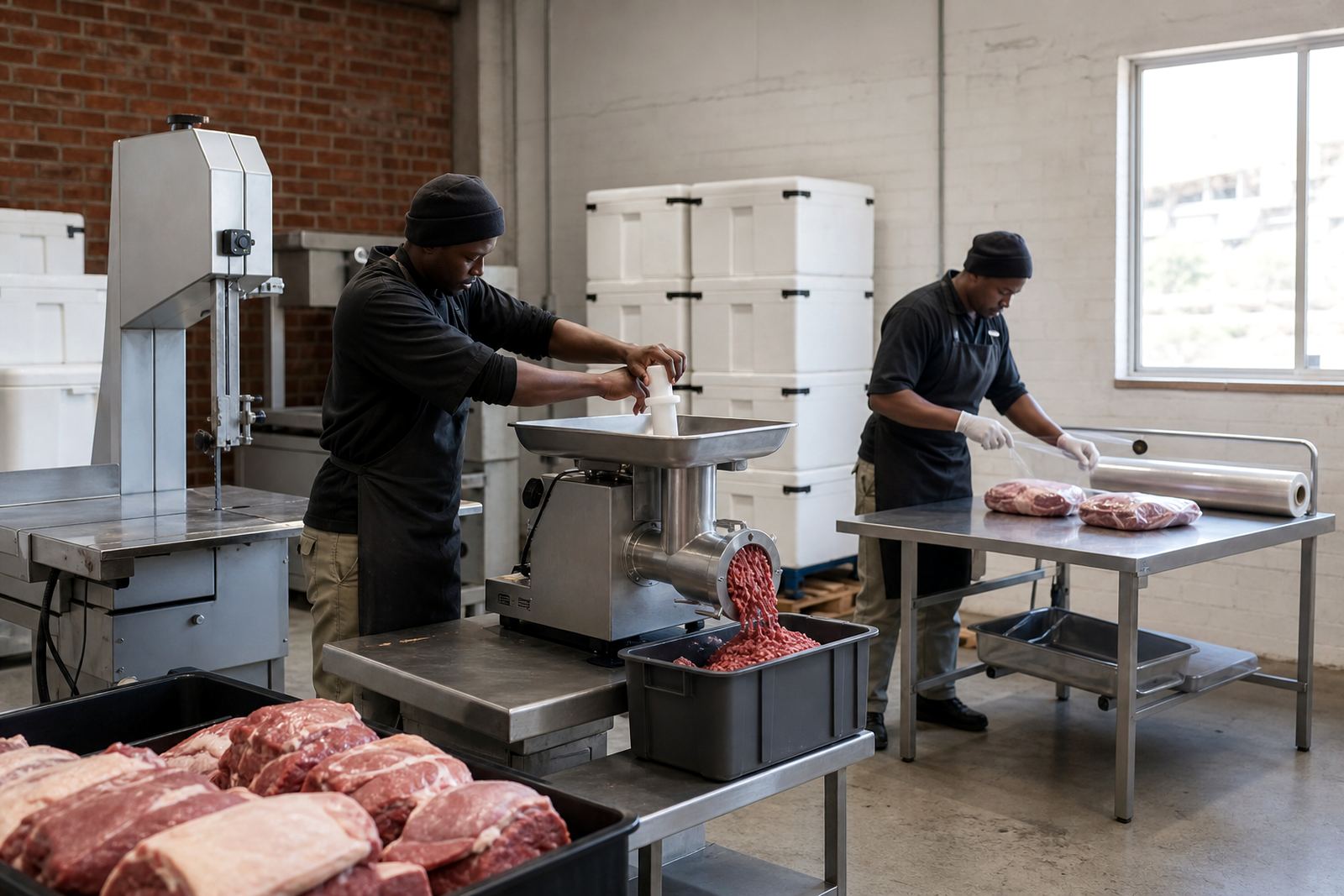
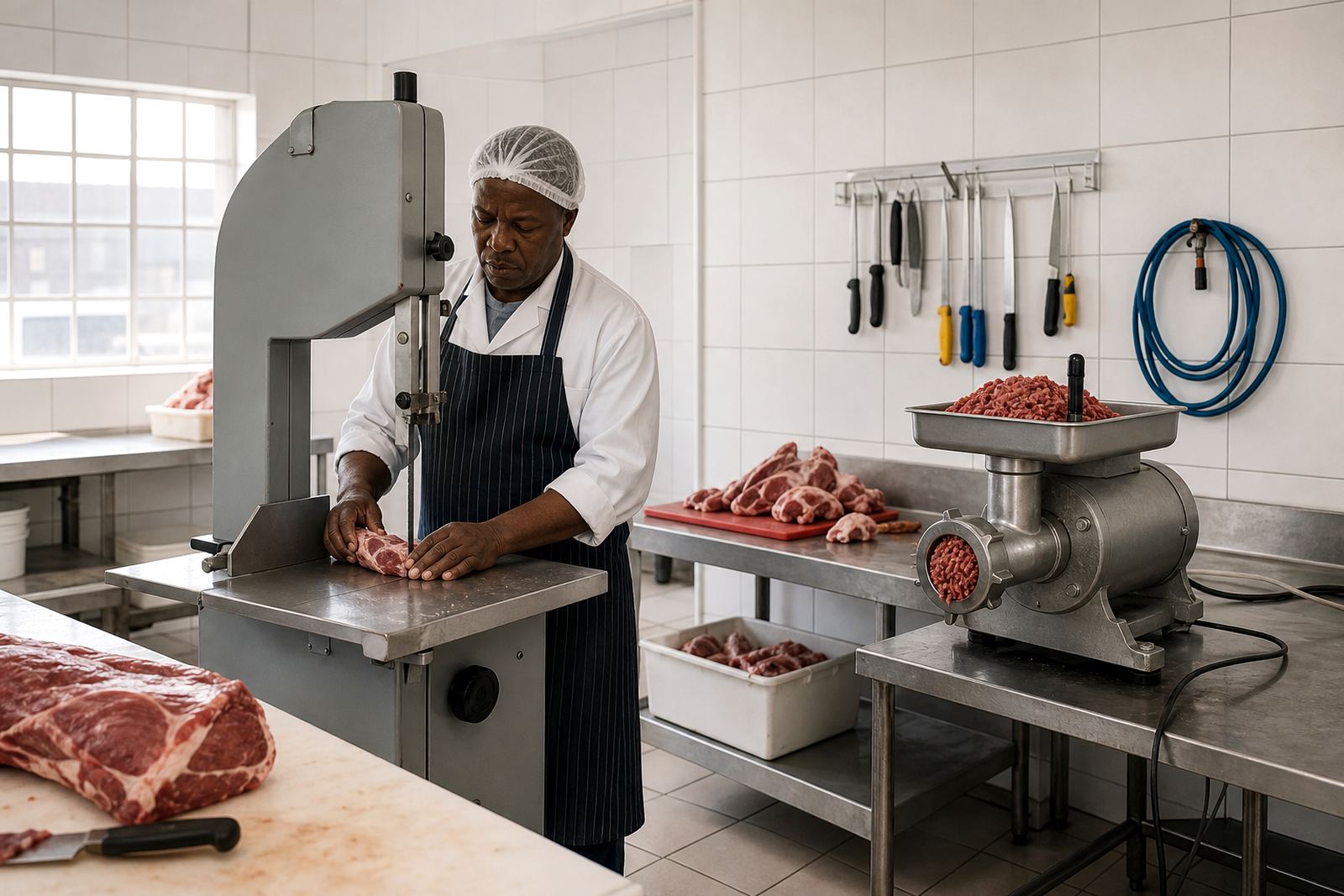
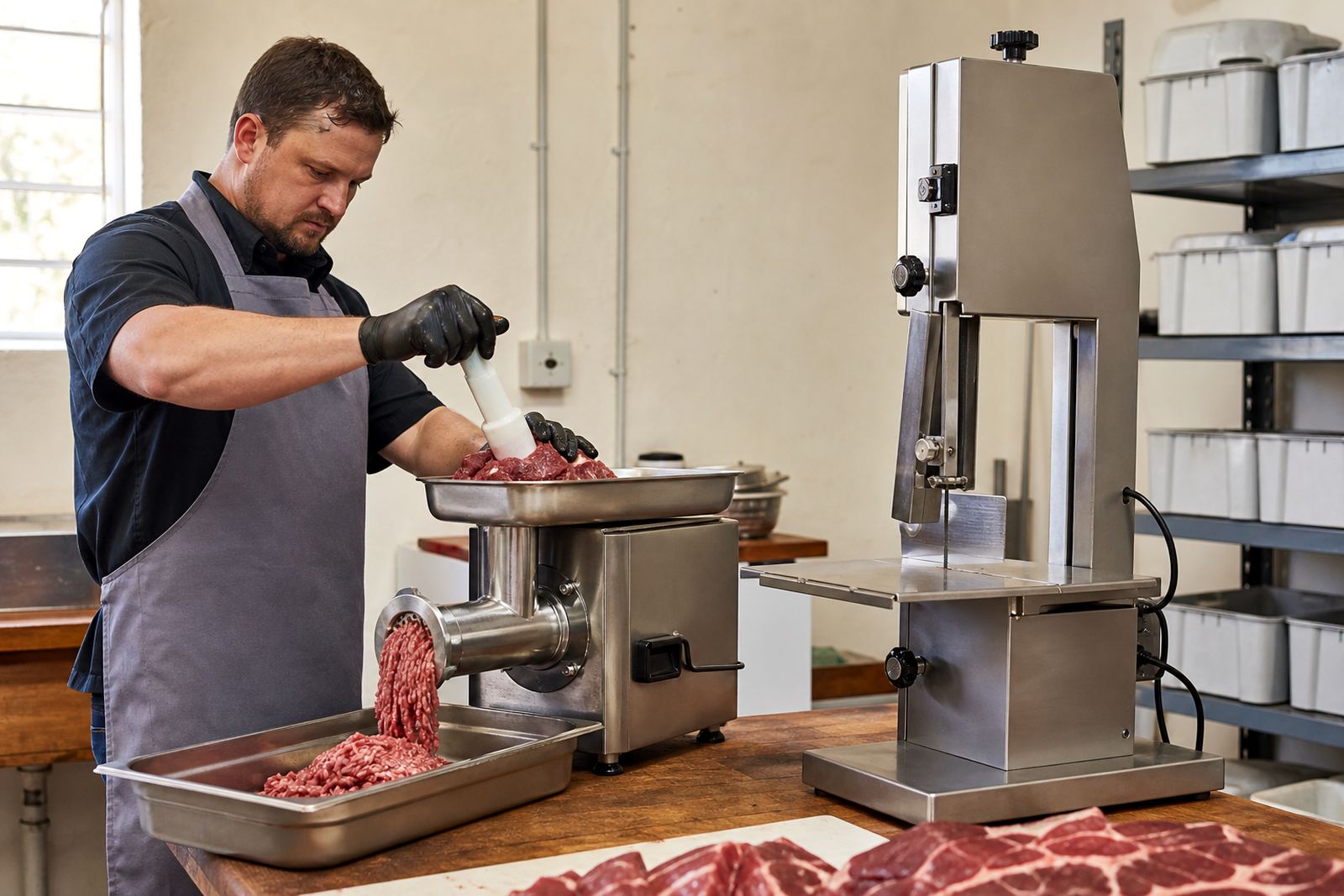
We supplied a compact bandsaw for cut work and a matching mincer for preparation work, then positioned both so the operator could move from cutting to mincing without unnecessary lifting or crossing back and forth. The layout was kept tight but not cramped, with enough clearance to open covers, remove working parts for cleaning and check guards properly before use.
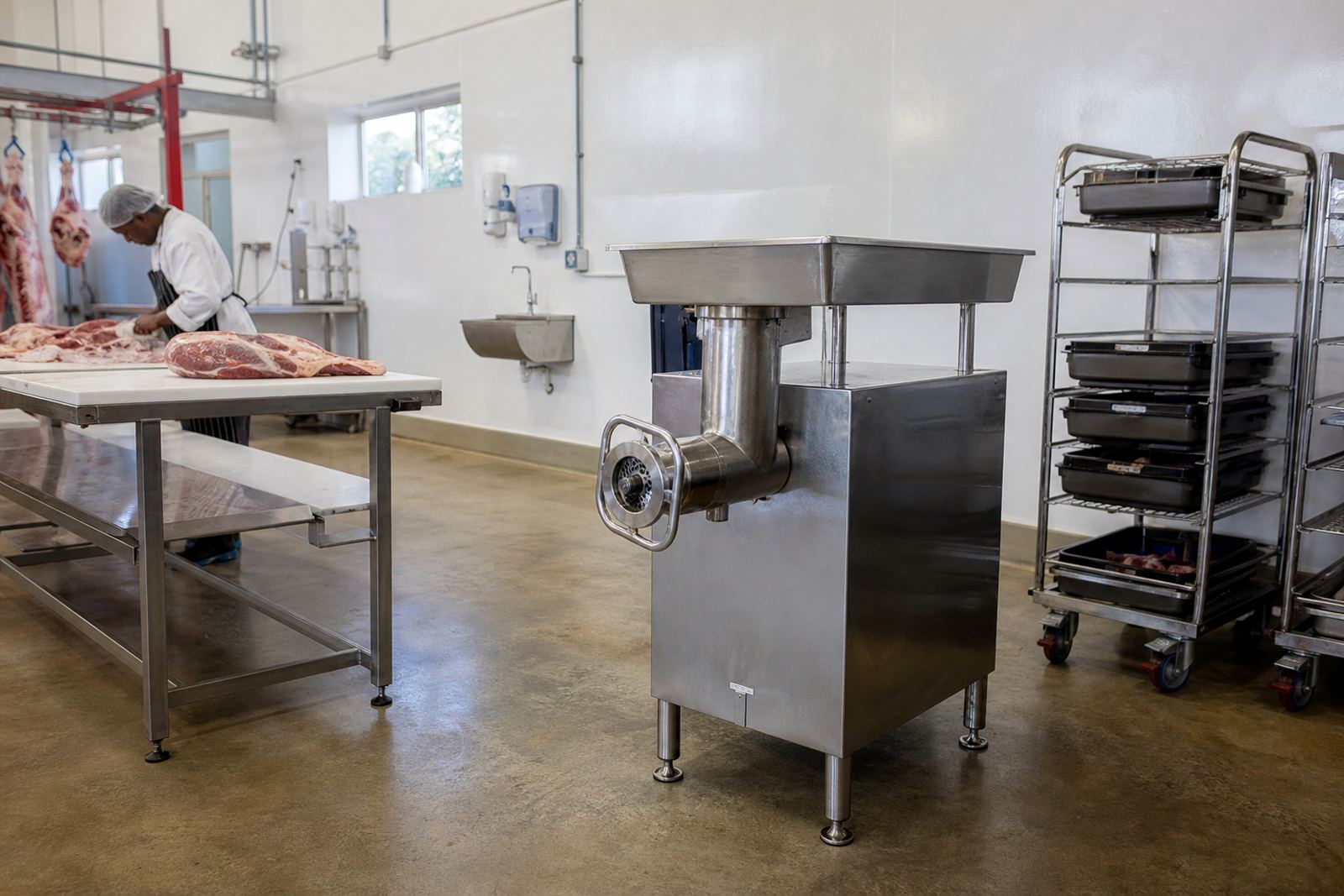
We also did the basic delivery and setup, checked the machine positions for level footing, and made sure the working area allowed for cleaning access around the base and rear edges. For a home installation, that matters just as much as the equipment itself. If the setup is awkward, cleaning gets skipped and small issues start building up.
- Bandsaw positioned for controlled cutting and safe feed direction
- Mincer placed close enough for efficient transfer of prepared meat
- Clear access kept around guards, trays and removable parts
- Setup arranged for easier daily cleaning and inspection
Installation Timeline And On-Site Work
The project ran over two weeks from first site discussion to final handover. The first week covered the room layout, equipment choice and placement plan, followed by delivery and installation in the second week. That sequence worked well because it allowed us to adjust the layout before the machines were fixed into position.
On site, we focused on practical details rather than overcomplicating the job. The machines were set where they could be reached comfortably, with enough room for cleaning tools, sanitiser and routine parts removal. The client also needed a setup that would stay manageable during load-shedding interruptions, so we kept the process simple and easy to restart when power came back on.
- Week 1: assessment and layout planning
- Week 2: delivery, placement and handover
- Final step: cleaning demonstration and operator guidance
Safety Points For Home Butchery Use
We kept the safety guidance practical and direct. The client was shown how to check that guards were in place before use, how to keep hands clear of moving parts, and how to stop and clean the area properly before changing from one task to another. For a home setup, these habits are what keep the machine work steady and reduce avoidable wear.
We also covered PPE basics such as cut-resistant hand protection where suitable, closed shoes and suitable cleaning gear for wash-downs. Blades, plates and knives were treated as service items, not parts to be handled casually. If anything starts dragging, vibrating or cutting unevenly, the machine should be stopped and checked before further use.
- Always use guards correctly
- Keep blades and cutting parts clean
- Use suitable PPE during operation and cleaning
- Stop the machine before adjusting or changing parts
Care, Cleaning And Service Access
A good home installation is not only about the first day of use. It also has to stay manageable week after week. We showed the client how to break the cleaning routine into simple steps so meat residue does not collect around joints, trays or feed areas. That helps with hygiene and keeps the equipment working properly for longer.
The layout left enough space for routine servicing, blade replacement and plate and knife changes when needed. In Free State conditions, dust can find its way into exposed areas, so regular wipe-downs and checks were built into the normal routine. It is better to clean little and often than to leave everything for a big catch-up later, because that is when parts start to bind and minor faults get missed.
- Daily clean-down after use
- Regular inspection of wear parts
- Keep spare service items accessible
- Schedule preventive maintenance before peak use periods
Results For The Westdene Client
The finished setup gave the client a cleaner, more controlled home butchery space with better access around both machines. The bandsaw and mincer were placed for efficient movement, and the cleaning routine became easier because the equipment was not boxed into a corner. That makes a real difference in a home environment where every metre of space matters.
The client now has a practical arrangement for regular processing with less handling strain and fewer awkward steps between tasks. It is the sort of installation we like to repeat: simple, safe, and built around the actual room rather than forcing the room to fit the machines. For a home butcher in Westdene, that kind of planning saves time every week.
- Cleaner workspace with better access for wash-downs
- Shorter movement between cutting and mincing
- Safer routine for home use
- Easy servicing access for future maintenance
What We Would Do Again
If we were doing this Westdene job again, we would keep the same approach: measure the room properly, place the machines with cleaning in mind, and keep the operator flow as direct as possible. That is the best way to avoid clutter and reduce the chances of poor handling around busy prep times.
For home butcher projects like this one, compact equipment works best when the setup is planned properly from the start. The machine choice matters, but the layout matters just as much. Get both right and the result is a setup that stays useful, tidy and easier to look after over time.
- Plan the room before delivery
- Keep service access open from day one
- Prioritise cleaning flow as much as cutting flow
- Use practical training so the setup stays safe and workable
Key facts
| Project area | Westdene, Bloemfontein, Free State |
|---|---|
| Client type | Home butcher |
| Setup scope | Bandsaw and mincer installation |
| Timeline | 2 weeks from assessment to handover |
| Key focus | Compact footprint with easy cleaning access |
| Support included | Delivery, setup, training and servicing guidance |