

Project Brief for a Shared Processing Room in Polokwane
The brief came from a co-operative in Polokwane that needed a processing room where several users could work from the same space without creating delays at the wash-up point. The room had to support a steady flow of meat handling, with equipment that was easy to clean, simple to explain to different operators and suitable for both regular production and smaller batch work.
The client wanted a practical layout rather than a complicated one. That meant clear work zones, easy movement around the machine positions and enough room for safe loading, trimming, cutting and pack-down at the end of the day. Because the room would be shared, the team also asked for a strong focus on hygiene routines, guard use and straightforward maintenance. We kept the plan practical and avoided anything that would slow the crew down.
- Project type: co-operative processing room
- Town: Polokwane, Limpopo
- Main use: shared access for small-scale and daily processing
- Priority: simple cleaning, safe operation and easier handover between users
Constraints We Had to Work Around
The room had to work inside an existing building footprint, so we had to think about doorway widths, floor drainage, wall finishes and where water would not pool after washing. In a shared room, cleaning is often the thing that slows everybody down, so the surfaces and machine placement had to support quick wipe-downs and proper rinse routines. We also had to allow for normal load shedding conditions and make sure the room still made sense when power was interrupted and restarted later in the day.
Another constraint was operator turnover. With several people using the same room, the equipment needed to be easy to understand without relying on one person to keep everything going. That influenced the training plan, the way we positioned the machines and the maintenance reminders we left behind. The room had to cope with busy mornings, cooler afternoons and those odd days when the crew is short staffed, which is normal in many towns outside the big metros.
- Limited room for equipment movement
- Shared access with different operator skill levels
- Cleaning needed to be quick and repeatable
- Power interruptions had to be factored into daily use
What We Supplied and Set Up
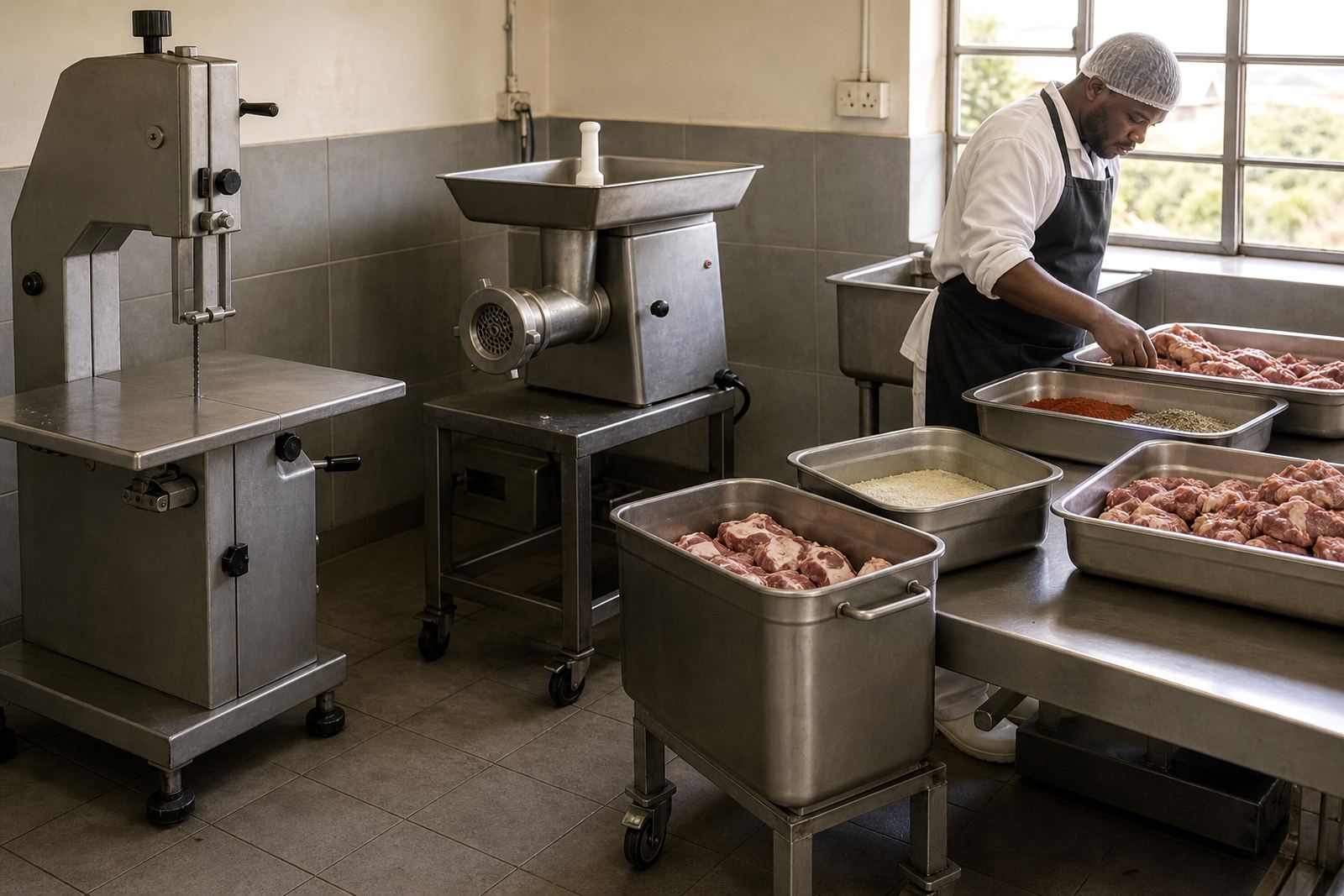
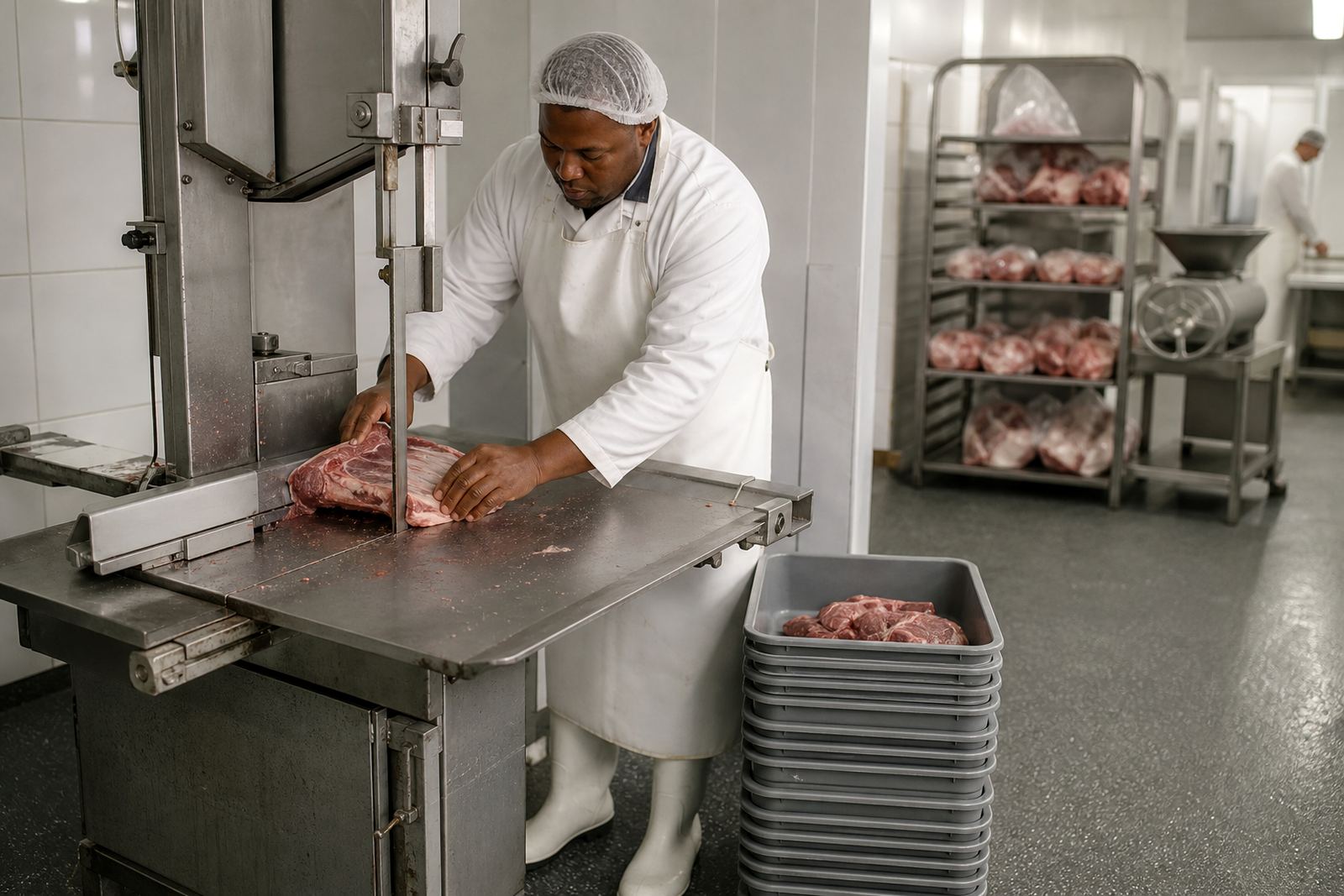
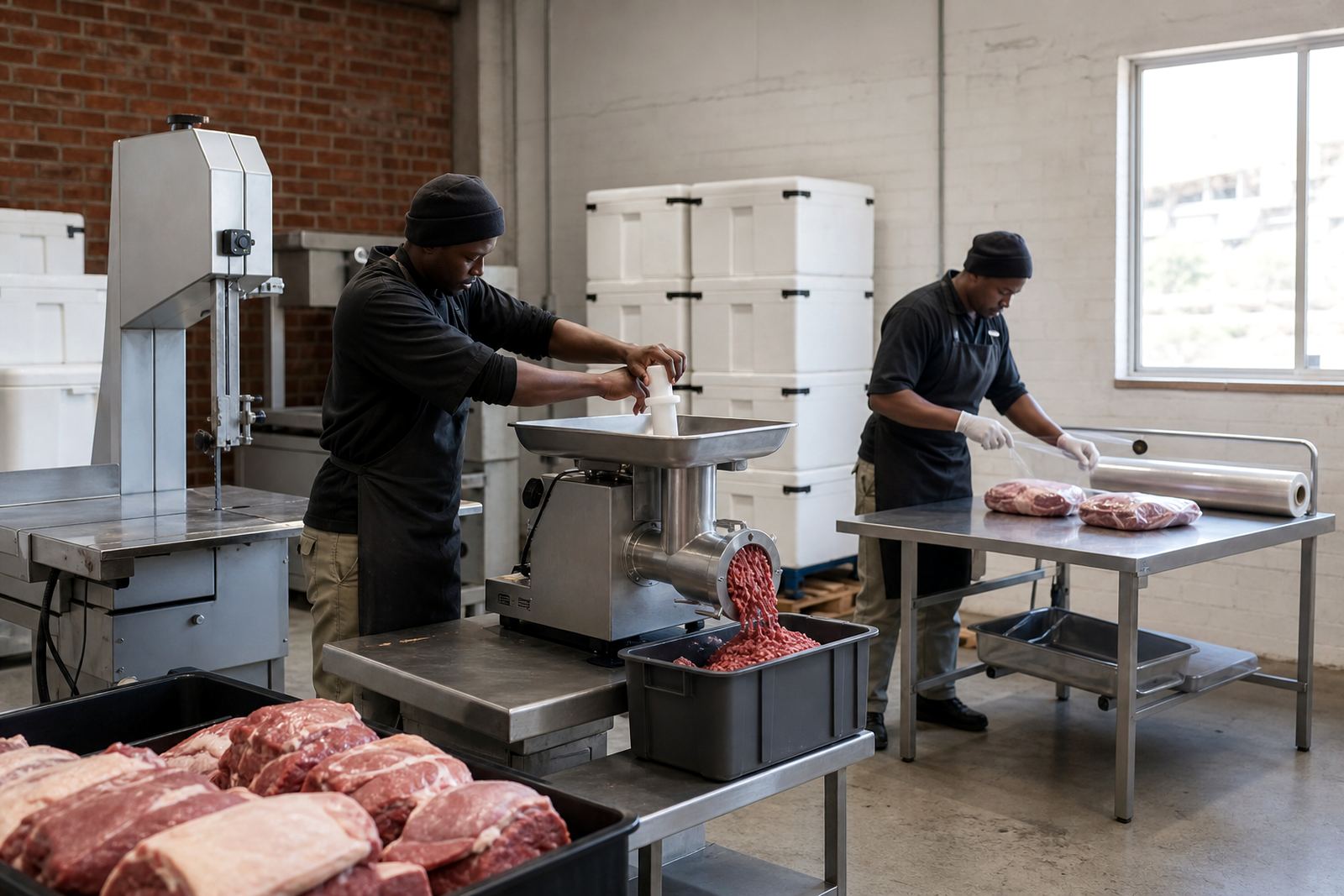
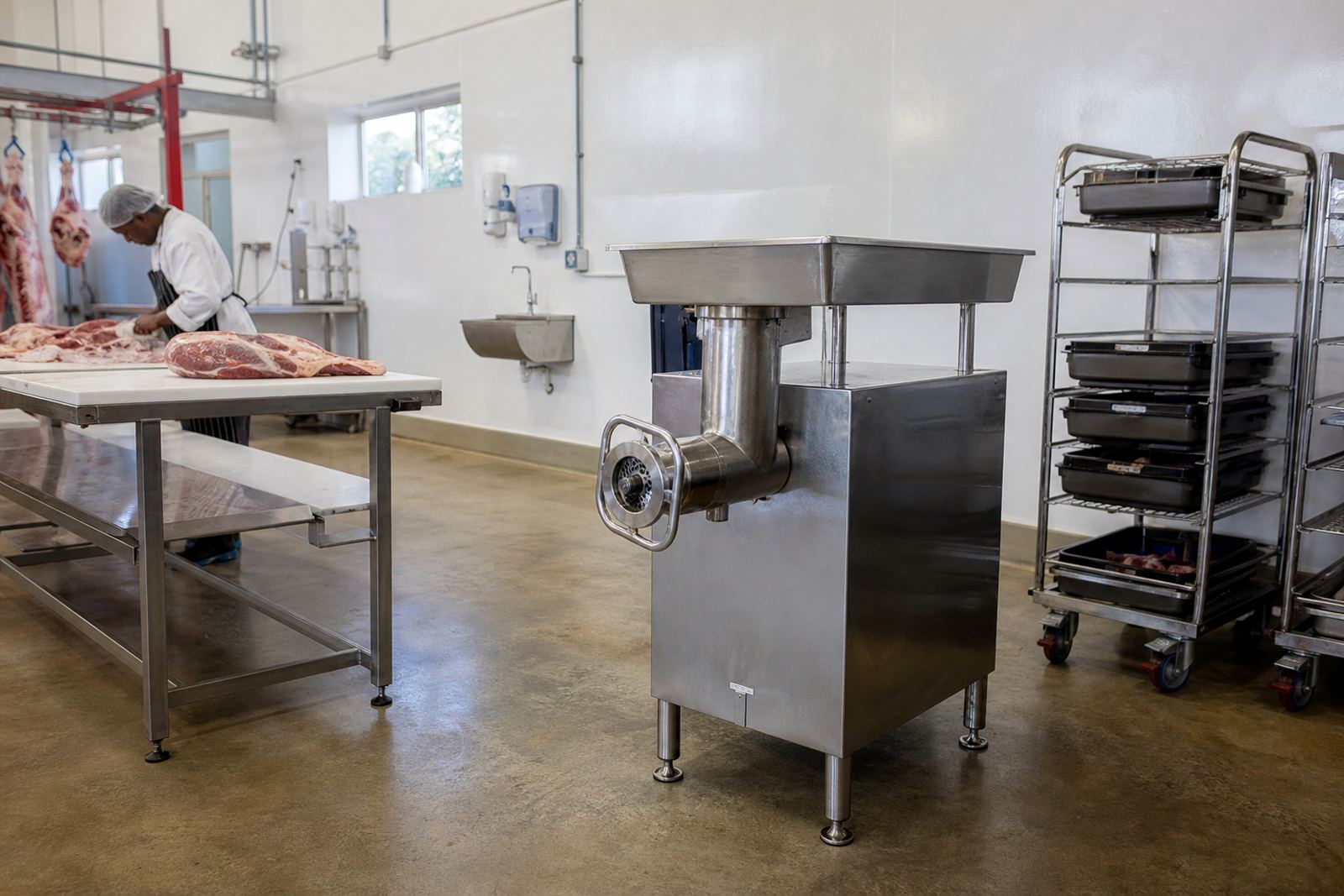
We supplied a bandsaw for controlled cutting work and a mincer for regular batch preparation, then handled delivery and setup on site. The focus was on dependable butchery equipment that suits cooperative use rather than oversized machinery that would be difficult to manage. We also arranged blade replacement guidance, plate and knife change basics, and a simple cleaning demonstration so the room team could run the machines with confidence.
As part of the setup, we checked clear working space around each machine, the operator path from prep area to wash area and the safest place for trays, tools and cleaning materials. We kept the controls and guards easy to reach, because if a machine is awkward to use, people start bypassing good habits and that is where trouble begins. The setup supported everyday use by commercial and home butchers in the same room, which was the whole point of the project.
- Bandsaw installation and setup
- Mincer installation and setup
- Blade replacement and cutting component change guidance
- Cleaning demonstration for shared users
- Basic PPE reminders and guard checks
Timeline and Delivery in Weeks
The project was completed over four weeks from first discussion to handover. Week one covered the room needs, access points and operating pattern. Week two was spent confirming equipment placement and service access. Week three covered delivery, installation and the practical room walk-through. Week four focused on operator training, cleaning routines and final checks before the co-operative started using the room on its own.
That timeline worked because the room was kept simple. There was no need for a long commissioning period, just a clear run of preparation and a proper handover. The team was able to begin using the space soon after setup and the learning curve stayed manageable. A slow setup would have made the room harder to get right, so we kept the programme tight and practical.
- Week 1: brief and site planning
- Week 2: equipment positioning and access checks
- Week 3: delivery, installation and setup
- Week 4: training, cleaning routines and handover
Cleaning, Safety and Day-to-Day Care
Because the room was intended for shared use, the care routine mattered as much as the equipment itself. We covered safe cleaning around guards, the order of strip-down for the mincer parts and the right way to handle blades and cutting components after use. The crew was reminded to isolate equipment before cleaning, wear proper PPE and avoid rushing the final rinse when the room gets busy. That kind of routine keeps the room working longer and helps prevent avoidable wear.
We also explained a few practical habits that make a difference in South African conditions. Dust, humidity and repeated wash-downs can all affect machine condition if they are ignored. A quick wipe after use, a proper dry-down and regular inspection of seals, moving parts and contact surfaces go a long way. It sounds basic, but basic is what keeps a cooperative room moving. One missed clean can turn into a stubborn mess by the next morning.
- Clean and dry equipment after every shift
- Check guards before each use
- Use gloves and other PPE where needed
- Keep blades, plates and knives stored properly
- Book preventive maintenance before faults grow
Results for the Cooperative Team
The room was handed over as a straightforward shared processing space that could be understood by different users without much confusion. The work flow became easier to manage because the equipment was positioned for practical movement and the cleaning steps were kept plain. The co-operative gained a room that supports regular use, simple supervision and less time wasted between batches.
What stood out most was how well the space suited shared ownership. When equipment is chosen for ease of use and care, the room becomes easier to keep tidy and easier to trust. That matters in a place like Polokwane where teams often need to make the most of a single room, a single set of machines and the same few hands doing the work every day. The result was steady, clean and workable, which is what the client asked for.
- Clearer shared workflow
- Faster clean-down between users
- Easier operator handover
- Practical equipment care routines
What We Would Do Again on a Similar Job
For another cooperative room, we would follow the same practical approach: keep the layout simple, plan for cleaning from the start and choose machines that can be maintained without fuss. We would again provide installation, delivery and setup, then back it up with operator training and a practical breakdown of daily care. In a shared room, that combination works well because it reduces confusion and makes the room easier to manage over time.
We would also keep the service plan close to the project from day one. That includes blade replacement, plate and knife change support, parts supply and regular servicing when needed. Shared rooms can wear equipment faster than single-user setups, so the maintenance side should never be left until something goes wrong. A good room is not just about the first day. It is about how the space still runs after a few months of use, when the small jobs start to matter.
- Keep the layout open and simple
- Build cleaning into the room plan
- Train more than one operator
- Set up a service schedule early
Key facts
| Project town | Polokwane, Limpopo |
|---|---|
| Project type | Shared co-operative processing room |
| Equipment supplied | Butchery bandsaw and mincer |
| Timeline | 4 weeks from brief to handover |
| Core focus | Simple cleaning and shared access |
| Services used | Installation, setup, training and servicing support |