

Market Production Needs In Parow
This project came from a market-focused producer in Parow who needed to move from small, irregular processing to a more controlled setup for mince, portions and value-added items. The work had to suit a site where space is tight, trading hours are busy, and the team cannot afford long stoppages when customers are waiting. The brief was practical from the start: keep the workflow simple, make cleaning easier and use equipment that could handle regular use without becoming a maintenance headache.
Parow market work also brings its own realities. Floors can be slippery during washdown, power interruptions still happen in parts of the Cape, and any food handling site has to stay neat enough for both hygiene and local compliance. The producer wanted equipment that could be fitted into an existing prep area without changing the whole room, and without adding complicated steps for staff who rotate between tasks.
Brief, Constraints And Working Conditions
The main constraint was a compact production area with limited bench space and a clear need to separate cutting, mincing and packing activity. The client also wanted equipment that was easy to teach to new staff, because market teams often change with seasonal demand. That meant we had to think carefully about guarding, operator flow and cleaning access, not just the equipment itself.
- Space had to be used carefully, with clear movement around the working area.
- Cleaning had to be straightforward enough for daily washdown.
- Staff needed simple operation and plain instructions.
- Safety controls were important, especially around blades, guards and feed points.
- The setup had to suit short runs rather than high volume industrial output.
We also kept load-shedding in mind. In market work, a machine that is easy to shut down safely and restart without fuss is worth far more than one that looks impressive on paper but needs constant attention. The client asked for a setup that would still make sense on a normal trading day, even when conditions changed from one week to the next.
What We Supplied And Set Up
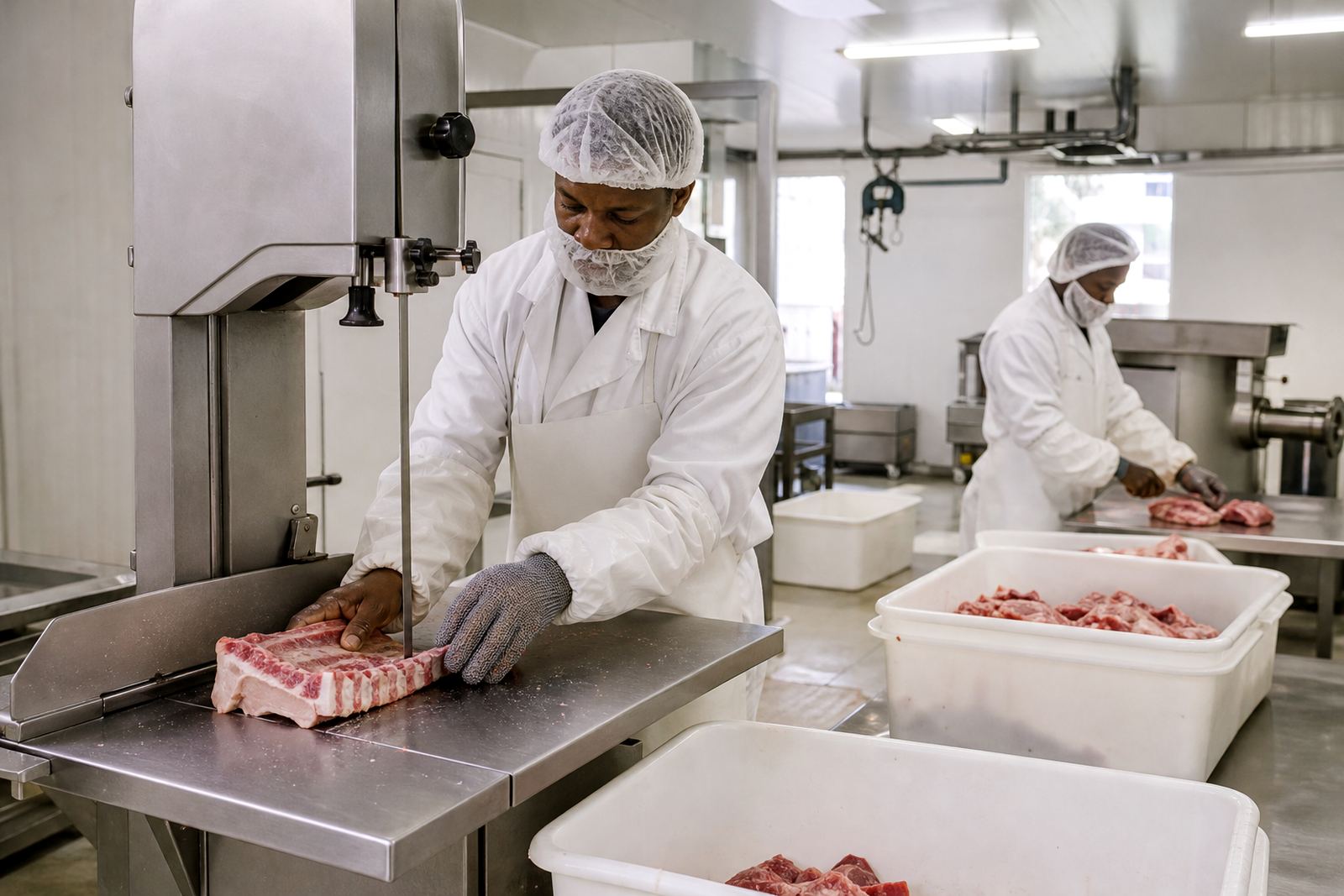
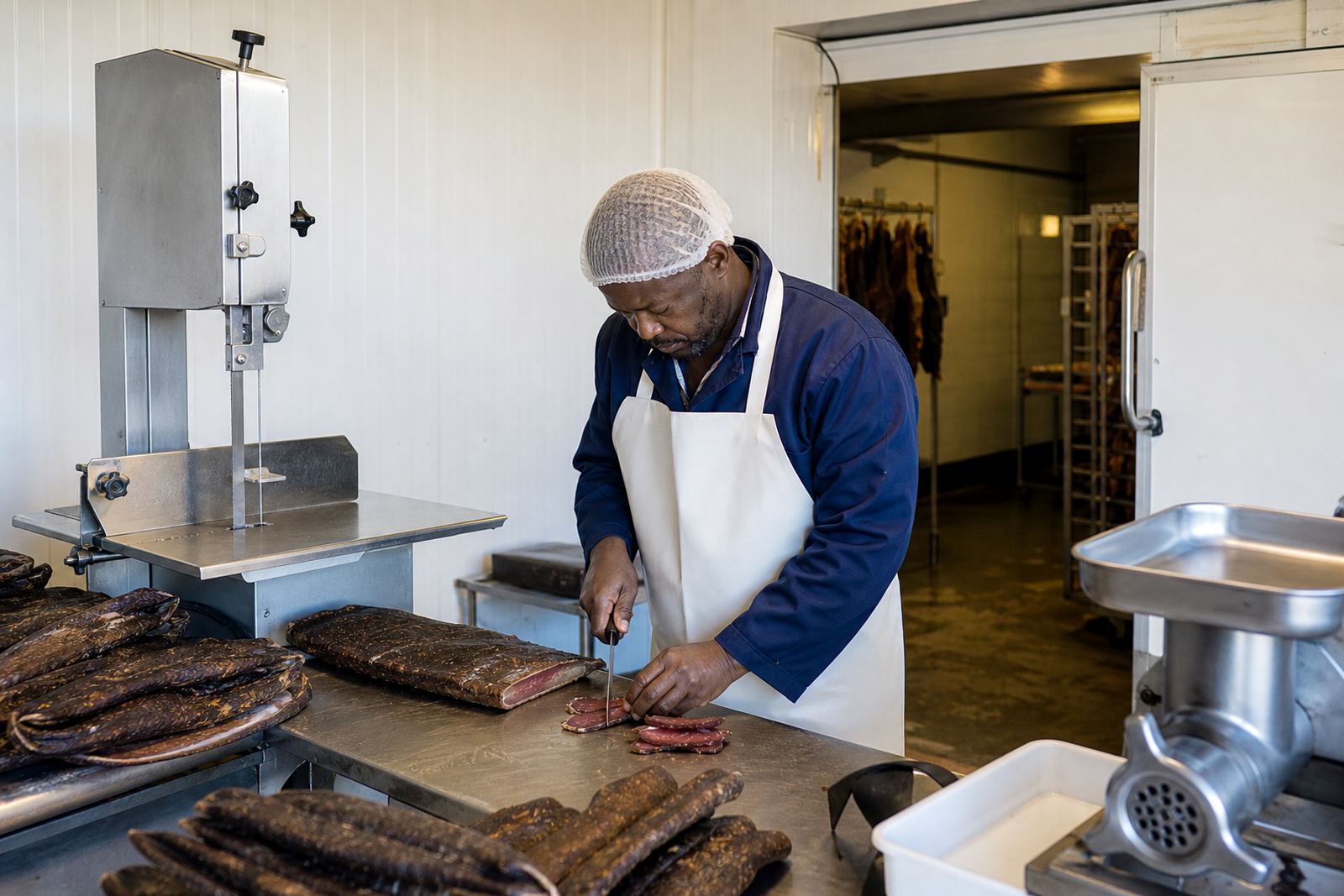
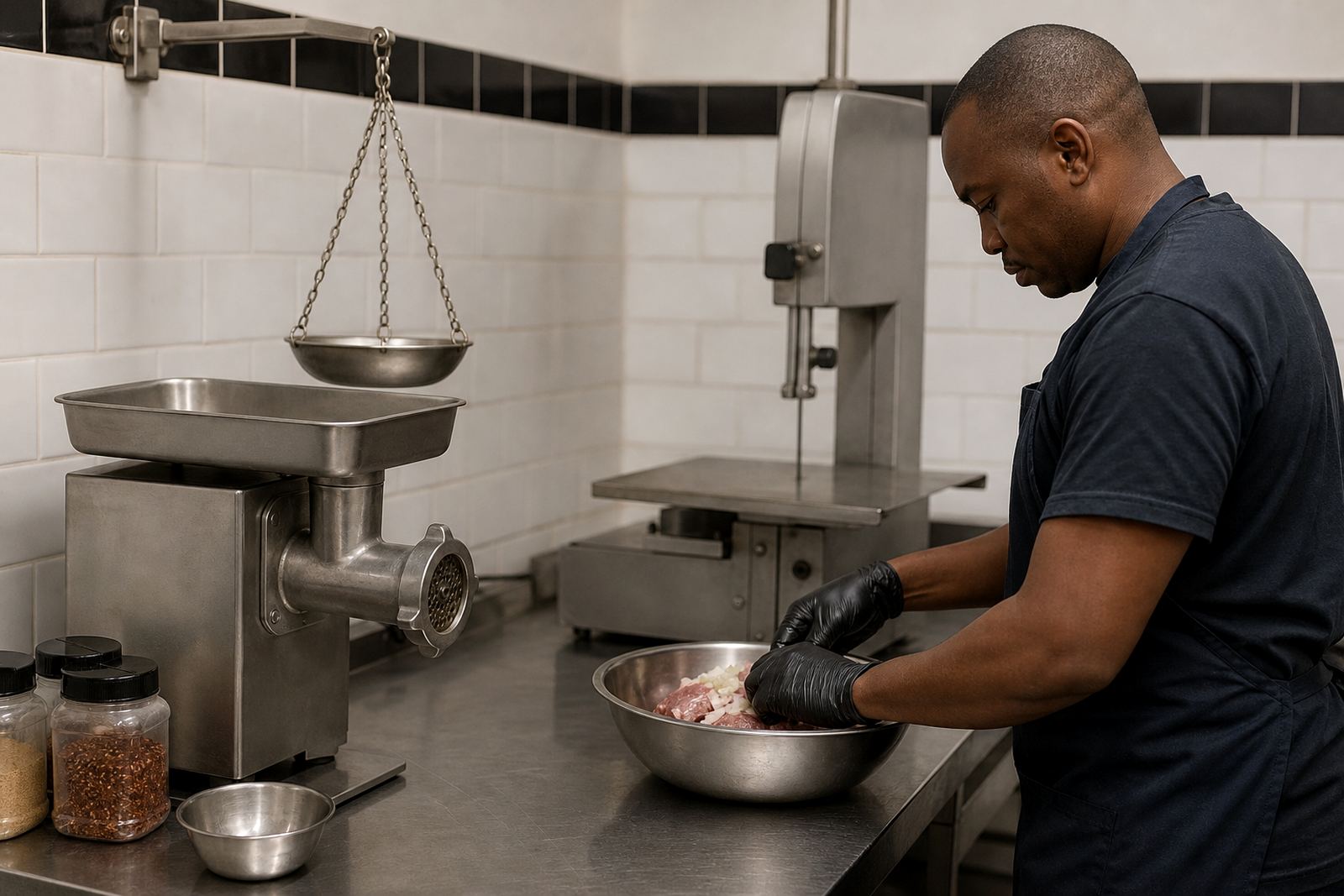
MorCut Butchery supplied and commissioned the core equipment needed for the job, focusing on a bandsaw for controlled cutting and a mincer for short-run mince production. We also handled the practical work around the machines, including setup, operator guidance and care reminders for daily use. The aim was not only to deliver equipment, but to make sure the team could use it safely and keep it in good working order.
In this type of project, the details matter. Blade handling, plate and knife changes, cleaning routines and general wear checks all affect how well the equipment performs over time. We walked the team through the basics so they could manage ordinary daily tasks without waiting for help every time a small issue came up.
- Delivery and setup at the Parow site
- Bandsaw installation and basic commissioning
- Mincer installation and operational handover
- Cleaning demonstration for food-safe daily routines
- Operator training with safety reminders and practical do's and don'ts
- Guidance on blade care, plate and knife changes, and general maintenance checks
Timeline From Order To Handover
The project ran over a short, manageable timeline of three weeks from first discussion to handover. The first stage was to understand the site layout and the type of products being made. After that, we planned the equipment placement and made sure the client understood what the workflow would look like on a normal production day. Once the equipment was prepared for delivery, we arranged setup and training around the client’s working hours so the changeover caused as little disruption as possible.
Week two covered delivery, positioning and installation. Week three was used for the handover, including cleaning demonstrations, routine checks and training for the staff who would use the machines most often. That timing worked well because it gave the producer enough time to adjust the work area and ask questions before the first busy trading cycle began. It also gave us time to confirm that the team was comfortable with the shutdown and cleaning steps.
Results On The Market Floor
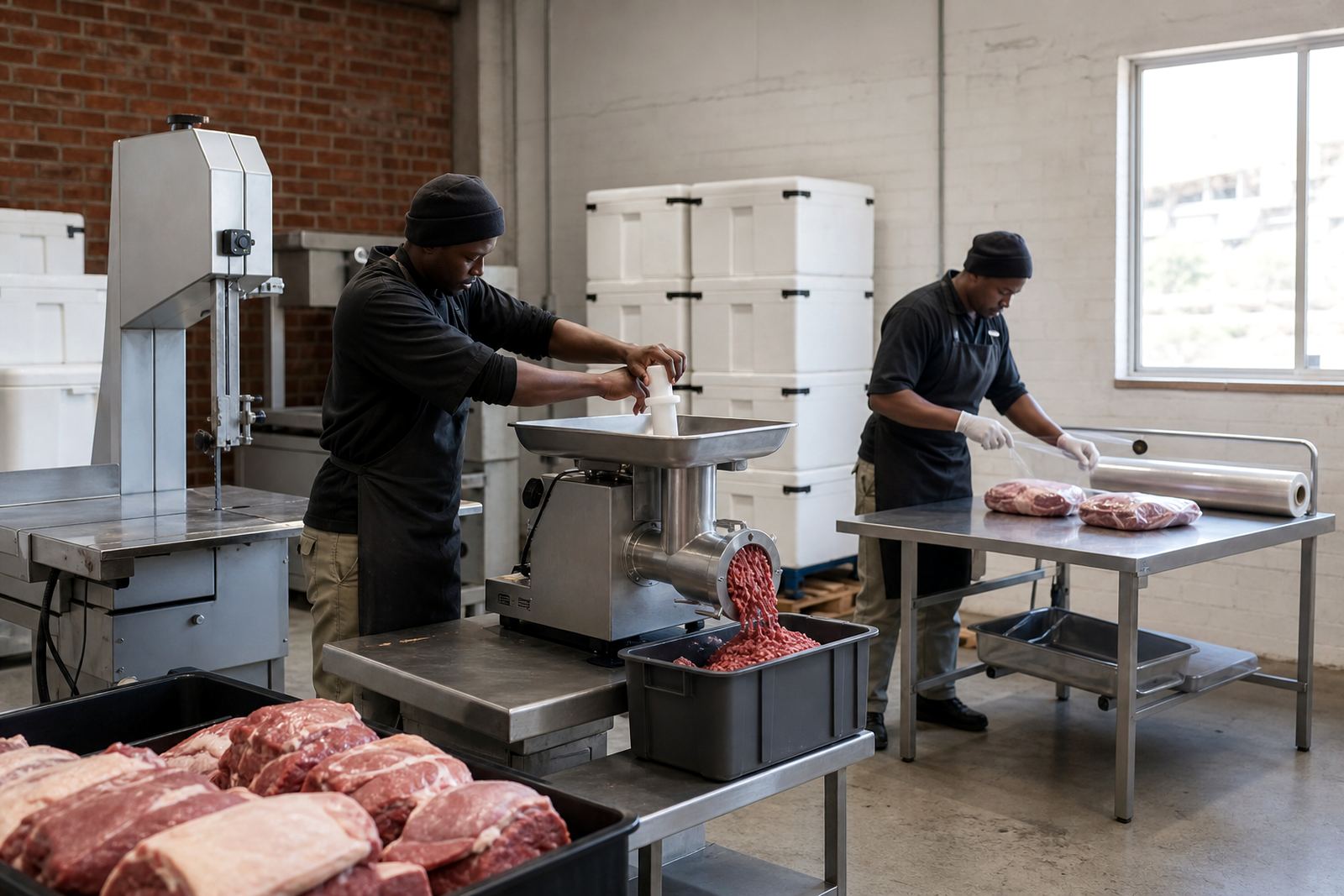
The outcome was a more orderly prep process for mince and related value-added products. The client gained a clearer workflow, with better separation between cutting and mincing tasks, and the team could work with fewer interruptions. The equipment fit the site properly, which mattered just as much as the machines themselves. In a market setting, if the equipment does not fit the room, the room starts fighting the work.
Staff reported that the training made day-to-day handling easier, especially around safe feeding, guarding and cleaning after trade. The client also appreciated having a clear line for servicing and parts support should wear items need attention later on. For a producer selling into a busy market, that means less uncertainty and a more predictable production day.
- Cleaner workflow between cutting, mincing and packing
- Better day-to-day control of short-run production
- Improved confidence around safe operation and cleaning
- Less downtime risk from poor setup or unclear handover
What We Would Do Again
We would approach a similar Parow market project in the same practical way: keep the scope focused, match the equipment to the real workload, and make sure the team understands the care side from the beginning. Too many small processing sites are set up with equipment that is hard to clean or awkward to use, and that leads to avoidable wear. A better approach is to plan for the way the site actually works, not the way a brochure says it should work.
For any market producer doing short-run mince and value-added products, the same basics apply. Keep the guards in place, clean thoroughly after each run, wear the right PPE, and do not ignore small changes in noise, cut quality or feed performance. We would also recommend regular checks on blade condition and wear parts, because a machine that is maintained properly is easier to trust when the day gets busy.
Key facts
| Project type | Market-focused producer setup for short-run mince and value-added products |
|---|---|
| Location | Parow, Cape Town |
| Equipment supplied | Bandsaw and mincer support with installation and handover |
| Timeline | 3 weeks from first discussion to handover |
| Services used | Delivery and Setup, Bandsaw Installation, Mincer Installation, Cleaning Demonstrations, Operator Training |
| Support base | Hamilton, Bloemfontein with delivery and servicing across South Africa |