

What the Stellenbosch team needed from the prep area
The brief came from a biltong prep operation in Stellenbosch that needed a neater way to break down meat for trimming, slicing and packing. The team wanted a better flow between receiving, portioning and cleanup, with enough space for regular work and enough control to keep the area tidy during a busy day.
The main goal was simple. Cut waste, improve handling and make the prep area easier to clean after each session. Because the site serves a steady local market, the equipment had to suit regular use and not become a bottleneck when orders picked up.
- Clean portioning workflow from raw product to packed stock
- Space for cutting, sorting and cleaning in one prep zone
- Practical equipment for a small commercial setup
Site constraints and working conditions
The prep area had limited floor space and needed careful placement so staff could move around safely without crossing the cutting zone. The team also wanted surfaces that were easy to wash down at the end of the day, with fewer corners where fat and scraps could build up.
Like many food prep spaces in the Western Cape, the site had to deal with electricity interruptions now and then, so the layout had to stay simple and practical. We kept the setup focused on day-to-day use, with clear access for cleaning, blade checks and routine servicing.
- Tight working area with a need for orderly traffic flow
- Washdown friendly surfaces for hygiene control
- Simple layout to reduce downtime during load-shedding
What we supplied and set up
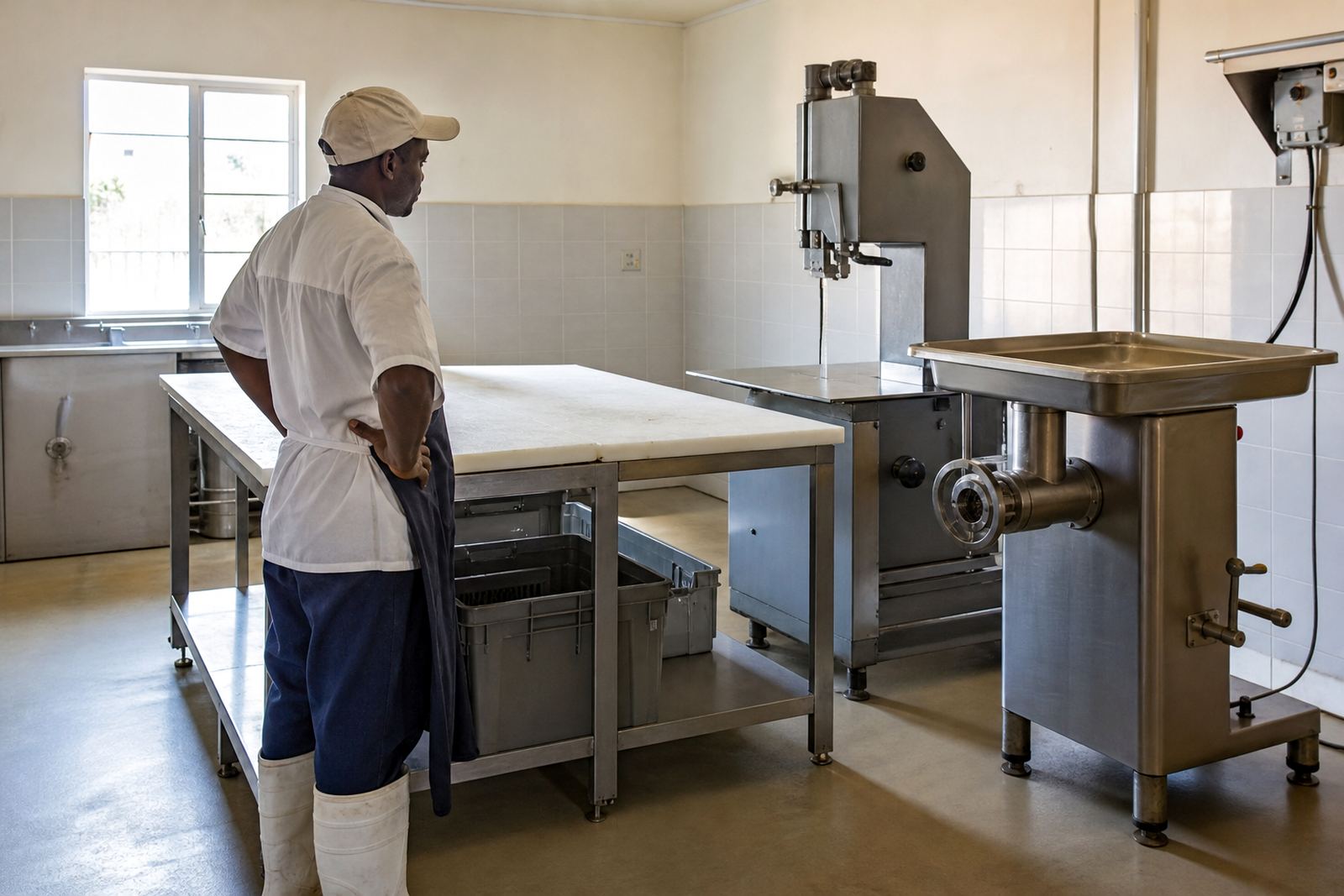
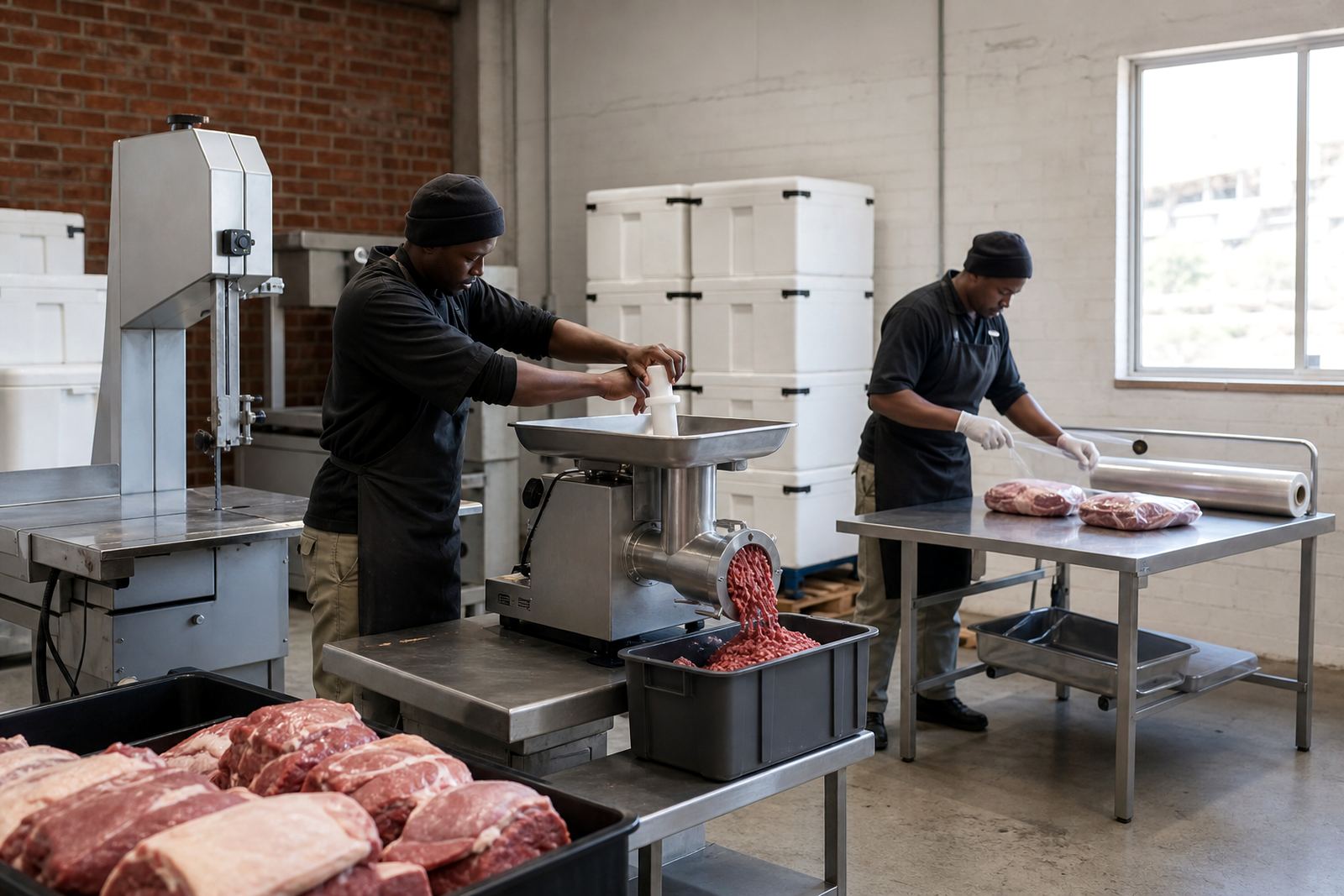
We supplied a butchery bandsaw for controlled cutting, together with sturdy benches for portioning and sorting. The bandsaw was set up with the usual safety features expected in a working prep area, including guards and a clear operating position so staff could work with better control.
The benches were arranged to support a sensible sequence of tasks, from trimming to staging to cleanup. We also walked the team through basic care, including keeping the machine clean, checking the blade area before use and wearing suitable PPE during operation.
- Butchery bandsaw for portioning and pre-cutting work
- Prep benches for sorting, trimming and staging
- Setup guidance for cleaning, guarding and safe use
- Operator reminders on PPE and post-shift washdown
Timeline from first visit to handover
The job moved from site assessment to installation and handover over a short, practical timeline of three weeks. The first week was used to understand the space and the team’s daily routine. The second week covered supply, positioning and setup. The final week was used for checks, cleaning demonstrations and a working handover with the operators.
That pace suited the client because it avoided a long interruption to trading and kept the prep area active while changes were being made. It also gave the team time to ask questions about cleaning, safe blade handling and how to keep the equipment in good condition.
- Week 1: site assessment and workflow planning
- Week 2: supply, delivery and equipment placement
- Week 3: handover, cleaning demonstration and operator guidance
Results on the floor
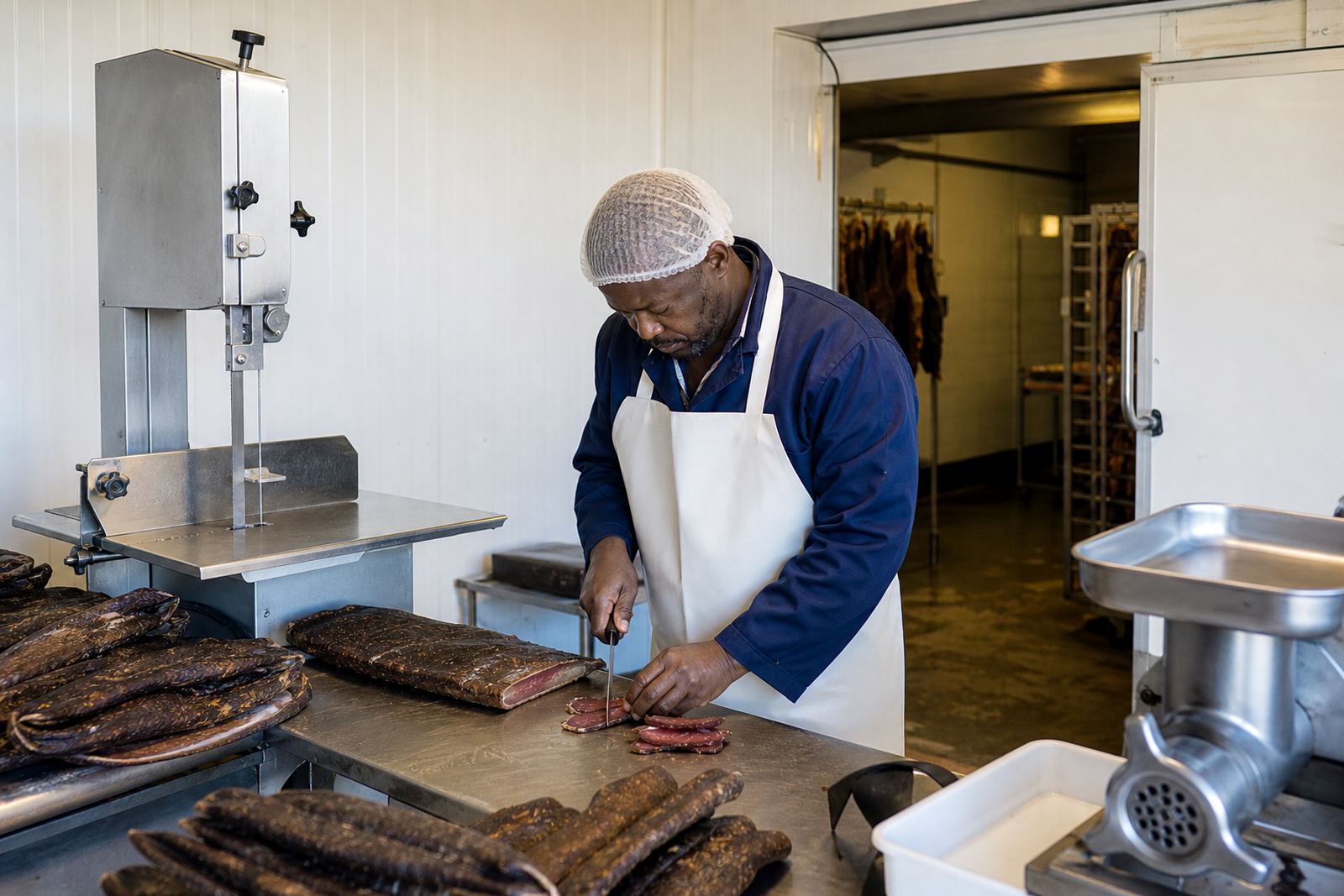
Once the prep area was running, the team had a clearer sequence for cutting and portioning, with less back-and-forth around the room. The benches gave staff enough working space to sort product properly, while the bandsaw helped keep cuts neater and more consistent for biltong prep.
The biggest practical gain was control. Product could be handled more cleanly, the work surface stayed more organised and the team could clean down faster after use. For a busy operation, that matters just as much as the cutting itself.
- Cleaner workflow between cutting and packing
- Better use of limited floor space
- Faster end-of-shift cleaning and reset
What we would repeat on a similar project
If we were doing another biltong prep area in Stellenbosch or anywhere else in South Africa, we would keep the same approach: assess the room first, place the equipment for a smooth flow and keep the safety and cleaning basics front and centre. That approach works well for both commercial and home butchers who want practical results without unnecessary complexity.
We would also stick to regular servicing from the start. A clean machine, a sound blade and a checked cutting area do more for day-to-day reliability than most people expect. Small care steps prevent bigger problems later, especially where equipment is used daily.
- Plan the work flow before equipment goes in
- Keep cleaning and blade care as part of the routine
- Use servicing checks before small issues become downtime
Key facts
| Project type | Biltong prep area with bandsaw and benches |
|---|---|
| Town | Stellenbosch, Western Cape |
| Use case | Clean portioning, trimming and staging for biltong prep |
| Supplied equipment | Butchery bandsaw and prep benches |
| Support included | Delivery, setup, cleaning demonstration and operator training |
| Timeline | 3 weeks from assessment to handover |