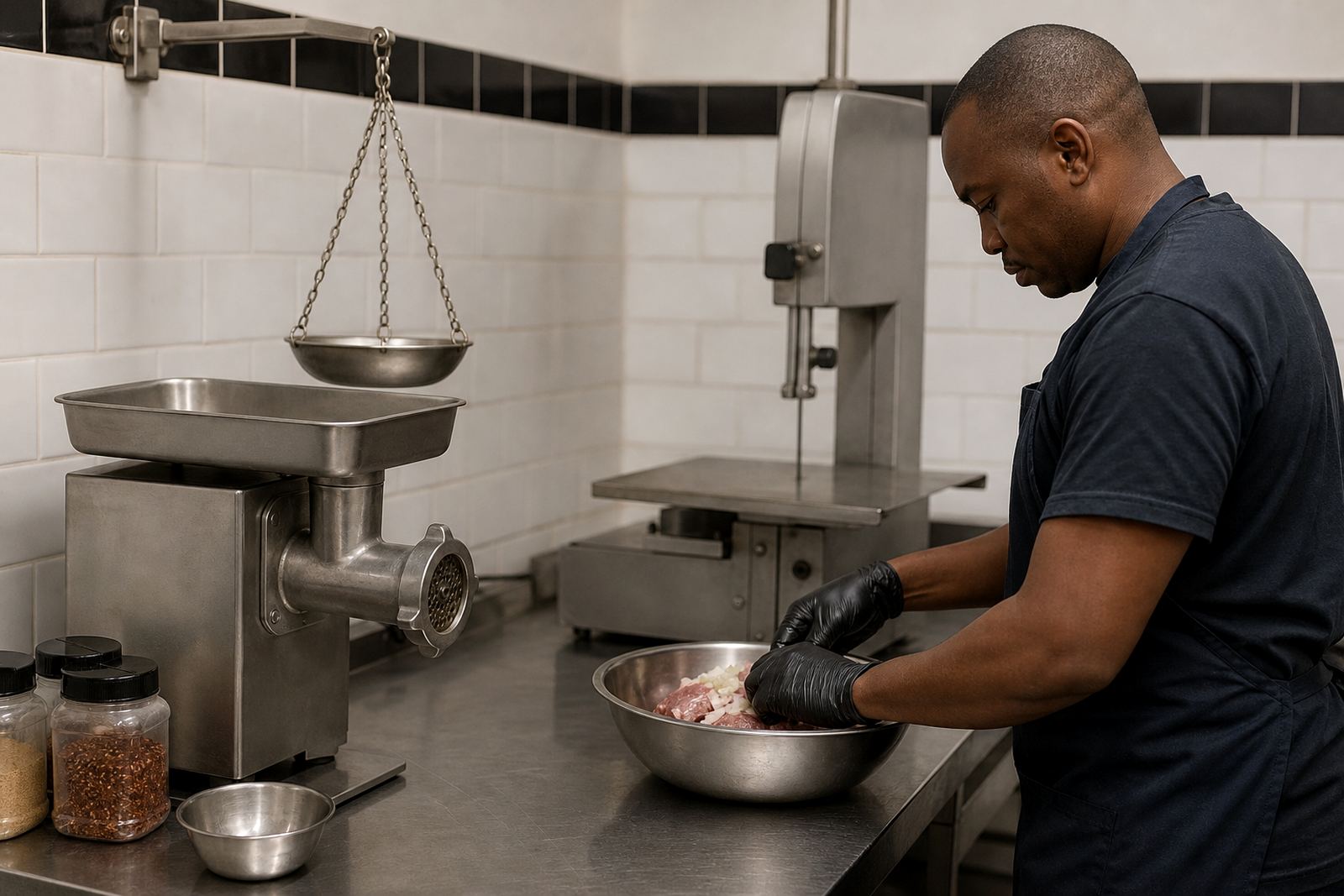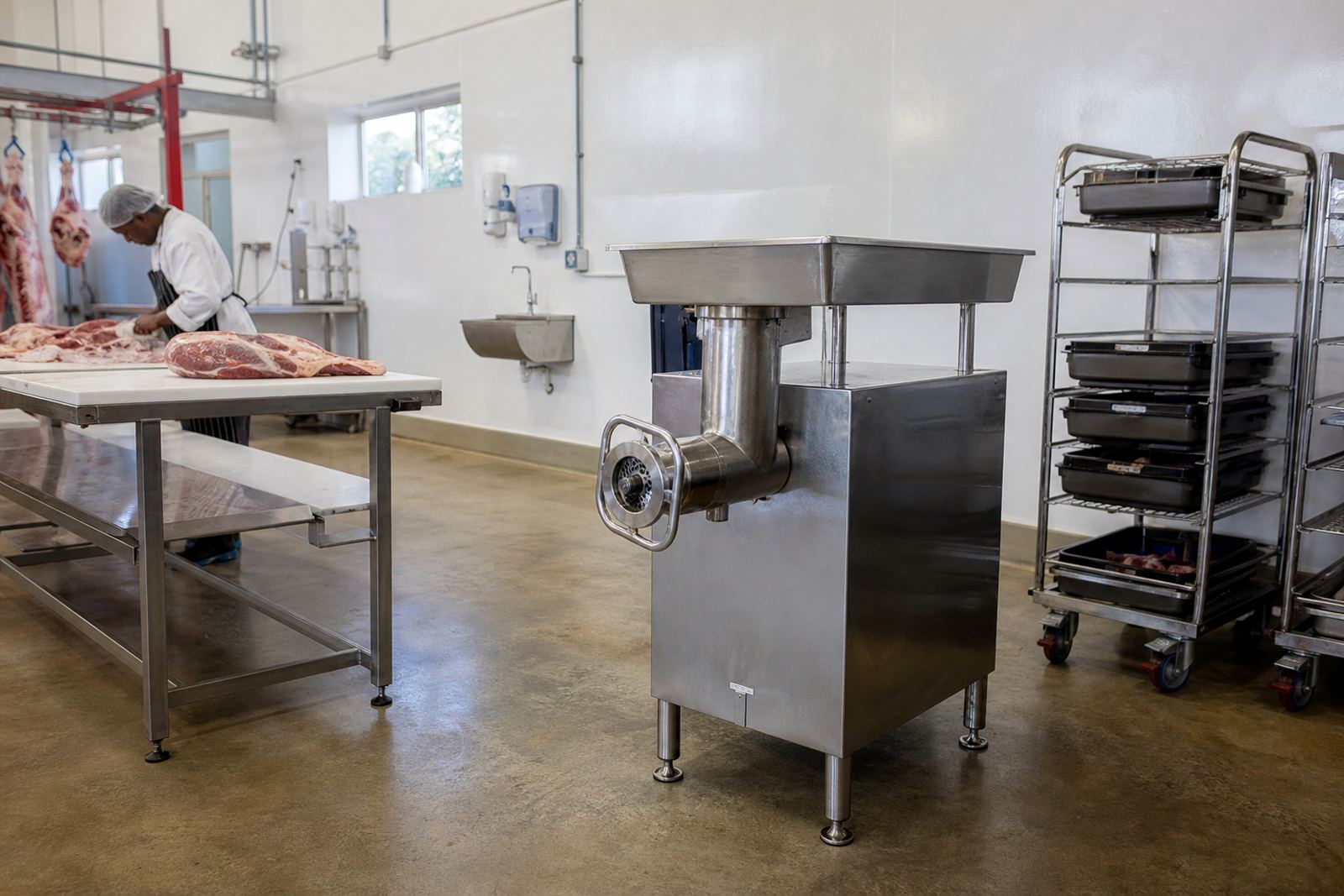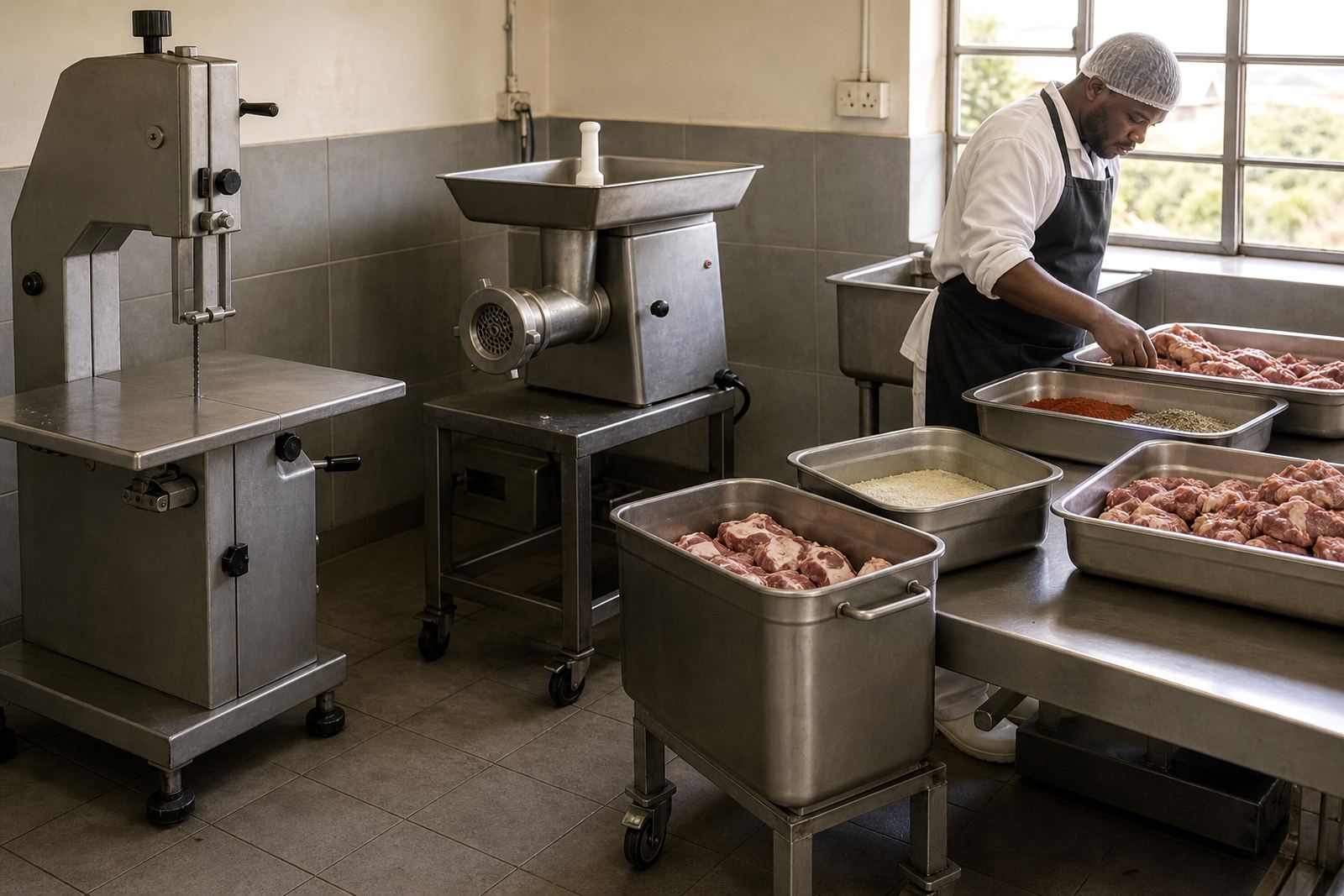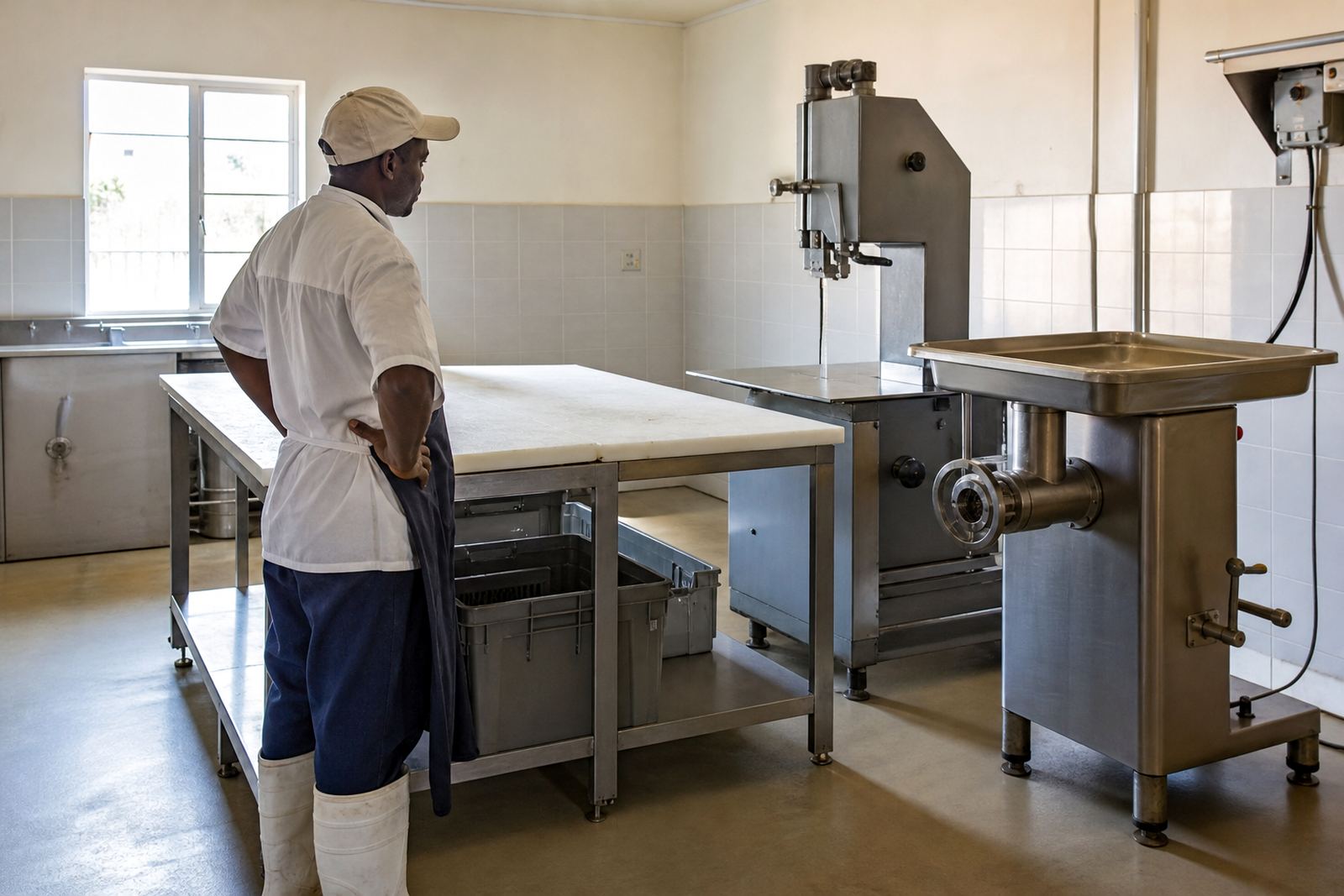


What the Bayswater shop needed
The brief came from a local farm shop in Bayswater that serves walk in shoppers, weekend customers and small commercial orders. Their existing setup was making prep work drag, especially when the team had to move between cutting carcass sections, trimming portions and mincing on the same counter. The owner wanted a smoother flow, safer handling and less time lost during busy trading periods.
They were not looking for fancy extras. They needed practical butchery equipment that could cope with everyday use, be easy to clean and fit into a shop where space is limited. In Bloemfontein, that also means thinking about dust, dry air and load shedding, because equipment that sits idle for hours or gets switched on and off often still has to keep working properly.
- Improve cutting and mincing workflow in a small retail butchery area
- Reduce bottlenecks during peak customer times
- Keep cleaning simple for a team that works long trading hours
- Support both home style orders and regular commercial prep
Site constraints and practical planning
The shop had a compact work area with limited floor space and a fixed counter layout, so we had to plan the installation around existing traffic paths and cleaning routines. We also had to account for power interruptions and a trading pattern that changes quickly when customers come in from the surrounding Bayswater and northern Bloemfontein areas.
Because the team wanted a setup they could use immediately, we kept the changeover straightforward. That meant checking where the equipment would sit, how the operator would move meat through the prep area and where cleaning access would be needed. We also made sure the staff had clear guard, blade and hygiene reminders before handover, since a busy shop cannot afford avoidable delays or unsafe shortcuts.
- Limited floor space and a fixed prep counter
- Need for easy access around the machine areas for cleaning
- Manual workflow that had to stay simple for multiple staff members
- Local power interruptions that required sensible operating routines
What we supplied and set up
We supplied a commercial bandsaw for controlled cutting and a mincer for faster batch processing, along with the parts and consumables needed to keep both units ready for daily use. The installation was handled so the shop could move from rough cutting to mincing with less handling and less waiting between steps. Our workshop technician and service coordinator worked through the setup with the client, then tested the machines in place to make sure the workflow suited the shop’s actual counter arrangement.
We also replaced worn cutting parts where required and checked the basic service points before the handover. That included confirming that guards were in place, the equipment was positioned properly and the team knew the cleaning sequence. For a shop like this, the value is not only in the machines themselves but in having the right support around them when the work gets busy.
- Bandsaw supply and installation for controlled cutting
- Mincer supply and installation for more efficient processing
- Blade replacement and plate and knife change where needed
- Parts supply arranged for future upkeep
- Delivery and setup completed on site in Bloemfontein
Timeline from order to handover
The project ran over three weeks from first assessment to final handover. Week one covered the brief, site review and equipment selection. Week two focused on delivery planning, installation preparation and checking the shop’s workflow so the machines would be placed in a useful position rather than simply fitted where there was space. Week three covered installation, testing, basic servicing and staff training.
That timeline suited the client because it kept disruption low and allowed them to stay open while the work was being done. The handover was done with the people who would actually use the equipment, which helped avoid confusion later when the shop got busy again.
- Week 1: brief, site check and equipment selection
- Week 2: delivery planning and setup preparation
- Week 3: installation, testing and handover
Results in the shop
After the upgrade, the shop had a cleaner handoff between cutting and mincing, with less stop start movement at the counter. The staff could handle standard prep more steadily, and the owner reported better control over the daily workload. The setup also made it easier to keep the working area tidy because the machines were arranged with cleaning in mind instead of being treated as separate add ons.
Another practical result was confidence. Once the team had been shown how to work with the guards, cleaning points and safe handling steps, they were comfortable using the equipment without second guessing the process. That matters in a farm shop because turnover is often small enough that one operator may need to do several tasks in a single shift.
- Smoother movement from cutting to mincing
- Less time lost during peak trade
- Better cleaning access around the work area
- More confident daily use by shop staff
Care habits we would repeat
For a similar shop, we would repeat the same approach: keep the installation practical, match the equipment to the space and train the team before the pressure of the trading day takes over. Regular cleaning, safe blade handling and basic inspection make a big difference to how long butchery equipment keeps performing well. In Free State conditions, dust and dry air can build up quickly, so routine care should never be left for later.
We would also keep the service plan simple. A shop that uses bandsaws and mincers every week needs a clear schedule for cleaning demonstrations, preventive maintenance and parts supply. If load shedding or a sudden rush interrupts the day, the team should know how to restart safely and where to check first if something is not operating as it should.
- Clean after every shift, not just when there is time
- Check guards and moving parts before starting work
- Keep spare consumables ready for regular use
- Book servicing before a fault slows the shop down
Support from our Bloemfontein base
MorCut Butchery works from Hamilton in Bloemfontein and supports commercial and home butchers across South Africa, including Bloemfontein, Johannesburg, Pretoria, Durban and Cape Town. For this project, the local base made coordination easier and meant the client could get direct help from a team that understands day to day butchery work rather than general equipment sales. The project was coordinated by our MD Pieter Johannes van Rensburg with support from Lerato Mokoena, Willem Jacobus Smit, Ayanda Khumalo, Morne du Plessis, Naledi Sekgobela and Themba Dlamini.
Clients reach us through the enquiry form on our contact page when they need bandsaw installation, mincer servicing, blade replacement, breakdown callouts or delivery and setup. For farm shops, butcheries and small retail counters, that direct line of support helps keep the work moving when equipment needs attention.
Key facts
| Project location | Bayswater, Bloemfontein, Free State |
|---|---|
| Client type | Local farm shop with retail and small order prep |
| Main equipment | Bandsaw and mincer |
| Scope | Supply, installation, servicing, training and setup |
| Timeline | 3 weeks from brief to handover |
| Support area | Bloemfontein Supply with delivery across South Africa |