

Project brief from a first-time butcher
The brief came from a student venture in Bloemfontein, Free State, with the aim of starting a small meat business that could serve local households and a handful of repeat customers. The owner needed equipment that was straightforward to learn, suitable for a compact workspace and easy to keep clean after trading hours. Because the business was new, every rand had to work hard, so the focus was on dependable day-to-day use rather than extras that would sit idle.
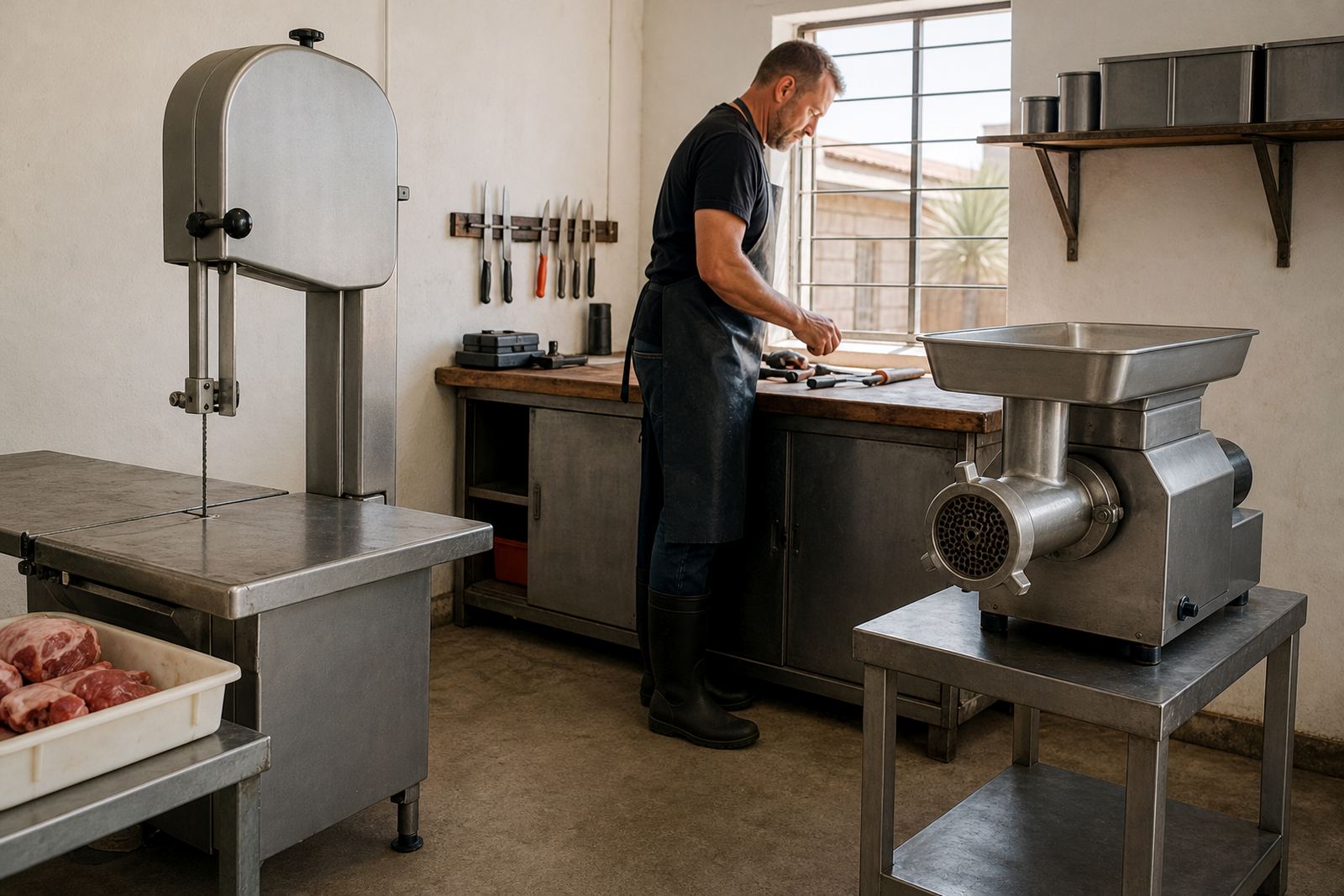
The setup had to suit a small shop style operation with limited floor space, steady power availability and only one person handling most of the work at first. That meant choosing equipment that was manageable for a new operator, with clear safety controls and simple maintenance routines. We also had to keep the workflow practical for someone who would be cutting, mincing and serving on the same day, often with limited help.
What we planned around before supply
Before anything was ordered, we looked at the working space, the expected meat volumes and the level of experience the owner had. A start-up like this does not benefit from oversized equipment. It needs the right size, enough strength for the task and a layout that allows the operator to move safely around the unit without crowding the area.
There were a few constraints to manage from the start:
- Limited floor space in the work area
- A tight start-up budget
- One main operator at launch
- Need for simple cleaning at the end of each shift
- Safe handling of blades, moving parts and cut product
We also took into account the usual Free State reality of mixed working conditions. In winter, cold meat handles differently and in summer hygiene routines need extra care. Load-shedding is always a concern, so we advised on practical work habits that reduce downtime and keep product movement organised when power is interrupted.
Equipment supplied and installed
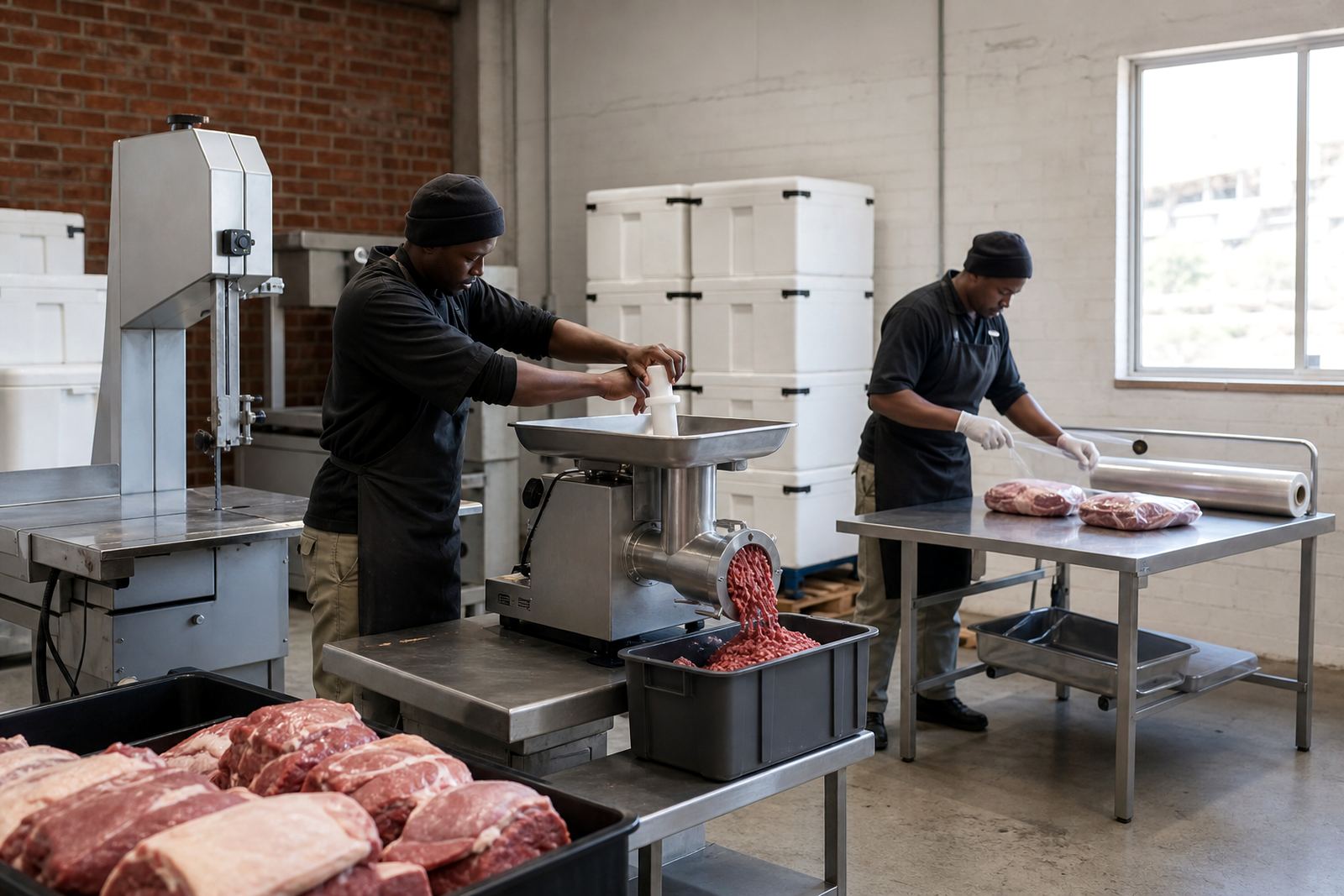
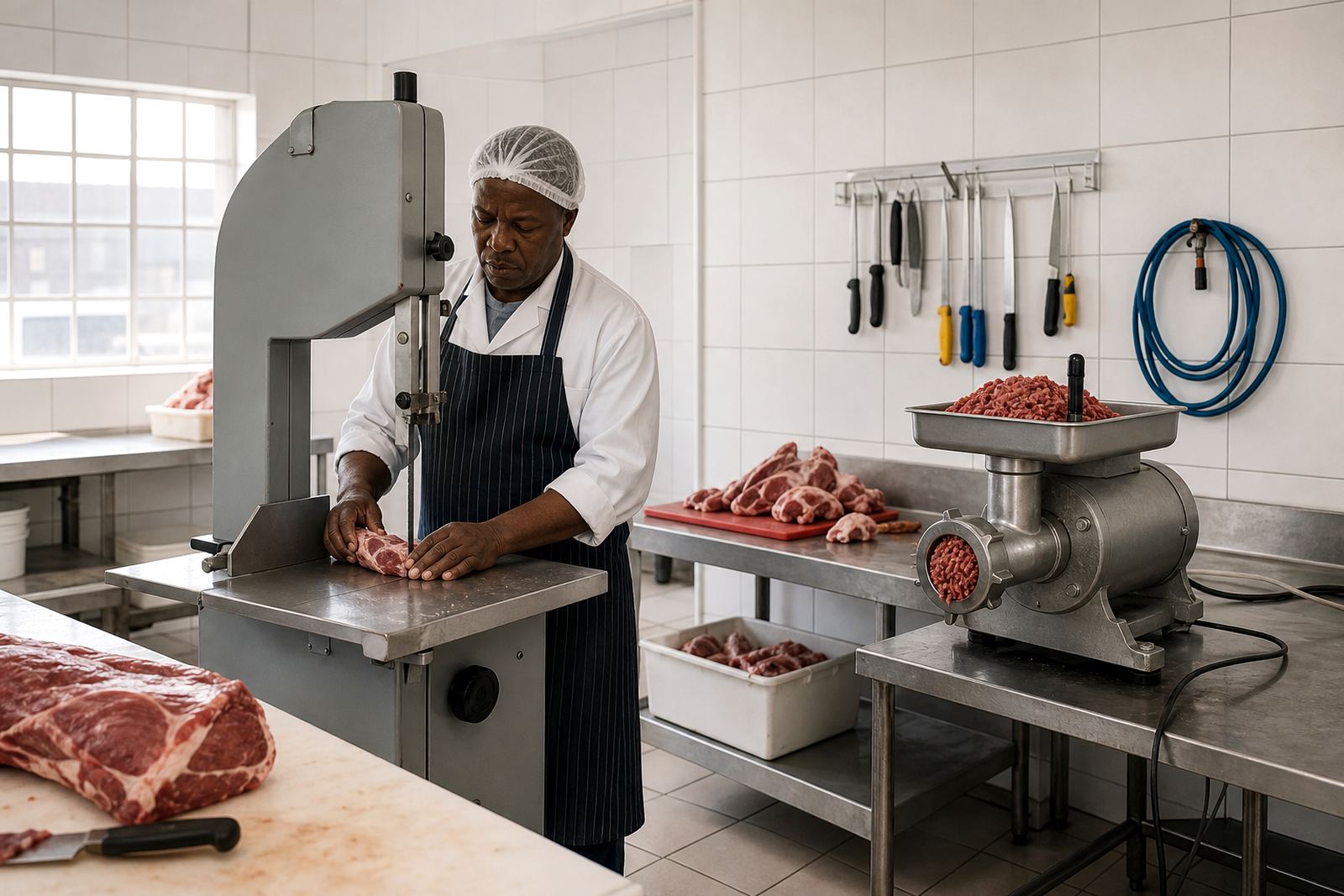
We supplied a basic but capable bandsaw and mincer combination, with installation arranged so the owner could begin trading without having to source separate support for each machine. The bandsaw was intended for controlled portioning and bone-in cuts, while the mincer handled ground meat preparation for everyday sales. We also set up the working area so the flow from cutting to mincing made sense for a small operation.
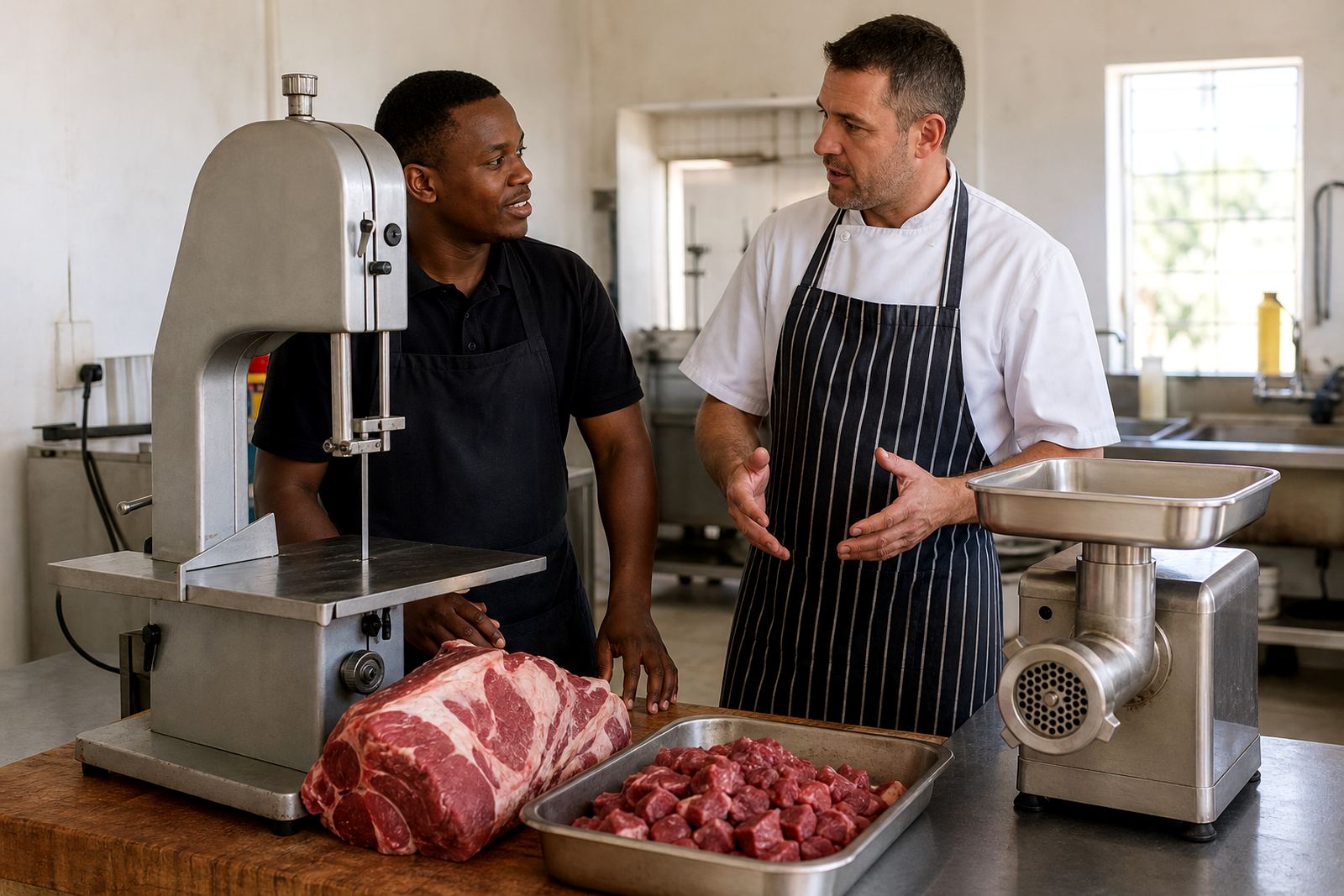
Along with the machines, we supplied the practical guidance needed for safe use. That included where the guards must stay in place, how to keep hands clear of the cutting zone, and how to treat cleaning as part of the working day rather than a once-off job. The machine area was shown in a way that a new operator could follow without fuss, and yes, we made sure the owner could repeat the routine alone afterward.
- Bandsaw installation and initial setup
- Mincer installation and working check
- Blade replacement guidance
- Plate and knife change guidance
- Cleaning demonstration after use
- Operator training on safe handling and shutdown
Training for a young operator
Because this was a first business, training mattered as much as supply. We spent time on start-up checks, safe feeding of product, switching off before cleaning and keeping the area clear of clutter. The goal was not to overwhelm the owner with theory, but to make sure the daily routine was repeatable and safe. A new operator must know what to look out for before a small problem turns into a stoppage.
The training covered PPE basics, including gloves where suitable, protective clothing and proper footwear. We also covered the limits of the machines, which parts should never be bypassed, and why regular cleaning keeps both hygiene and cutting performance in better shape. The owner got a clear routine for end-of-day washdown and drying, because moisture left on equipment is a quick way to invite trouble. In a place where municipal inspections can matter and customers notice cleanliness fast, that detail is worth doing properly.
Timeline from first visit to handover
The project moved over a short, practical timeline of three weeks from first discussion to handover. Week one was used for the brief, space check and final equipment selection. Week two covered supply planning and preparation of the installation steps. Week three was the on-site setup, testing and training session.
That schedule suited the client because a start-up needs momentum. Waiting too long can stall opening plans, while rushing the process usually creates mistakes. We kept the work staged so the owner had time to understand the process and the machine layout before trading began. The result was a measured handover rather than a one-off drop off.
Results on the floor and what held up best
Once the setup was in place, the business had a workable entry-level line for cutting and mincing without unnecessary complexity. The owner could manage small batches, keep product movement organised and serve customers without having to juggle awkward equipment. The biggest result was confidence, which matters a great deal when a young entrepreneur is trying to build a name for themselves in a local market.
The practical parts held up best: the simple layout, the cleaning routine and the clear training on how to use the machines safely. That is often what makes a start-up succeed in the early months, not fancy features but equipment that behaves the same way every day. We would take the same approach again for a new butcher in Bloemfontein or elsewhere, because the right first setup should be easy to use, easy to clean and easy to maintain.
- Better control over small batch meat preparation
- Cleaner workflow between cutting and mincing
- Safer operation for a first-time user
- Simple routine for daily cleaning and shutdown
Key facts
| Project type | Entry-level butchery setup for a young entrepreneur |
|---|---|
| Town | Bloemfontein, Free State |
| Equipment supplied | Bandsaw and mincer package |
| Services included | Installation, training, cleaning demonstration and handover |
| Timeline | 3 weeks from brief to handover |
| Support areas | Bloemfontein, Johannesburg, Pretoria, Durban and Cape Town delivery and servicing |