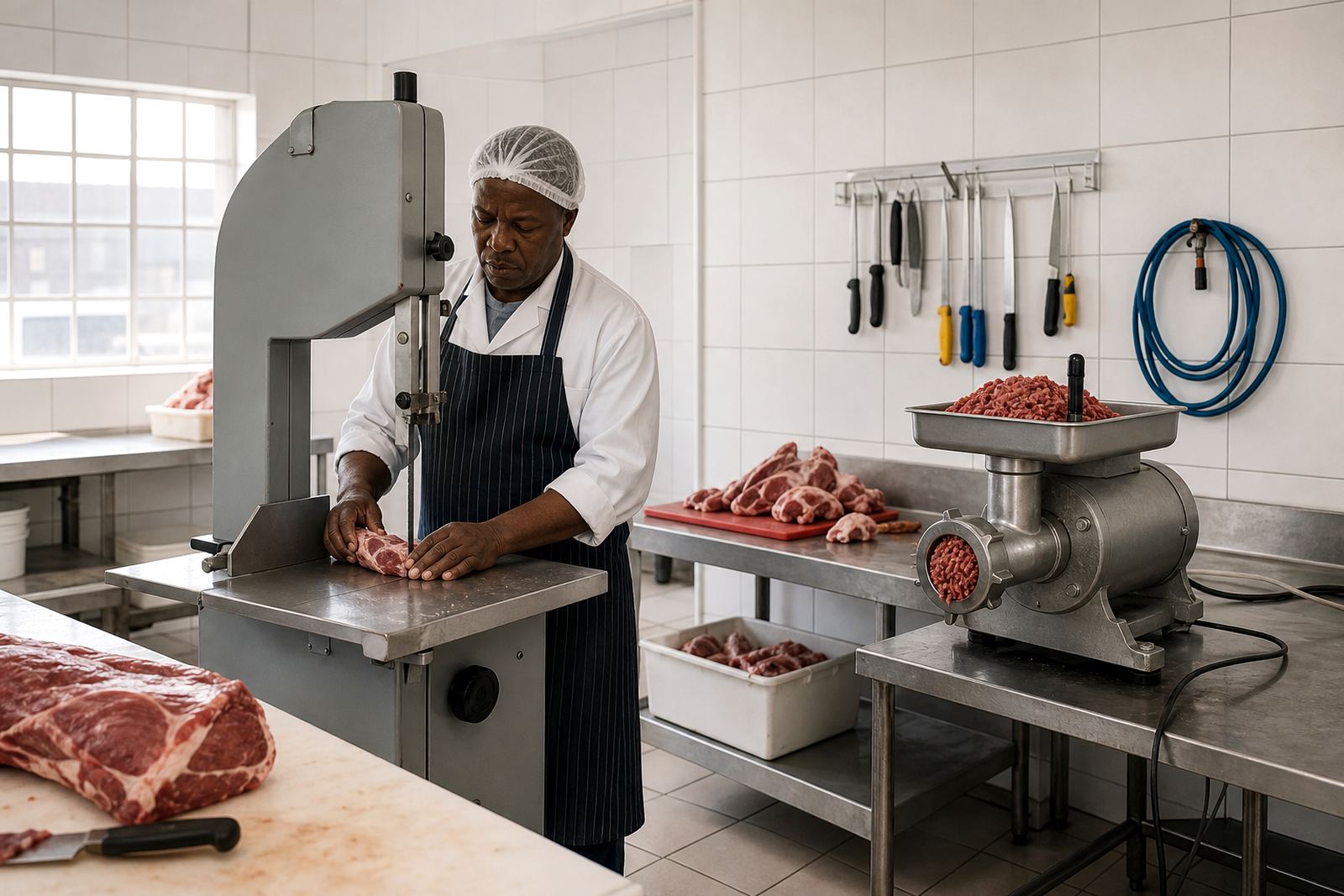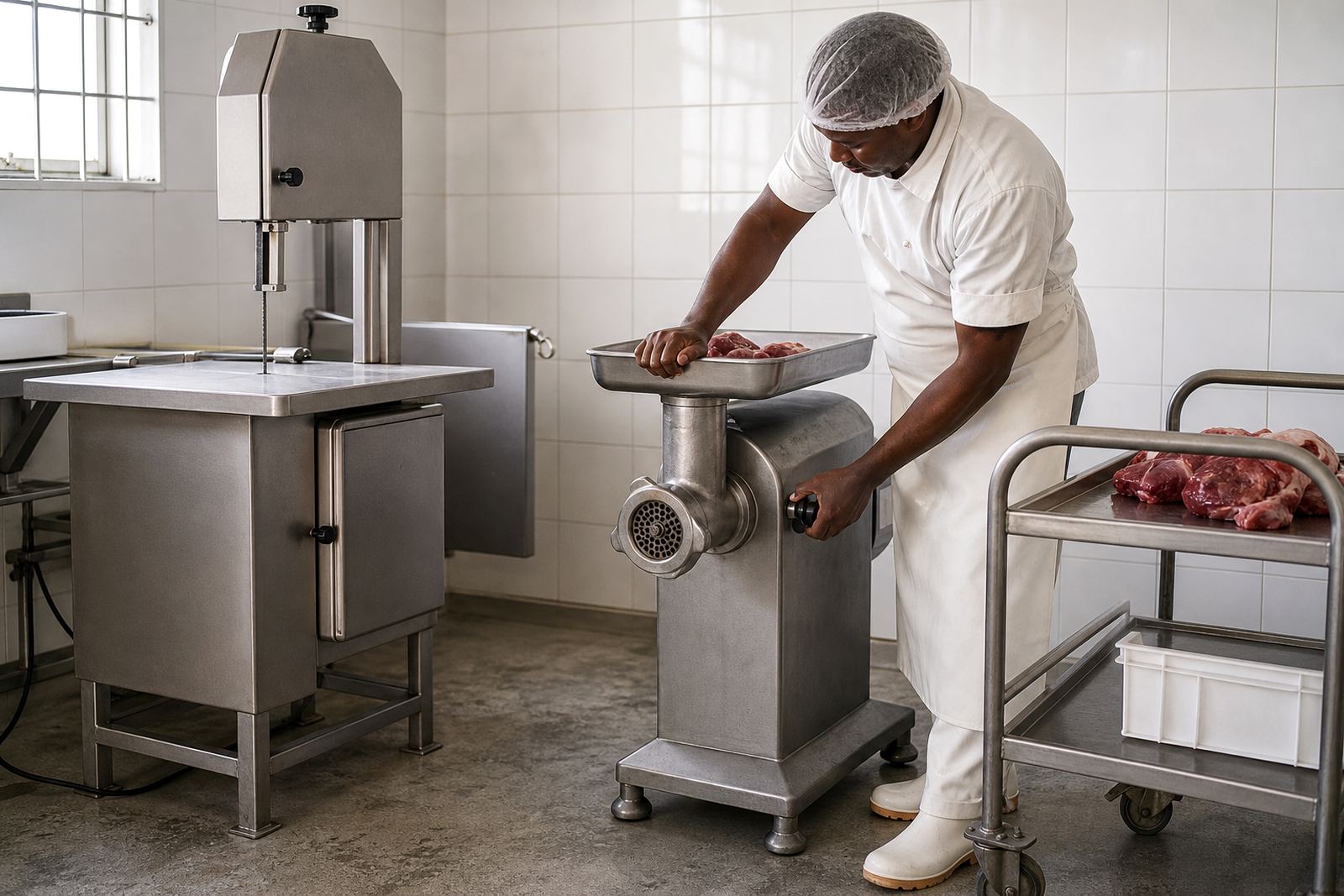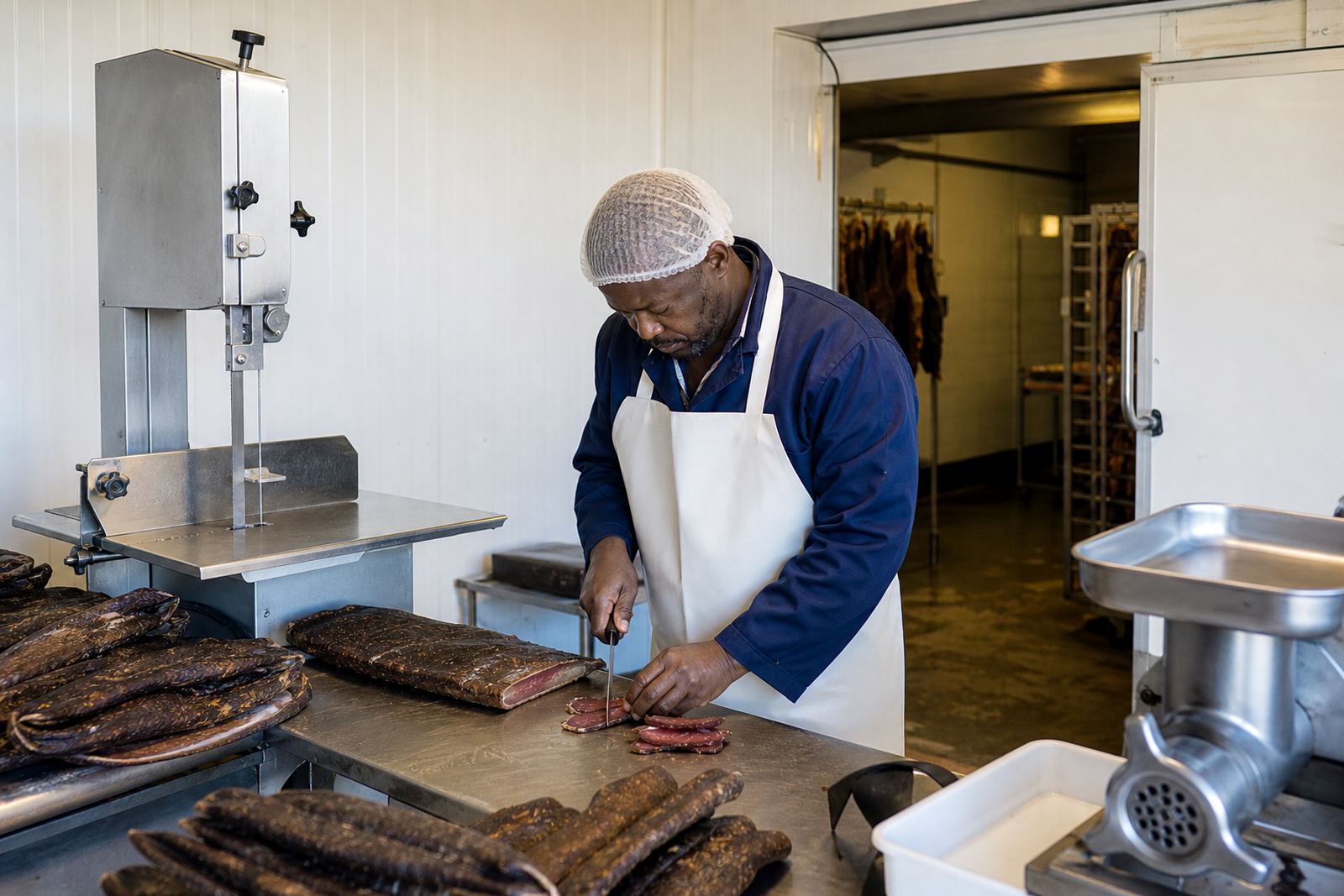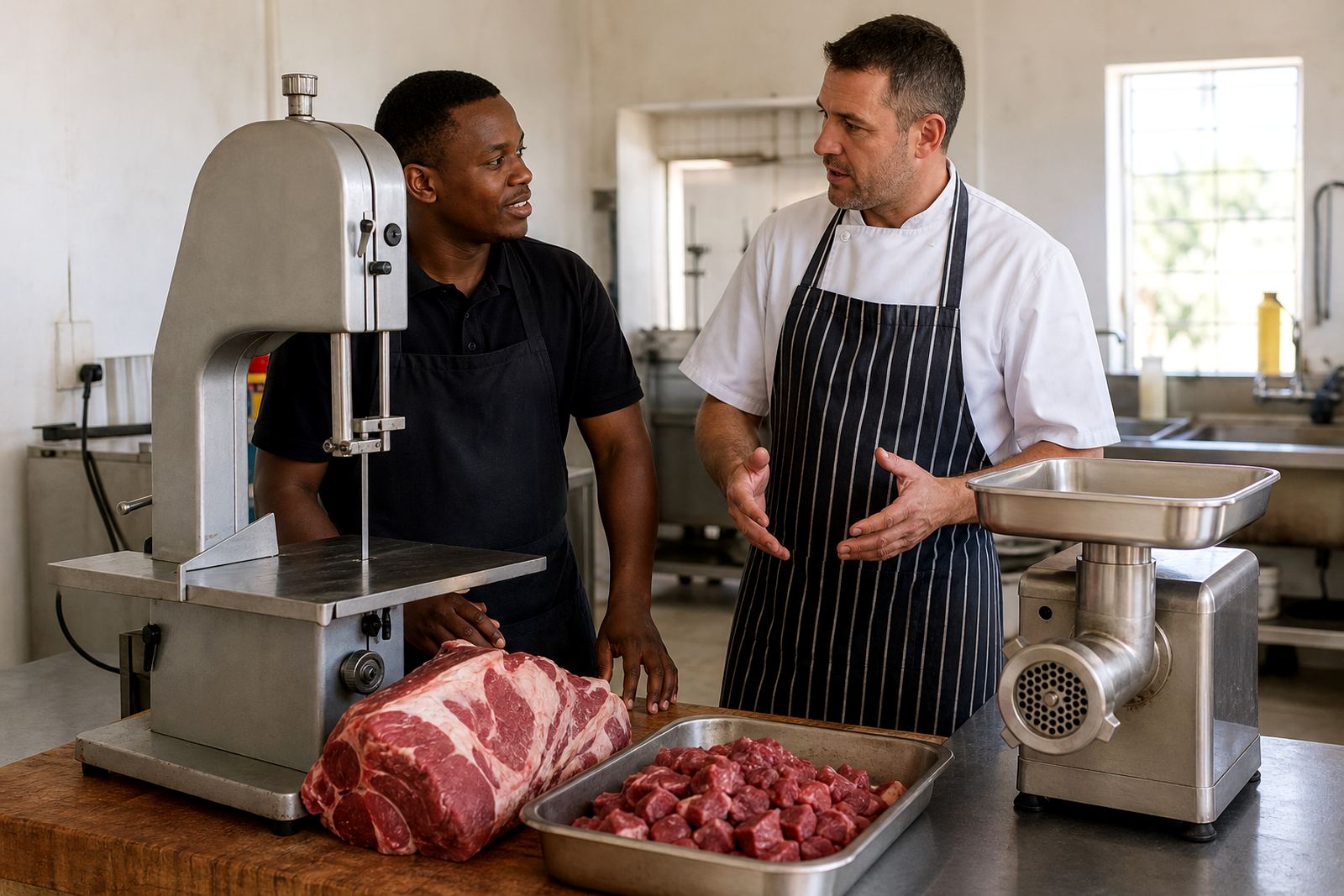


Back-of-house prep with daily volume in mind
The brief came from a restaurant operation in Pinetown, KwaZulu-Natal that wanted to do more work in-house instead of relying on outside prep. The team needed reliable butchery equipment for portion cutting and mince production, with enough order for a busy kitchen and enough flexibility for normal service pressure.
We kept the focus on practical use. The equipment had to fit into an existing prep area, support regular cleaning, and suit staff who rotate between stations. In a restaurant setting, that means fewer wasted steps, safer handling and equipment that can be wiped down properly at the end of service. It also meant planning around load-shedding risk and the humid coastal climate, where hygiene and routine maintenance matter even more.
What the restaurant needed from the equipment
The client was not after fancy extras. They needed a bandsaw for controlled portion cutting and a mincer for in-house mince prep, with simple operation and sensible care. The key points were consistency, cleanliness, and keeping the prep room moving without unnecessary downtime.
- Equipment for in-house mince and portion cutting
- Safe operation with guards in place
- Easy cleaning after service
- Support for a compact back-of-house layout
- Training for staff who would use the machines regularly
We also discussed the day-to-day realities of restaurant use. Knives, blades and cutting plates need regular checking, and staff must be shown how to keep the machines clean before residue builds up. In a busy kitchen, that kind of guidance saves time and helps extend the life of the equipment.
How we handled supply and setup in Pinetown
Our team managed the supply, delivery and setup process in phases over three weeks. Week one was for confirming the workspace, access points and the intended flow of product through the prep area. Week two was for delivery and installation. Week three was for handover, cleaning demonstrations and operator training.
We worked with the restaurant team to position the equipment for practical use, not just to make it fit. That included allowing enough room around the cutting area, making sure the staff had a clear path for loading and cleaning, and checking that the setup would suit regular service. Where a prep room is tight, small details matter, and if the equipment is placed poorly it becomes harder to keep tidy.
- Initial site discussion and requirement check
- Delivery to Pinetown and setup in the prep area
- Basic operator guidance and cleaning walk-through
- Advice on daily checks, blade care and safe use
Safety, cleaning and routine care
For restaurant equipment, the biggest risk is usually poor routine care rather than the machine itself. We showed the team how to keep guards in place during use, how to use proper PPE, and how to clean the equipment without leaving scraps, fat or moisture where they should not be. That is especially important in a coastal province like KwaZulu-Natal, where humidity can make dirt and residue harder to manage if a prep room is left unchecked.
We also covered basic care for the cutting parts. Blades, plates and knives should be inspected regularly, cleaned after use and changed when wear starts affecting performance. If a machine starts working harder than usual, or the cut quality changes, it is best to stop and check before a small issue becomes a breakdown. A short routine at the end of service is far better than a rushed repair later.
The result in the prep room
Once the equipment was in place, the restaurant had a cleaner and more practical way to handle its own prep work. The kitchen team could portion meat and prepare mince on site, which improved control over workflow and reduced dependence on outside prep schedules. It also helped the team keep service moving when orders came in faster than expected.
The main result was not just output, but control. The restaurant gained a prep setup that suited its pace of work, with equipment that was easy to understand and easier to manage every day. Staff were able to use the machines with more confidence, and the cleaning routine became part of normal closing procedures instead of a last-minute problem.
- Better in-house control over mince and portion prep
- Cleaner workflow in the back-of-house area
- Clearer cleaning and shutdown routine
- Less disruption during busy service periods
What we would do again for a similar site
If we were setting up another restaurant prep room in Pinetown or elsewhere in South Africa, we would follow the same approach: confirm the working area first, match the equipment to the actual volume, and train the staff before the first busy shift. That process keeps mistakes down and helps the team settle in quickly.
We would also keep servicing in the plan from the start. Commercial prep rooms need follow-up, whether that is a blade change, a plate and knife change, a service call or a parts check. Preventive maintenance is always cheaper than losing a prep machine mid-week. For any restaurant handling its own meat prep, the best setup is the one that is safe, tidy and easy to maintain.
Key facts
| Project location | Pinetown, KwaZulu-Natal |
|---|---|
| Client type | Restaurant back-of-house prep operation |
| Work delivered | Bandsaw and mincer supply, installation, training and cleaning guidance |
| Timeline | 3 weeks from planning to handover |
| Equipment use | In-house mince production and portion cutting |
| Support areas | Delivery, setup, servicing and parts supply from Bloemfontein |
| Local coverage | Bloemfontein, Johannesburg, Pretoria, Durban, Cape Town, Kimberley, Welkom and Kroonstad |