

Project brief for regular sausage batches
The brief came from a sausage-making room in Noordhoek, close to Cape Town, where the team needed a practical mince-focused setup for steady weekly production. The room had to support repeat batches, keep cleaning simple and fit into a space that also needed to stay tidy for food handling.
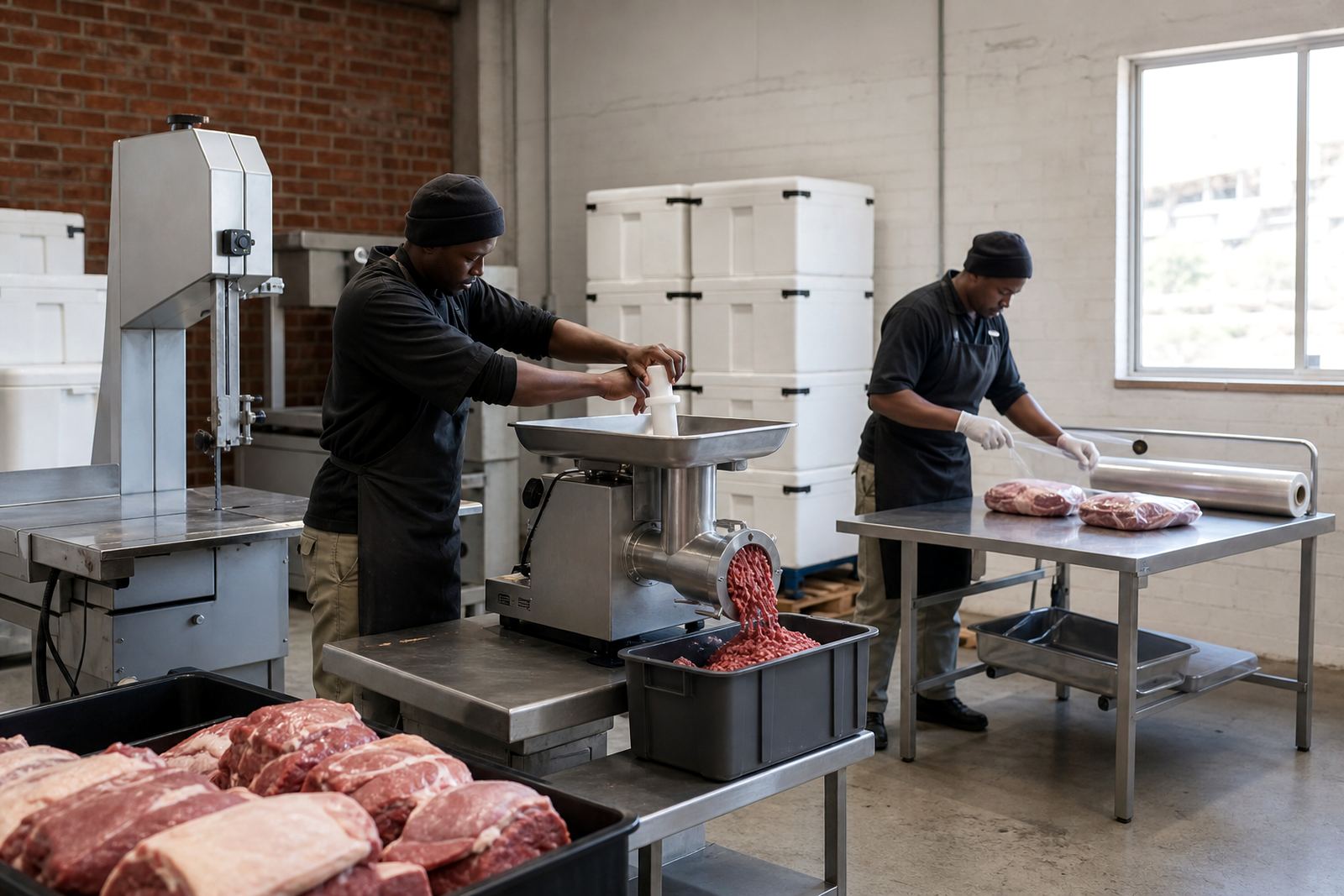
The client wanted equipment that would handle day to day butchery work without fuss. That meant a reliable mincer for sausage preparation, a bandsaw for broader cutting work, and a layout that let staff move between trimming, mincing, cleaning and packing without crossing paths too much.
- Client type: home and small commercial butchery room
- Location: Noordhoek, Western Cape
- Primary use: regular sausage preparation and supporting butchery cuts
- Focus: clean workflow, safe operation and easier maintenance
Constraints in a coastal working room
Being near the coast, the room had to deal with moisture in the air, which is never ideal for equipment storage or daily cleaning routines. The client also needed a solution that would cope with power interruptions and still fit a production rhythm that does not leave much room for delay.
We also had to keep the setup straightforward for staff with different levels of experience. A room like this needs clear guard use, proper knife and blade care, and enough space for cleaning without leaving wet floors or meat residue around the work area. That matters as much as the machine choice.
- Coastal humidity was a factor in care and storage
- Load-shedding planning was part of the working routine
- Cleaning access had to stay easy and practical
- Safety reminders covered guards, PPE and routine hygiene
What we supplied and set up
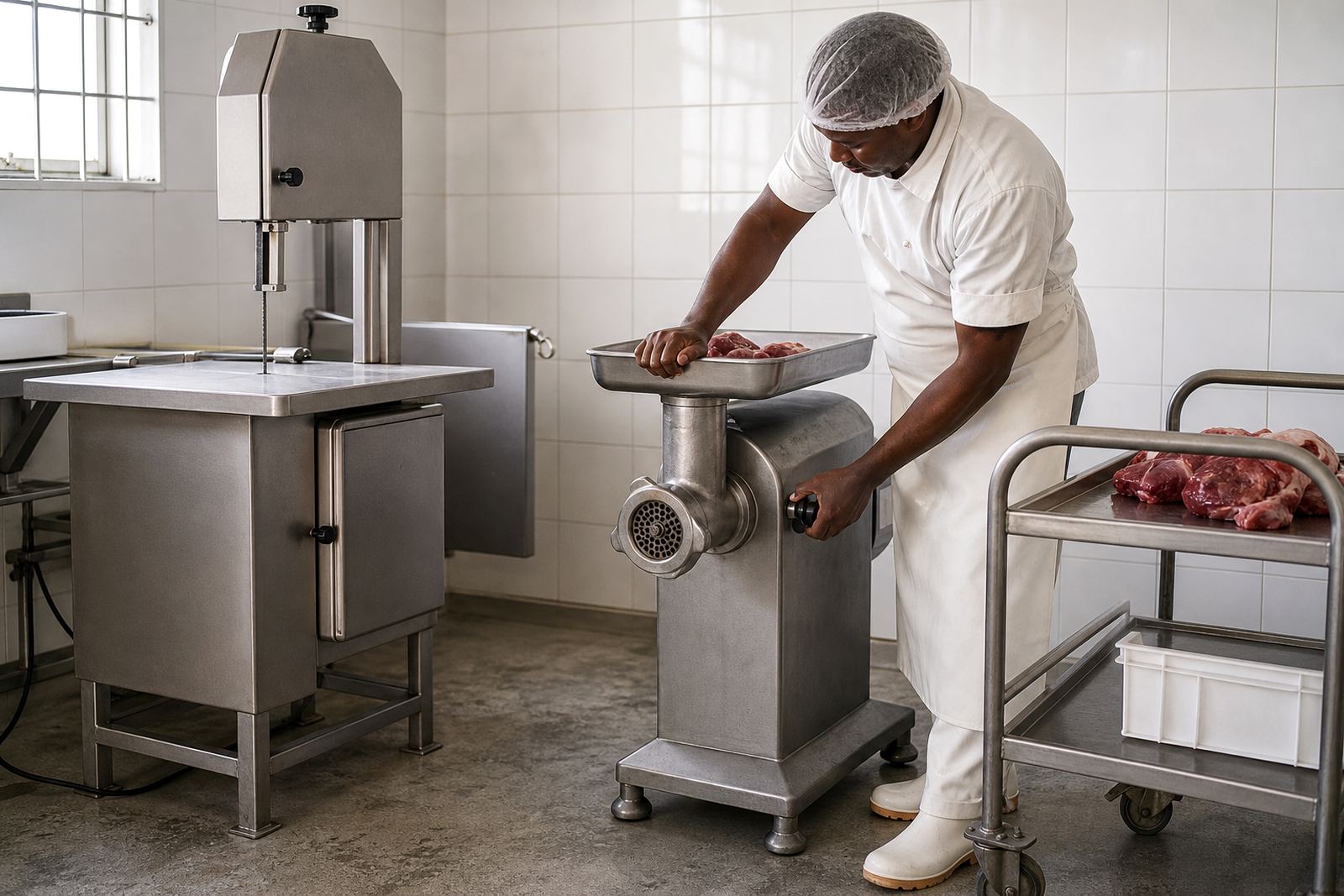
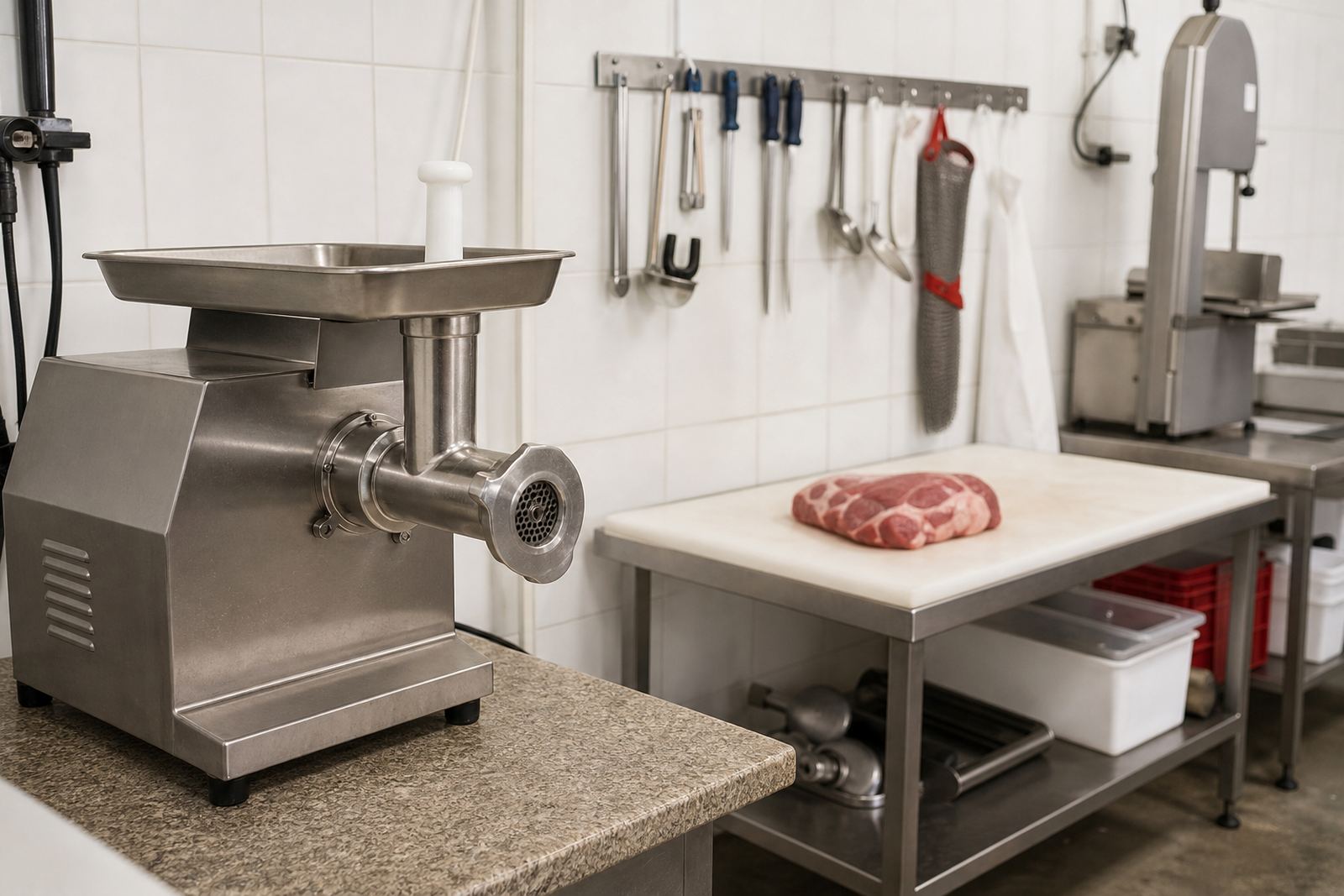
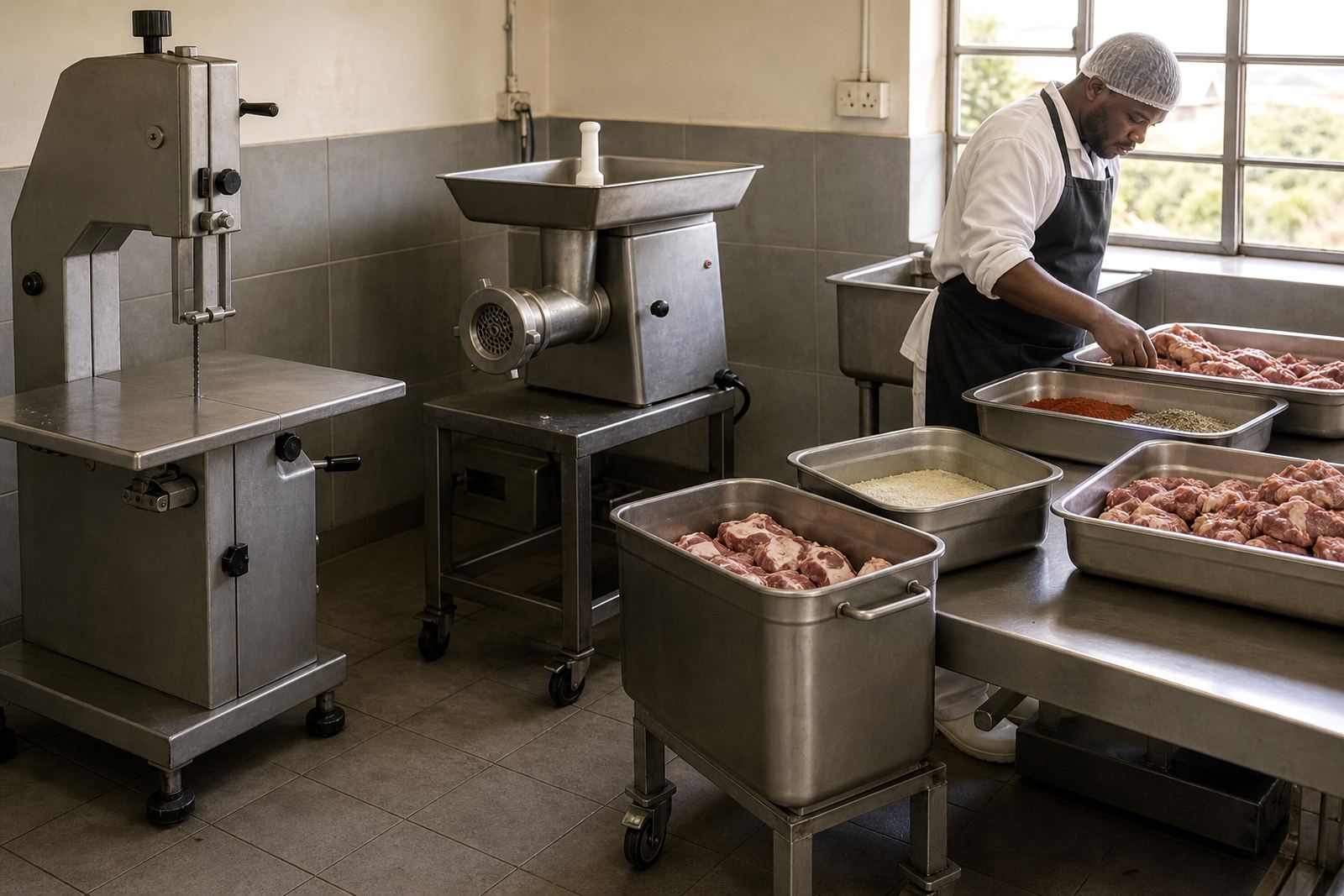
MorCut supplied a butchery bandsaw and a mincer suited to the room’s regular sausage batches, then handled delivery and setup on site. We also checked the working position of the machines so the staff could feed, cut, collect and clean with less backtracking in a tight room.
Along with the main equipment, we covered the everyday items that keep a room moving: blade care, plate and knife changes on the mincer, cleaning demonstrations and operator training. That support is often what makes the difference between a room that looks good on day one and a room that stays useful months later.
- Bandsaw installation and setup
- Mincer installation and setup
- Cleaning demonstrations for staff
- Operator training for safe daily use
- Parts guidance for future servicing
Timeline from delivery to first production
The project ran over a short, practical timeline of three weeks from first discussion to working handover. The first stage was room assessment and planning, followed by delivery, positioning and initial setup. After that we spent time on training and checking the cleaning and servicing points with the team.
That pace worked well because the client already had a clear idea of how often the room would be used. There was no need for a long build-up, but there was a need for careful handover so the team could start producing sausage batches with confidence. A rushed setup tends to cause problems later, especially when blades and plates start wearing in.
- Week 1: brief, room review and equipment selection
- Week 2: delivery, placement and installation
- Week 3: training, cleaning walk-through and handover
Results on the floor
Once the room was running, the client had a cleaner flow for sausage preparation and less stop-start handling during mince work. The equipment choice supported regular production batches while keeping cleaning and maintenance manageable for the team. It also gave them a more controlled way to work with raw product, which is important in any butchery room.
For a setup like this, success is not just about output. It is about consistency, easier supervision and fewer delays when the room is busy. The client could now plan batches with clearer steps and keep the room in better order at the end of each shift.
- Better batching for sausage preparation
- Cleaner work flow between cutting and mincing
- Less downtime from avoidable handling problems
- More confident day to day operation for staff
What we would repeat on the next room
We would use the same approach again: keep the layout simple, match the equipment to the actual batch size and spend proper time on training. It is also worth building in a clear servicing plan from the start, because mincer plates, knives and bandsaw blades need regular attention if the room is going to stay efficient.
In a place like Noordhoek, we would again keep moisture control and cleaning habits front of mind. A tidy room, dry storage where possible and a team that knows how to handle guards and PPE can make a major difference to safety and equipment life. That is the practical part people sometimes skip, but it pays off later.
- Keep the workflow simple and direct
- Plan servicing before wear becomes a problem
- Train staff on cleaning, guards and safe handling
- Allow space for drying and proper storage after wash-down
Key facts
| Project location | Noordhoek, Western Cape |
|---|---|
| Project type | Mince-focused sausage room |
| Core equipment | Butchery bandsaw and mincer |
| Services used | Installation, training, cleaning demos and servicing support |
| Timeline | 3 weeks |
| Support areas | Delivery and servicing across South Africa |