

What A Plate And Knife Change Covers
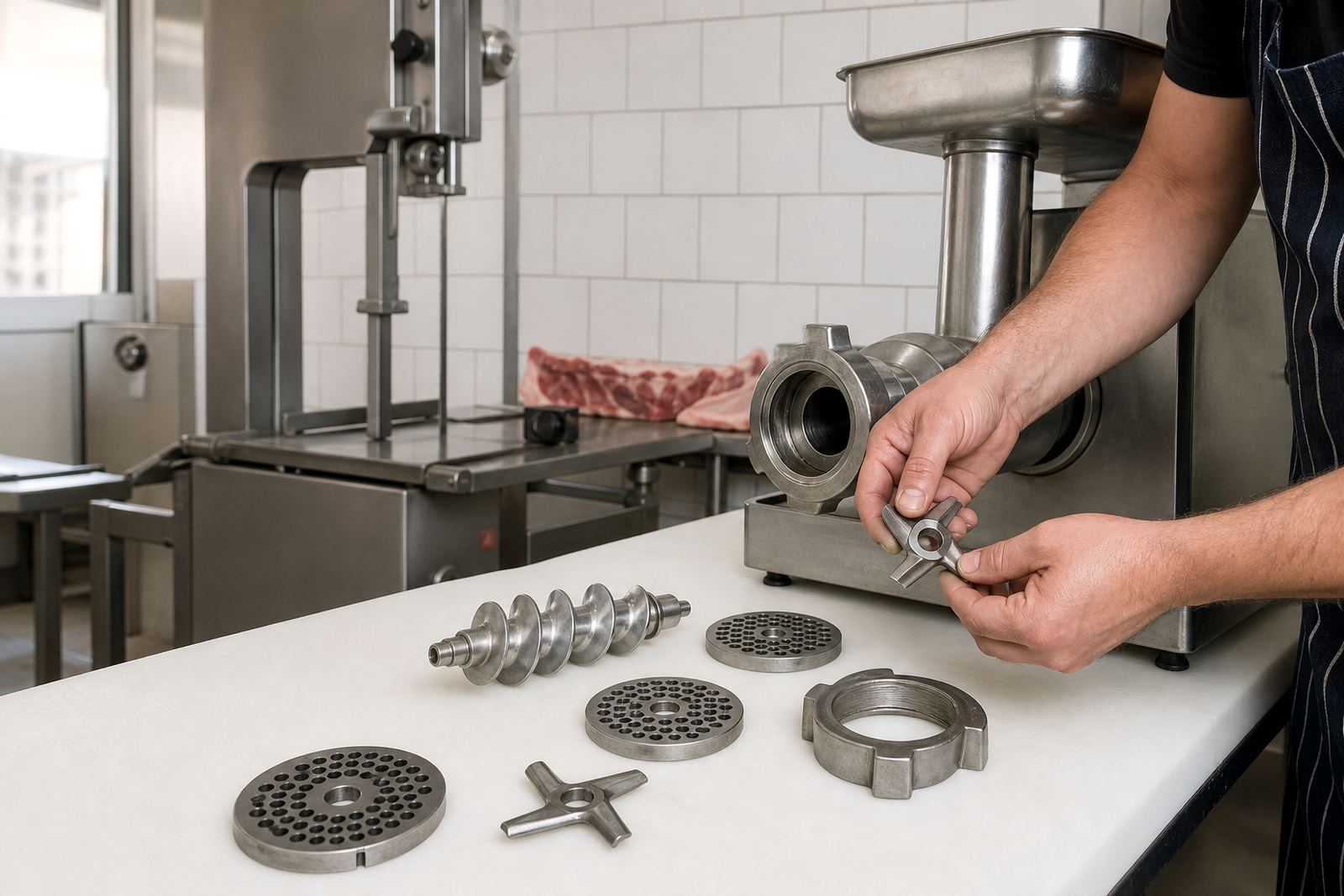
Our plate and knife change service is part of routine mincer maintenance and can be done during a planned service visit or as part of a breakdown callout. We remove worn cutting parts, fit matched replacements, check the seating faces, and make sure the head is assembled correctly before the machine goes back into use. If the plate has grooving, the knife is chipped, or the cut has started to look rough and uneven, that is usually the point to replace the parts rather than push them further.
The aim is simple: keep product quality consistent and reduce unnecessary wear on the drive and head assembly. A mincer that is run with blunt or mismatched cutting parts can work harder than it should, and that can lead to heat build-up, poor mince texture and avoidable downtime. In busy shops, a small delay in changing the plate and knife can turn into a bigger repair later on.
- Removal of worn plate and knife sets
- Inspection of the mincer head, retaining parts and seating surfaces
- Fitting of suitable replacement parts
- Basic operational test after reassembly
How The Change Is Done On Site Or In Workshop
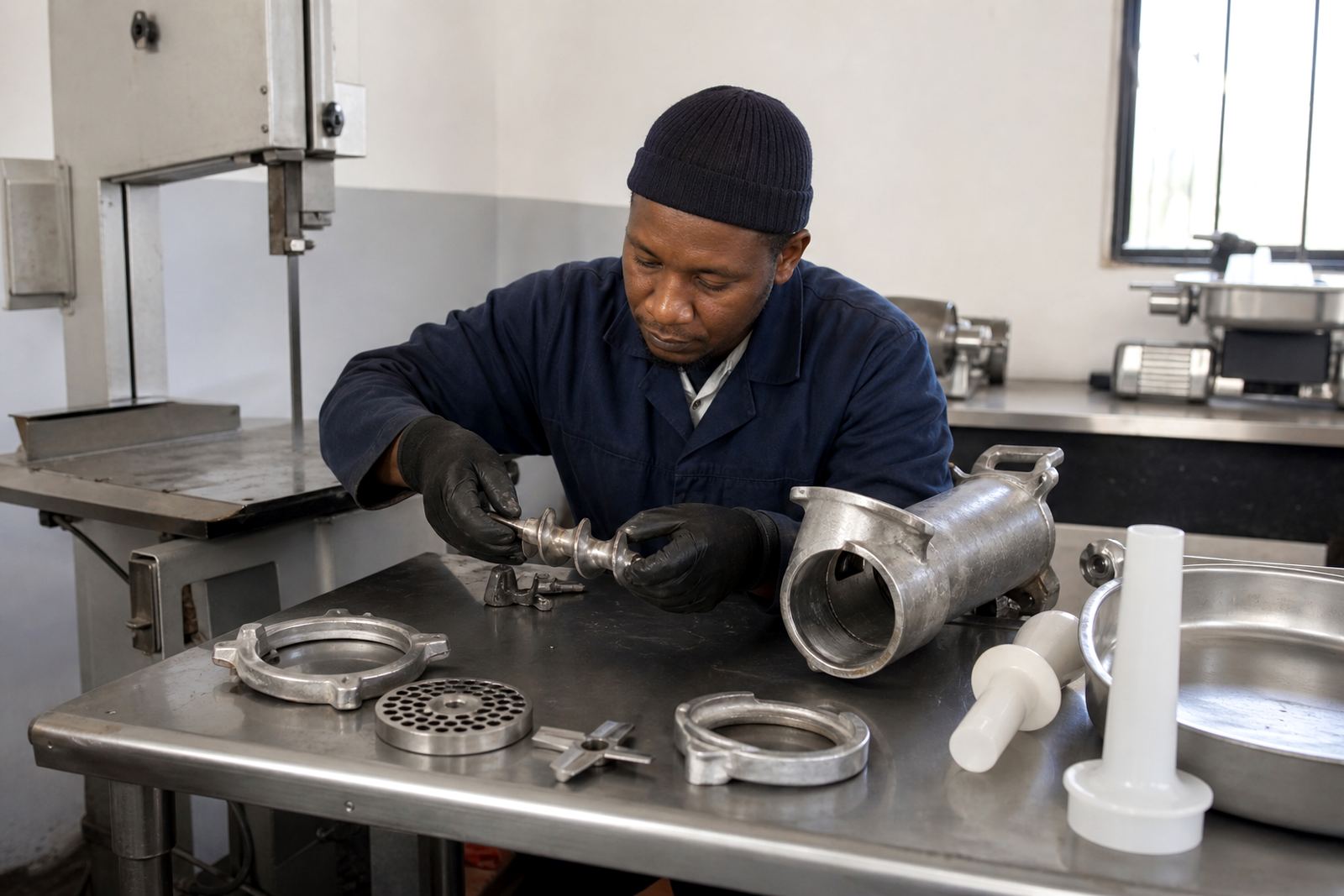
We start by checking how the machine is cutting, how the feed is moving and whether there are signs of misalignment, contamination or excessive wear. From there we strip the head carefully, clean the contact areas and fit the new plate and knife in the correct order. If the machine has been running with product residue or old grease in the wrong places, that gets cleared out before reassembly. It is common sense work, but it needs care and a steady hand.
Where possible, the change is completed on site so the shop can get back to work quickly. For machines that need more attention, the unit can be taken in for workshop work and returned once the job is complete. We also advise whether other parts should be looked at at the same time, such as the worm, retaining ring, seals or drive-related components, depending on the condition of the unit.
- On-site change for routine service visits
- Workshop handling for more involved repairs
- Condition check before and after the change
- Practical advice on any follow-up work needed
When Plates And Knives Should Be Replaced
There is no one-size-fits-all interval because usage varies from one butcher to the next. A small home butcher who runs the machine occasionally will not wear parts at the same rate as a busy shop serving meat daily. The right time to replace depends on how often the mincer is used, what product is being processed and how well the machine is cleaned after every shift.
As a general guide, the first signs are usually plain to see. The mince starts looking ragged, the machine needs more effort to pull the meat through, the head may feel hotter than normal, or the output becomes uneven. If you are seeing that sort of change, the plate and knife probably need attention. Waiting too long can also put extra pressure on the motor and other moving parts, and that can be a costly mistake.
- Regular commercial use: check during planned service visits
- Home use: inspect if the cut quality changes
- Replace sooner if parts are chipped, scored or badly worn
- Do not keep forcing the machine when cut quality drops
Turnaround And What To Expect
Turnaround depends on the condition of the machine and whether the right parts are immediately available. Straightforward plate and knife changes are usually handled quickly, especially when the machine is already scheduled for a service visit. If additional cleaning, adjustment or part replacement is needed, we will explain the steps before work continues so there are no surprises. Clear communication matters, particularly when a shop is planning around trading hours.
For customers in Bloemfontein, Kimberley, Welkom and Kroonstad, local support helps keep downtime down. For Johannesburg, Pretoria, Durban and Cape Town deliveries or service arrangements, timing is planned around route and job load. We always try to work in a way that suits the butcher’s day, whether that means early site work, a workshop booking or a return visit after parts are secured. During load-shedding or busy holiday periods, a little forward planning helps more than people think.
Safety, Cleaning And Good Mincer Care
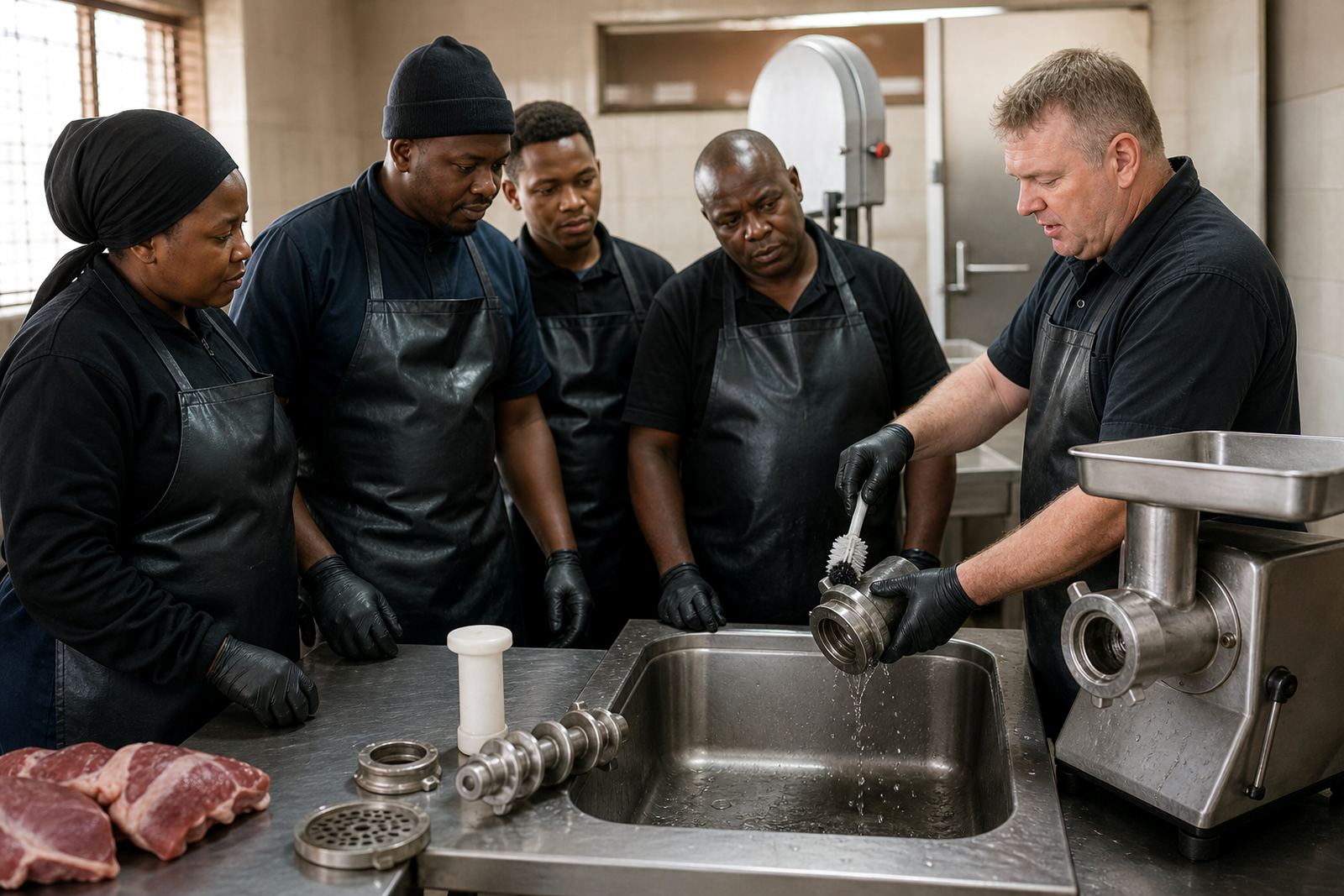
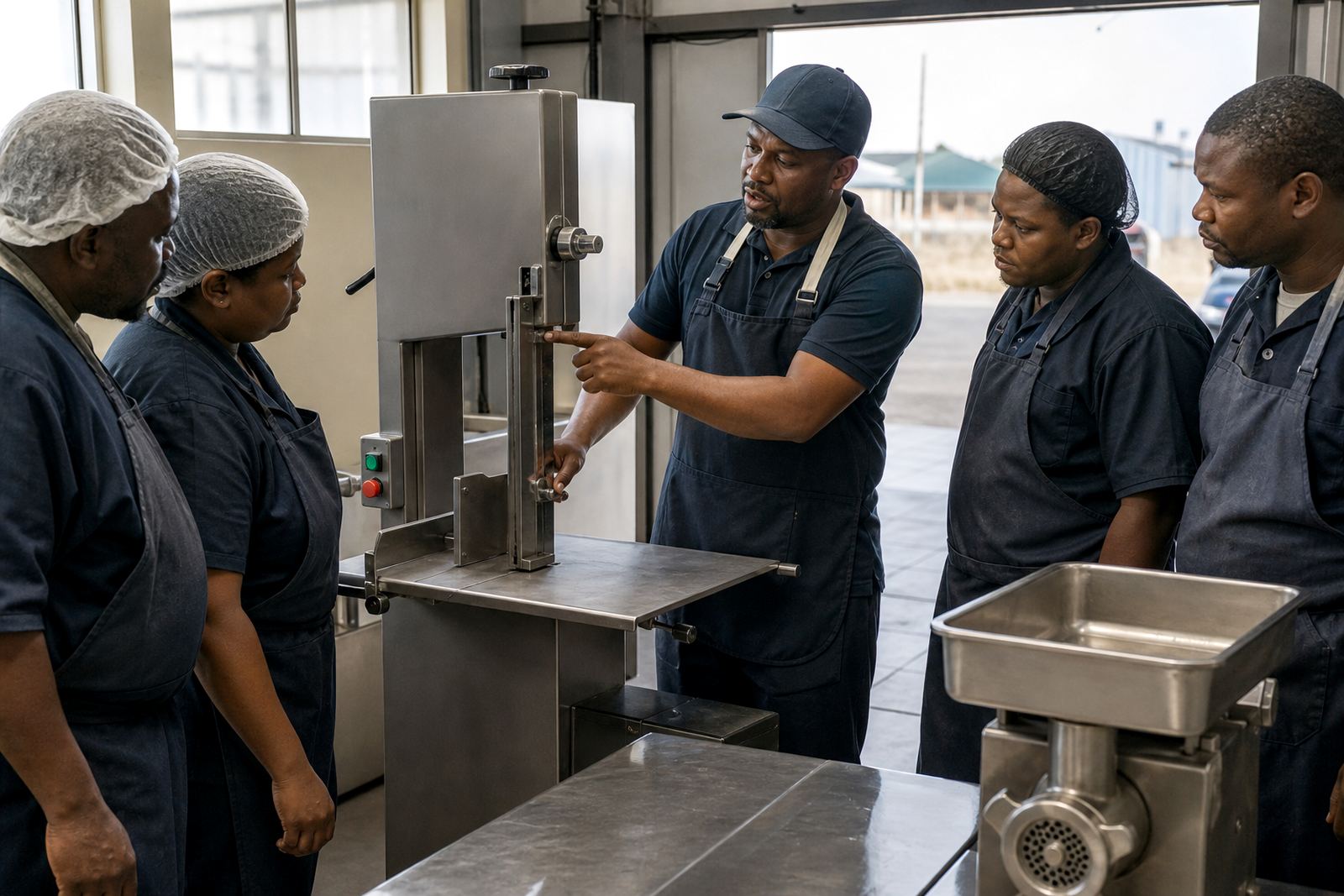
Any cutting work on a mincer should be done with the machine isolated and the correct guards or covers in place. Operators should wear suitable PPE and never reach into the head or feed area while the unit is live. Cleaning matters just as much as the part change itself. Old fat, meat fibres and residue left in the head can affect fit, wear and hygiene. A clean machine is easier to service and less likely to give trouble later on.
We also show customers how to handle day-to-day care between services. That includes stripping and washing the head properly, drying the parts before reassembly and storing spares in a dry place. In coastal areas like Durban and Cape Town, humidity can affect metal parts if they are left damp. In all areas, a simple wipe-down after use and proper storage makes a real difference. A small routine now saves a bigger problem later on.
- Isolate power before any cleaning or part change
- Use correct PPE and keep hands clear of moving parts
- Clean and dry plates, knives and head components thoroughly
- Store spare parts out of moisture and dust
Pricing Approach And Maintenance Planning
Pricing is based on the work required, the condition of the machine and whether the job is done on site or in the workshop. A simple plate and knife change costs less than a job where parts are badly worn, the head needs extra cleaning or the machine needs follow-up adjustment. We do not guess at the work from a distance. The best approach is to assess the machine first, then quote according to the actual condition and parts needed.
For regular users, we recommend tying plate and knife checks into scheduled servicing. That keeps the machine in better shape and helps avoid emergency stoppages during peak trade. Some shops prefer to replace these parts at set intervals, while others wait for a change in cut quality. Either way, planned maintenance is usually the more economical option. It also makes ordering parts easier, so the mincer is not left standing when a busy weekend comes around.
- Quoted according to condition and labour required
- On-site and workshop options available
- Good for planned service schedules and breakdown support
- Parts supply can be arranged with the service visit
Key facts
| Service focus | Replacement of mincer plates and knives during maintenance or repair visits |
|---|---|
| Coverage | Bloemfontein, Johannesburg, Pretoria, Durban, Cape Town and selected regional supply areas |
| Service format | On-site visits, workshop handling and breakdown callouts |
| Parts scope | Matching cutting parts, seating check, reassembly and basic test run |
| Typical use cases | Routine wear, poor cut quality, chipped or scored parts, planned servicing |
| Safety checks | Power isolation, guard awareness, cleaning and PPE guidance |