
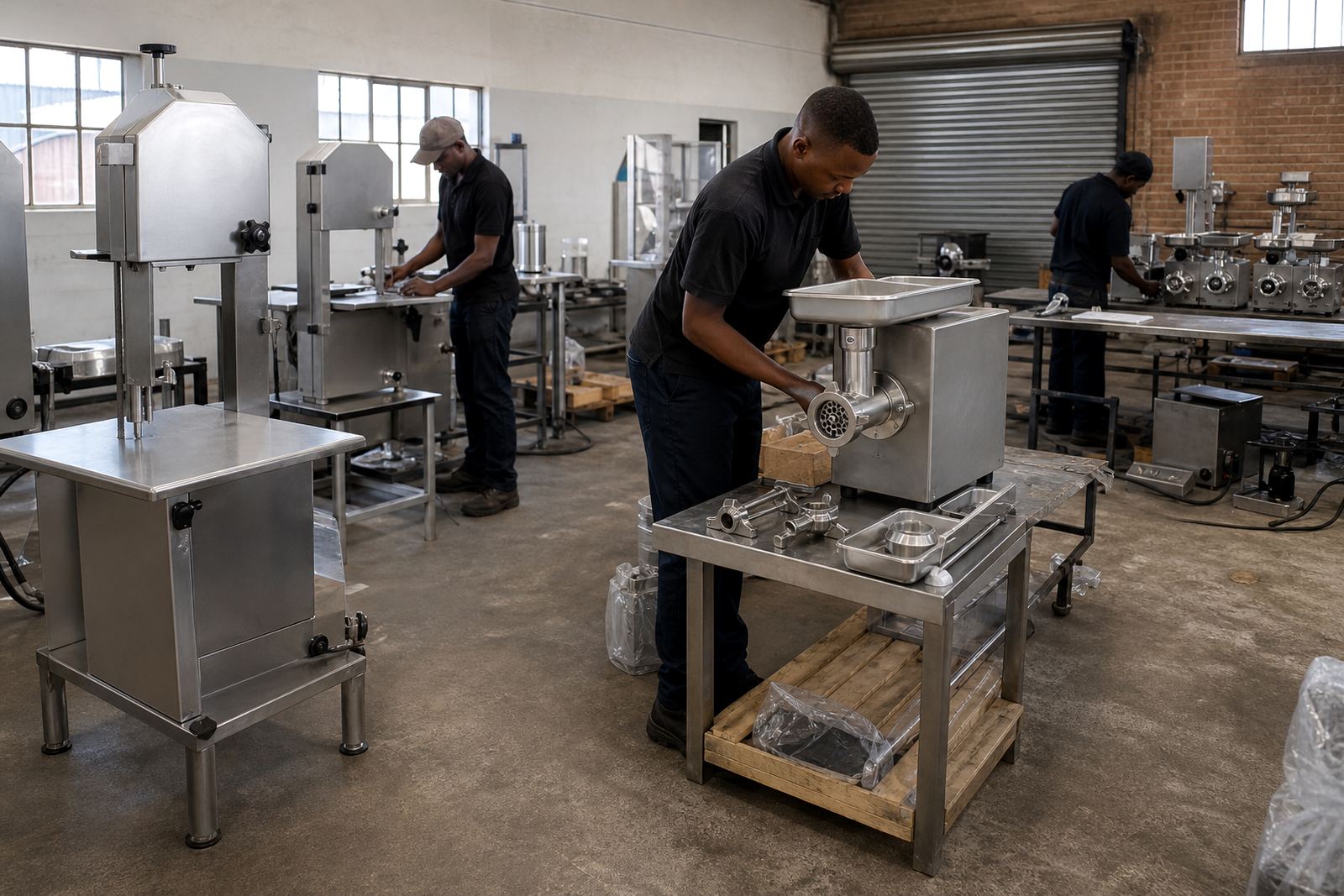
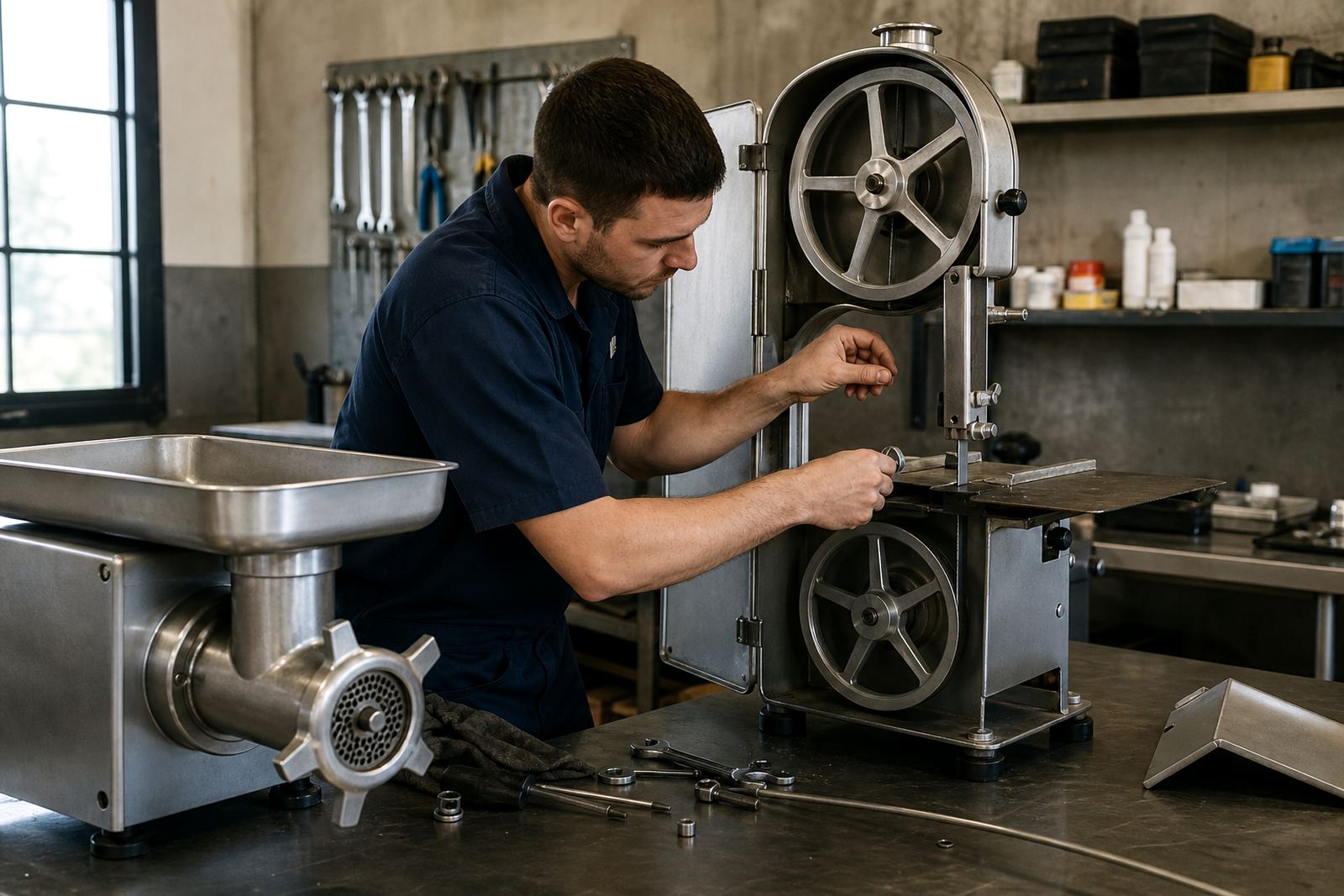
What our mincer servicing covers
Our mincer servicing is aimed at keeping your machine working properly for cleaner operation and dependable mince preparation. We service mincers used in shops, home butchery rooms, meat processing spaces and small production setups where hygiene and consistency matter every day. A well-serviced mincer is easier to use, easier to clean and less likely to struggle under normal load.
Servicing is carried out with attention to the parts that do the real work. That includes the feed area, cutting components, drive parts, seals, fittings and the general condition of the machine body. We also look for signs of wear that can affect output, such as poor feed, uneven mincing, unusual noise, overheating or residue build-up. If a part needs replacing, we advise on the next step before the machine is put back into service.
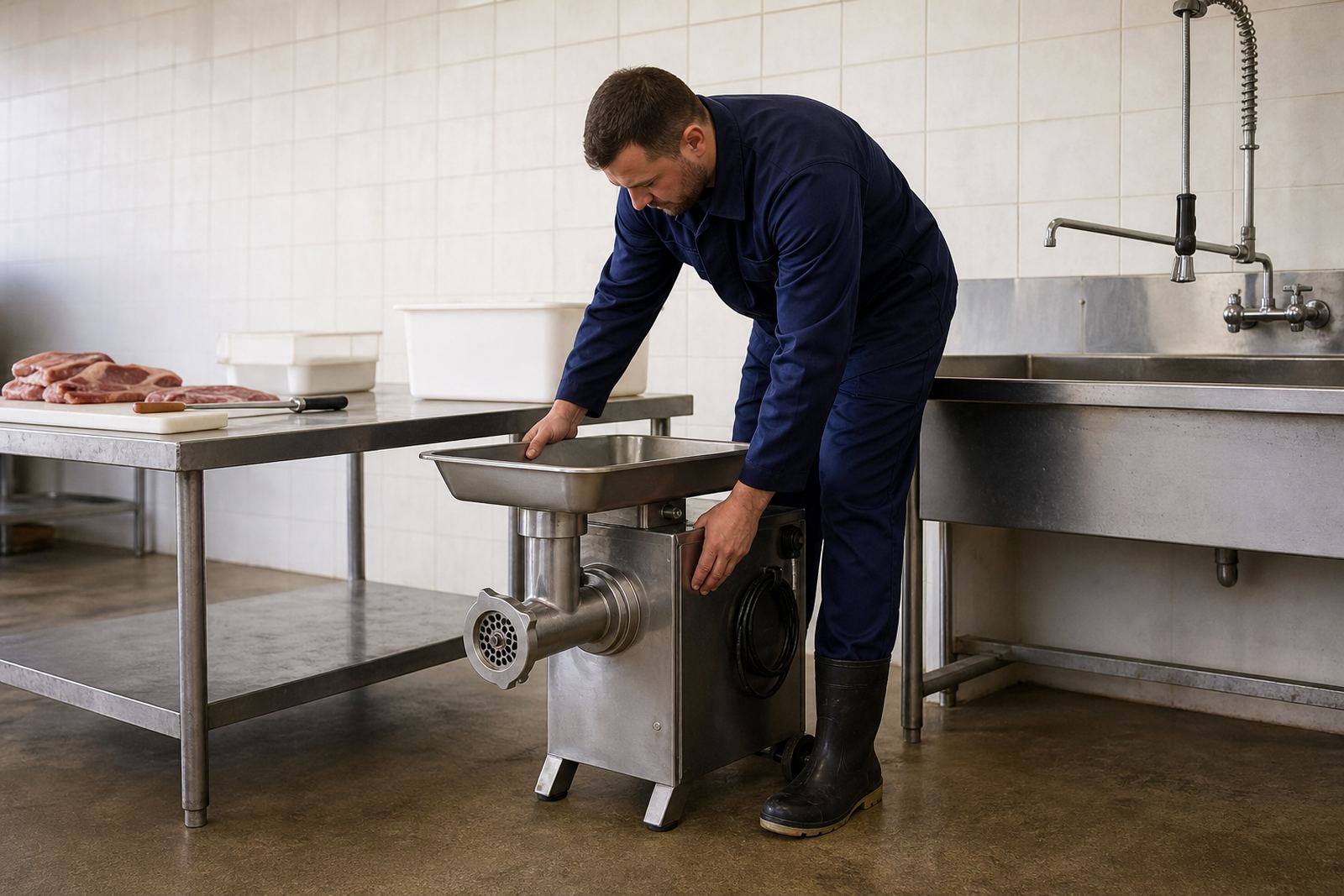
For operators, this is also the right time to check basic safety points. Guards should be in place, the machine should be switched off before cleaning and staff should use suitable PPE during handling and maintenance. A mincer that is looked after properly is simpler to manage and less likely to give trouble during busy periods.
Step-by-step servicing process
We follow a clear process so you know what is being done and why it matters. First, the machine is assessed for symptoms, usage patterns and any reported faults. Then it is opened, cleaned and checked part by part so the likely cause of wear or poor performance can be identified before work starts.
- Initial inspection and fault discussion with the operator or owner
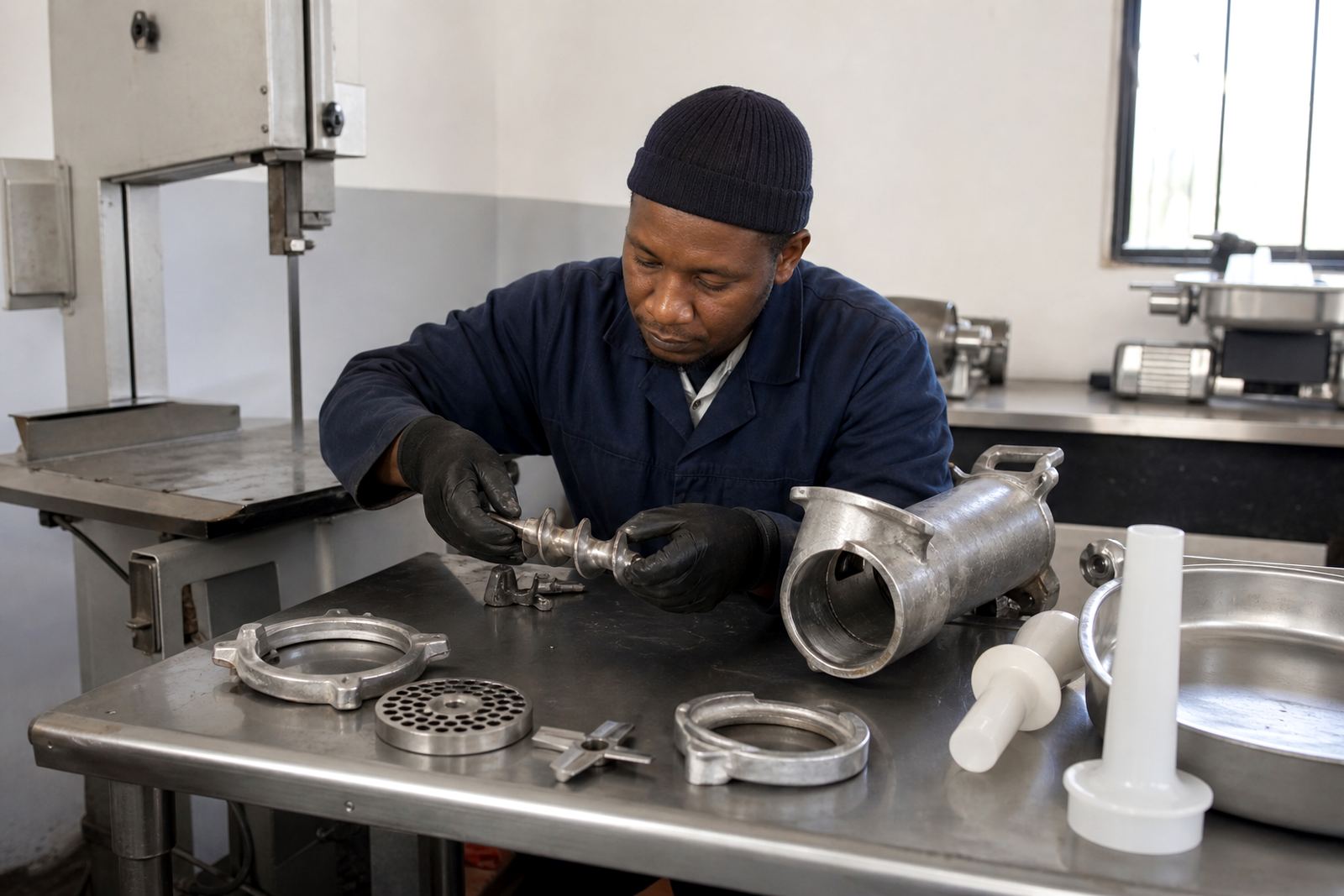
- Strip down of accessible components for cleaning and examination
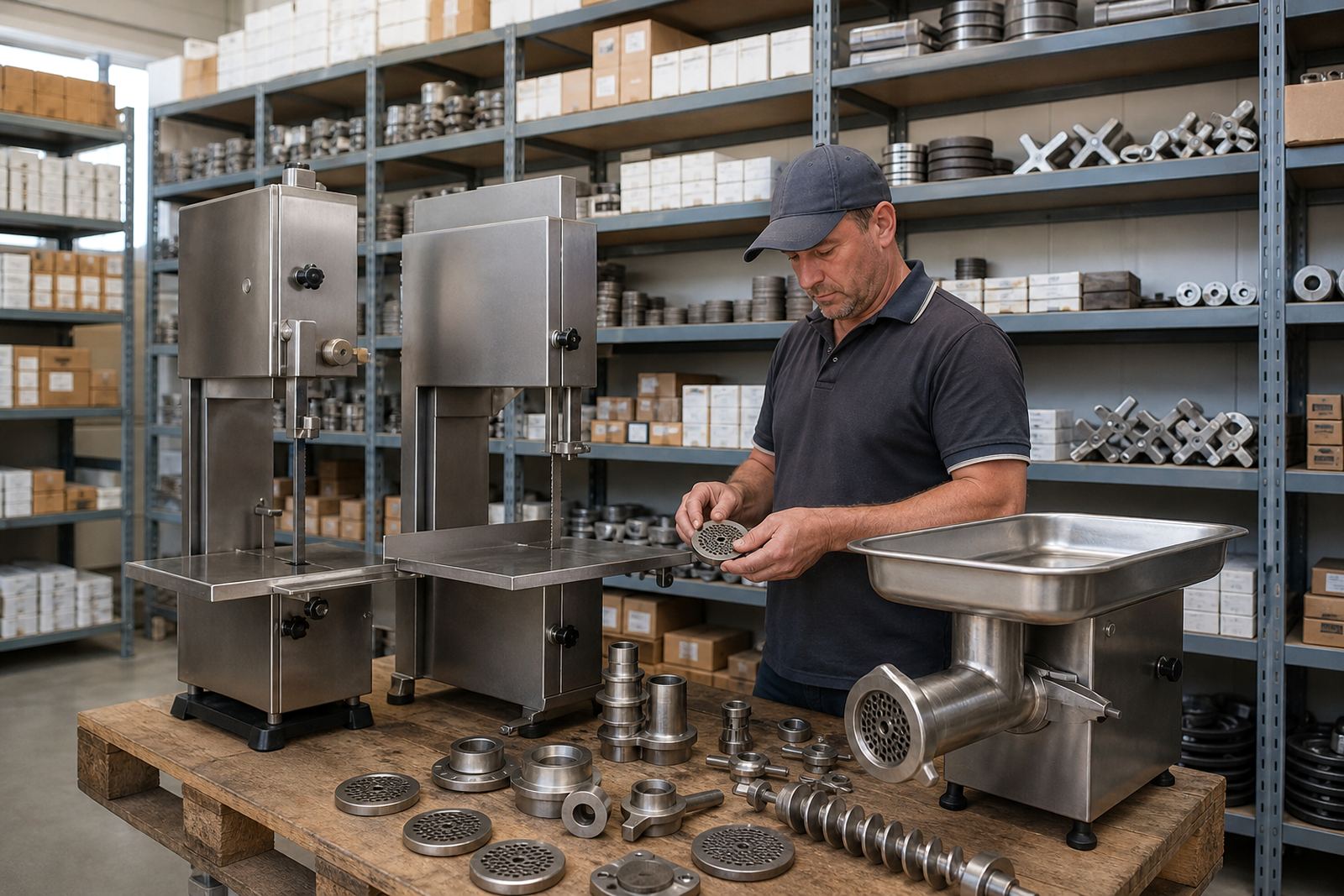
- Checking of blades, plates, knives, screws, seals and related parts
- Removal of built-up residue and grease from working areas
- Replacement of worn parts where needed
- Reassembly, basic function check and final cleaning
After servicing, we test the machine for smooth operation and make sure the usual working parts are seated correctly. If there is a deeper fault, we will explain what needs attention next rather than guessing. That way you can plan the work and avoid repeated stoppages. It saves time and keeps the machine in a better state for longer.
Cleaning, hygiene and day-to-day care
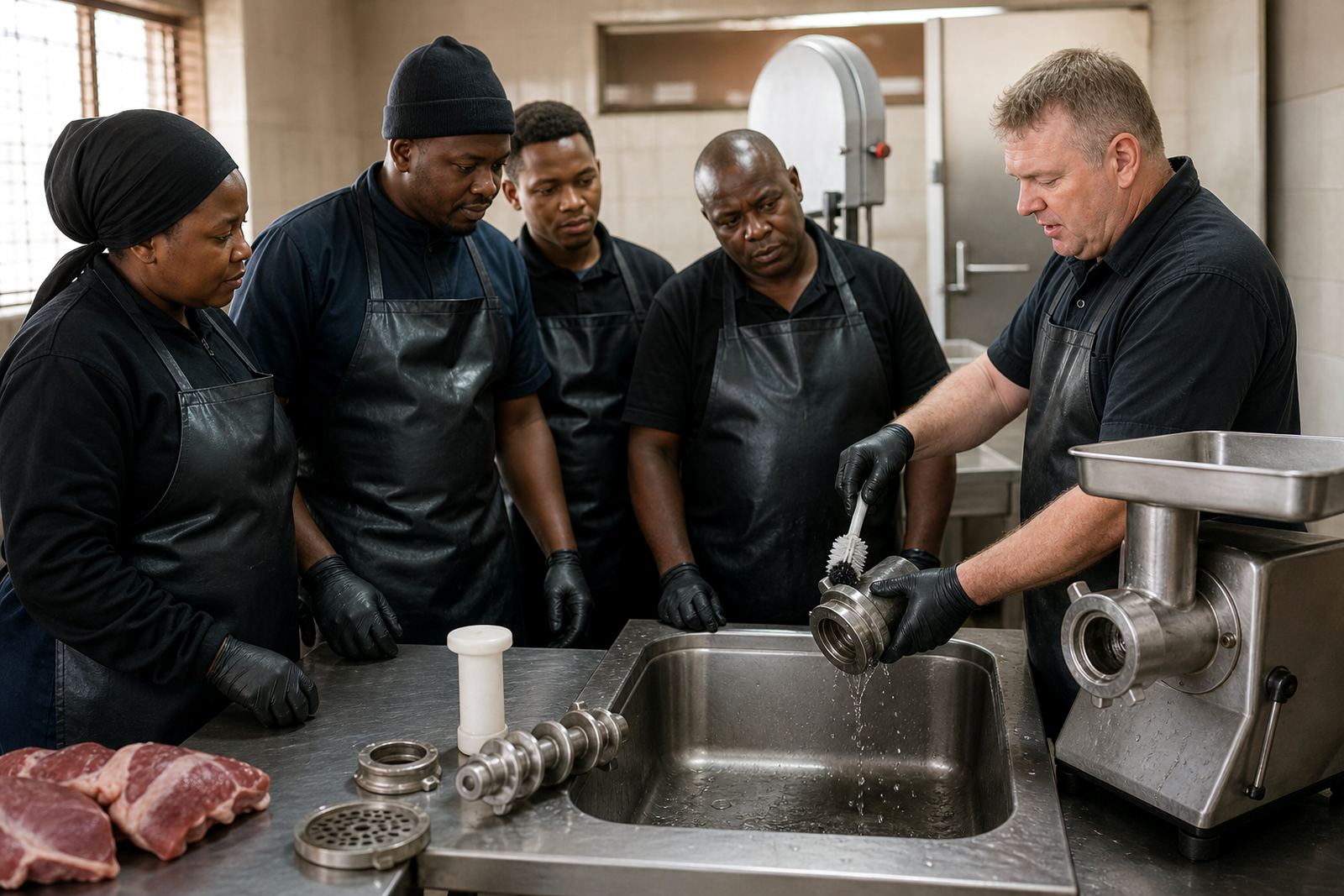
Mincers that are used for meat need regular cleaning, not only because of appearance but because residue can affect output and safety. During servicing, we show operators where product build-up commonly happens and how to clean those areas properly. Good cleaning habits reduce odours, help protect finished product and make the machine easier to inspect before use.
We also give practical advice for routine care between services. This can include wiping down external surfaces after use, removing and washing contact parts correctly, drying components before storage and checking for damage before reassembly. Coastal humidity in places like Durban and parts of Cape Town can make rust and moisture a bigger concern, so correct drying and storage become even more important there.
- Do not wash down electrical areas with careless water use
- Keep blades and plates dry after cleaning
- Store loose parts in a clean, dry place
- Check for dull cutting edges or worn fittings before the next shift
- Use gloves and other PPE when handling sharp parts
These small habits help prevent trouble and keep the mincer ready for daily work instead of becoming a source of delay.
Turnaround and service planning
We understand that a mincer out of action can slow down production fast, especially in a busy butcher shop or a small operation where one machine does a lot of work. Turnaround depends on the condition of the machine, the parts needed and the level of cleaning or repair required. Some jobs are handled quickly while others need more time if worn components must be sourced and fitted.
For customers in Bloemfontein and surrounding areas, we can often plan work around your operating hours to reduce disruption. For Johannesburg, Pretoria, Durban and Cape Town deliveries or support, we coordinate the job around transport and workshop timing so you are not left waiting longer than necessary. If a breakdown callout is needed, we assess the situation and advise on the next practical step.
Where possible, we recommend servicing before a machine starts giving trouble. That is usually easier than waiting for a complete failure. If your mincer is used daily, regular checking helps avoid rushed repairs and keeps the machine in a better condition through the year.
Pricing approach and what affects the cost
We price mincer servicing based on the work that actually needs to be done, not a one-size-fits-all rate. The final cost can depend on the amount of cleaning required, the parts that need replacing, the condition of the cutting set and whether there are drive or feed issues that need extra attention. If a machine has been neglected for some time, it may need more labour than one that is serviced regularly.
Before work goes ahead, we aim to explain the likely scope so you have a clear idea of what to expect. If replacement parts are needed, we confirm the requirement and proceed only once the customer understands the plan. That makes budgeting easier for both small home butchers and larger commercial operators.
We also keep the practical side in mind. Sometimes it makes better sense to service a machine properly than to keep patching it with quick fixes. When that happens, we say so plainly and help you decide on the next step. In some cases, a plate and knife change or a blade replacement can restore performance without unnecessary extra work.
Maintenance intervals that make sense
The best servicing interval depends on how often the mincer is used and what it handles. A machine used daily in a commercial setting will need attention more often than one that is used occasionally at home. Heavy use, poor cleaning habits and repeated overloading will all shorten the time between services. In short, the harder the machine works, the sooner it should be checked.
As a general guide, regular users should not wait for a breakdown before asking for help. Servicing should be scheduled before the machine starts showing signs of wear, especially if mince quality is changing or the motor sounds strained. If you notice poor feeding, smearing instead of clean cutting, excess noise or difficulty cleaning, it is time to book a service.
- Daily use: check often and service regularly
- Weekly or occasional use: still inspect before each session
- Any sign of rust, dull cutting or loose fittings: arrange a service soon
Preventive maintenance is usually the cheapest way to keep a mincer working well. It reduces downtime, helps protect product quality and gives the operator more confidence in the machine.
Key facts
| Service focus | Cleaner operation and dependable mince preparation |
|---|---|
| Coverage | Bloemfontein, Johannesburg, Pretoria, Durban, Cape Town and surrounding supply areas |
| Work type | Cleaning, inspection, parts replacement, reassembly and function check |
| Common items checked | Blades, plates, knives, seals, feed area, drive parts and fittings |
| Support options | Workshop servicing, breakdown callouts, parts supply and operator training |
| Pricing method | Quoted according to condition, labour needed and parts required |