

What our operator training covers
Our operator training is built for people who need to use butchery bandsaws and mincers safely, whether they are starting out or need a refresher after a change in staff. The focus is on everyday operation rather than theory, so the team leaves with clear steps they can follow on the shop floor. We explain the purpose of each control, where the guards must stay in place, how to keep hands clear of cutting areas, and how to switch the machine off properly when work is done.
Training also covers basic cleaning routines, safe handling around blades and plates, and the right protective gear for the job. That includes aprons, gloves where suitable, eye protection when needed, and closed footwear. We keep the advice practical for South African conditions too, including how to manage power interruptions, when to stop and isolate the machine, and why equipment should never be rushed back into use after a fault.
- Safe start up and shutdown routines
- Guard checks before and during use
- Basic PPE guidance for operators
- Cleaning steps after each shift
- Simple fault recognition and reporting
How the training session is run
We start with a short assessment of the machine and the workspace so the session matches the actual setup in the butchery. That helps us tailor the training to the kind of work being done, the level of experience in the team, and the current condition of the equipment. In some cases we train around a single machine in Bloemfontein, in other cases we arrange on site sessions for branches in Johannesburg, Pretoria, Durban or Cape Town.
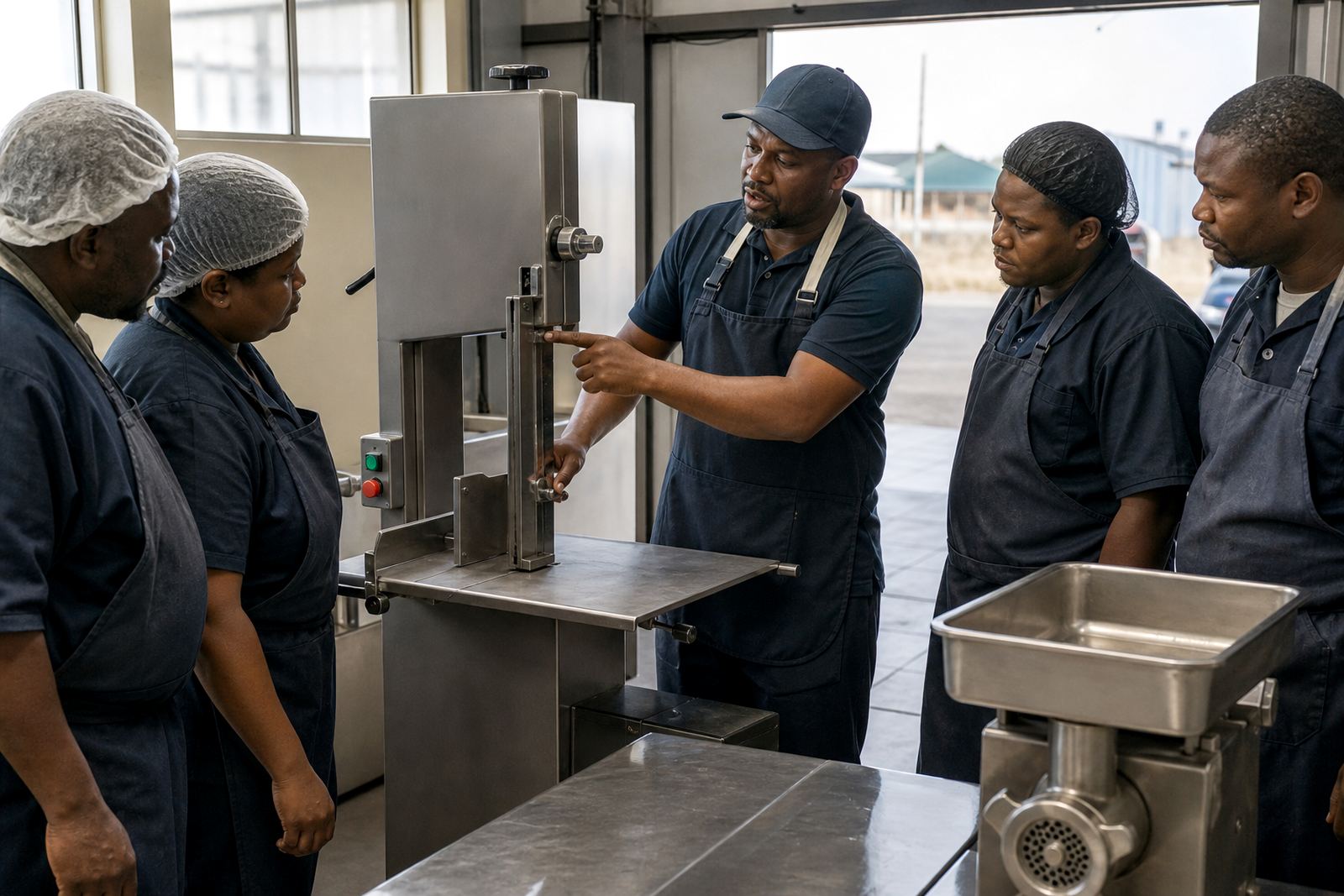
The trainer then shows the correct sequence for operation, followed by a hands on walkthrough with the operator watching first and then practising under supervision. We keep the pace steady, not rushed. If the team has had previous issues with unsafe loading, poor blade care, or cleaning shortcuts, we address those directly. The aim is that staff understand not only what to do, but why each step matters. That makes it easier to keep standards consistent when shifts change or load shedding interrupts the day.
- Pre training machine check
- Demonstration of correct operation
- Supervised practice by staff
- Questions and correction on site
- Basic records and sign off notes where needed
Bandsaw and mincer safety points we emphasise
Bandsaws and mincers can save a lot of time, but only when operators respect the machine and keep to the correct routine. We spend time on blade and feed safety, the correct use of guards, and the need to keep loose clothing, jewellery and hair secured. If the machine starts to sound different or feed becomes uneven, the operator should stop and report it instead of pushing through the problem. That is where small mistakes turn into bigger repairs.
For bandsaws, we show how to keep the work area clear, how to feed product without forcing it, and how to avoid reaching close to the cutting zone. For mincers, we cover safe loading, plate and knife handling, and the importance of not bypassing covers or interlocks. We also explain what to do during a power cut or voltage dip. In many parts of South Africa, that means switching off properly and waiting for a controlled restart, rather than leaving the unit half running and hoping for the best.
- Never remove or bypass guards
- Keep hands clear of cutting and feeding points
- Use proper PPE for the task
- Stop immediately if there is an unusual noise or vibration
- Isolate the machine before cleaning or clearing a jam
Cleaning habits and daily care after training
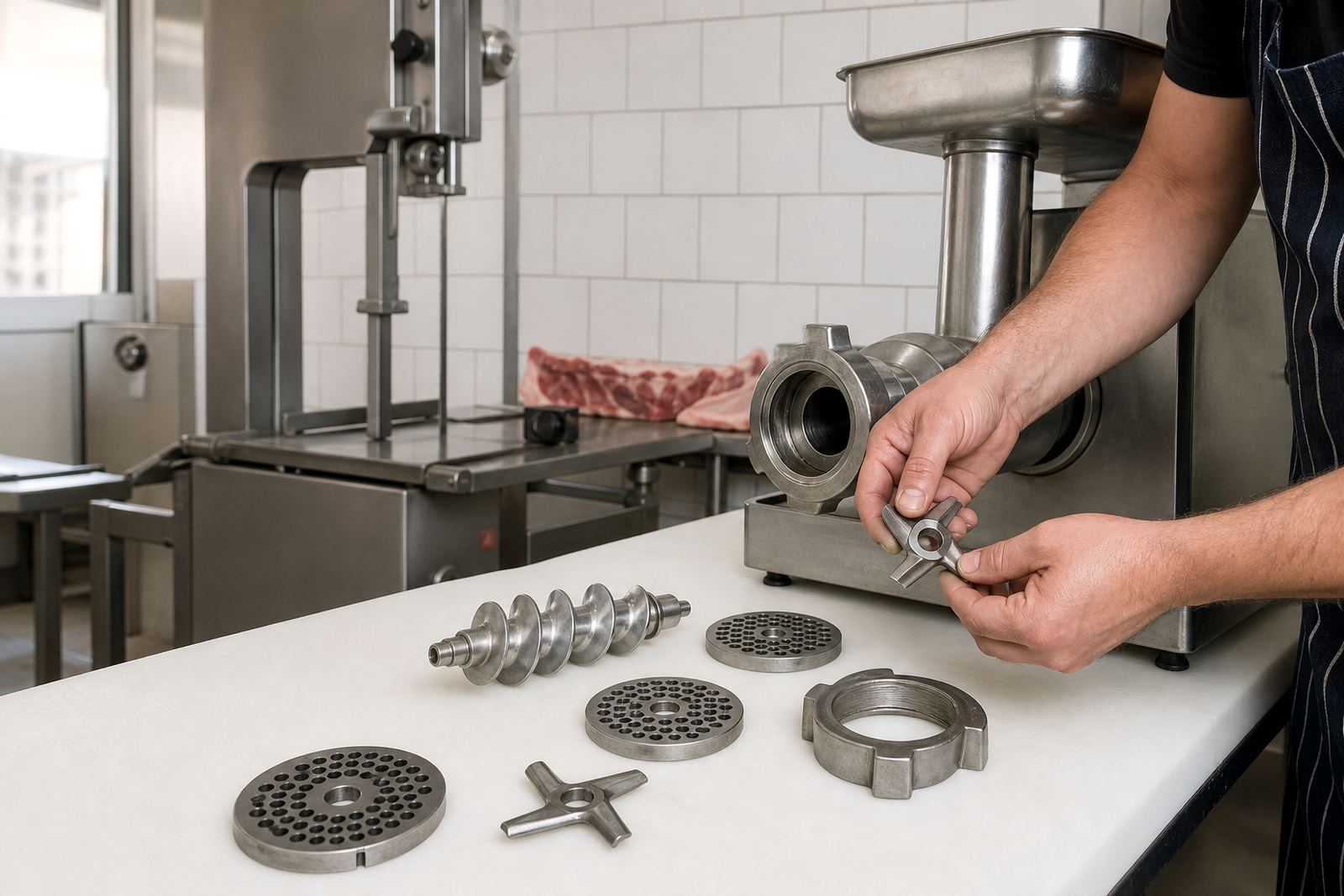
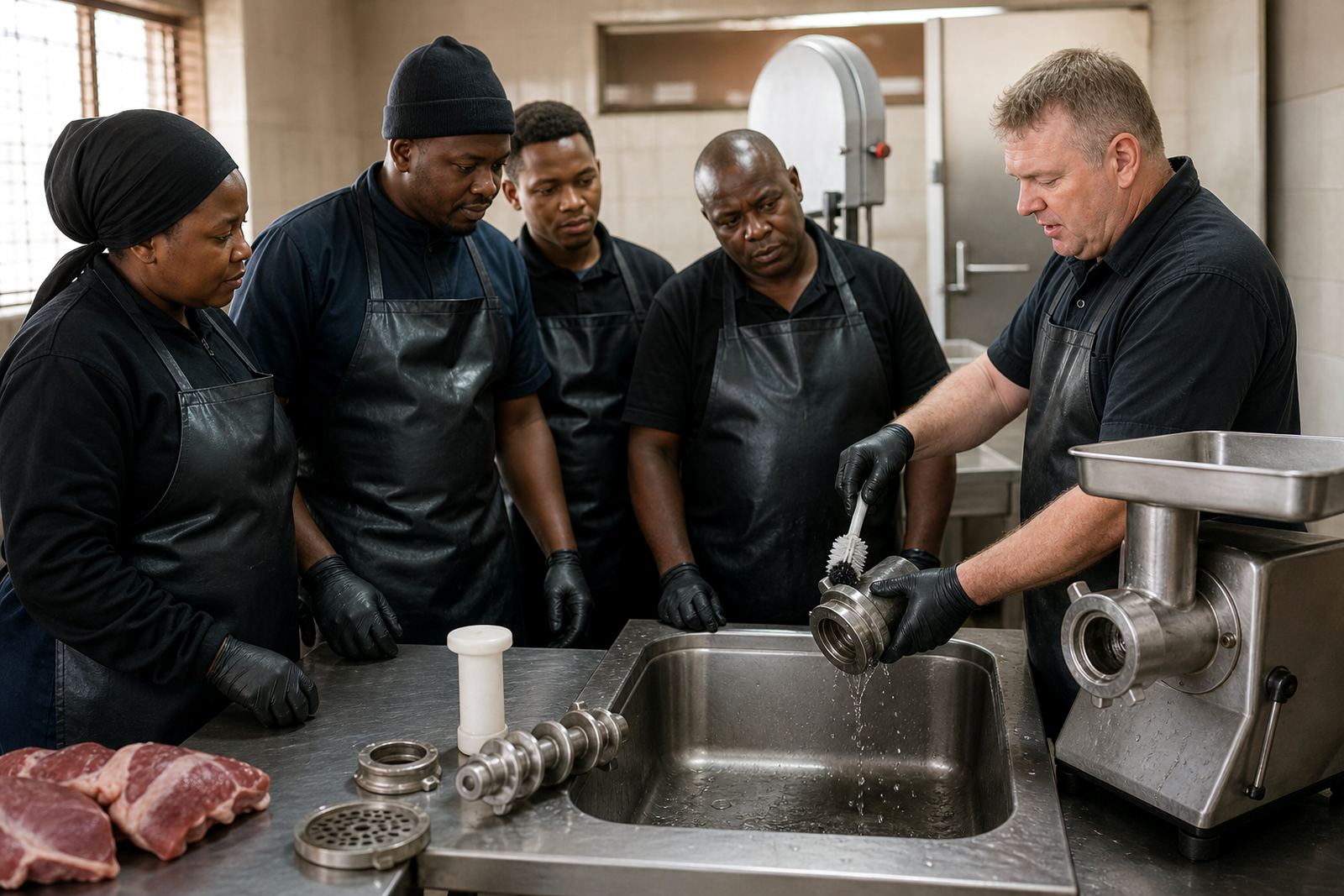
Good operator training always includes cleaning habits. A machine that is wiped down properly, stripped where necessary and dried before storage will usually give fewer issues than one that is left with residue on it. We show operators the routine for safe cleaning after use, including when to remove parts, how to handle blades or plates carefully, and why water should not be sprayed where it can enter sensitive electrical components. In humid coastal areas such as Durban and Cape Town, drying and storage matter even more.
We also cover what not to do. No harsh scrubbing that damages surfaces, no rushed reassembly, and no starting the machine before all parts are seated correctly. It sounds simple but these are the steps that often get missed when the shop is busy. A clean machine is easier to inspect, easier to service and safer for the next operator. The result is less waste, fewer interruptions and better working conditions for the team.
- Clean immediately after use where possible
- Dry all washable parts before reassembly
- Check for wear while cleaning
- Store blades, plates and knives safely
- Keep electrical areas dry and clear
Turnaround times and service area coverage
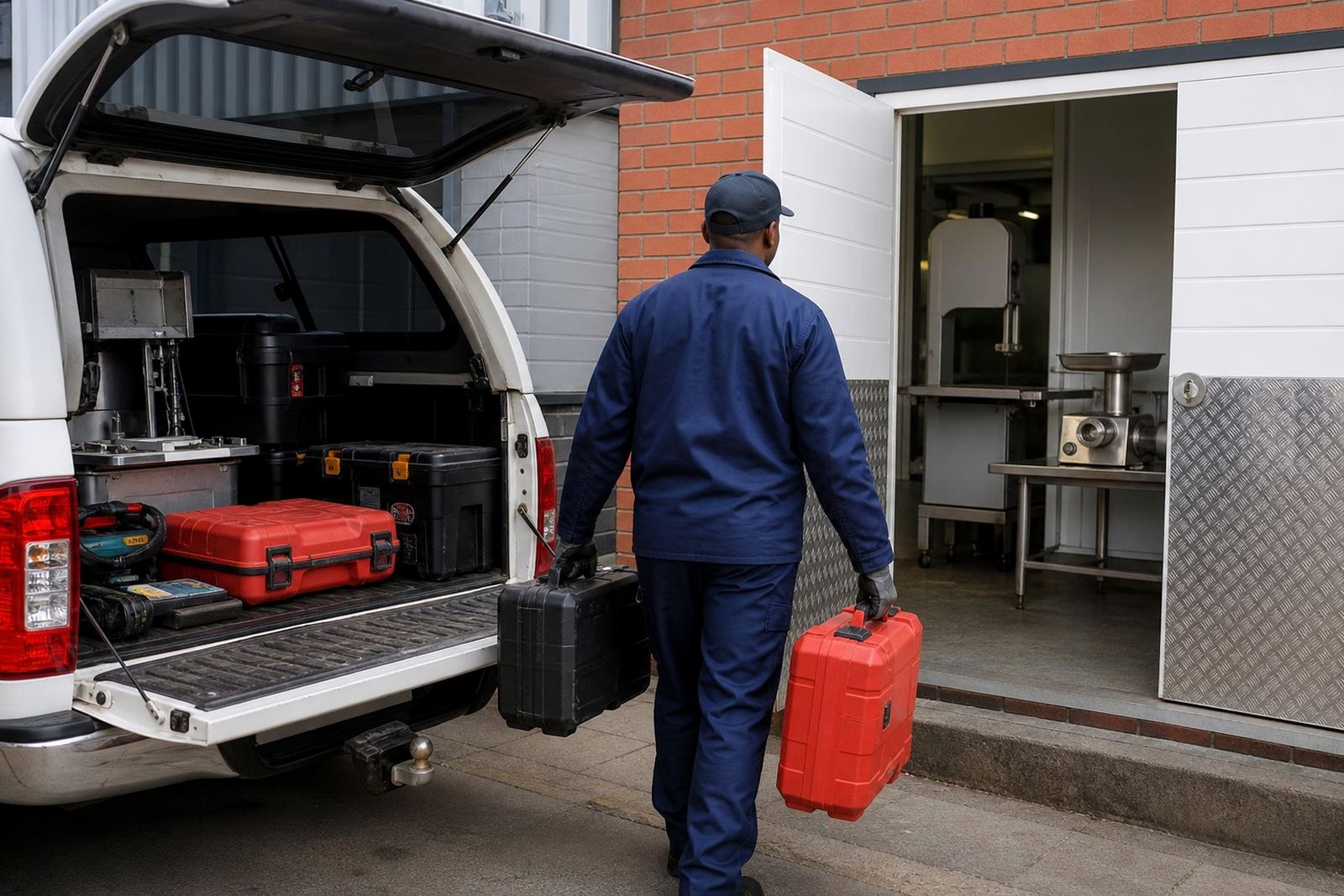
Operator training can usually be arranged quickly, depending on the branch location, the number of staff involved and whether the machine is already on site or still awaiting delivery. In Bloemfontein and nearby Free State towns such as Kimberley, Welkom and Kroonstad, we can often schedule visits efficiently. For other centres we coordinate around delivery, servicing or setup work so the training fits into the same visit where possible. That saves time and helps the team learn on the actual unit they will use every day.
We also support commercial butchers who need training for new staff or new shifts. If a machine has just been installed, it is often the best time to train because the operator can learn the correct routine from day one. When a branch has had breakdowns or repeated cleaning issues, we can focus the session on those problem areas first. Response times vary by route and workload, but we always aim for practical scheduling rather than long delays.
- Training can be booked with installation or servicing
- Sessions can be arranged for single operators or small teams
- Branch visits are coordinated by area and route
- Refresher training is available for new staff
Pricing approach and maintenance intervals
Our pricing approach is straightforward. We quote according to the training scope, number of operators, location, and whether the session is tied to installation, servicing or a callout. We do not treat training as a one size fits all job because a small home butcher setup and a busy commercial shop need different levels of time and attention. Once we understand the machine, the site and the number of people to be trained, we can provide a clear quotation before work begins.
As for maintenance intervals, training is most effective when paired with regular care. Operators should do daily cleaning and basic checks, while a supervisor or technician should inspect wear points on a planned schedule. Blades, plates and knives need closer attention whenever cutting quality drops, and guards or switches should be checked if anything feels loose or slow. If a machine is used heavily, more frequent inspections are sensible. The main point is simple: train the operator, then keep the care routine going. That is what protects the equipment and the people using it.
- Quotes are based on scope, site and number of operators
- Daily cleaning should be part of every shift end routine
- Planned inspections help catch wear early
- Heavy use calls for shorter maintenance intervals
Key facts
| Service type | Operator training for butchery bandsaws and mincers |
|---|---|
| Training focus | Everyday operation, guards, PPE and shutdown routines |
| Format | On site practical training and refresher sessions |
| Coverage area | Bloemfontein, Johannesburg, Pretoria, Durban, Cape Town and selected branch areas |
| Typical audience | Commercial butchers and home butchers |
| Booking method | Enquiry form on our contact page |