

Fast Fault Checking When Production Stops
Our breakdown callout service is set up for equipment that has stopped working, is running unevenly, or is showing signs of strain. We look at the likely cause first, then work through the machine in a sensible order so you are not left guessing. That includes power supply checks, control issues, moving parts, blade condition, plate and knife condition, alignment, guards and basic safety items.
In butchery work, small problems can quickly turn into wasted time and poor cut quality. A blunt blade, loose fitting, blocked feed area or worn component can slow the whole room down. We aim to identify the fault, explain what can be repaired on site and what parts may need to be sourced before work can continue.
What A Callout Covers On Site
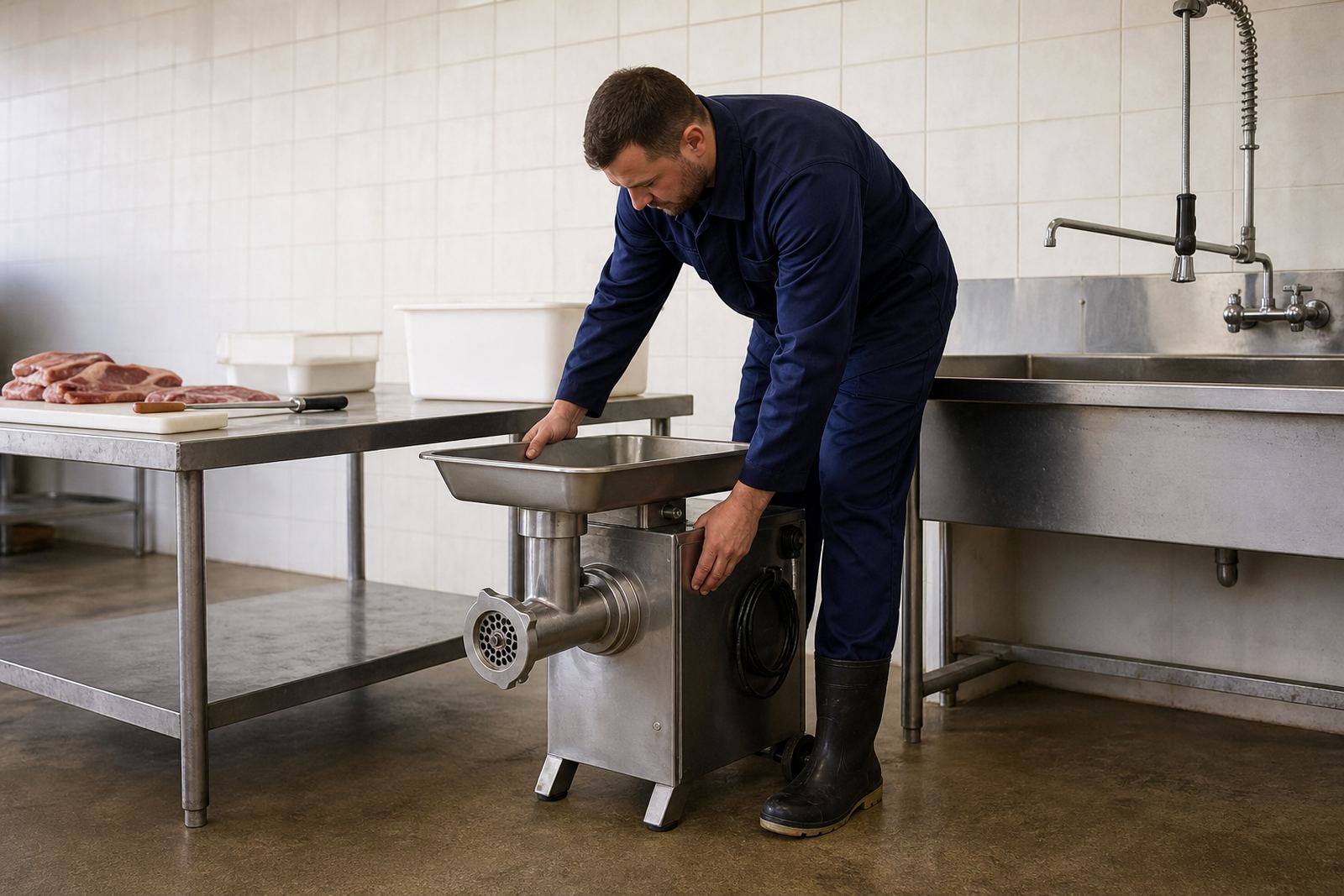
Each visit is handled with safety and practicality in mind. We inspect the machine, test the parts that affect operation and check whether the problem is caused by wear, cleaning issues, setup mistakes or a failed component. If the issue is simple, we work toward a same-visit fix. If it is more involved, we give a clear next step and keep the process moving.
- Basic fault finding on bandsaws and mincers
- Safety checks on guards, covers and visible moving parts
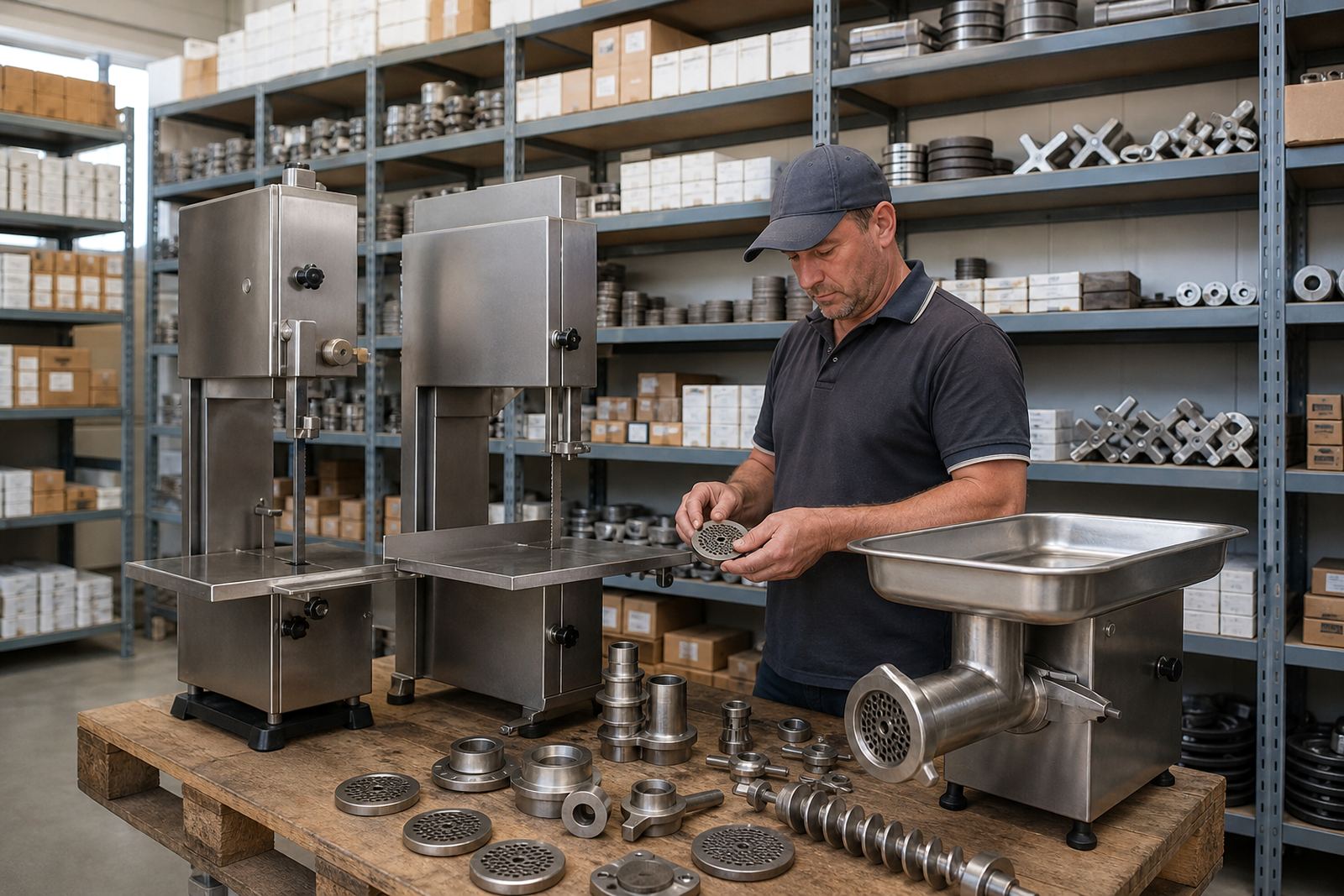
- Assessment of blades, plates, knives and feed areas
- Advice on cleaning, lubrication and daily use
- Replacement planning for worn parts where needed
We also check for common causes of repeat breakdowns such as poor cleaning routines, overloading, moisture build-up and parts that have been run past their service life.
How The Breakdown Process Works
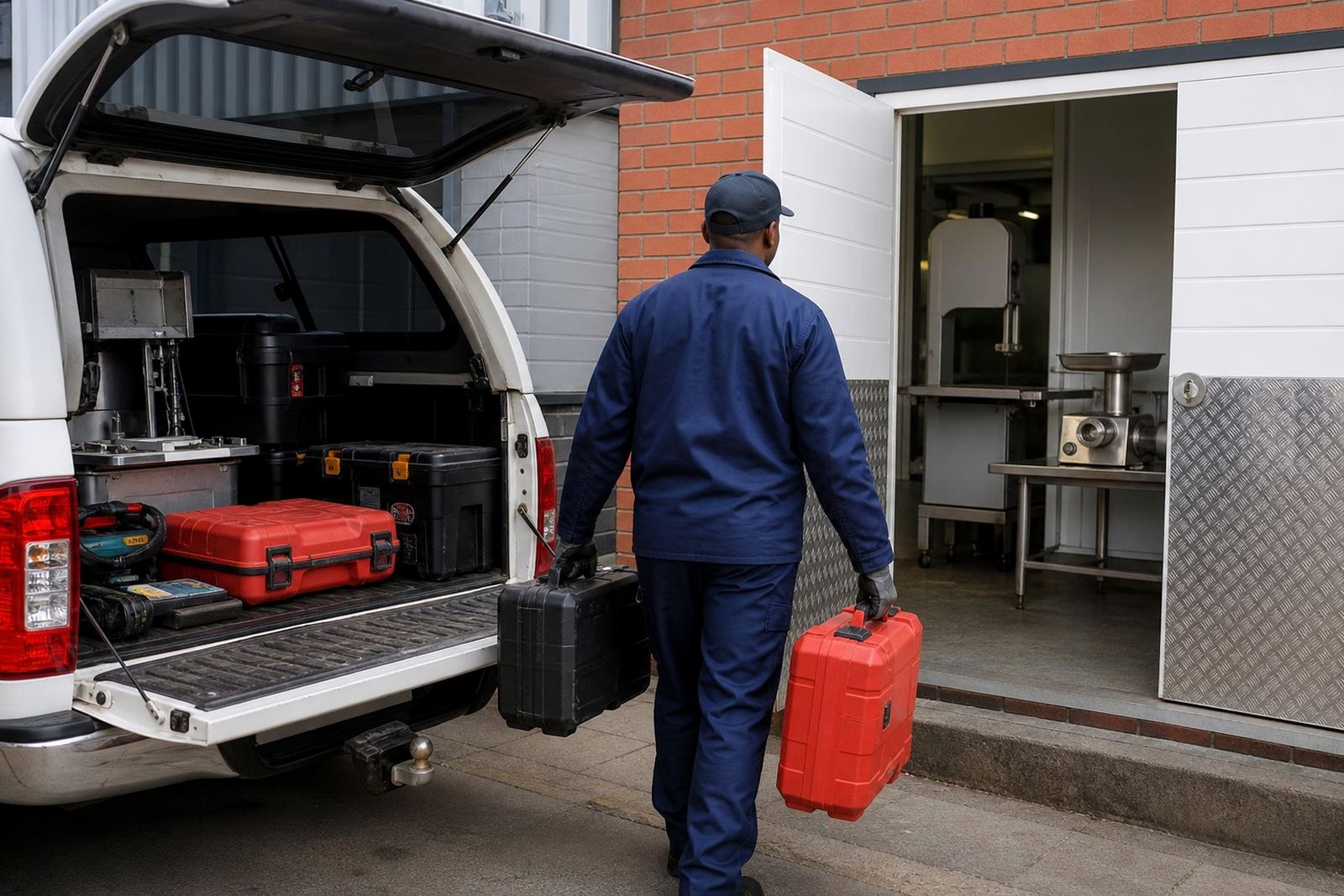
Customers reach us through the enquiry form on our contact page and give a short description of what the machine is doing. From there we confirm the equipment type, the location and the urgency of the job. For sites in Bloemfontein and surrounding areas we can often respond quickly, while longer-distance callouts are scheduled to keep travel and parts handling practical.
- Receive the breakdown details and machine type
- Confirm the site, access and likely issue
- Send a technician or arrange the next available visit
- Carry out fault checking and report back clearly
- Complete repair work, parts replacement or follow-up booking
Where a machine needs workshop attention, we explain the safest route forward. That may mean parts supply, planned servicing or a deeper inspection before the machine goes back into daily use.
Turnaround And Service Areas
Turnaround depends on location, the nature of the fault and whether parts are needed. A simple issue may be handled on the first visit, while a damaged drive part or worn cutting set can require a return appointment. We keep the process practical and do not promise what the machine or the parts supply cannot support.
We service Bloemfontein, Johannesburg, Pretoria, Durban and Cape Town, with supply support in Kimberley, Welkom and Kroonstad. That local reach helps commercial butchers and home users get help without waiting too long when a machine stops in the middle of work.
- Bloemfontein Supply and local callouts
- Johannesburg Delivery and support visits
- Pretoria Delivery and support visits
- Durban Delivery and support visits
- Cape Town Delivery and support visits
Pricing That Depends On The Job, Not Guesswork
Breakdown work is priced according to the fault, the time required, travel, labour and any parts that must be sourced. That is the fairest way to handle callouts because no two machines fail in quite the same way. A dirty or misused machine may need a short intervention, while a worn cutting assembly or electrical issue can take more time.
We keep pricing straightforward. Before work proceeds, we explain the likely cost approach and whether the job is best handled as a repair, a parts replacement or a service visit. If extra work becomes necessary after inspection, we talk it through first so there are no surprises. This is especially useful for smaller shops and home butchers watching costs closely.
Keeping Breakdown Callouts To A Minimum
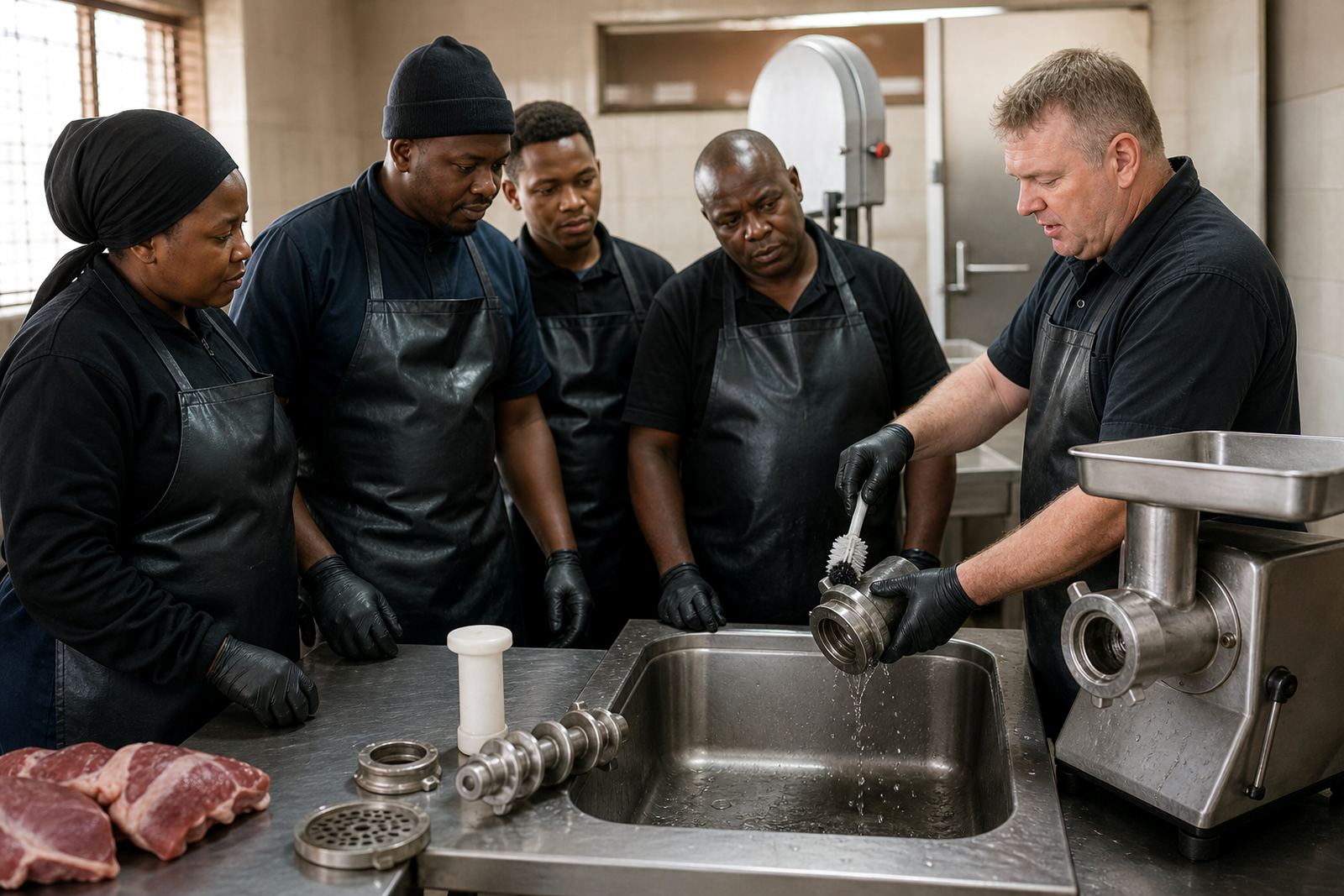
Most repeated failures can be reduced with regular care. Bandsaws and mincers should be cleaned properly after use, dried where needed and checked for wear before the next shift. Guards must stay in place, operators should use the right PPE and machines should not be forced when feed is slow or resistance increases. If something feels off, stop and check it before the problem gets worse.
We recommend planned servicing at sensible intervals based on how often the machine is used. Busy commercial sites may need more frequent checks than a home butcher or small local shop. Blade replacement, plate and knife change, cleaning demonstrations and preventive maintenance all help reduce sudden stoppages. On coastal routes or in humid conditions, regular cleaning and dry storage matter even more.
- Clean and dry the machine after every use
- Check for worn blades, plates and knives
- Keep guards fitted and secure
- Use correct PPE during operation and cleaning
- Book preventive maintenance before a breakdown spreads
For managers in Bloemfontein, Hamilton and across the Free State, a sensible maintenance plan is often cheaper than an emergency stop on a busy Friday.
Key facts
| Service type | Breakdown callouts for butchery bandsaws and mincers |
|---|---|
| Fault handling | On-site inspection, diagnosis and repair planning |
| Response areas | Bloemfontein, Johannesburg, Pretoria, Durban, Cape Town |
| Additional support | Parts supply, servicing and follow-up maintenance |
| Typical visit outcome | Same-visit fix where possible, otherwise clear next steps |
| Recommended upkeep | Regular cleaning, wear checks and scheduled servicing |