

Washdown Tools for Daily Butchery Cleaning
Washdown tools are the simple hand tools and accessories used to clear blood, fat, bone dust and general residue from work areas after processing. In a butchery, the right tools save time and help keep floors, drains, and equipment surrounds in better condition. They also support cleaner habits at the end of each shift, which matters in busy shops, abattoir spaces and home processing rooms alike.
These tools are not for cutting or processing meat. They are for rinsing, pushing water, loosening grime, scrubbing surfaces and guiding dirty water toward drains. For butchers working in Bloemfontein, Johannesburg, Pretoria, Durban or Cape Town, good washdown routines are especially useful because humidity, dust and load-shedding can all affect how quickly a room dries and how often cleaning has to be done.
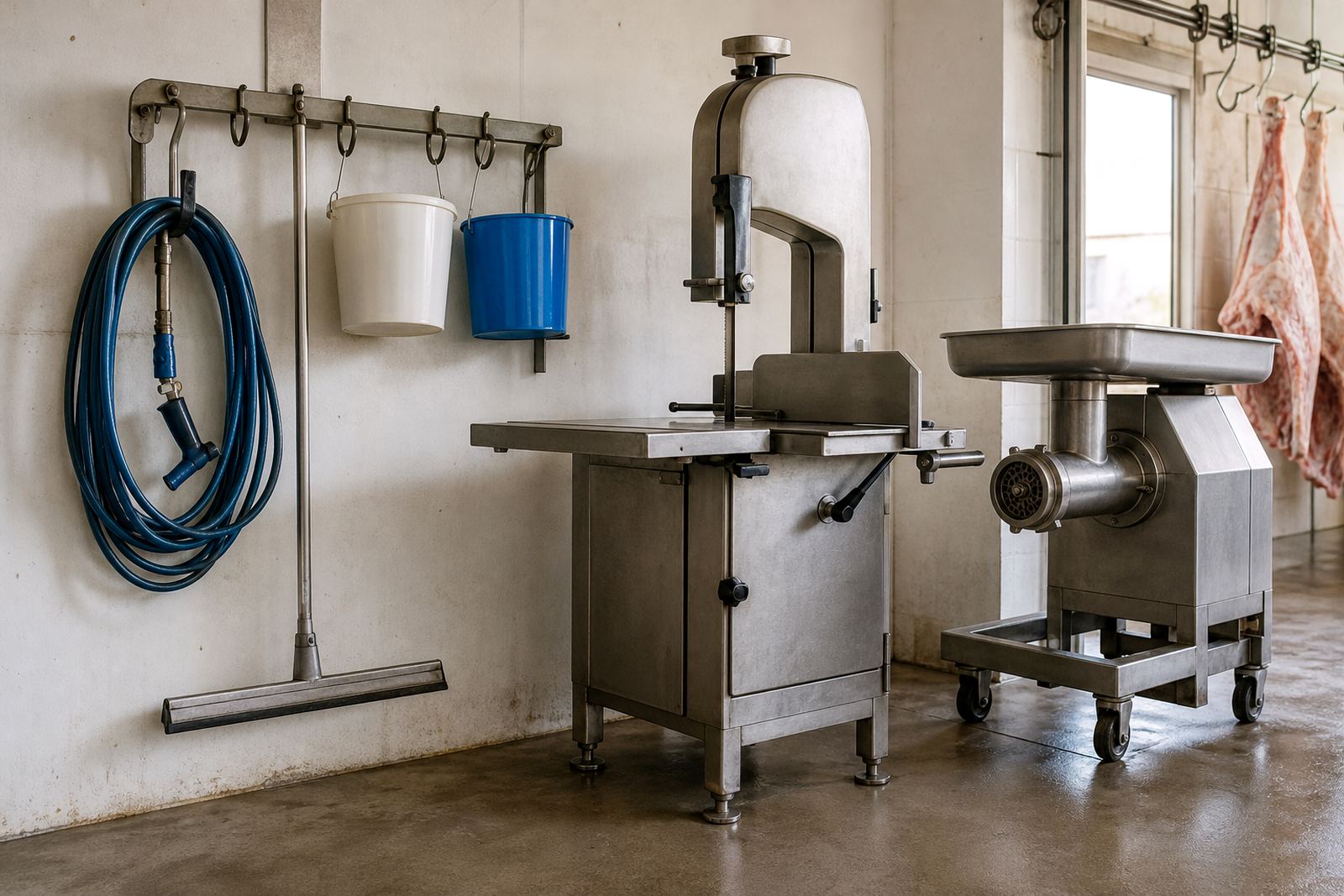
- Floor squeegees for moving water to drains
- Scrub brushes for tables, tiled walls and floor edges
- Hose sets and spray attachments for controlled rinsing
- Wall hooks and holders for tidy storage between shifts
What the Range Covers and Where It Suits
Washdown tools suit compact home butchery areas, small retail counters and larger commercial rooms where cleaning has to happen fast between tasks. They are also useful in meat prep rooms, packing areas and staff washup zones. Some users prefer lighter hand tools for quick daily cleaning, while others need longer handles and stronger brush heads for stubborn build-up on rough floors or around drain channels.
In shops with tiled floors, stainless work tables and wall mounted equipment, washdown tools help keep corners and base areas cleaner without using too much water. In coastal areas like Durban and Cape Town, regular washdowns help reduce residue that can cling to surfaces in damp conditions. In inland towns such as Bloemfontein, Welkom and Kroonstad, dust control is often just as important as fat removal.
- Small cleaning sets for home butchers and deli rooms
- Mid-size tools for retail butcheries and back rooms
- Heavy-duty options for busy commercial work areas
- Choice of brush stiffness for delicate or rough surfaces
Sizes, Options and Practical Specs
Washdown tools are usually chosen by handle length, head shape, bristle type and how much reach is needed around equipment and floor drains. Some buyers want short handled brushes for close work on benches. Others need longer handled units for floor cleaning without bending too much. Squeegee widths also matter, because wider heads can clear water quicker in open areas while narrower ones are easier to steer in tighter rooms.
When selecting a set, it helps to match the tools to the room size and the kind of cleaning done every day. A home butcher may only need a few essentials, while a larger shop may need separate tools for floors, walls and equipment surrounds. We can also assist with setup advice so the cleaning kit fits the room properly and does not get in the way of movement during busy periods.
- Short handle and long handle brush options
- Soft, medium and stiff bristle choices
- Lightweight plastic or stronger industrial grade handles
- Compact and wider squeegee heads for different floor areas
Installation, Power Needs and Site Readiness
Most washdown tools do not need electrical power or gas, which makes them easy to add to an existing butchery setup. What matters more is having the right water supply, drainage and storage points. If the floor slope is poor or the drains are too far from the work area, cleaning becomes slower and water can sit where it should not. A proper washdown plan helps avoid slippery floors and keeps the cleaning routine more efficient.
For rooms that already have spray lines, hose points or wash stations, the tools can be organised close to the cleaning zone. In older buildings or rented spaces, it may be worth checking where water can be used safely and where the cleaning tools will be stored after use. During load-shedding, good manual cleaning tools become even more important because you still need to finish the shift properly, even if other equipment is off line.
- No electricity or gas required for standard hand tools
- Best used with reliable water access and proper drainage
- Should be stored off the floor to avoid contamination
- Useful in rooms where cleaning must continue during outages
How to Care for Washdown Tools
Washdown tools need basic care to stay hygienic and last longer. After use, they should be rinsed, cleaned and left to dry in a place with good airflow. Brushes that hold onto meat residue or grease can start to smell and become less effective, so regular cleaning matters. Squeegees should also be checked for worn edges, because a damaged edge leaves water behind and makes the floor take longer to dry.
It is a good idea to keep washdown tools separate from food contact tools and to use colour coding where possible. That makes it easier for staff to know which tools are for floors, which are for walls and which are for equipment surrounds. If a handle cracks or a head loosens, replace it early rather than waiting for a full breakdown of the cleaning routine. A small issue now can become a bigger hygiene problem later.
- Rinse after every shift and allow full drying
- Check bristles, handles and squeegee edges regularly
- Store in a clean, ventilated area away from floor splash
- Replace worn items before they stop cleaning properly
What to Check Before You Order
Before ordering washdown tools, think about the size of the room, the surface type and how many staff members will use the tools each day. A narrow prep room may need smaller heads and shorter handles, while a larger production area can benefit from longer handles and wider cleaning heads. It also helps to know whether the floor is smooth, tiled or slightly rough, because that affects how hard the brush needs to work.
Check whether you need a simple starter set or a fuller cleaning kit with separate tools for different jobs. If your team is receiving training on better cleaning routines, the right set can make the process easier to follow and help keep standards consistent. For ordering through MorCut Butchery, clients can use the enquiry form on our contact page and tell us what they need, where the equipment will be used, and whether delivery is needed to Bloemfontein, Johannesburg, Pretoria, Durban, Cape Town, Kimberley, Welkom or Kroonstad.
- Measure the work area and drain positions
- Confirm surface type and cleaning frequency
- Choose handle length and head width to suit the room
- Ask about delivery and support for your town or branch area
Key facts
| Product type | Manual washdown cleaning tools for butcheries |
|---|---|
| Typical use | Floor washing, residue removal and end of shift cleaning |
| Handle options | Short and long handle formats |
| Head options | Brushes and squeegees in different widths |
| Power or gas requirement | None |
| Care | Rinse, dry and store in a clean ventilated area |