

What a Portioning Bandsaw Does in Daily Butchery Work
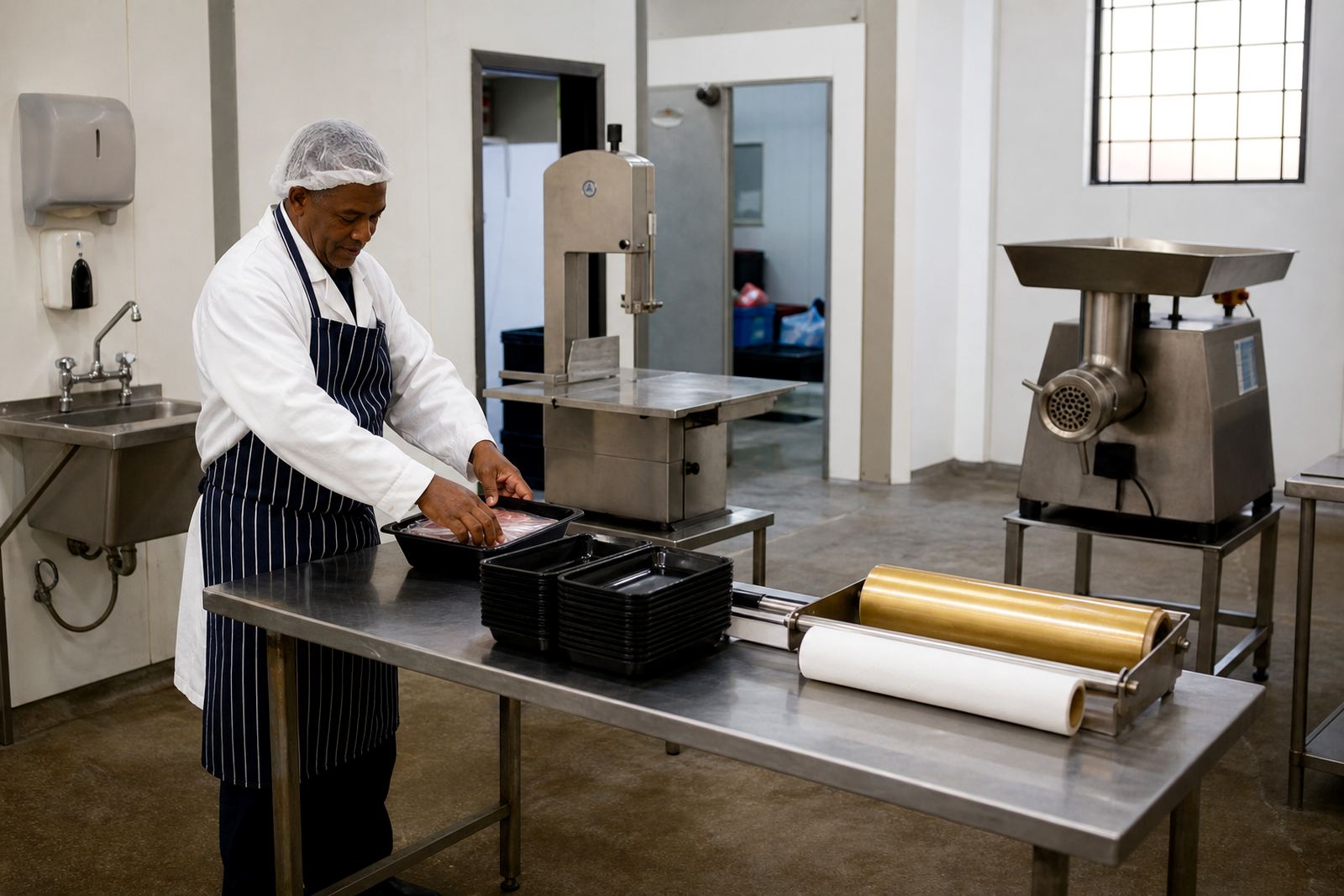
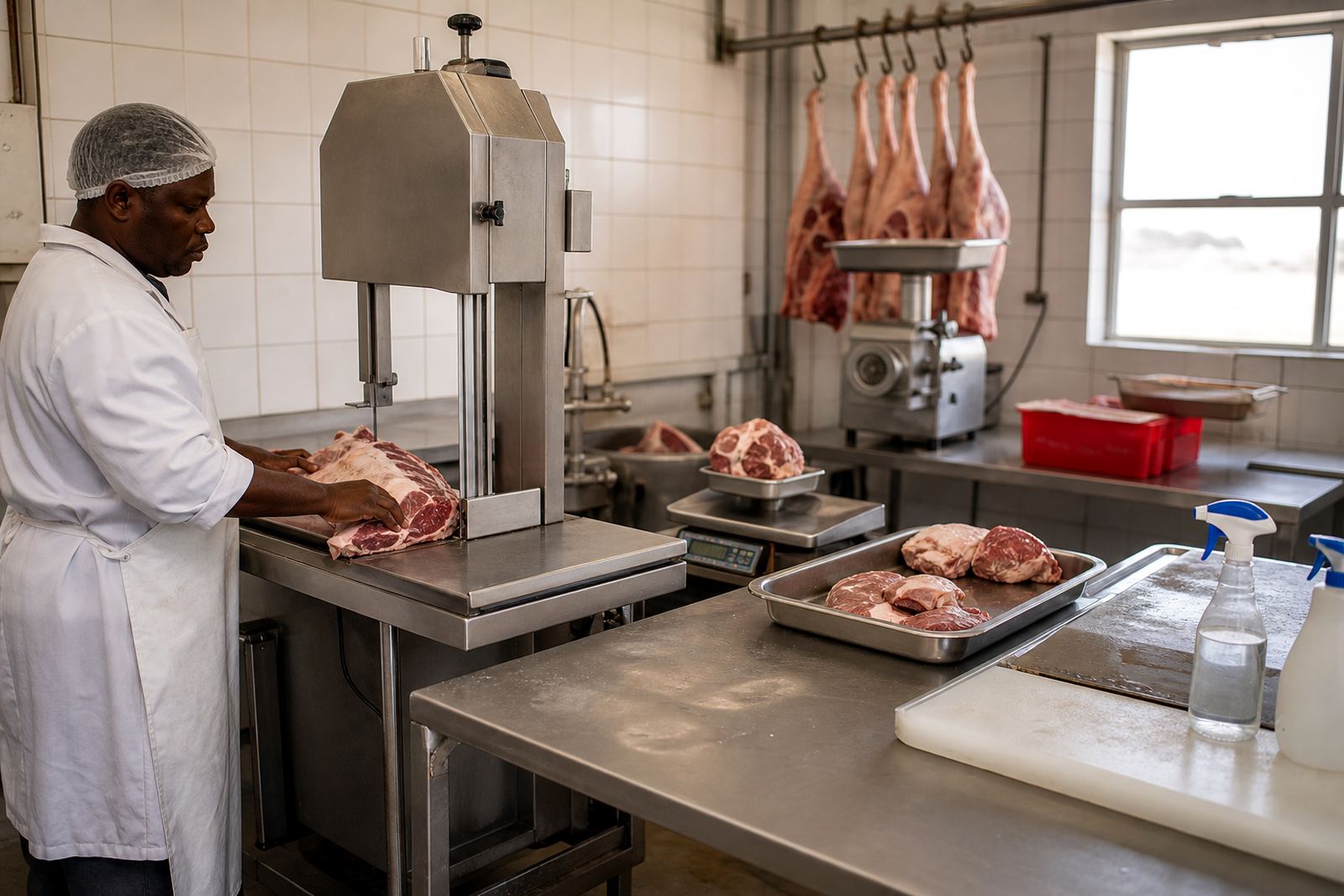
A portioning bandsaw is used where clean, repeatable cuts are needed during prep. It helps you break down carcass sections, portion bone-in products and handle frozen meat with more control than hand cutting. In a busy shop, that matters because the right cut size keeps portions even and reduces waste.
These machines are used in butcheries, meat prep rooms, small processing spaces and home setups where the work volume is steady but not always full industrial scale. A bandsaw is especially useful when the product needs support and a guided cut, rather than force. It also helps reduce strain on the operator when used correctly with the proper guard in place and a sharp blade fitted.
For everyday use, the machine should suit the product you cut most often. Some butchers need a compact unit for lighter portioning while others need a taller frame and a wider cutting area for larger joints and blocks. The right choice depends on your space, your workflow and what you cut most days, not just on the price tag.
Sizes and Options to Match Your Prep Room
Portioning bandsaws are available in different sizes and layouts, so it helps to think about the floor space, table height and the type of cuts you do. A smaller unit can suit a home butcher or a limited prep area, while a larger model is better for shops that handle regular volume and thicker product. If you work in a tight room, measure the stand area, cutting zone and the space needed to load and remove product safely.
When choosing options, look at the blade type, the guide setup, the table finish and whether the unit is easier to clean after a long day. Stainless and food-safe contact surfaces are useful in humid coastal areas like Durban and Cape Town, while a strong, easy-to-clean frame helps in busy inland shops too. If you have regular load-shedding in Bloemfontein or elsewhere, plan your processing schedule so you are not left mid-cut when power returns and the room is rushed.
- Compact models for smaller prep areas and home butchers
- Mid-size units for steady retail cutting and portion work
- Larger framed machines for higher output and thicker product
- Options for different blade widths, guides and table layouts
- Choice of cleaning access and removable parts where needed
Where Portioning Bandsaws Suit Best
These bandsaws suit butcheries that need regular portioning, trimming and breakdown work without making the process slower than it has to be. They are a good fit for retail butcheries, farm shops, home meat prep rooms and small production spaces where consistency is important. Many operators use them for bone-in cuts, frozen blocks and controlled slicing through dense product.
In larger centres such as Johannesburg and Pretoria, the machine often becomes part of a busy prep routine where speed and accuracy both matter. In towns like Kimberley, Welkom and Kroonstad, it can support a smaller team that still needs dependable day-to-day equipment. If the machine will be used close to customers or in a public-facing shop, the setup should allow the operator to keep product movement controlled and the work area tidy.
A bandsaw is not only about speed. It is about giving the butcher better handling, better portion control and a cleaner working method. That is why it should be matched to the product range, the staff skill level and the available space. If the wrong size is chosen, the machine can be awkward to load, difficult to clean and harder to keep in daily use.
Installation, Power and Safe Setup
Before installation, check the floor space, access points and the electrical supply available on site. A bandsaw should be placed where the operator has enough room to feed product safely and where cleaning around the unit will not be difficult. The surface should be level, stable and suitable for a working kitchen or prep room.
Power requirements vary by model, so confirm the supply before ordering. Some units are suited to standard single-phase use while others may need a heavier supply arrangement. If you are setting up in an area with load-shedding, think about your workflow and whether backup power is available for the rest of the room. The machine should be installed with proper guarding and the operator should be trained on starting, stopping and safe product handling.
Safe use starts with simple checks: keep hands clear of the blade path, use the guard properly and wear the right PPE for the job. Good footwear, eye protection where needed and a clean non-slip floor all help. If the machine is being installed in a municipal or shared food space, it should also fit the cleaning and hygiene rules that apply to the site.
Keeping the Bandsaw Clean and in Working Order
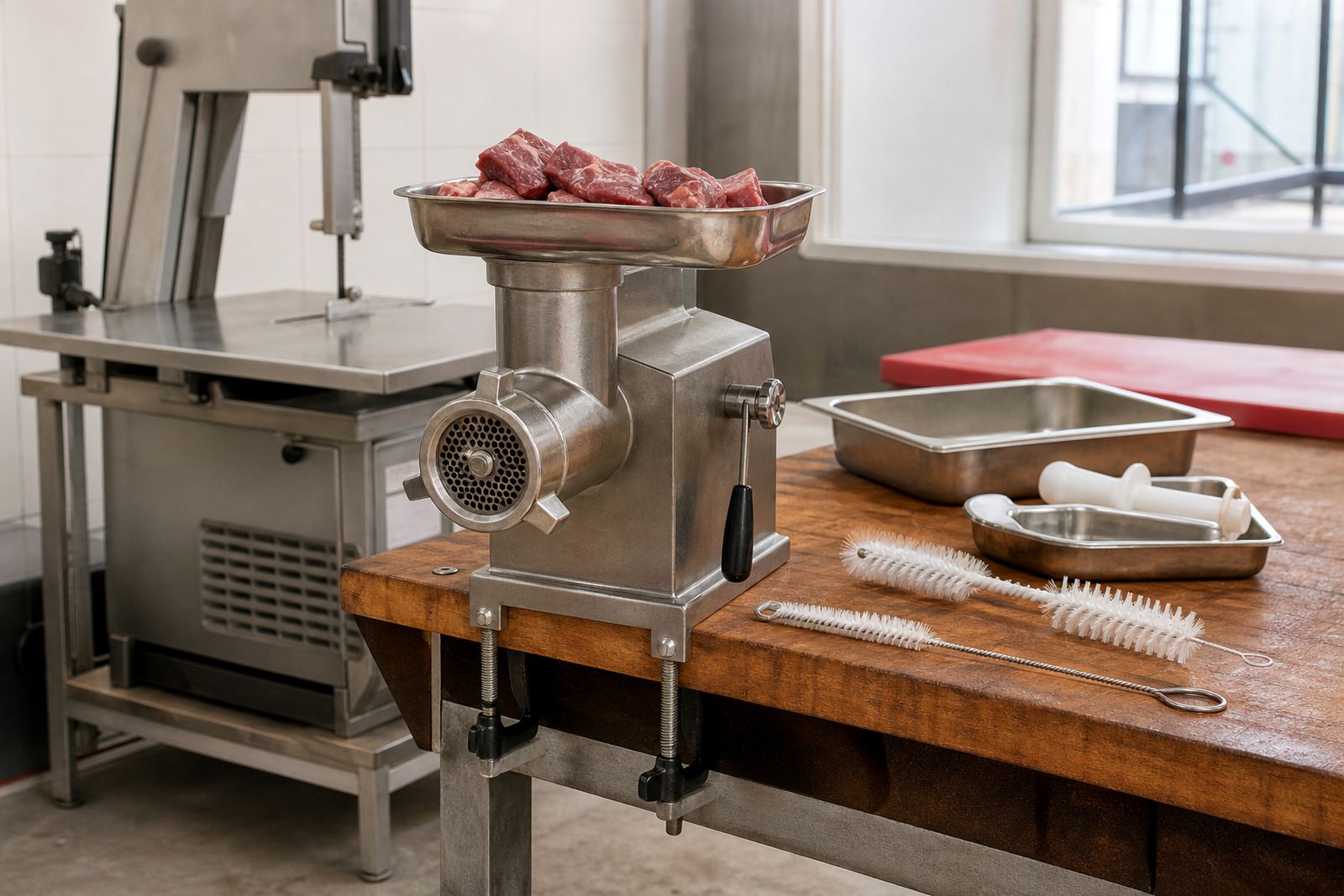
Daily care makes a big difference to how long a bandsaw lasts and how well it cuts. After use, switch off the machine, isolate the power and clean all food contact areas thoroughly. Remove residue from the table, blade area and guides so fat and meat particles do not build up. In coastal towns, moisture and salt in the air can speed up wear, so drying the machine properly matters just as much as washing it.
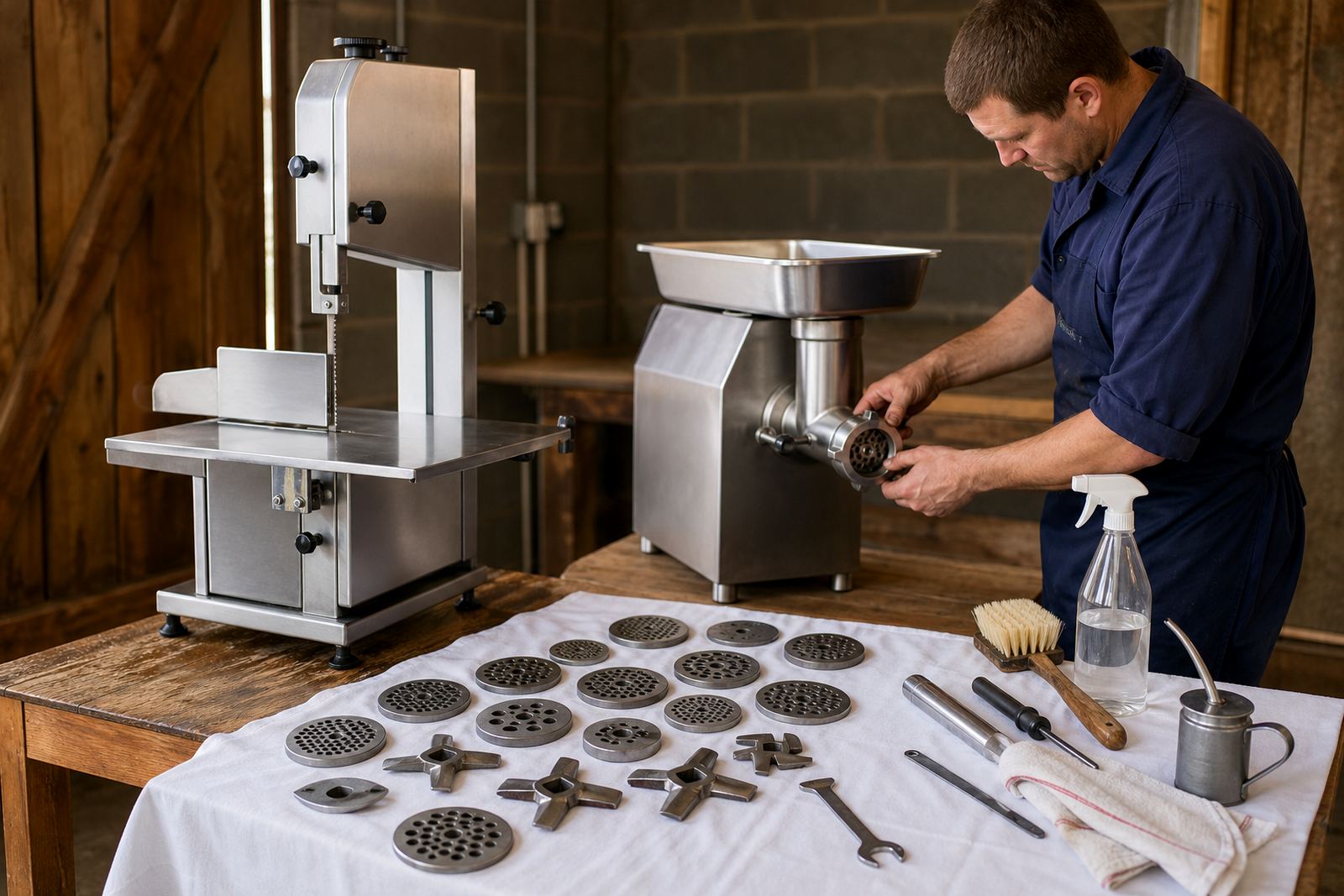
A blade that is dull, loose or damaged can affect cut quality and place extra strain on the motor and operator. Check the blade regularly and replace it when needed. The same applies to plates, knives and other wear parts on related butchery equipment. Preventive maintenance helps avoid breakdowns at the wrong time, especially when you have stock to process before a busy weekend or a public holiday.
- Clean after every shift and dry all contact parts fully
- Inspect the blade before use and replace worn blades promptly
- Check guards, covers and moving parts for safe operation
- Keep the area around the machine free of bone dust and scraps
- Book servicing before small faults become downtime
What to Check Before You Order
Before ordering a portioning bandsaw, check what you cut most often, how much floor space you have and how much output you expect on a normal day. Measure the room properly. Make sure there is enough space for loading, cleaning and working around the machine without crowding the operator.
Also confirm the power supply, the cleaning routine and whether your team needs operator training. A machine that is easy to use but hard to clean is often the wrong fit. Ask about the blade setup, the frame size, access for servicing and the availability of parts. If the machine will be used in a commercial shop, it is worth planning for preventive maintenance from the start rather than waiting for the first problem.
MorCut Butchery supplies bandsaws, carries out installation and supports servicing across South Africa from our base in Hamilton, Bloemfontein. Clients can reach us through the enquiry form on our contact page for guidance on the right machine for Bloemfontein Supply, Johannesburg Delivery, Pretoria Delivery, Durban Delivery, Cape Town Delivery, Kimberley Supply, Welkom Supply and Kroonstad Supply.
Key facts
| Machine type | Portioning bandsaw for meat, bone-in cuts and frozen product |
|---|---|
| Use case | Commercial and home butchers needing consistent portion cutting |
| Size range | Available in compact, mid-size and larger workshop formats |
| Power supply | Model dependent, with single-phase and heavier supply options common |
| Care requirements | Daily cleaning, blade inspection, guard checks and scheduled servicing |
| Support | Installation, servicing, blade replacement, delivery and setup |