

What an entry bandsaw does in a butcher’s workflow
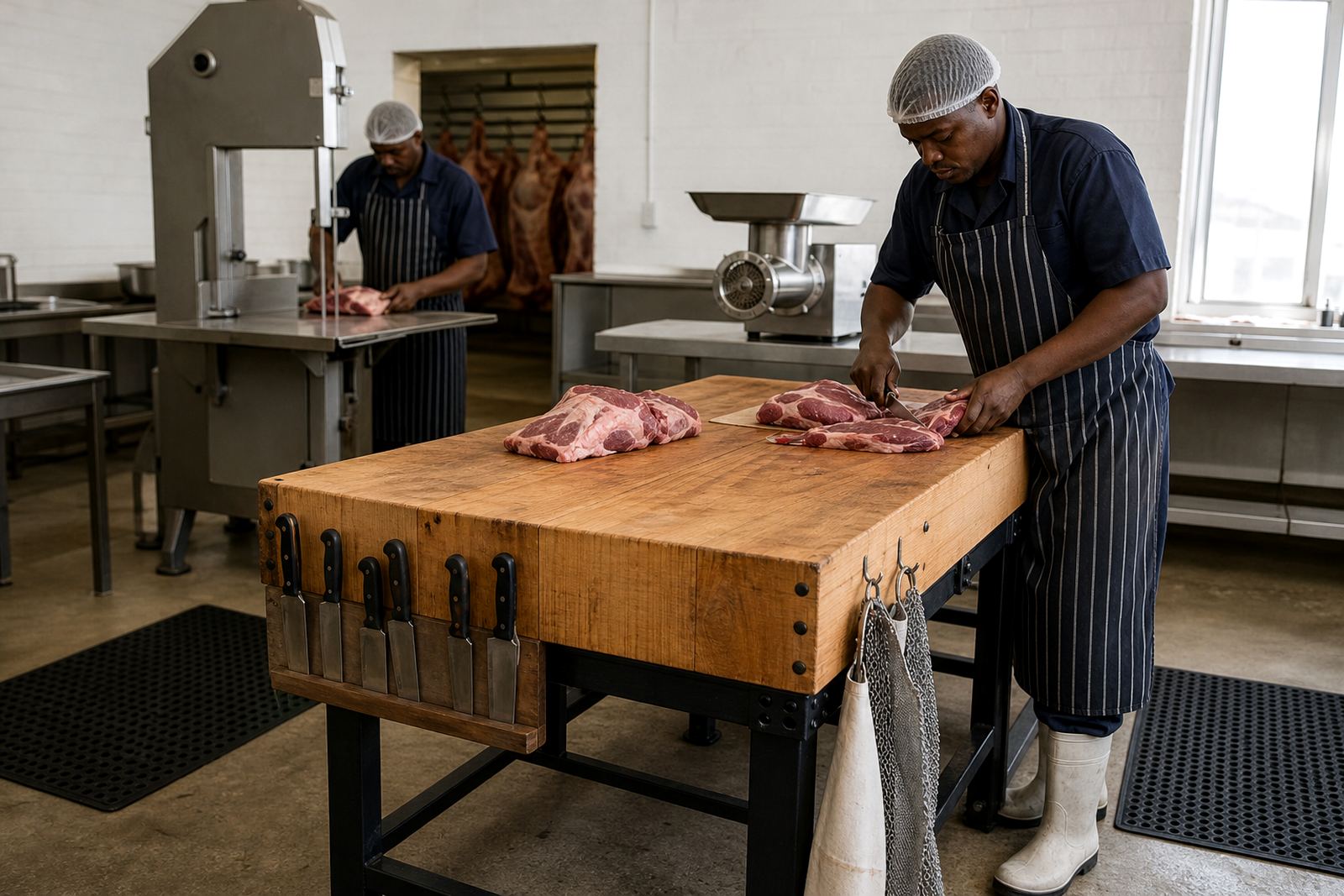
An entry bandsaw is used to cut carcasses, ribs, frozen portions and general meat product into manageable sizes with more control than hand cutting. For a small butchery, it helps keep portions more consistent and can make day-to-day prep faster, especially when one person is doing more than one job.
These machines are suited to first-time buyers who need something practical, not oversized. In Bloemfontein, Kimberley, Welkom and Kroonstad, many small shops look for an entry model because it fits a tighter prep room and still handles the daily load if it is used correctly and kept clean.
- Useful for smaller retail butcheries
- Handy for farm shops and home butchers with regular demand
- Suitable for bone-in cutting and general meat portioning
- Best where space, power supply and budget must all be considered
Sizes and options to consider before you buy
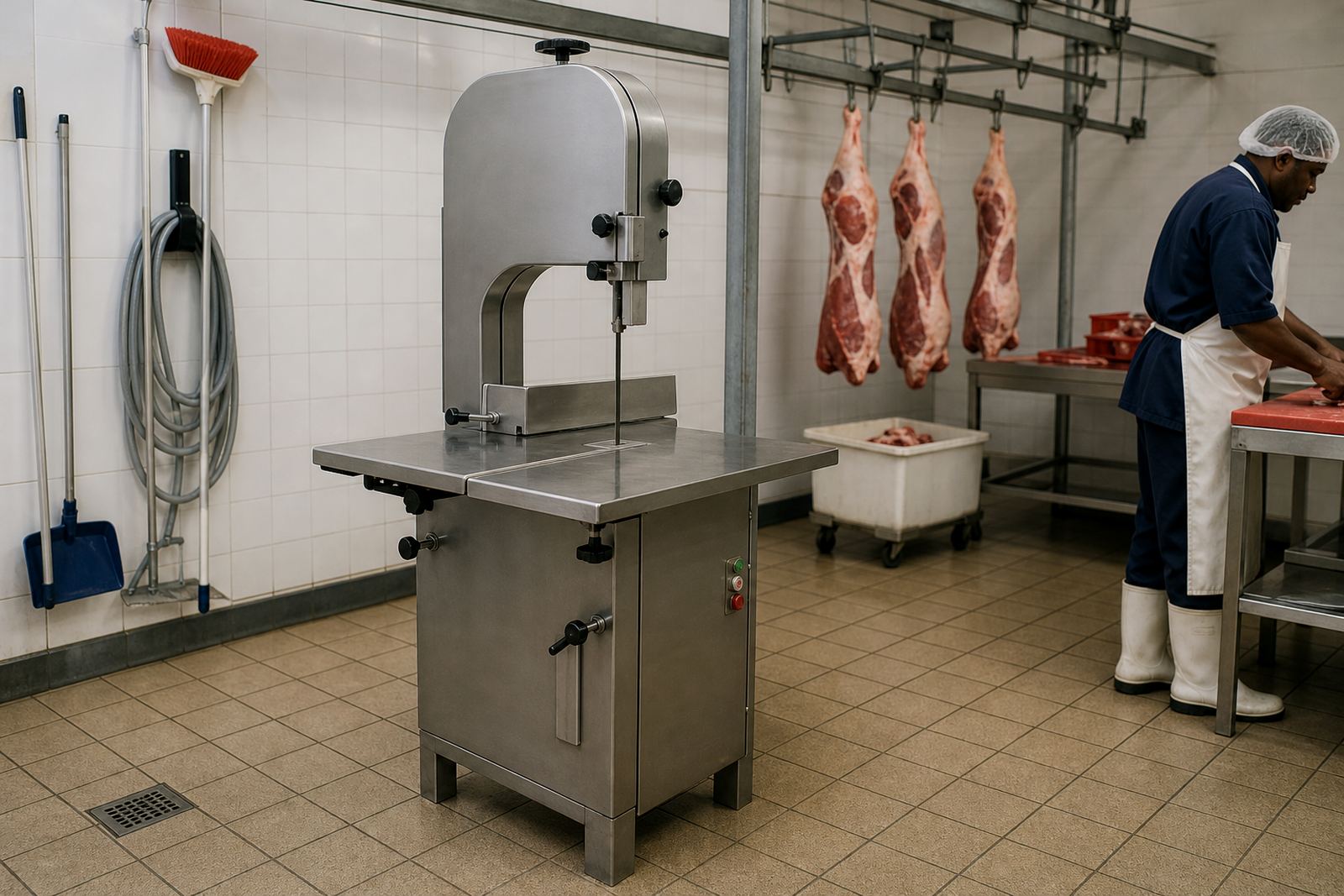
Entry bandsaws come in compact formats, with the main differences being table size, blade reach, motor strength, frame size and how much product can be handled at one time. A smaller machine is easier to place in a tight room, while a slightly larger unit may suit a shop that cuts more often during the day.
When comparing options, think about the type of work you do most. If you are cutting mostly retail portions, a compact saw may be enough. If you also process larger cuts from local abattoir deliveries or farm slaughter, you may want a model with a larger cutting area and better support at the table.
- Compact table sizes for small prep areas
- Different blade lengths and guide setups depending on the machine
- Choice of single-phase or three-phase power on some models
- Options for fixed or mobile placement, depending on the floor plan
It is worth checking door widths, turning space and floor level before you order. A machine that fits the room properly is easier to use and safer for staff.
Where an entry model fits best
These bandsaws suit businesses that are building up their meat room step by step. They are commonly chosen by new butcheries, home butchers who process regularly, and smaller outlets that need a dependable machine without moving straight into a heavy commercial unit.
They are also a sensible choice where power supply is not ideal. In some areas, especially where load-shedding still affects trading, a buyer may need to plan around generator use or restricted prep times. That makes it even more important to choose a machine that matches the available supply and operating hours.
- New butcheries opening in townships, malls or roadside centres
- Farm butcheries and home processing spaces
- Small retail counters that cut in limited batches
- Businesses wanting simple day-to-day handling and less foot print
For shops in Durban and Cape Town, corrosion resistance and regular cleaning matter even more because of coastal humidity. In those areas, poor care can shorten the life of moving parts and brackets quicker than expected.
Installation, power and site readiness
Before installation, the floor area should be measured properly, the machine position should allow for safe feeding and exit of product, and the work area should have enough light and drainage for cleaning. A bandsaw should stand level and stable, with space around it for operator movement and routine access.
Power needs must be checked before delivery. Some entry bandsaws are suited to standard workshop supplies, while others may need a different electrical setup. If your site uses a generator during outages, that should be considered too, because unstable supply can affect performance and put stress on the machine.
- Check the available electrical supply before ordering
- Make sure the floor can carry the machine safely
- Allow space for cleaning, blade access and operator movement
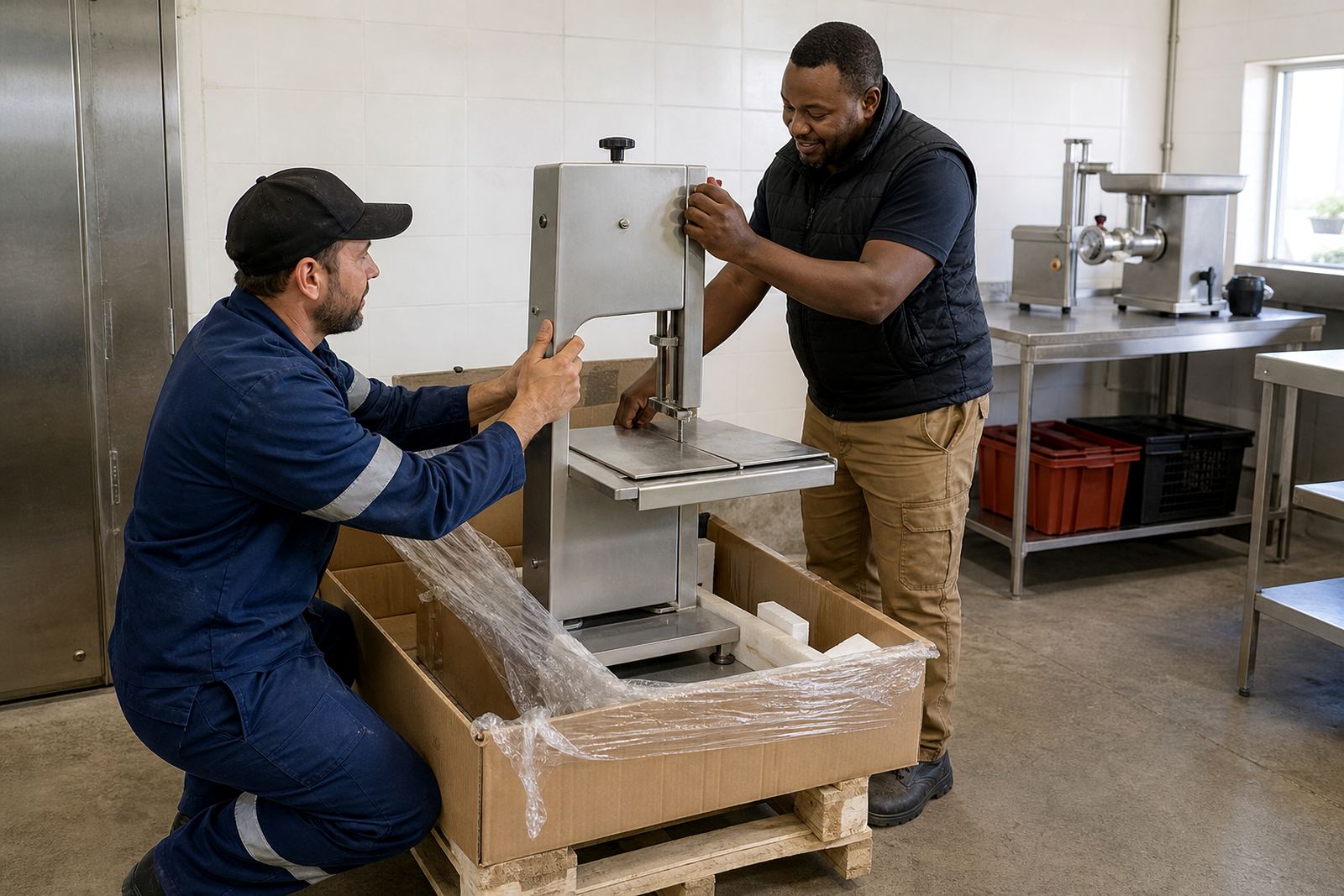
- Plan the route for delivery into the shop or prep room
For Pretoria, Johannesburg and Bloemfontein deliveries, access steps, narrow passages and loading bays often matter as much as the machine itself. A proper site check avoids delays on installation day.
Care, cleaning and servicing that keep the saw working
Good care starts with daily cleaning, a check on the guards, and making sure product residue does not build up around the blade path or table. Operators should wear suitable PPE, keep hands clear of the cutting line and follow the machine’s normal safe working method every time.
Blade condition is important. A dull or damaged blade can slow work, give a poor cut and place extra strain on the machine. Regular servicing helps with tension checks, guide alignment and general wear before small issues turn into downtime.
- Clean after every shift, especially around the blade and table
- Check guards, switches and moving parts before use
- Replace worn blades in time, not after they start dragging
- Book preventive maintenance if the saw is used daily
In busy shops, small problems are often missed until they stop trade. A short weekly check is easier than waiting for a breakdown callout during a Saturday rush.
What to check when ordering your first bandsaw
When ordering, start with the type of product you cut most often, the space you have, and the power available on site. From there, check whether the machine suits your pace of work, your cleaning routine and your staff’s level of experience.
It also helps to ask about delivery, setup and training at the same time. A first-time buyer may know what they want to cut, but still need help with safe use, cleaning demonstrations and basic maintenance. That support makes a real difference in the first few weeks after purchase.
- What product will be cut most often
- How much room is available for the machine and operator
- What power supply is on site
- Whether installation, training and parts support are included
MorCut Butchery supports customers in Bloemfontein and across South Africa, with supply and delivery to Johannesburg, Pretoria, Durban, Cape Town, Kimberley, Welkom and Kroonstad. If you need a practical entry bandsaw, the right choice is the one that fits the shop and can be kept in good working order.
Key facts
| Machine type | Entry-level butchery bandsaw for smaller cutting jobs |
|---|---|
| Typical use | Bone-in cuts, carcass portions, ribs and frozen meat handling |
| Size range | Compact formats with options suited to smaller prep areas |
| Power needs | Single-phase or three-phase depending on the model and site supply |
| Installation | Requires level flooring, safe operator space and correct electrical readiness |
| Care requirements | Daily cleaning, blade checks, guard inspection and routine servicing |