

What a Mincer Plate Does in Daily Butchery Work
A mincer plate is the perforated cutting disc that works with the knife inside the mincer head. As meat is pushed through, the plate shape and hole size help determine the final texture, whether you want a finer grind for patties and processed products or a coarser mince for sausage filling and bulk prep. When the plate is in good condition, the cut is cleaner and the machine runs with less strain.
In busy butchery work, plates are treated as regular upkeep items, not one-time purchases. Hard use, bone chips, frozen product, poor cleaning and repeated fitting can cause wear at the cutting face. Once the surface starts to glaze, pit or lose its flatness, the plate no longer meets the knife cleanly and the mince can come out uneven. That is when change-out becomes important.
For butchers in Bloemfontein and across the Free State, a plate also has to suit the pace of the day. Smaller home butchers may use one general plate for standard mince, while commercial counters often keep a few options on hand for different products. The right plate helps the operator work faster and keeps the machine under less stress, which matters when load-shedding, warm rooms or a full morning rush put extra pressure on equipment.
Plate Sizes, Hole Patterns and Common Options
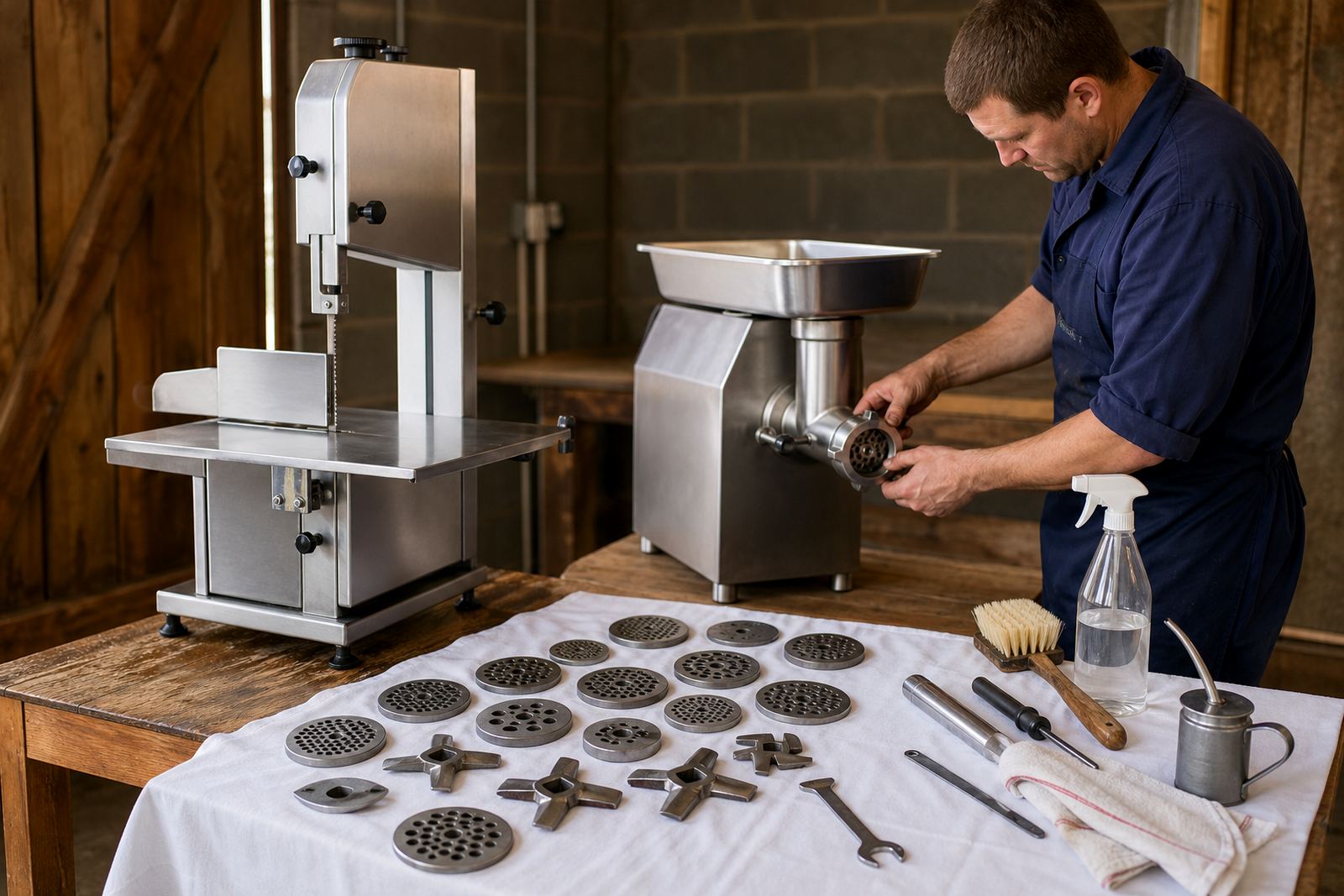
Mincer plates are selected to match the head size of the machine and the finish you want from the product. The most important check is physical fit: the plate must seat properly in the head and line up with the knife and retaining parts. After that, hole size and pattern guide the texture. Smaller openings give a finer grind, while larger openings let more product through with a coarser finish.
We supply plates for general butchery use in a range of common formats so operators can keep the right spare on hand. The usual choice depends on the product line, the volume of work and the meat condition on the day. A plate used for regular mince may not be the best choice for a sausage room or a kitchen that prefers a thicker texture.
- Fine plates for a smooth, even mince finish
- Medium plates for everyday retail mince and mixed products
- Coarse plates for sausage work, bulk prep and textured output
- Replacement plates for worn or damaged cutting faces
- Matching plates for different mincer head sizes and retaining systems
If you are not sure which plate is needed, bring the old plate details or the machine opening measurements. That makes it easier to match the part before ordering and avoids delays. A plate that is almost right is usually not good enough, because even a small mismatch can affect the cut and put extra load on the mincer.
Where Mincer Plates Suit Commercial and Home Use
Mincer plates are used anywhere meat is processed in regular batches. In commercial butcheries, they suit retail counters, back-of-house prep rooms, meat cutting areas and production spaces that need consistent output through the day. In home butcher setups, the same wear part can help keep mince quality steady for family use, small orders or weekend processing.
We work with customers in Bloemfontein, Johannesburg, Pretoria, Durban and Cape Town, and the same practical rule applies in each place: choose a plate that suits the machine size, the product mix and the amount of cleaning the equipment gets. Coastal conditions in Durban and Cape Town can mean more attention to drying and storage, while inland shops often focus on dust control and regular inspection after busy periods. Either way, the plate should be checked before it starts to show heavy wear.
Plates are useful in setups that need repeatable results. If one batch is too coarse and the next is too fine, it often points to a worn plate, an unsharp knife, poor fit or product that is too hard or too warm. In a practical butcher room, the plate is one of the first parts to inspect when output changes.
Fitting, Power Use and What the Machine Needs
A mincer plate itself does not use power, but it has a direct effect on how hard the machine must work. A plate that is correct for the machine and kept sharp and flat allows the motor to do less work. A poor fit can increase strain, slow down output and put extra pressure on the drive system. That matters on electrically powered units especially when the supply is already interrupted by load-shedding or low-voltage conditions.
Installation should always be done with the machine isolated and the correct guarding in place. The knife and plate must be seated properly, and the retaining parts must be tightened to the maker’s normal procedure. Never force a plate into position or use a damaged knife against a worn plate, because that can damage the cutting set and affect safety. If the machine has been recently serviced, check that the plate face sits flush and the cut is even before putting it back into full production.
- Switch off and isolate the machine before fitting or removing parts
- Use clean hands or gloves when handling cutting faces
- Check the knife and plate as a matched set
- Make sure guards and covers are in place before operation
- Do not run the machine with loose retaining parts
For workshops that handle multiple machines, it helps to label plates by machine type or hole size. That saves time and reduces mix-ups during a busy shift. It also makes setup cleaner for staff who may step in during peak periods or power interruptions.
Care, Cleaning and Servicing Between Replacements
Good care makes a real difference to how long a plate lasts. After use, remove all meat residue, wash with suitable cleaning materials and dry the part properly before storage. If moisture is left on the plate, rust can start quickly, especially in humid coastal areas. Even in dry inland towns, damp storage and poor drying can shorten life.
Do not scrape the cutting face with hard metal tools, and avoid dropping the plate onto a floor or bench edge. A small knock can distort the face enough to upset the cut. It is also wise to inspect the plate during blade replacement or regular servicing. If the holes have widened unevenly, the surface is rough or the edges no longer meet the knife cleanly, the plate should be changed. Many operators leave worn plates in use for too long because the change is gradual, but the output difference becomes obvious once it starts showing up in the tray.
Our servicing support includes plate and knife change, cleaning demonstrations, preventative maintenance and breakdown callouts. For shops in Hamilton, Bloemfontein and surrounding areas, that means practical help when equipment needs attention and you want to keep the work moving without unnecessary stoppages.
What to Check Before You Place an Order
Ordering the correct mincer plate is mostly about fit and intended use. If you have the machine details, that helps. If not, there are a few simple checks that make ordering easier and reduce the risk of getting the wrong part. The plate must match the head size, the drive arrangement and the cutting set used in the mincer.
- Machine model or head size if available
- Desired mince texture, fine, medium or coarse
- Current plate diameter and thickness
- Hole pattern and number of holes if known
- Whether the plate is for retail mince, sausage work or general prep
- Condition of the matching knife and retaining parts
If you are replacing a worn plate, bring the old one along or send clear measurements through the enquiry form on our contact page. That helps us check the fit before dispatch. We also help customers who need spares for more than one site, including supply and delivery to Bloemfontein, Johannesburg, Pretoria, Durban, Cape Town, Kimberley, Welkom and Kroonstad. For commercial kitchens and butcheries alike, the goal is simple: the right part, the right fit, and less time lost to rework.
Key facts
| Product type | Replacement mincer plate for butchery use |
|---|---|
| Use | Controls mince texture and supports consistent output |
| Common options | Fine, medium and coarse hole patterns |
| Fit requirement | Must match the mincer head size and knife set |
| Care | Clean, dry and store after every use |
| Support available | Parts supply, servicing, training and delivery |