

What Mincer Knives Do in Daily Butchery Work
A mincer knife sits inside the cutting set and does the actual slicing action before meat passes through the plate. In a busy butchery, whether you are preparing mince for retail packs, burger mixes or home batches, the knife needs to stay flat, sharp and properly matched to the plate. If the knife is chipped, bent or simply worn thin, the mincer has to work harder and the finish changes straight away.
These are not parts to ignore until the machine fails. Good cutting performance depends on the knife, plate and locking pressure working together. That is why routine inspection matters. A quick check before trading starts can save time later, especially where load-shedding interruptions and stop-start work put extra strain on equipment in Bloemfontein and other parts of South Africa.
Sizes, Fitment and Knife Options
Mincer knives are supplied to suit different mincer sizes and shaft patterns, so the first step is always confirming the fit. Some knives are made for smaller home units, while others are intended for larger commercial mincers that handle regular daily processing. The blade profile, centre hole and overall diameter must match the machine exactly or the cut will not be right.
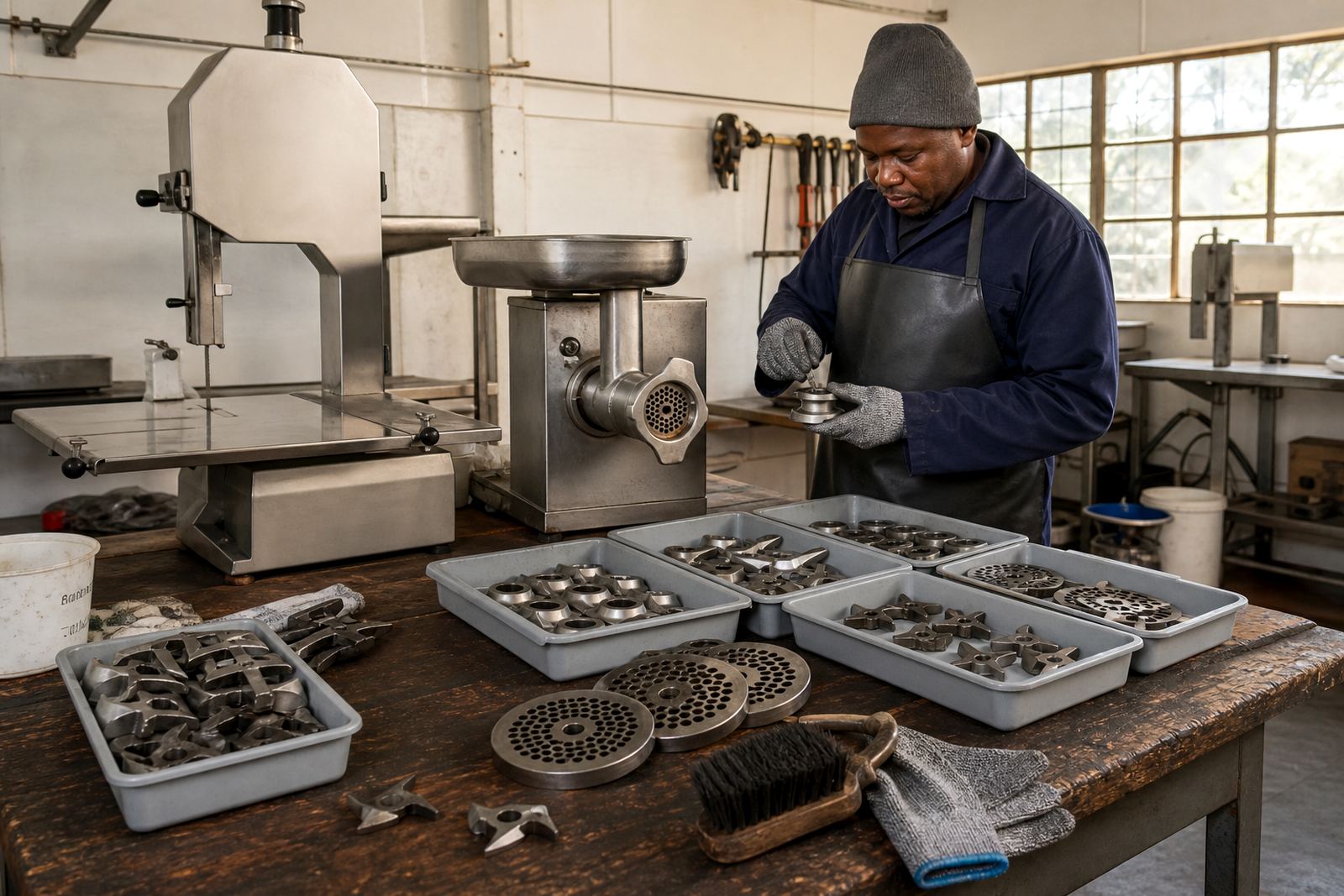
When ordering, it helps to know the plate size, the machine type and whether the knife is for a standard cross-style cutting set or another layout. If you are replacing both plate and knife together, the pair should be matched as a set. That gives a cleaner cut and helps reduce unnecessary wear.
- Fit must match the mincer model and cutting set
- Knife and plate should be checked together
- Replacement is often best done in pairs with the plate
- Worn or chipped edges should not be put back into service
Where Mincer Knives Suit Best
These cutting parts suit butchery counters, processing rooms, farm shops and home butchers who want consistent results. In commercial work, the knife has to cope with repeated use and regular cleaning, while home users need a part that is easy to maintain and ready when needed. The same basic care applies in both cases: keep it clean, dry and checked for wear.
For butchers in Bloemfontein, Johannesburg, Pretoria, Durban and Cape Town, the local conditions matter too. Coastal humidity can encourage surface rust if parts are left damp, while dust and temperature changes inland can affect how well a machine is stored between uses. Keeping spare knives on hand makes sense for any setup that must keep trading without delay.
Installation and Power Considerations
A mincer knife does not need gas or power on its own, but it must be installed correctly into the machine before operation. The cutting set must sit flat, with the knife placed the right way round against the plate. If the pressure ring or retaining parts are too loose, the cut becomes uneven. If they are over-tightened, the machine can bind and the motor may work harder than necessary.
Before starting up, check that guards are fitted, the feed area is clear and the machine is isolated during installation. Use proper PPE when handling a blade and avoid testing fit by hand where there is any chance of movement. If you are not sure about the correct orientation, it is better to have the set checked during servicing than to force a guess.
- Confirm the knife sits flat against the plate
- Check the retaining parts are secure but not over-tightened
- Keep hands clear during fitting and testing
- Use guards and PPE during all handling and cleaning
Care, Cleaning and Servicing That Extends Life
Regular care is the simplest way to get more life from a mincer knife. After use, remove fat and meat residue, wash in suitable cleaning solution, rinse and dry properly. Do not leave the knife wet on a bench or in a sink where it can stain or rust. A light protective oil may be used where suitable, but always follow the machine care routine used in your butchery.
During servicing, check for dull edges, chips, burrs and signs that the knife is no longer seating correctly. If the machine starts to mince poorly, pushes meat instead of cutting it, or leaves an uneven texture, the knife and plate should be inspected together. Small faults become bigger faults quickly in daily trade, especially when the machine is used often and cleaned several times a day.
What to Check Before You Order
Ordering the right knife starts with basic machine details. Measure or confirm the mincer size, note the cuttting set type, and check whether you need one replacement or a full set with the plate. If the current knife has a model reference or visible markings, keep those details ready when you send your enquiry through the contact page. That saves time and reduces the chance of a wrong fit.
It also helps to mention how the machine is used. A home butcher, a small shop in Welkom or Kroonstad, and a busy processing room in Durban will not always wear parts at the same rate. If the knife is being replaced because of poor cut quality, tell us whether the issue is a noisy run, slow feed, heat build-up or an uneven mince. Those details help us guide you to the correct part and the right servicing support.
- Mincer size and cutting set type
- Knife and plate requirement, as a pair or separate
- Machine condition and the reason for replacement
- Whether you need delivery, setup or workshop support
MorCut Support for Supply, Setup and Ongoing Maintenance
MorCut Butchery is based in Hamilton, Bloemfontein and supplies butchery equipment parts to commercial and home butchers across South Africa. Our team supports enquiries from Bloemfontein Supply, Johannesburg Delivery, Pretoria Delivery, Durban Delivery, Cape Town Delivery, Kimberley Supply, Welkom Supply and Kroonstad Supply. We also assist with parts supply, delivery and setup, together with servicing and training where needed.
If you are replacing mincer knives, it is worth reviewing the full cutting set and the condition of the machine at the same time. A good knife alone will not fix a worn plate or poor setup. With the right fit, proper cleaning and regular checks, the mincer stays safer to use and easier to keep in working order. That is practical maintenance, not guesswork.
Key facts
| Product type | Replacement cutting component for butchery mincers |
|---|---|
| Use | Commercial and home mincing applications |
| Fitment | Must match mincer size, shaft pattern and cutting set |
| Related parts | Best checked together with the plate |
| Care | Clean, dry and inspect regularly for wear or chips |
| Support | Delivery, setup, servicing and parts supply available |