

What a floor mincer is and when it makes sense
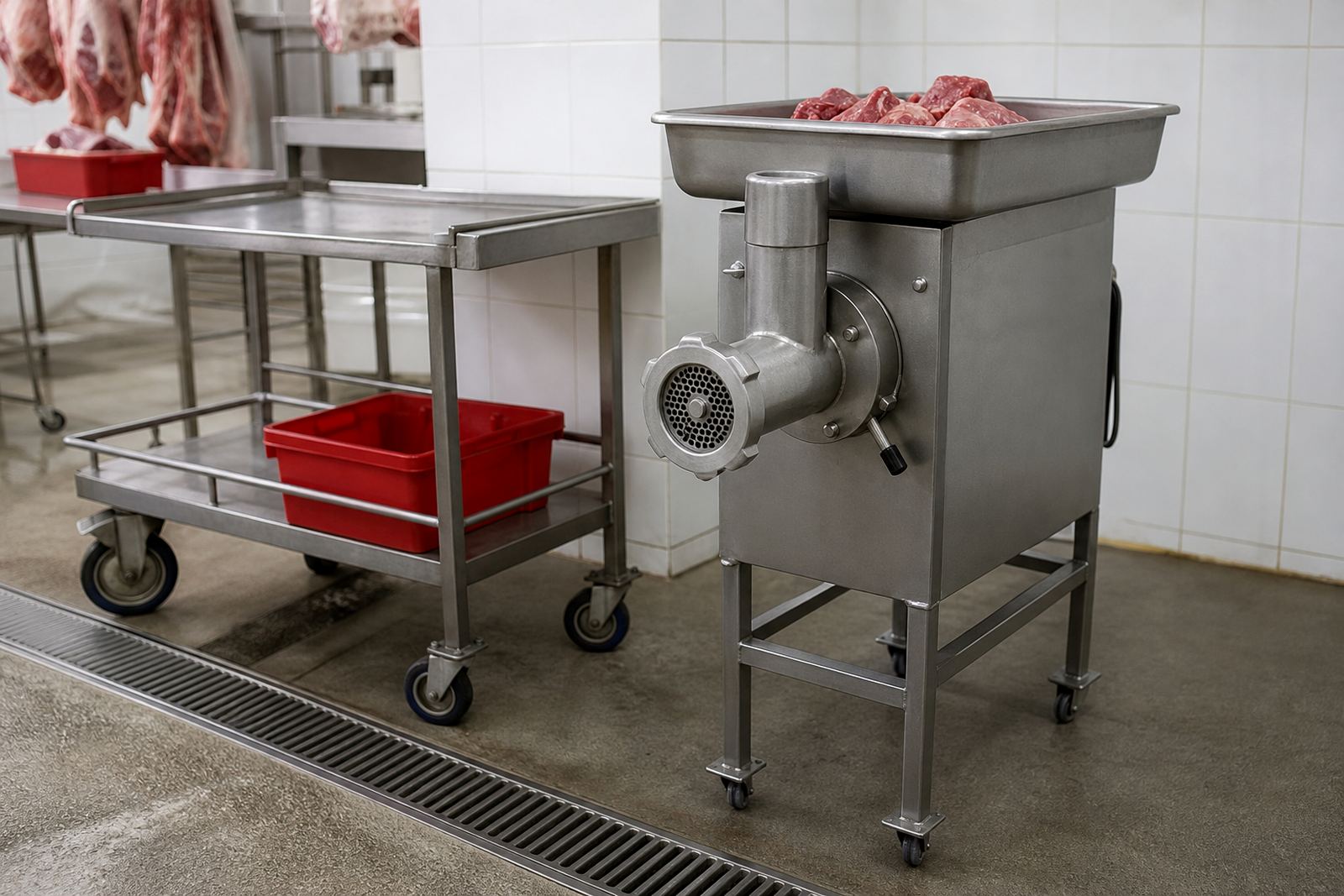
A floor mincer is a larger standing mincing machine used for regular production rather than the odd tray here and there. It is placed at a comfortable working height and is suited to butcheries that process beef, mutton, pork or mixed mince through the day. In a busy shop, this saves time, reduces handling and helps keep the work flow steady from trimming to packing.
For commercial butchers, the main advantage is capacity. You are not constantly feeding small batches into a light-duty unit and waiting for it to catch up. A floor mincer is better suited to prep rooms where there is a clear line between receiving, cutting, mincing and cleaning. It also works well in home butcheries with regular processing, especially where more than one person is working in the same area.
These machines are not only about speed. They also help with consistency, which matters when you want even mince for boerewors, patties, sausage mix or bulk packs. If the output is steady and the feed is controlled, your final product looks better and portions are easier to manage.
Sizes, feed options and build choices
Floor mincers come in different sizes and configurations, so the right choice depends on how much product you process and how your team works. Some are suited to general daily production, while others are better for heavier throughput in a larger butchery or central prep room. The important point is to match the machine to the pace of the business, not just the floor space.
When comparing options, look at the following practical features:
- Feed opening size and tray layout for easy loading
- Single or multi-step cutting setup, depending on the finish you want
- Stainless or coated food contact parts for easier cleaning
- Forward and reverse controls for clearing minor blockages
- Fixed standing base or wheeled movement for cleaning access
Some butcheries want a simple unit for everyday mince, while others need a machine that can handle heavier batches and longer periods of use. In coastal towns such as Durban and Cape Town, a machine with easier wipe-down surfaces and sensible storage care can help with humidity and corrosion control. In inland areas like Bloemfontein, Johannesburg and Pretoria, the focus is often more on throughput and power stability during load-shedding or after-hours production.
Where floor mincers suit best
These machines suit active butcheries, farm shops, meat prep rooms, small processing spaces and wholesale counters. They are also useful where mince is prepared alongside sausages, burger packs, meat balls and bulk family packs. A floor mincer is a good fit when the same unit is used more than once a day and when clean-up between batches must be fast.
Floor mincers are also practical in shops that serve walk-in customers and trade buyers from the same back room. If you prepare mince for retail and also for catering orders, a larger machine helps keep both streams moving. That said, it should always be placed where staff can feed it safely and keep the floor dry and uncluttered, because a wet prep area becomes a slip risk very quickly.
For home butchers, the machine can make sense where larger family orders, social events or farm use justify the size. It is worth remembering though, that bigger machines need more care. They are not for leaving idle with meat in the throat, and they should never be pushed beyond what the operator can manage safely.
Installation, power needs and setup on site
Installation starts with the basics: a level floor, enough working space around the machine, and a clean route for loading and cleaning. Floor mincers should be positioned so the operator can work without twisting or reaching awkwardly. The discharge area must also be planned properly so trays or tubs can sit securely without blocking movement.
Power requirements vary by machine, so the supply must be checked before delivery. Some sites are better suited to a standard electrical connection, while others may need dedicated planning for startup load and safe cabling. If your butchery runs during load-shedding, it is important to understand what backup power can and cannot support. Do not assume a generator or inverter will handle the machine without checking the full electrical load first.
If you are setting up a new prep room in Bloemfontein or adding a second machine in Johannesburg or Pretoria, it is worth planning the install around the room layout, drainage and cleaning points. In Durban and Cape Town, ventilation and corrosion control matter too, especially where salt air and moisture are part of daily life. A proper setup makes the machine easier to use and easier to keep in working order.
- Check floor space for loading and cleaning access
- Confirm the power supply before delivery
- Keep the machine away from wash-down spray
- Plan where trays, tubs and cleaning tools will sit
Care, cleaning and servicing that keep output steady
Regular care matters because meat equipment works best when it is kept clean, sharp where relevant, and free of residue. The operator should remove all food contact parts as instructed, wash them thoroughly and dry them before reassembly. Leaving moisture behind is a common cause of wear and hygiene problems. Guards should stay in place, hands should stay clear of the feed opening, and staff should use proper PPE for cutting and cleaning tasks.
Blunt or worn parts affect the quality of the mince and can strain the machine. A good service routine includes checking plates and knives, looking for play in moving parts, and making sure the motor area stays clear of dust, fat and debris. If a machine starts to sound different, heats up more than usual, or slows under load, it should be inspected before a small fault becomes a stoppage. That is better than trying to push through a busy day and hoping for the best.
We support floor mincers with servicing, blade changes, plate and knife change work, breakdown callouts and preventive maintenance. Our workshop team handles practical repairs and our parts team helps keep common wear items moving. For businesses that work through week-end trade or holiday rushes, scheduled servicing can save time and reduce disruption.
What to check before you order
Before ordering, think about how many kilograms you usually process, what cuts you mince most often, and how many people will use the machine. You should also check whether the machine will sit in a front prep room, back room or separate meat prep area. That affects size, movement and cleaning access. If you are unsure, it helps to look at the whole work flow instead of just the machine itself.
Useful ordering checks include:
- Daily output and batch size
- Available floor space and doorway width
- Power supply and backup power plan
- Need for delivery, setup and operator training
- Parts access for routine wear items
- Cleaning routine and storage after use
You should also confirm whether you need a machine mainly for mince, sausage mix or general prep room work. The intended use affects the best size and layout choice. If the machine will be used in a shop that also handles other equipment, make sure there is enough space for staff to move safely around it without crowding the area.
Supply and support from Bloemfontein to the rest of South Africa
MorCut Butchery supplies floor mincers from Hamilton in Bloemfontein, with delivery and support for commercial and home butchers across South Africa. We work with customers in Bloemfontein, Johannesburg, Pretoria, Durban, Cape Town, Kimberley, Welkom and Kroonstad, and we help with setup, training and after-sales support where needed. Our team also assists with installation, servicing, parts supply and operator training, so the machine is supported after it arrives.
When a butchery needs a floor mincer, it usually needs more than just the machine. It needs practical advice, the right placement, and a plan for cleaning and maintenance that fits the day to day pressure of the shop. That is where a direct, local supplier makes a real difference.
If you want to discuss a floor mincer for your butchery, you can reach us through the enquiry form on our contact page. We will help you match the machine to your space, your power supply and your production needs.
Key facts
| Product type | Floor-standing mincer for meat preparation and continuous use |
|---|---|
| Best use | Commercial butcheries, prep rooms, farm shops and serious home butchers |
| Material options | Food contact parts in stainless or similar easy-clean materials |
| Controls | Typical forward and reverse operation with simple operator controls |
| Maintenance | Cleaning, lubrication where required, plate and knife changes, routine servicing |
| Support available | Delivery, setup, operator training, parts supply and breakdown callouts |