

Compact Mincers for Tight Counter Space
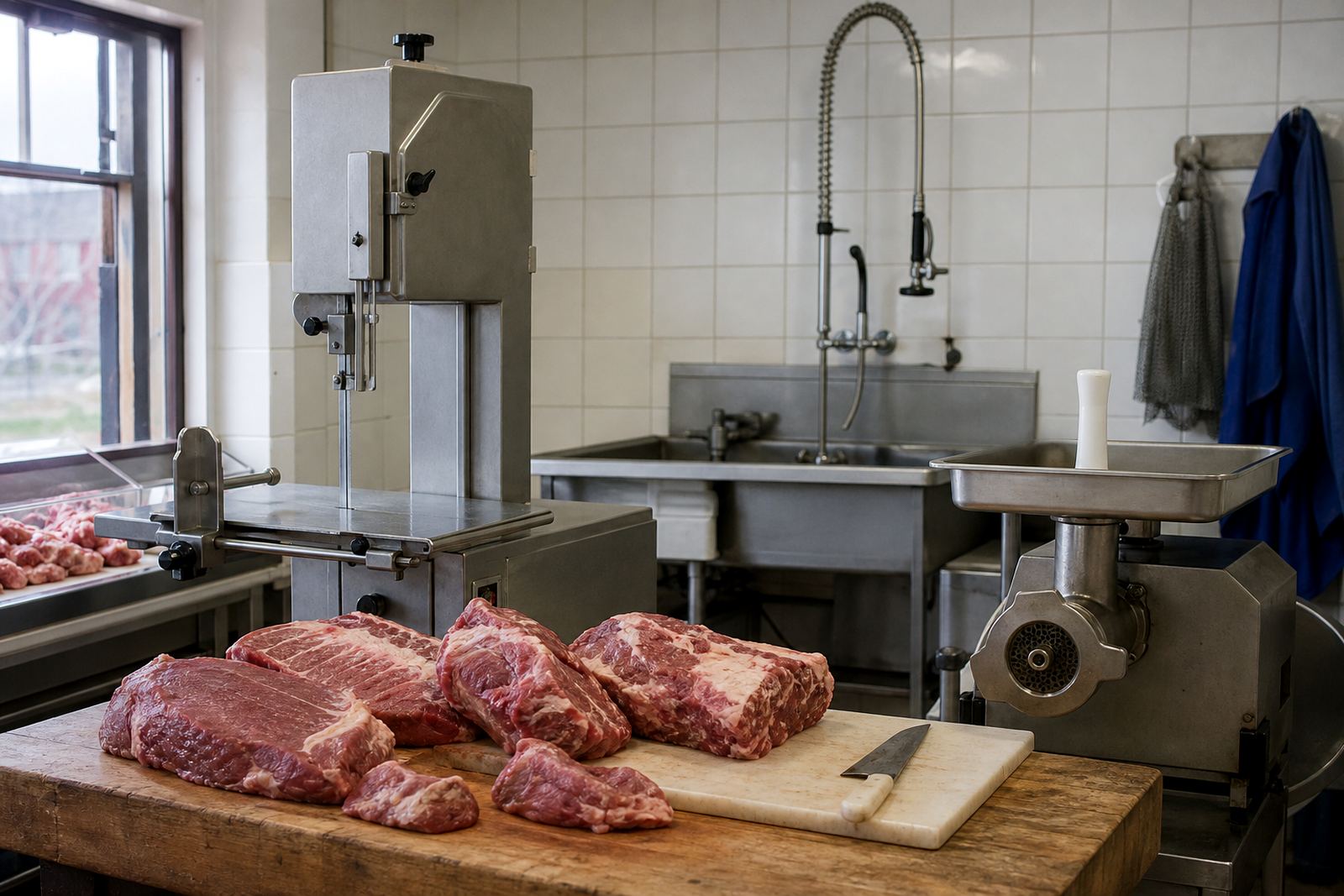
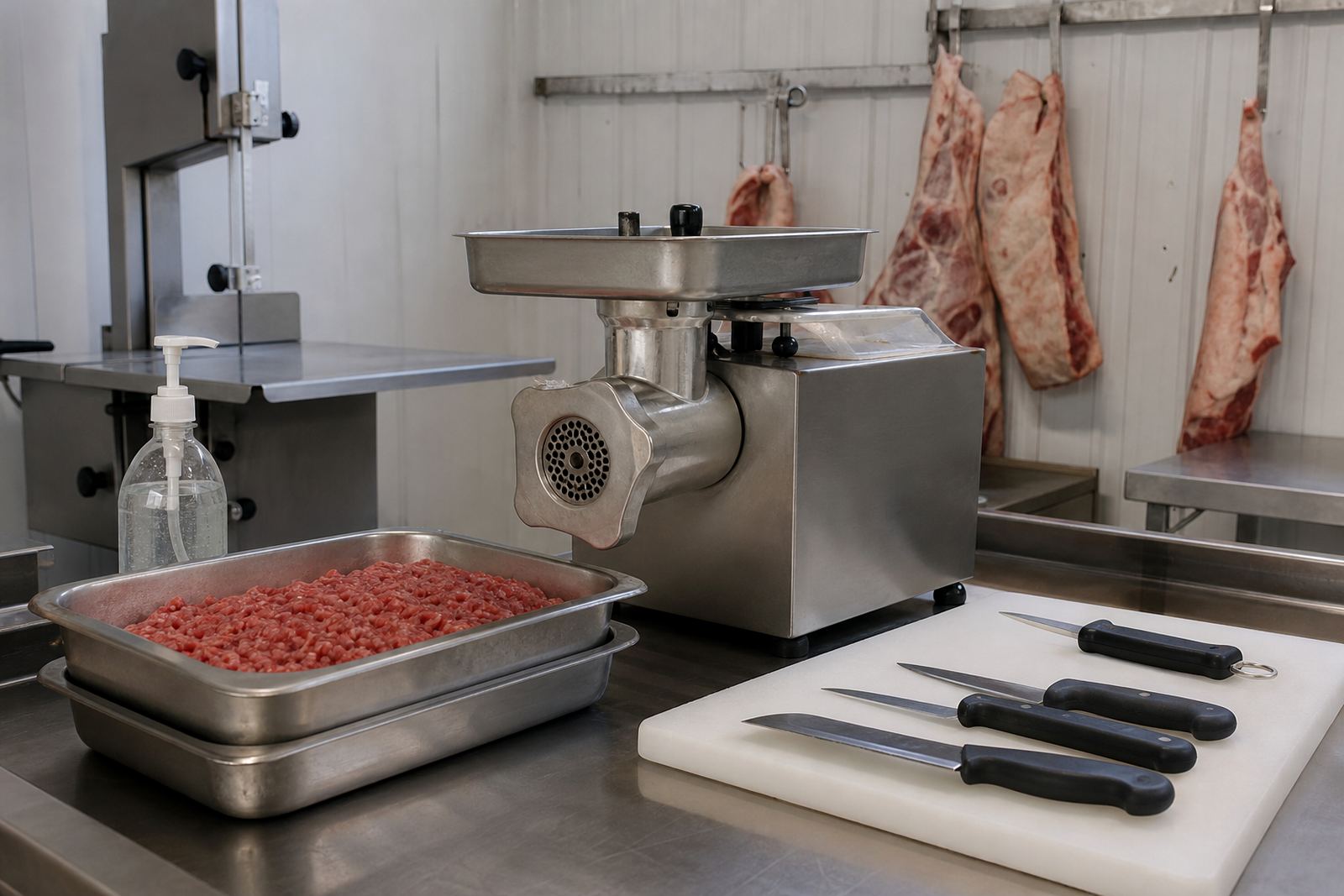
A compact mincer is built for smaller prep areas, home butchery setups and shops that need a neat footprint without giving up proper meat processing. It helps you mince fresh meat for mince, sausage filling and other everyday butchery work while keeping the working area organised. For many operations, a compact unit is easier to position near a prep table, sink or packing point, especially where every metre counts.
These mincers suit operators who want a straightforward machine for regular use. They are often chosen for back rooms, training kitchens, farm stalls and small retail counters where the team needs quick access, simple cleaning and reliable handling of fresh product. In a busy shop, a smaller machine also makes it easier to manage movement around the counter and maintain a clean workflow.
Typical Sizes and Options to Compare
Compact mincers come in a range of practical configurations, so it helps to compare the model layout against your daily volume and counter space. Some are designed as tabletop units, while others are small floor units that still save room. The right choice depends on how much product you process, how often you run the machine, and whether you need it to sit on a counter or on a dedicated stand.
- Tabletop or small floor-standing layout
- Single-phase or three-phase power, depending on the model
- Stainless steel contact parts on many units
- Different throat and feed sizes for varying batch work
- Choice of plate and knife set to suit fine or coarser mince
When comparing options, ask how easy the machine is to strip for cleaning, how the feed tray is shaped and whether replacement parts are easy to source. These practical details matter more than looks when the machine has to work daily. A compact mincer should feel manageable for the operator and not crowd the rest of the prep area.
Where a Compact Mincer Works Best
Compact mincers are well suited to home butchers, small butcher counters, butcheries in shopping centres and shops with limited back-of-house space. They also make sense for rural butchers and farm-based operations where service access must be simple and downtime kept low. In places such as Bloemfontein, Welkom, Kroonstad and Kimberley, a smaller unit is often easier to place, clean and keep ready for daily use.
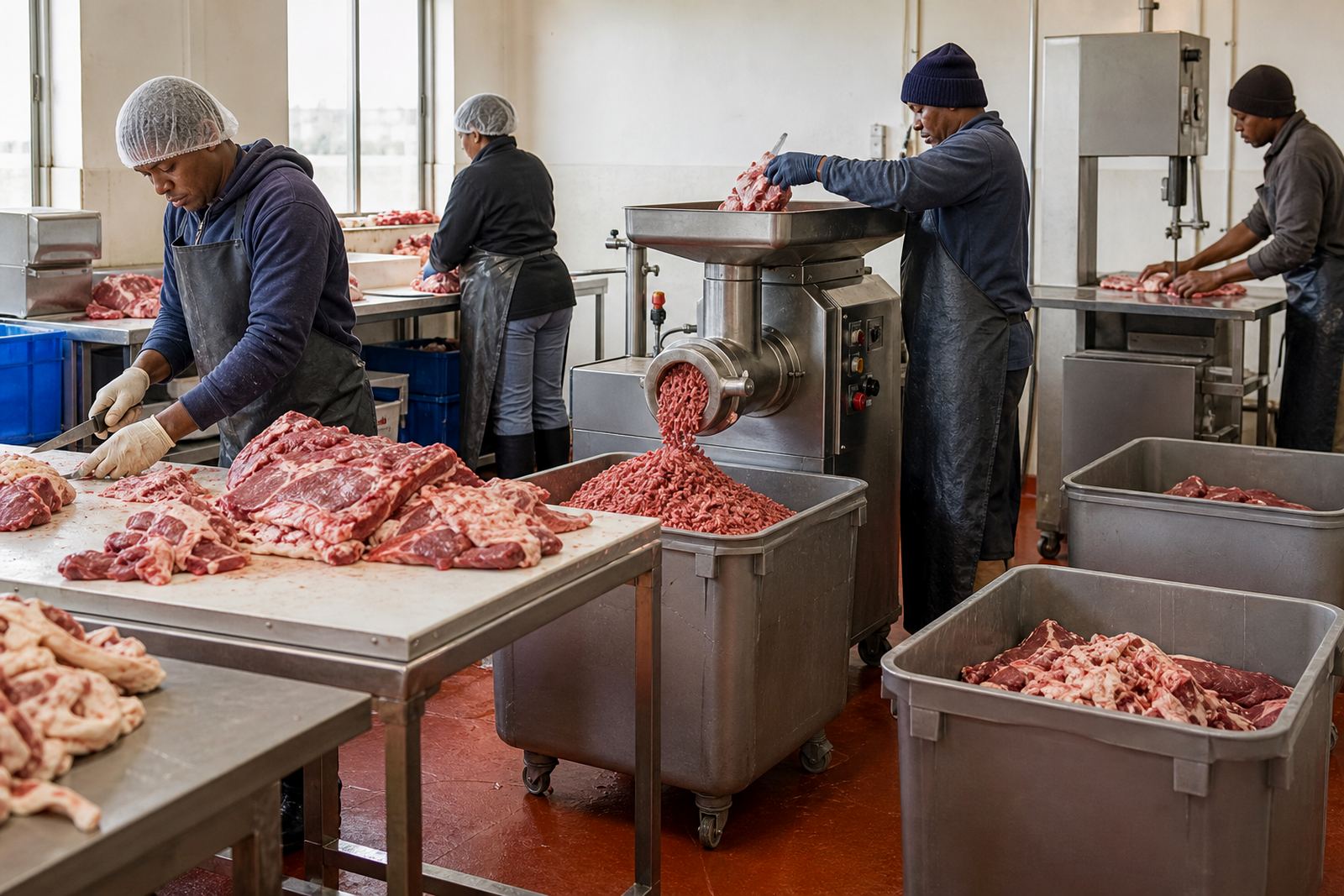
They also work well for businesses that only mince in batches rather than all day. If your operation produces meat pies, burger packs or sausage mixes in smaller runs, a compact unit can be the practical choice. For shops serving local households and weekend trade, it gives enough capacity without tying up too much floor space or power.
Power Setup and Installation Basics
Before ordering, check where the mincer will stand, what power is available and how the machine will be fed and cleaned. Some compact mincers are suited to a standard single-phase supply, while others need three-phase power. That choice should match your site conditions, especially where load-shedding, generator use or shared power boards are part of daily life. A clean, stable power supply helps avoid nuisance trips and unnecessary wear.
Installation should allow enough room for feeding, collection and cleaning. Keep the unit on a level surface and away from splash zones where possible. If the machine is to be used in a busy retail area, make sure staff can move around it safely without crowding. Our team can assist with delivery and setup from Bloemfontein to Johannesburg, Pretoria, Durban and Cape Town, and can advise on the right position for the unit before it goes into service.
Care, Cleaning and Routine Servicing
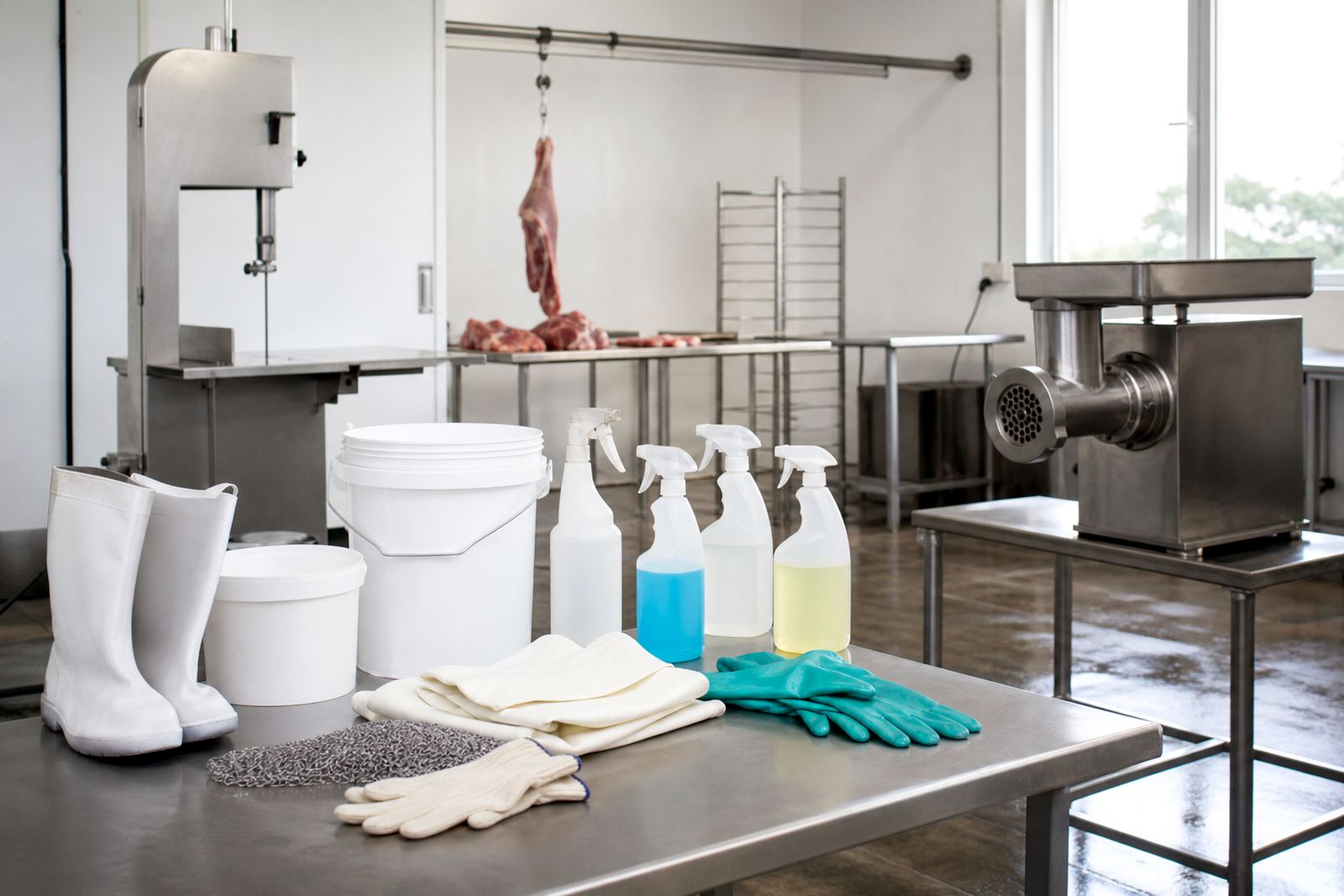
Good care keeps a compact mincer working well and helps protect product quality. Clean the machine after use, remove residue from the feed area and wash the parts that contact meat according to the recommended method. Never bypass guards or use the machine without the correct safety covers in place. Operators should use PPE as required, keep hands clear of the feed opening and follow the correct cleaning sequence.
Routine servicing helps prevent unnecessary stoppages and keeps the machine safe for daily work. Check blades, plates and seals for wear, and arrange servicing before small issues turn into bigger repairs. If the mincer starts to labour, produces uneven mince, or sounds different during operation, it is worth having it inspected. Regular care also matters in coastal towns where moisture can affect components more quickly, so cleaning and drying after use is important. A quick routine now saves a bigger problem later, and helps the machine stay dependable through the busy season.
- Clean after every use
- Inspect blades and plates for wear
- Keep guards fitted and working
- Store cleaned parts dry
- Book servicing when output changes or the machine strains
What to Check Before You Order
When ordering a compact mincer, start with the basics: how much meat you process, how often the machine will run, and where it will stand. Confirm whether you need a tabletop or floor unit, what power supply is available, and whether the machine must fit through a narrow door or into a tight counter space. If the unit will be used in a small shop, think about how staff will load product and collect mince without blocking other work.
Also check what comes with the machine and what consumables may be needed later. It helps to know whether the plate and knife set is suitable for the finish you want, whether spare parts are available, and if training is needed for the team. If you are placing an order for a home butcher setup, ask about simple setup and easy cleaning so the machine stays practical from day one. Our team can assist through the enquiry form on the contact page and help you choose a unit that fits your space and duty cycle.
- Available floor space and counter height
- Power supply on site
- Daily batch size and usage frequency
- Cleaning access and storage space for parts
- Need for training, servicing and spares
Key facts
| Machine type | Compact meat mincer for home and small commercial use |
|---|---|
| Size format | Tabletop or small floor-standing options, depending on the model |
| Power needs | Single-phase or three-phase supply, model dependent |
| Contact parts | Commonly supplied in food-grade metal finishes |
| Output use | Suitable for mince preparation, sausage filling and small batch processing |
| Maintenance | Routine cleaning, blade and plate checks, and scheduled servicing |