
What a retail bandsaw does in the shop
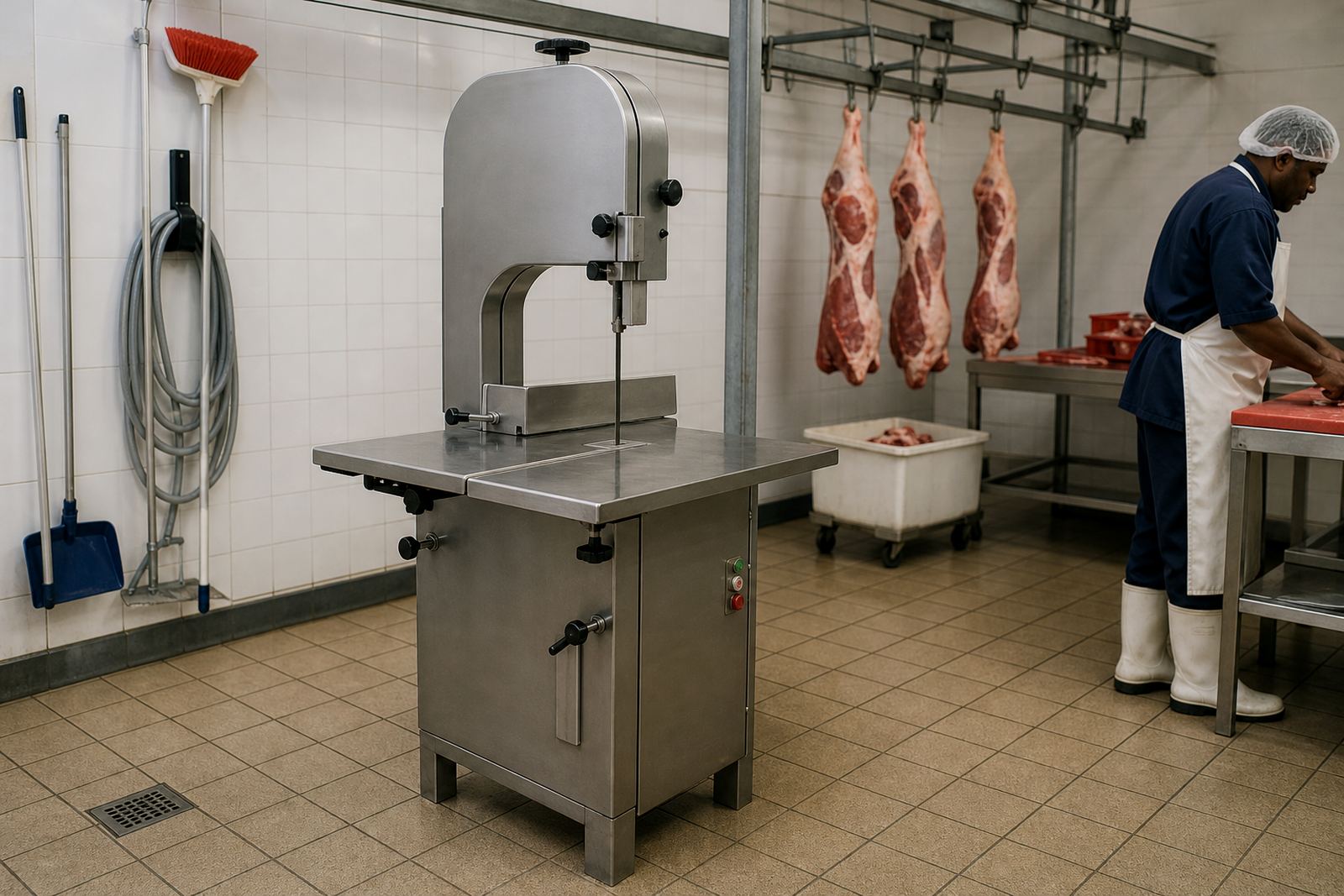
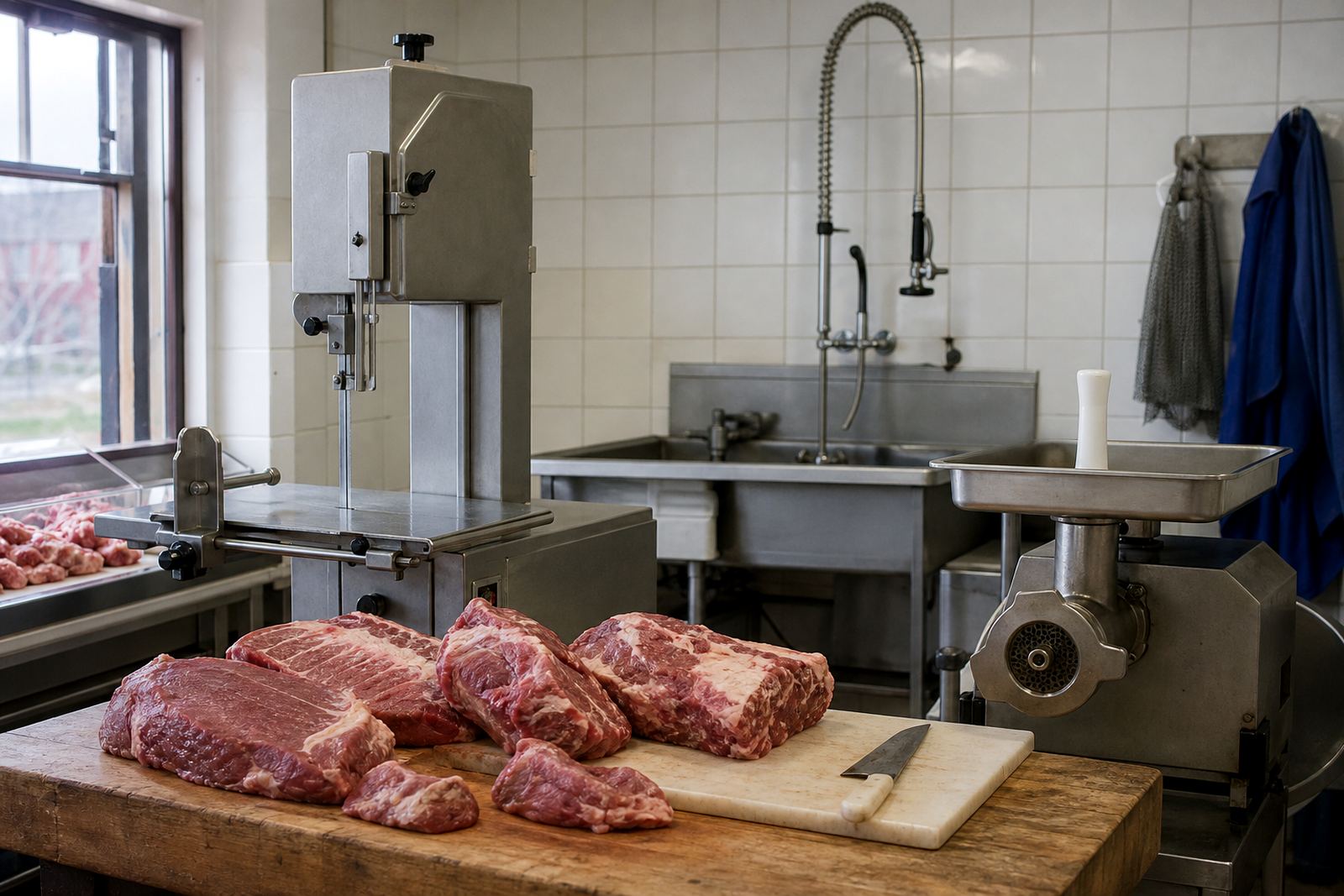
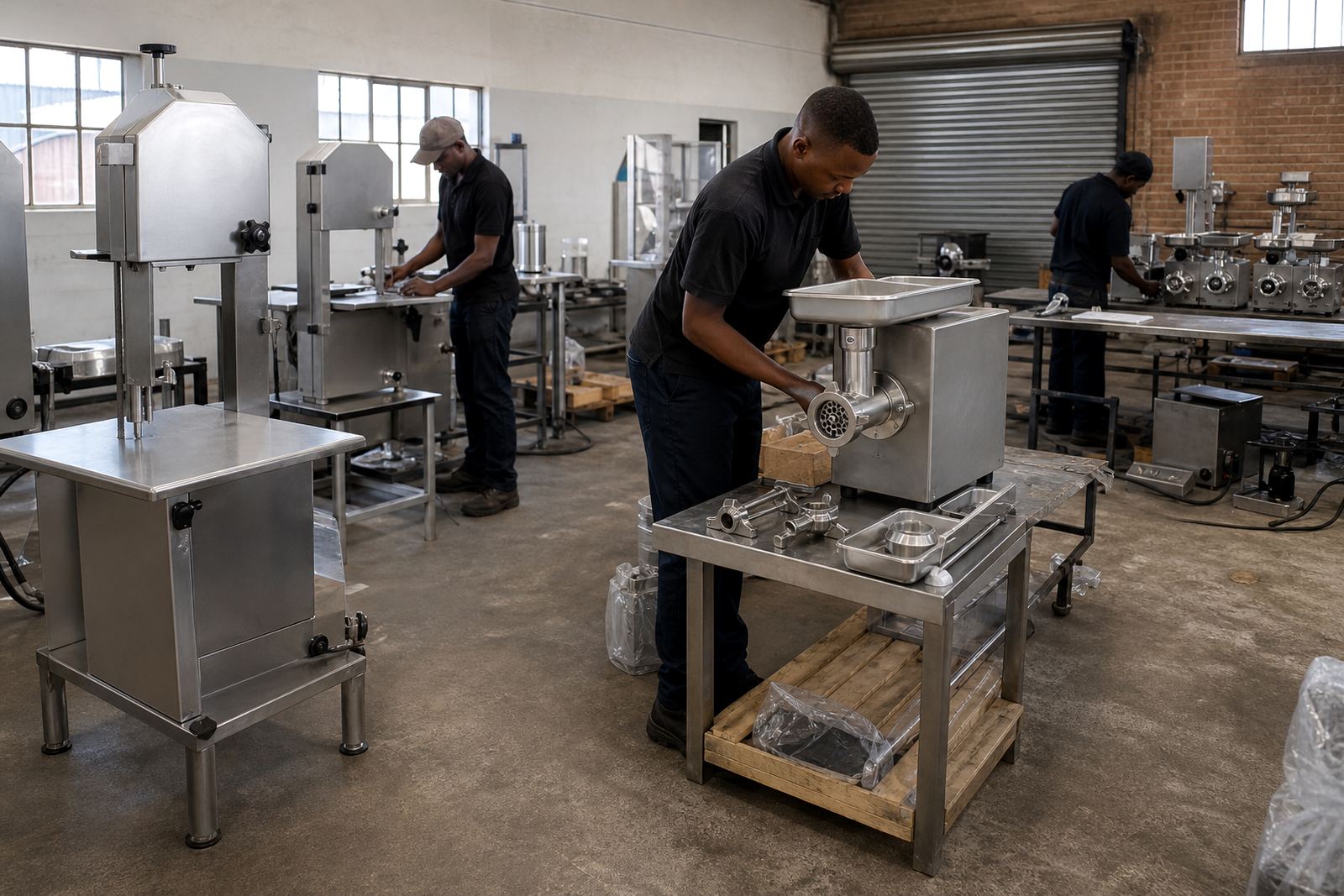
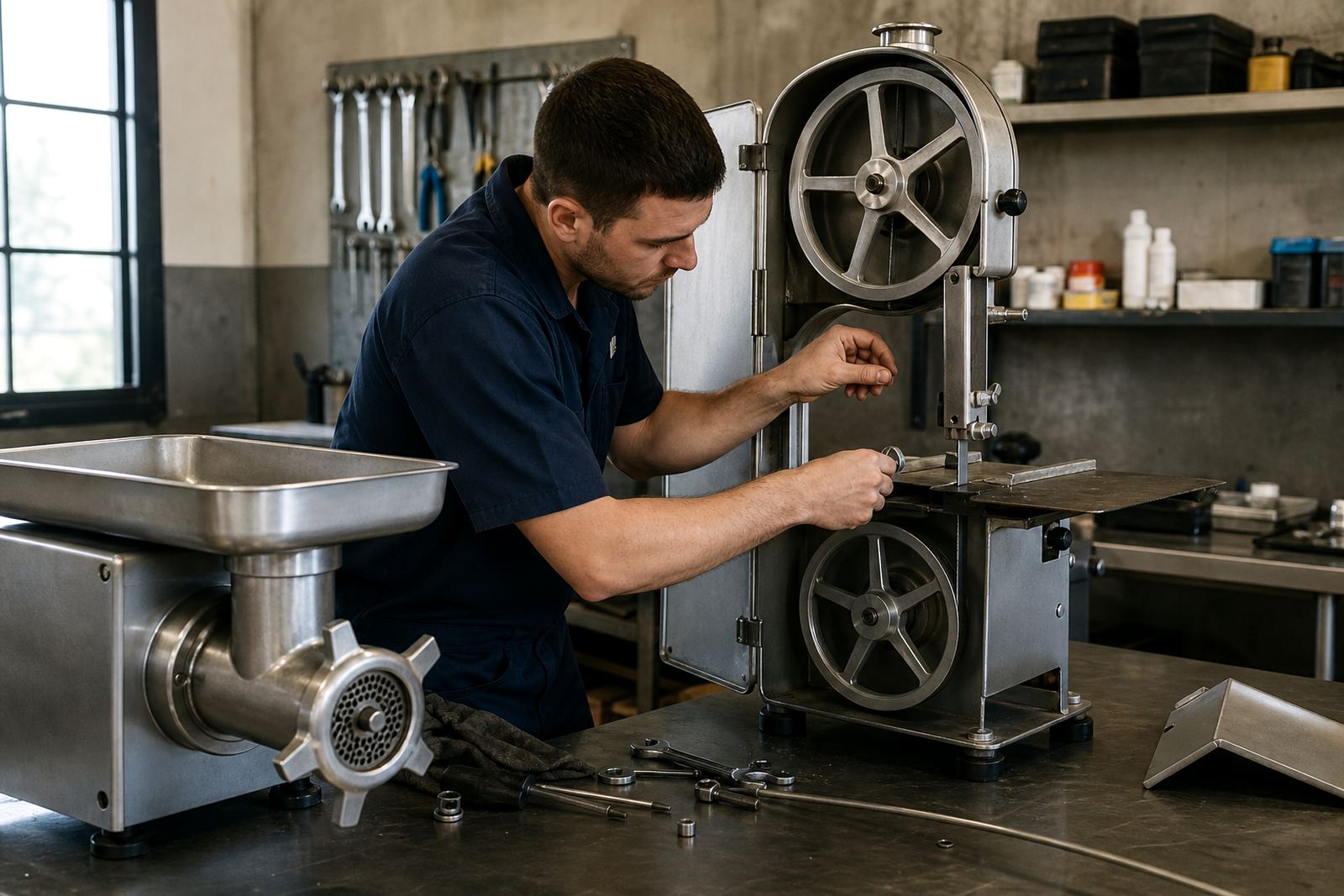
A retail bandsaw is used to break down meat with a moving blade that runs over wheels and through a guarded cutting area. It is the kind of machine that suits a shop where portions need to be cut consistently through the day, whether you are working with carcass portions, bones or smaller retail cuts.
For many butchers, the value is in control. A bandsaw gives a straight, guided cut and helps reduce waste when the operator keeps the blade sharp and the guides set correctly. It also suits busy counters where speed matters, but only if the machine is kept clean and the guards stay in place.
- Useful for regular portioning work
- Helps keep cuts neat and repeatable
- Can support both front counter and back-of-house prep areas
- Needs proper guarding and trained operation
Sizes and options to match your workload
Retail bandsaws are supplied in different frame sizes and table layouts so you can match the machine to the space you have and the type of work you do. A smaller shop in Bloemfontein may want a compact unit that fits a tighter prep room, while a higher-volume operation in Johannesburg or Durban may prefer a larger floor-standing model with a wider working area.
When choosing, look at the cut height, throat opening, blade access and how easy it is to clean around the table and guides. Some users want a simple machine for routine retail cuts, while others need a unit that can handle heavier daily use. The right option should suit your portion sizes, your available space and how often the saw will run each day.
- Table-top or floor-standing options
- Different working table sizes
- Choice of light-duty or heavier-use setups
- Guarding and guide arrangements for safer use
Where retail bandsaws fit best
These machines suit butcher shops that do day-to-day cutting for walk-in customers, supermarkets with an in-house butchery, small meat processing rooms and home butchers who want a proper cutting solution. In Free State towns like Bloemfontein, Welkom and Kroonstad, they are often chosen for practical service and straightforward maintenance.
They also suit sites where staff need to move between tasks and equipment must be reliable under normal trading pressure. If your team is cutting through the morning rush, then cleaning and resetting the machine quickly becomes just as important as the cut itself. A good setup should feel practical, not fussy.
- Butcher shops and meat counters
- Home butchers with regular cutting needs
- Processing rooms with controlled prep areas
- Shops that need dependable daily operation
Power, installation and setup checks
Before installation, confirm the power supply available on site and the floor space around the machine. Some units are set up for standard electricity supply, while heavier workshop-type arrangements may need a different connection, so it is best to check the site first rather than guess and call the electrician later.
Installation should allow safe access for the operator, room for cleaning, and enough space to load and unload product without crowding the blade area. In places where load-shedding is part of the day, shops often plan for backup power or schedule cutting work around the times when supply is steady. A good install also considers drainage, water access for cleaning and where waste will go under municipal rules.
- Check available electricity supply before ordering
- Allow space for safe loading and cleaning
- Plan for water, drainage and waste handling
- Consider backup power if your area is affected by outages
Care, cleaning and servicing that keeps it working
Daily care matters with any bandsaw. The blade, table, guides and guards should be cleaned after use, and operators should wear PPE when handling sharp parts or doing maintenance. A clean machine cuts better, and it is also easier to spot wear, loose fittings or damage before a small issue turns into a stoppage.
Regular servicing helps with blade tracking, guard alignment and general wear on moving parts. Blade replacement should be done promptly when the cut starts to wander or the blade shows damage. For shops near the coast, humidity can affect exposed metal, so wiping down and drying the machine properly is worth the extra few minutes. It saves trouble later, nogal.
- Clean after each use
- Check guards and guides often
- Replace worn blades before they affect the cut
- Book routine servicing to reduce breakdowns
What to confirm before you place an order
When you enquire, it helps to have a clear picture of how the machine will be used. Tell us whether it is for a small home setup or a busy shop, what type of product you cut most often, and how much room you have in the prep area. That makes it easier to match the saw to your work without overbuying or under-specifying.
You should also confirm delivery access, whether you need setup on site and if staff training is required on day one. If you are in Bloemfontein, Johannesburg, Pretoria, Durban or Cape Town, or in surrounding supply areas like Kimberley, Welkom and Kroonstad, we can help with delivery and setup planning so the machine arrives ready for use.
- Intended workload and shop size
- Available floor space and layout
- Power supply on site
- Need for installation, training or ongoing servicing
Key facts
| Product type | Retail butchery bandsaw |
|---|---|
| Use case | Front-to-back cutting for butcher shops and home butchers |
| Machine style | Table-top or floor-standing options |
| Operation | Guarded blade cutting with guide and table support |
| Installation needs | Verified power supply, safe working space and cleaning access |
| After-sales support | Delivery, setup, servicing, blade replacement and operator training |