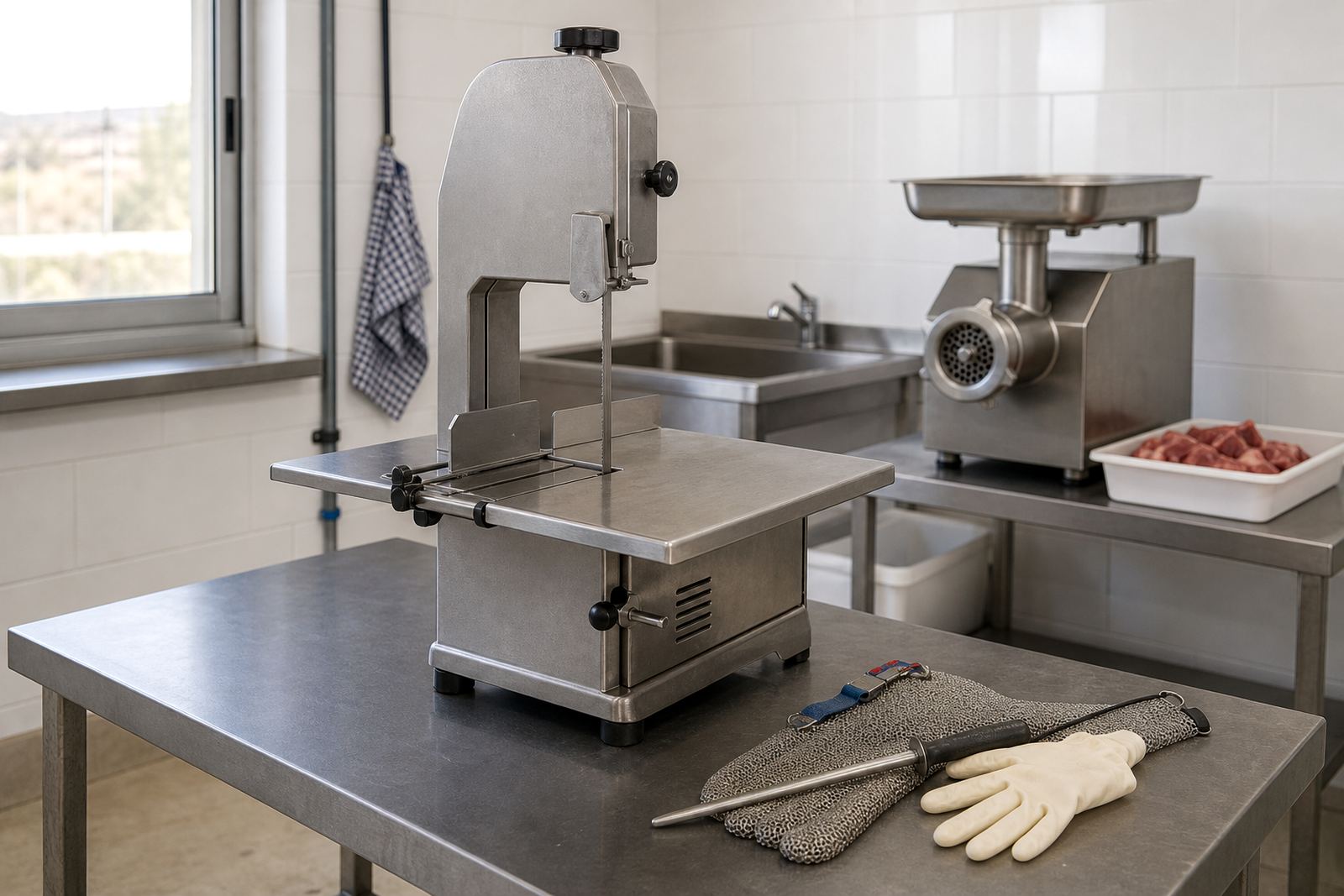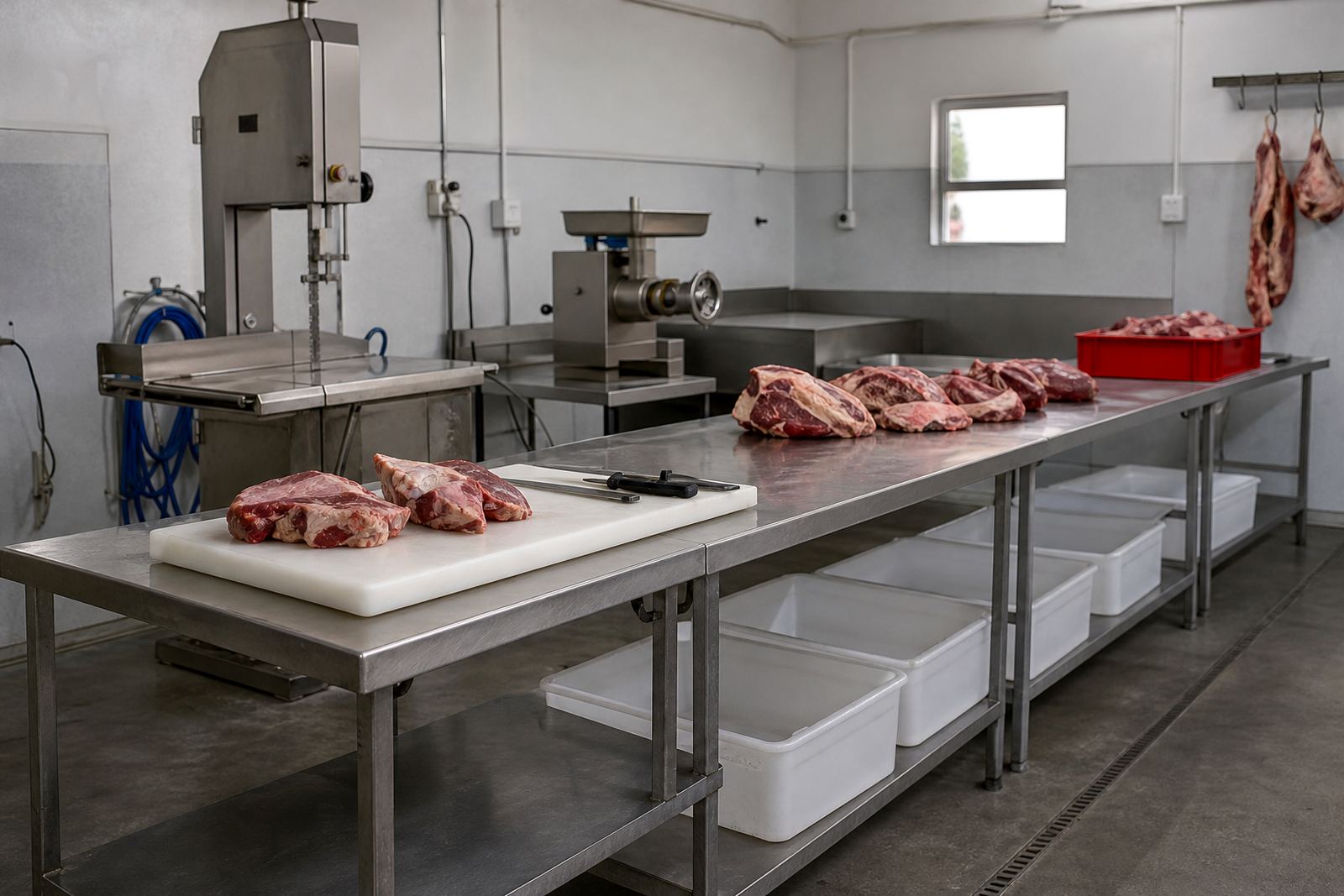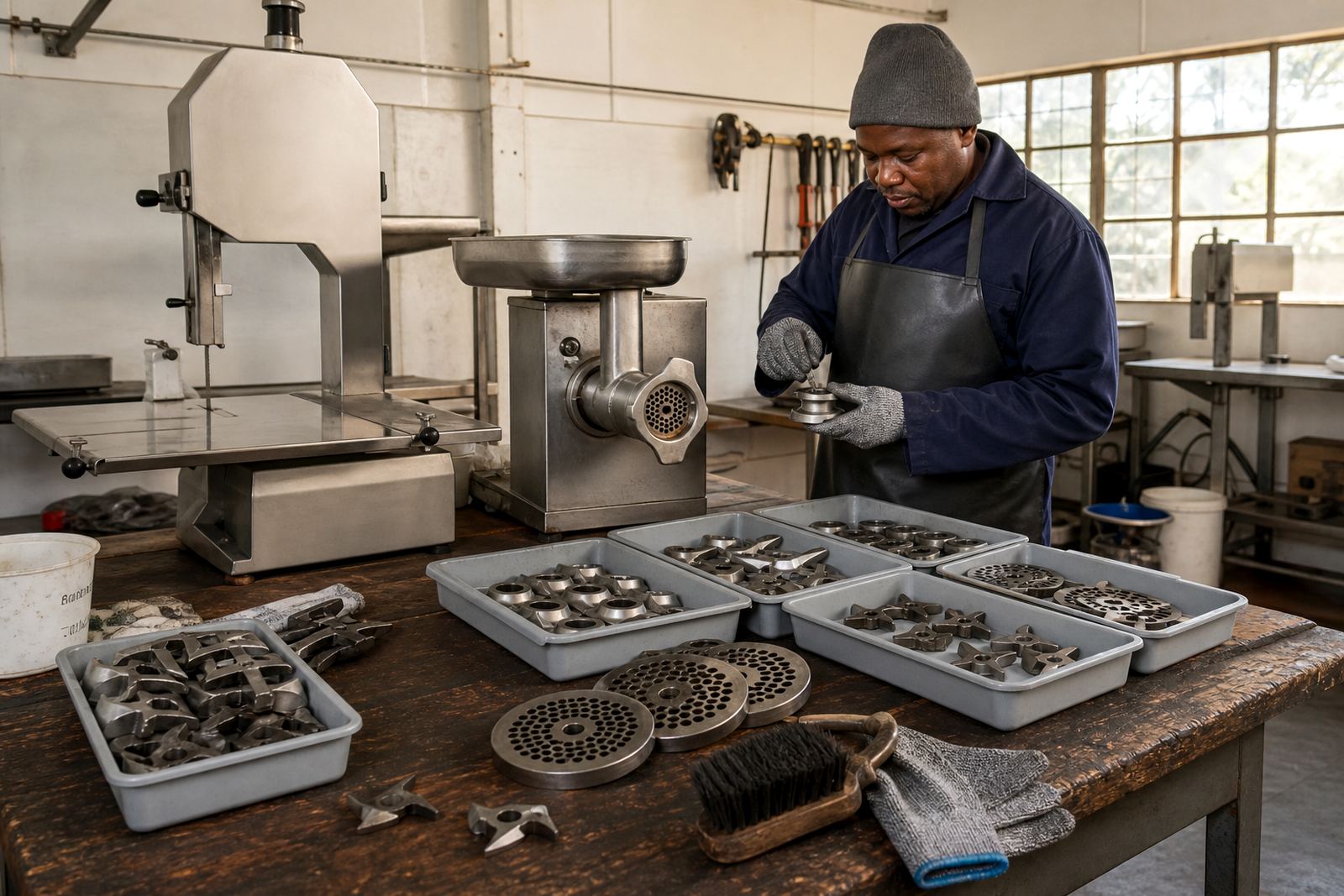


What Blade Guides Do on a Butchery Bandsaw
Blade guides are the small but important components that support the saw blade as it runs through meat, bone and cartilage. Their job is to help steady the blade, reduce side movement and keep the cut consistent from start to finish. When a guide is in good condition, the operator has better control and the saw is less likely to wander during use.
In a busy shop, farm slaughter room or small home setup, worn guides can cause rough cuts, heat build-up and unnecessary strain on the machine. That is why guides should be checked as part of normal care, especially where the saw is used often or cleaned down every day. If the blade is not sitting correctly, the issue is often visible before it becomes a bigger fault.
- Helps support the blade during cutting
- Assists with straighter, cleaner cuts
- Reduces uneven wear on related parts
- Makes daily operation easier on the operator
Sizes and Fitting Options to Match the Saw
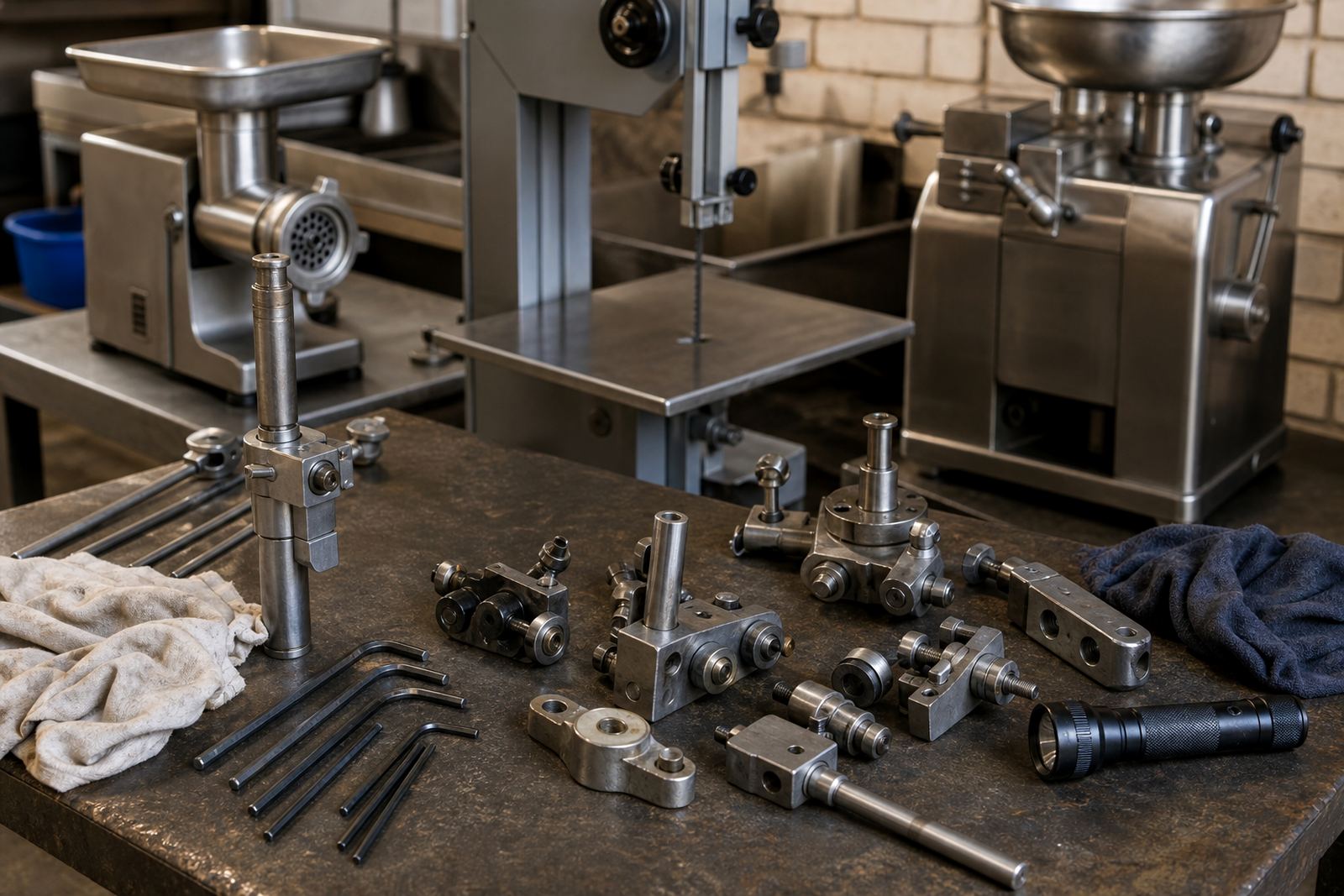
Blade guides are not one-size-fits-all. The correct part depends on the bandsaw frame, blade width, guide type and how the saw was set up. Some machines use simple guide blocks while others use roller-style support. The right choice is the one that matches the machine properly and sits square to the blade path.
When ordering, it helps to have the saw model details, blade width, and clear photos of the existing guide area. If the old guide is worn or missing, measurements can be taken from the guide housing and mounting points. For shops in Bloemfontein, Johannesburg, Pretoria, Durban or Cape Town, we can help assess what is needed before a part is sent out.
- Match to blade width and guide housing
- Choose the correct mounting style
- Check blade clearance on both sides
- Confirm whether the machine uses blocks or rollers
Where Blade Guides Suit Best
These parts suit a wide range of butchery work. They are useful in commercial butcheries, meat rooms, abattoir support areas and home cutting spaces where a bandsaw is used for regular preparation. In Free State conditions, where dust and temperature changes can affect equipment over time, proper guide care matters just as much as the blade itself.
Blade guides are especially useful where clean, repeatable cuts are important and the saw is used for beef, lamb or mixed meat preparation. They also suit operations that need a dependable machine during load-shedding planning, because a well-kept saw can be put back into service without extra trouble after power interruptions. In coastal towns like Durban or Cape Town, salt air and moisture mean routine wiping and checks are even more important.
- Commercial butchers and meat rooms
- Home butchers and farm use
- Retail cutting rooms
- Training rooms and small processing areas
Installation, Power and Site Readiness
Blade guides themselves do not need gas, but they must be fitted correctly to a bandsaw that is powered and set up safely. Before installation, the machine should be isolated from power, cleaned properly and checked for any blade damage or loose fittings. Guards must stay in place, and any work around the blade path should be done with care.
For installation or replacement, the saw should be positioned on a level surface with enough space for safe feeding, cleaning and maintenance. In workshop or retail settings, the area should allow the operator to stand clear of the blade line and handle product without crowding. If the saw is part of a larger butchery setup, we can also assist with setup checks and operator training so the machine is used correctly from day one.
- Switch off and isolate power before fitting
- Keep blade guards in place during use
- Allow space for safe loading and cleaning
- Check that the saw sits level and steady
Care, Cleaning and Servicing Between Jobs
Blade guides need regular cleaning because meat residue, bone dust and moisture can collect around the guide area. After use, the saw should be washed and dried according to normal butchery hygiene practice. A clean guide runs better and is easier to inspect for wear, cracks or movement. If the guide is damaged or loose, do not keep running the saw and hope it will settle. That usually makes matters worse.
Servicing should include a check of the blade path, tension, guard position and related wear points. For busy shops, preventive maintenance is the best way to avoid breakdown callouts at the wrong time. We support bandsaw servicing, blade replacement, cleaning demonstrations and operator training for customers across South Africa, including Kimberley, Welkom and Kroonstad. Keep PPE on hand during cleaning and handling, because even a small slip can turn into a cut pretty fast.
- Wash and dry after every shift
- Remove residue from guide areas
- Inspect for wear, chips or looseness
- Book servicing before faults get bigger
What to Check Before You Place an Order
When ordering blade guides, have the saw details ready so the part is matched properly. The most useful checks are the machine make and model, blade width, guide style, mounting method and whether you need a full pair or only one side. If you are replacing a worn part, send clear pictures and note any marks or numbers visible on the old fitting.
If the saw has already been repaired before, old modifications may affect the fit. In that case, a quick assessment helps avoid ordering the wrong part and waiting twice. Our parts team in Hamilton, Bloemfontein can assist through the enquiry form on our contact page, and we deliver and support orders for commercial and home butchers across South Africa.
- Machine model and blade width
- Guide type and mounting style
- Whether you need one part or a set
- Photos of the current guide and housing
Key facts
| Product type | Blade guide component for butchery bandsaws |
|---|---|
| Guide styles | Block-style or roller-style, depending on machine |
| Fitment | Matched to saw frame, blade width and mounting points |
| Use cases | Commercial butchers, home butchers and meat rooms |
| Care | Clean after use, inspect for wear and keep dry |
| Support | Installation, servicing, parts supply and training |