

Practical protection for daily butchery work
Aprons and gloves are used every day in busy butchery spaces, from early morning prep to end-of-day wash down. They are there to help keep clothing cleaner, give better grip when handling chilled product and protect hands from minor cuts, splashes and irritation during routine tasks. In a commercial shop or a home setup, the right protective wear makes the work easier to manage and a lot tidier.
For butchers in Bloemfontein and other parts of South Africa, these items need to stand up to repeated use, regular washing and working conditions that change with the seasons. In coastal areas, moisture and salt in the air can affect how quickly gear dries, while inland dust and dry air can mean more frequent cleaning. Good protective wear should be simple, practical and easy to keep in service.
- Helps protect clothing from blood, fat and moisture
- Improves grip for handling trays, trays and chilled product
- Supports cleaner work habits during prep and cleaning
- Useful for shop floors, home butchery areas and back-of-house work
Apron and glove options to suit the job
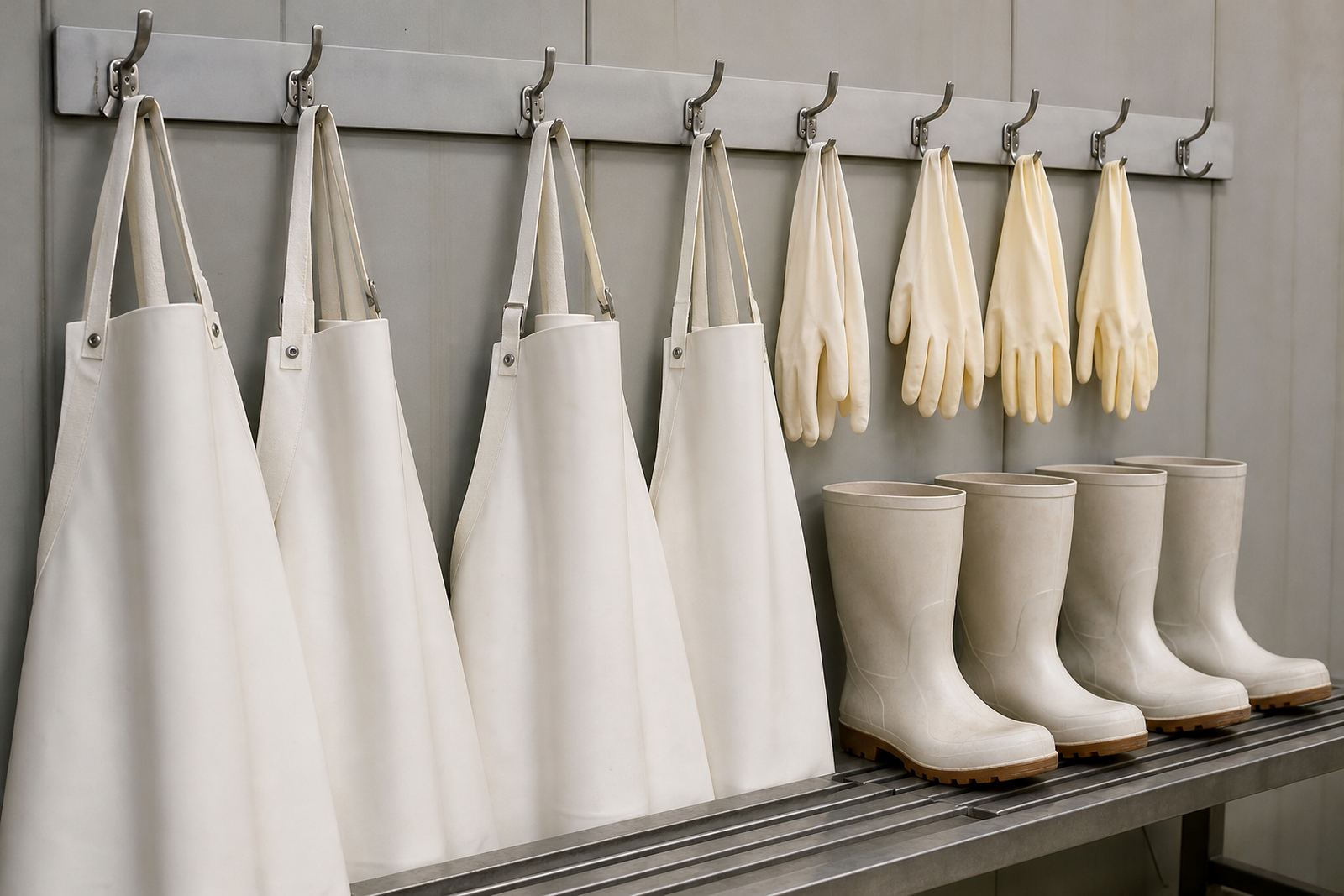
Different tasks call for different levels of protection. Aprons are commonly chosen in plastic, rubberised or other wipe-clean finishes, depending on how much splash protection is needed and how often the item must be washed. Gloves may be selected for general handling, cleaning, cold-room use or tasks where a better grip is needed around wet surfaces. The right choice depends on the work being done, not just on size alone.
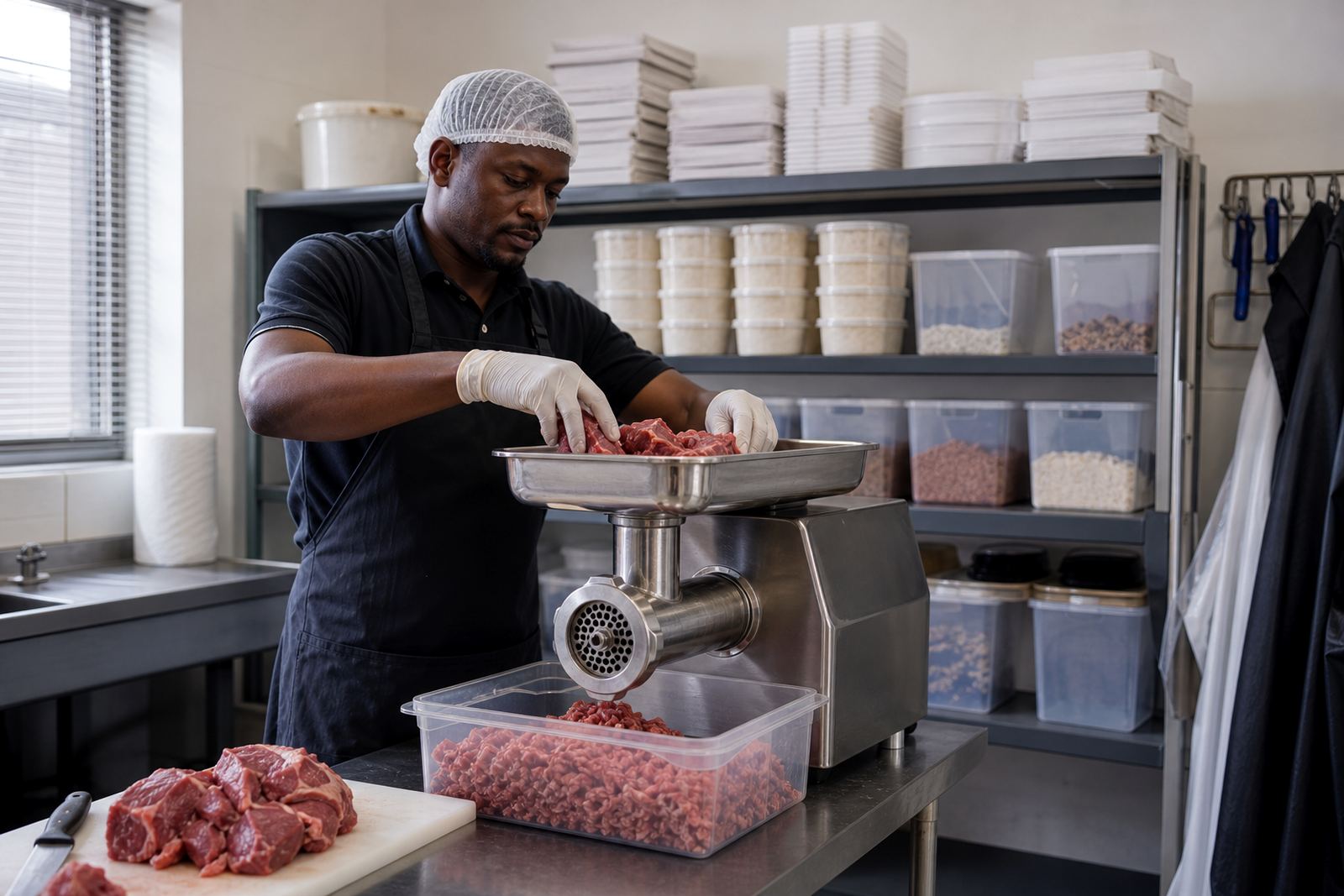
For butcheries that handle a mix of cutting, packing and cleaning, it often helps to keep more than one type on hand. A lighter apron may suit short prep jobs, while a heavier option is better for washing and cleanup. Gloves should fit properly, allow enough movement for safe handling, and be changed when worn or damaged. Tight gloves can reduce dexterity, while loose ones can catch on tools or slip during work.
- Apron lengths suited to waist or chest coverage needs
- Gloves for general handling, cleaning and cooler work
- Sizes to suit different staff members and home users
- Options that are easy to rinse, wipe or wash after use
Where aprons and gloves work best
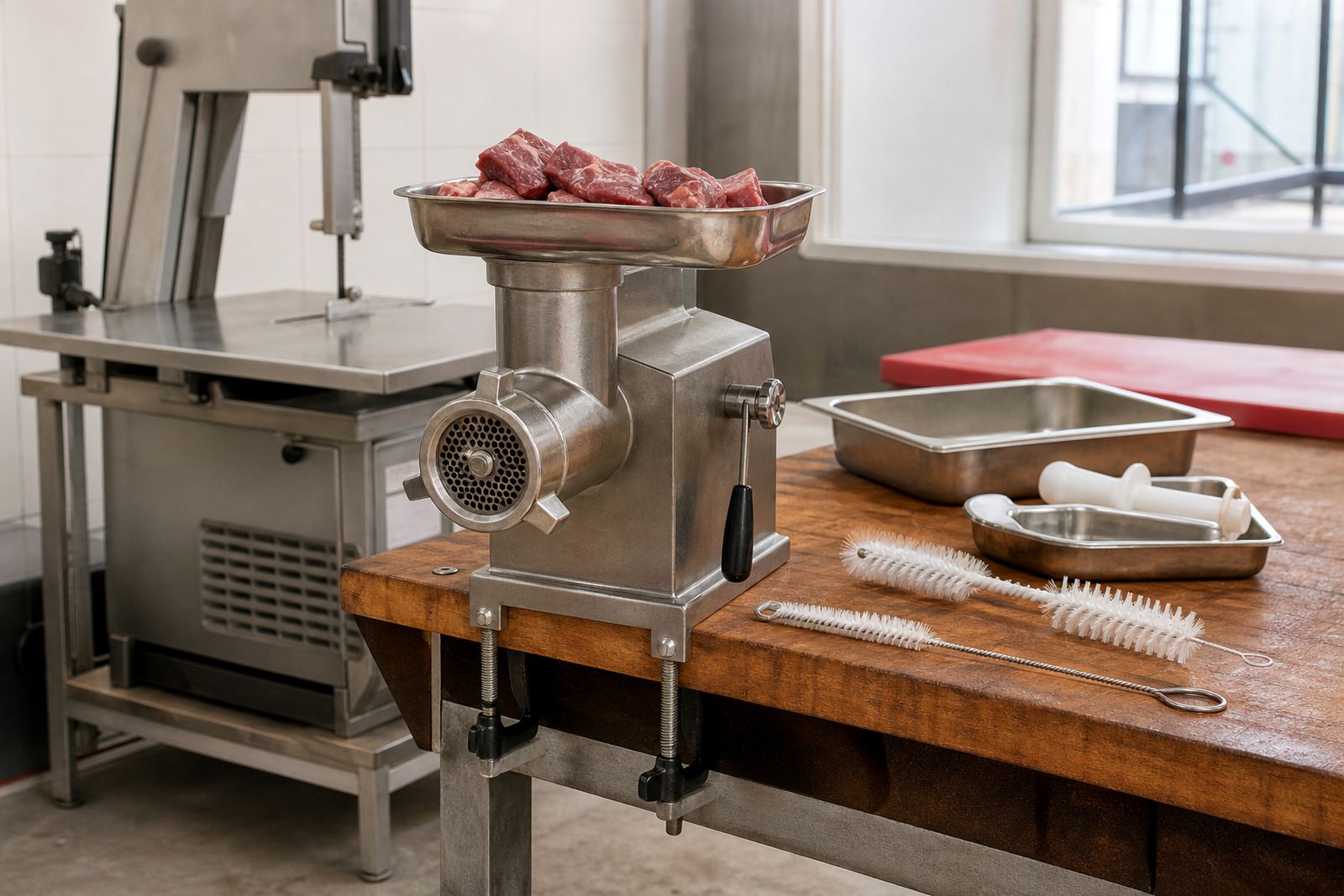
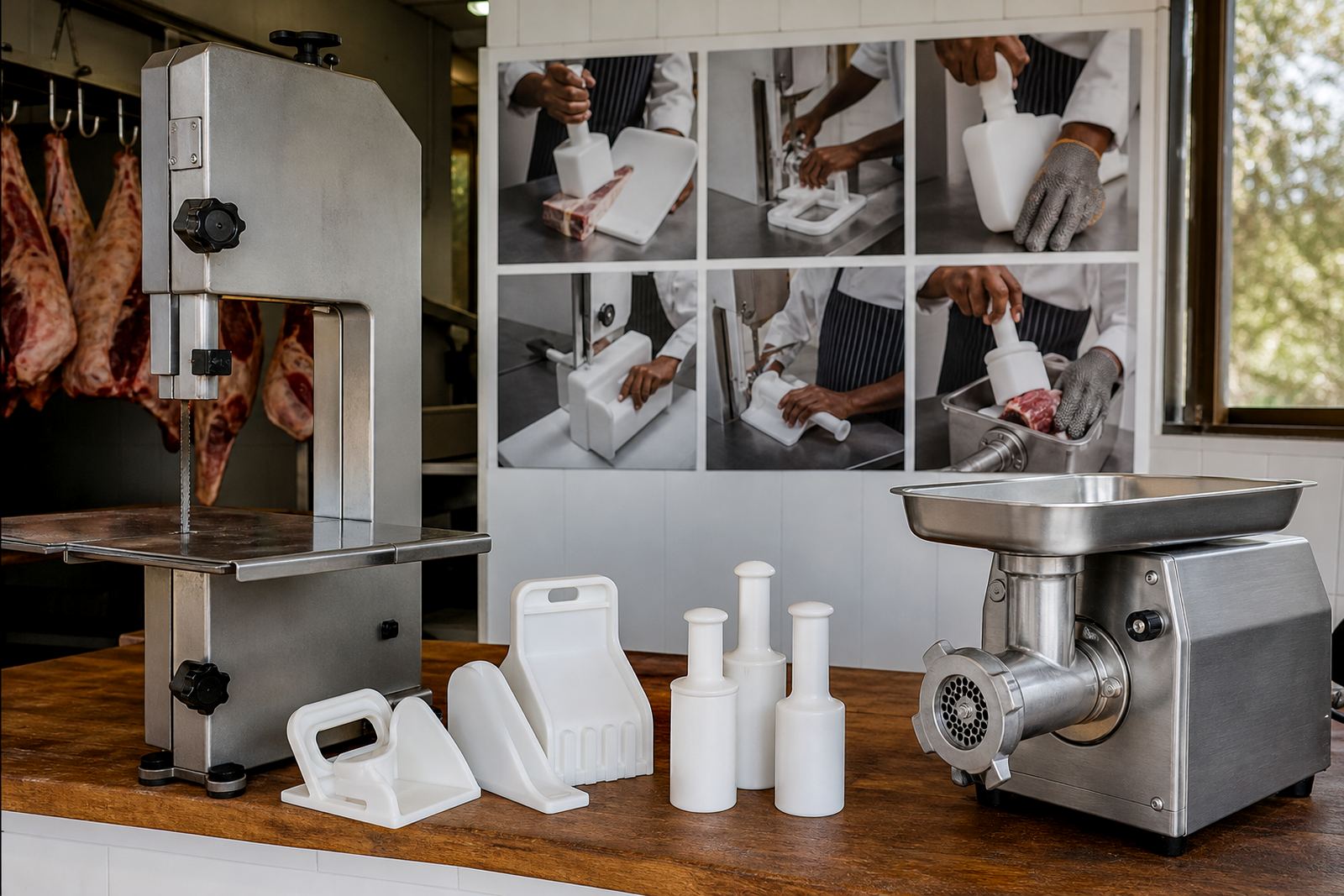
These products suit a wide range of butchery tasks, especially where regular cleaning and handling are part of the routine. They are useful around bandsaws, mincers, work tables, wash areas and packing stations. In a commercial shop, aprons and gloves help staff move between tasks with less mess and better control. In a home butchery, they help keep a small prep area cleaner and easier to manage.
They are also helpful during servicing and cleaning work, where hands are exposed to grease, residue and sharp edges. A proper apron and glove set does not replace safe working habits, but it adds an extra layer of protection. That matters when staff are working near blades, moving parts or wet floors, especially when the pressure is on and the pace picks up before a busy trading day.
- Shop floors and preparation rooms
- Cleaning and sanitising tasks
- Cold-room and chilled product handling
- Home butchery preparation and cleanup
No power or gas needed, just the right fit
Aprons and gloves do not need electrical power or gas, so there is no installation in the usual sense. What matters is choosing the right fit and using them correctly from the first day. An apron should sit comfortably without restricting movement, and gloves should allow enough control for safe handling of tools and product. If gear is too bulky or awkward, it tends to be left out, and that can lead to poor habits.
When ordering, it helps to think about the actual work area. Will the apron be used mostly for cutting, washing or general handling? Will the gloves be used in a cold room, at a packing station or during heavy cleanup? These details help match the item to the task. For teams with different body sizes, it is often worth ordering a few size options so every person has a proper fit.
There is no setup required beyond checking the item on arrival and making sure it is worn properly. If staff are working around sharp equipment, make sure they still use guards, follow safe cleaning steps and keep hands clear of blades and moving parts.
Care, cleaning and when to replace them
Protective wear lasts longer when it is cleaned properly after use. Aprons should be rinsed or wiped down soon after a shift, then hung to dry in a clean, ventilated area. Gloves should be washed if the material allows it, then dried fully before storage. In humid coastal areas, drying space matters because trapped moisture can lead to a bad smell and shorten service life. In dusty inland towns, clean storage is just as important.
Watch for cracking, tears, thinning material, loose seams or a surface that no longer cleans properly. Once that happens, it is time to replace the item. A worn apron or glove may still look serviceable at a glance but it will not give the same level of protection. Regular inspection is a simple habit that saves trouble later, especially in busy shops where gear gets used hard every day.
- Rinse or wipe after each shift
- Dry fully before storage
- Check for cracks, tears and worn seams
- Replace items that no longer clean properly
What to check before placing an order
Before ordering aprons and gloves, check the work they must support and the people who will use them. A good order starts with a clear idea of size, material and how often the items will be washed. If you need gloves for cleaning or handling chilled product, make sure the fit and finish suit that task. If aprons are needed for a team, ask for enough variation so the item is practical for daily wear and not just acceptable on paper.
It also helps to think about the rest of the butchery setup. If you are ordering protective wear alongside bandsaw or mincer support, servicing or parts, it can be simpler to plan the items together. That way your team has what it needs for safer handling, cleaning and routine work without last-minute gaps. Clients in Bloemfontein, Johannesburg, Pretoria, Durban, Cape Town and surrounding supply areas can use the enquiry form on our contact page to request the right options for their operation.
- Size and fit for each user
- Type of work, such as cutting, cleaning or packing
- How often the item will be washed and reused
- Whether you need a small home set or a larger shop order
Key facts
| Product type | Aprons and gloves for butchery use |
|---|---|
| Typical use | Protection for prep, cleaning, handling and general shop work |
| Material options | Wipe-clean and washable options, depending on task |
| Sizing | Multiple sizes and fits for different users |
| Power or gas requirement | None |
| Care | Rinse, clean, dry fully and inspect before reuse |