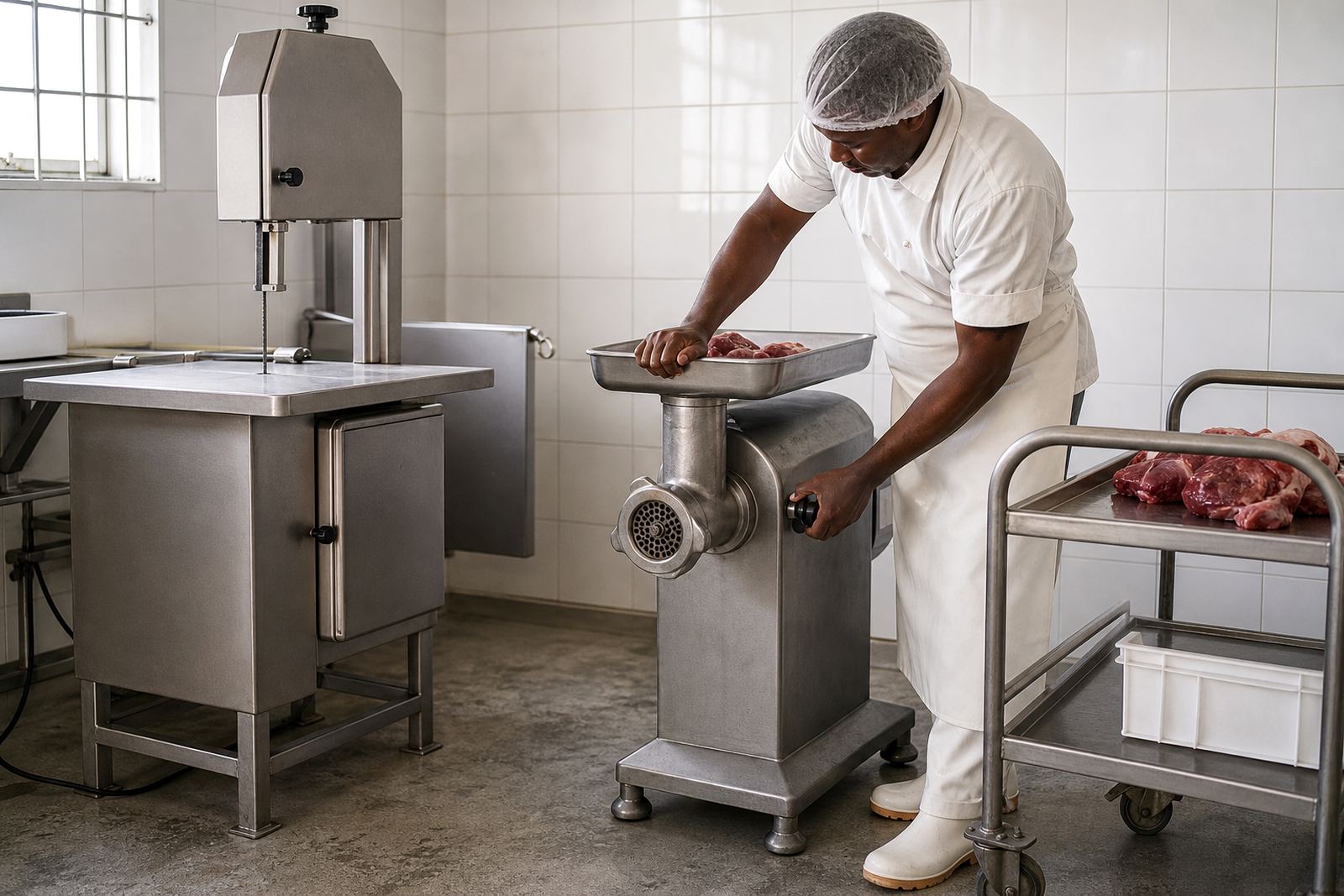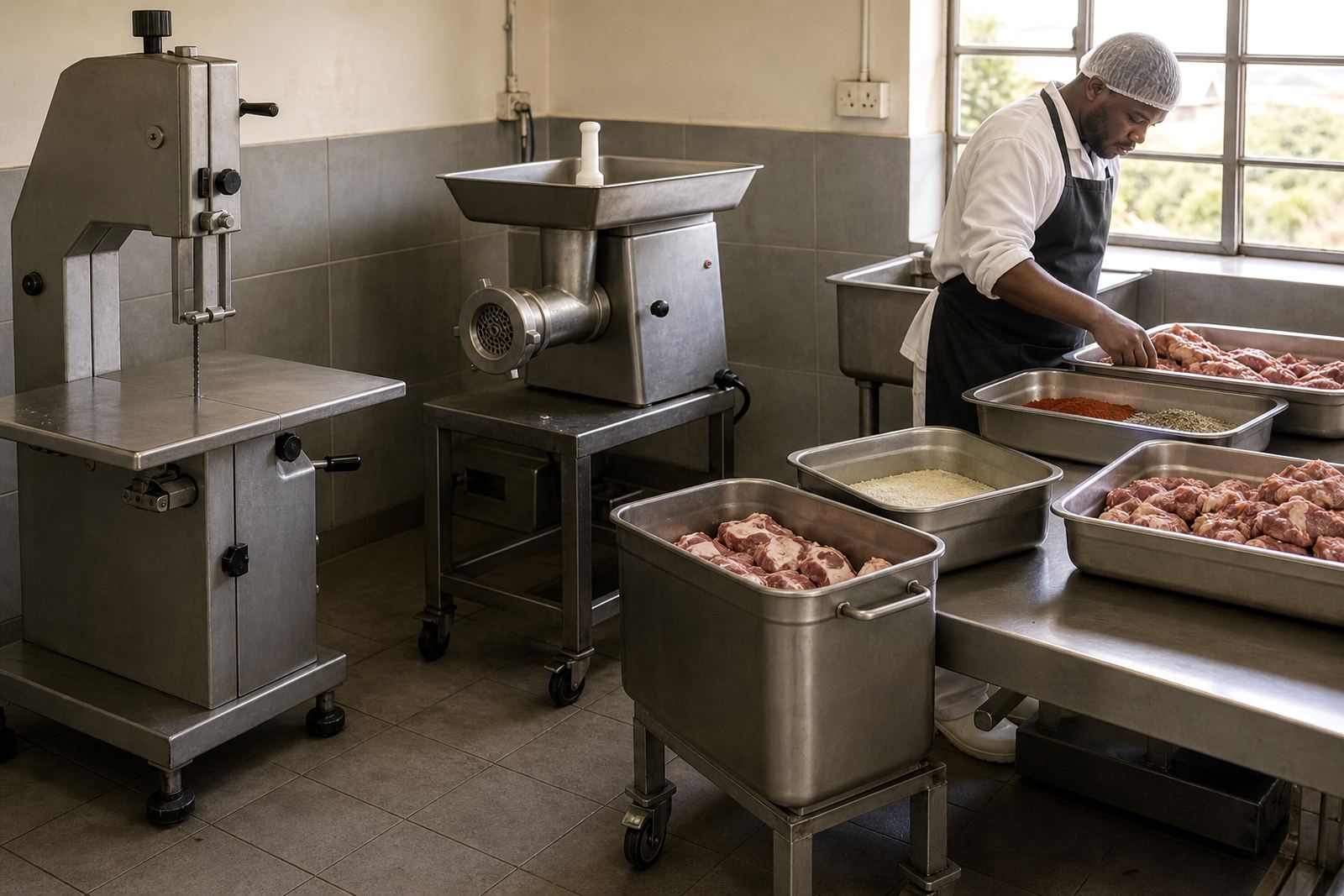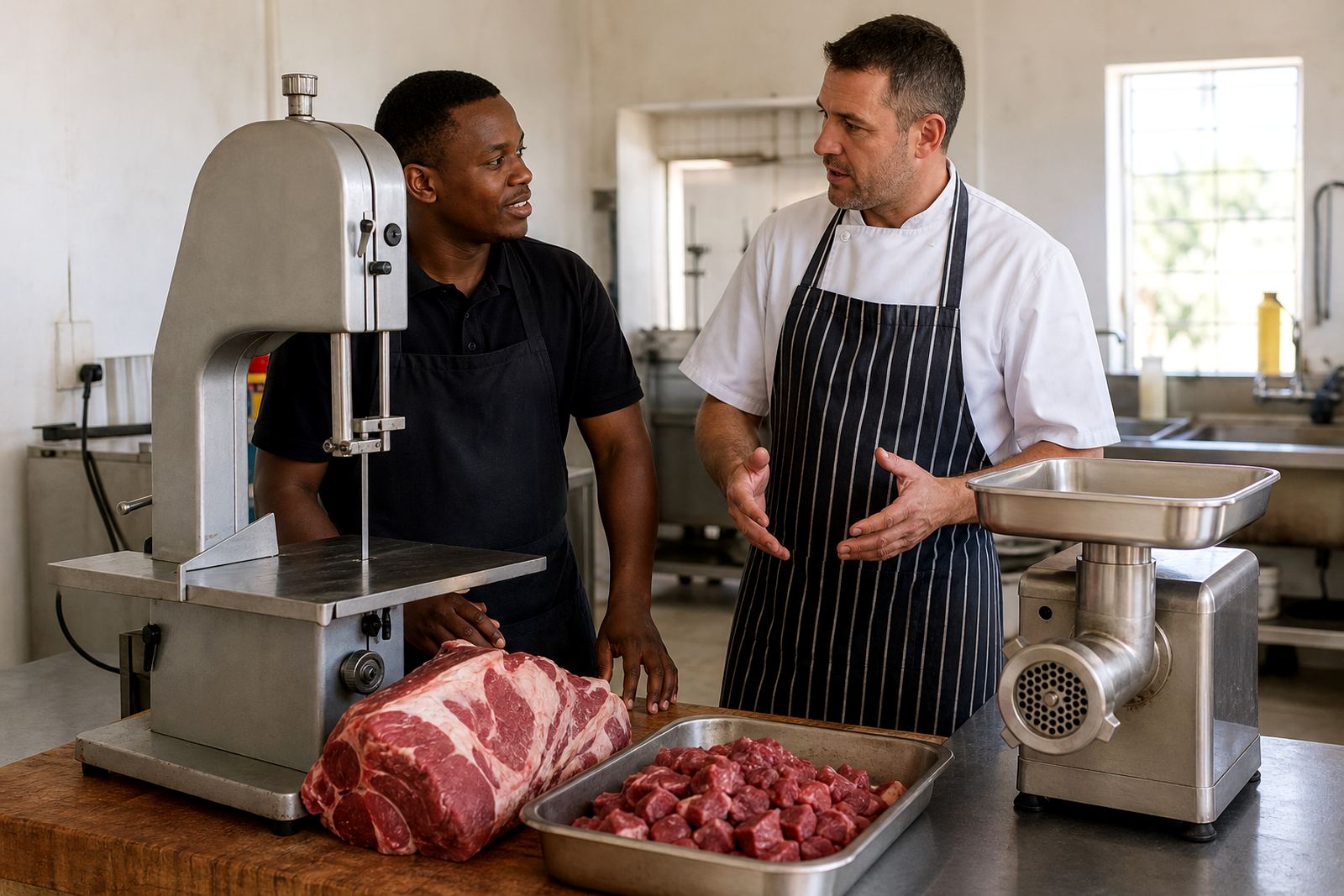

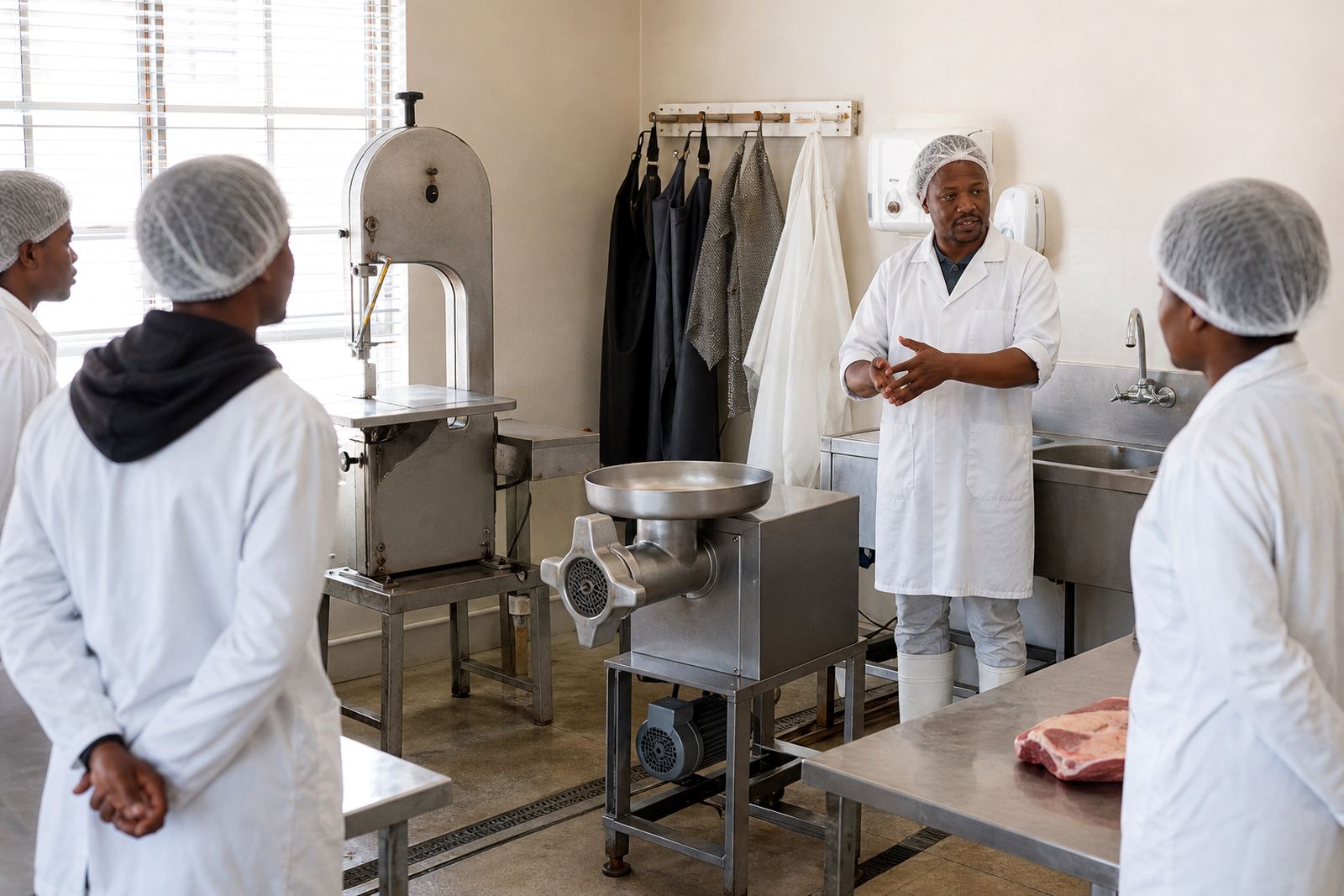
Client brief for a practical training room
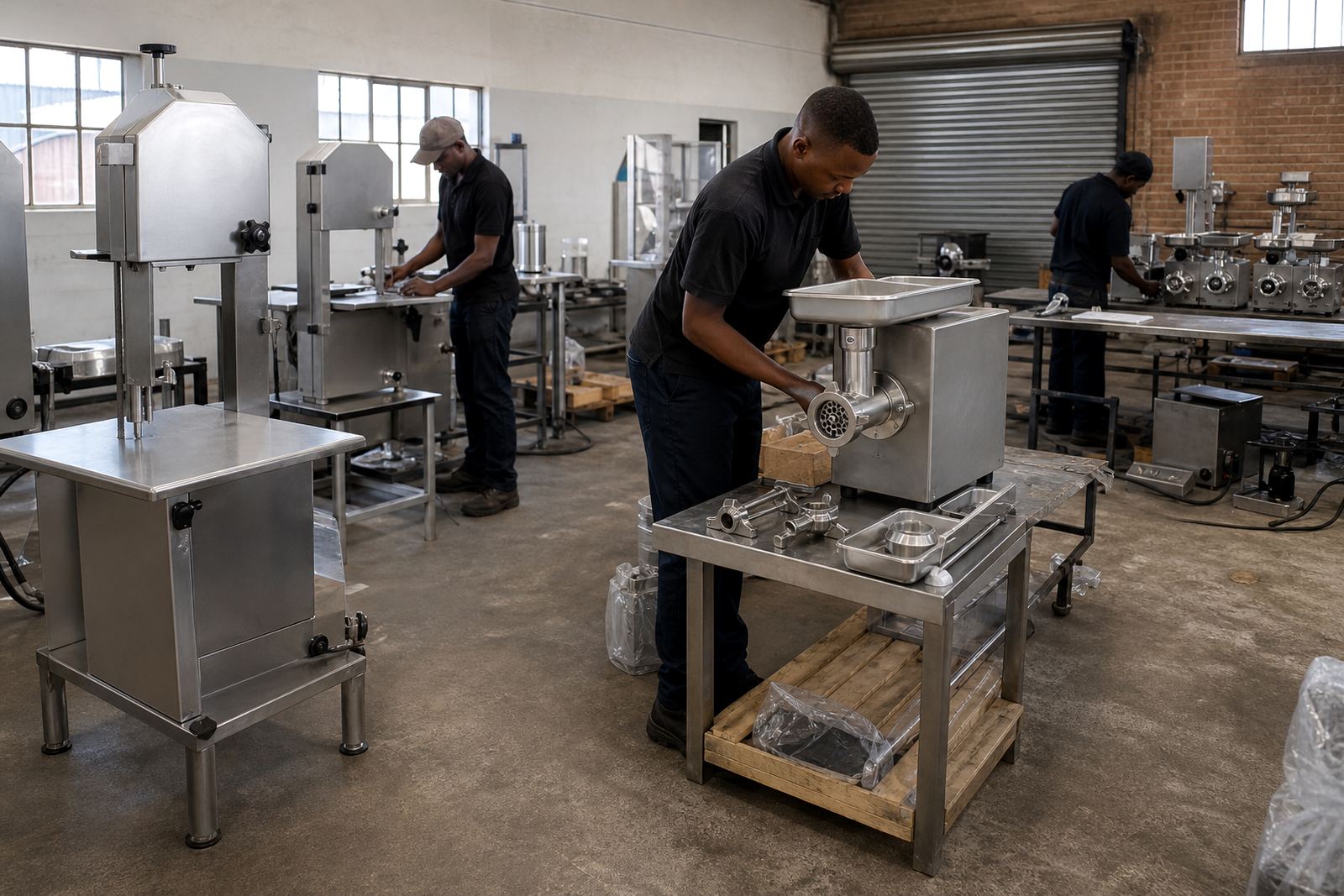
The brief came from a local butchery operation in Bloemfontein that wanted a dedicated room for hands-on learning without interrupting daily work. The client needed a space where staff could be shown how to clean, inspect and use equipment safely, with simple routines that make sense on a busy floor and during load-shedding planning.
The main aim was not to create a showroom. It was to set up a teaching space that supports real work, where new staff can learn the basics around bandsaws and mincers, and where more experienced operators can be refreshed on safe handling, guards, cleaning and daily checks.
- Safe demonstrations of cleaning procedures
- Basic operation training for bandsaws and mincers
- Room layout that supports small group teaching
- Easy access to water, cleaning points and working surfaces
Constraints in a working Bloemfontein site
The site in Wilgehof had to stay practical for an operating business, so we worked around existing space, cleaning routines and the need to keep things orderly. In Bloemfontein, dry conditions can help with dust control in some seasons, but it still takes discipline to keep a training room tidy and ready for use after every session.
We also had to keep the setup simple enough for staff to maintain. That meant using a room layout that does not crowd the operator, leaves clear walking space, and supports quick wipe-downs after demonstrations. We kept safety front and centre, with attention on guards, PPE and routine cleaning rather than showy features.
- Space had to suit small group instruction
- Surfaces needed to be easy to clean and sanitise
- Training had to fit around business hours
- Equipment placement had to allow safe observation
What we supplied and arranged
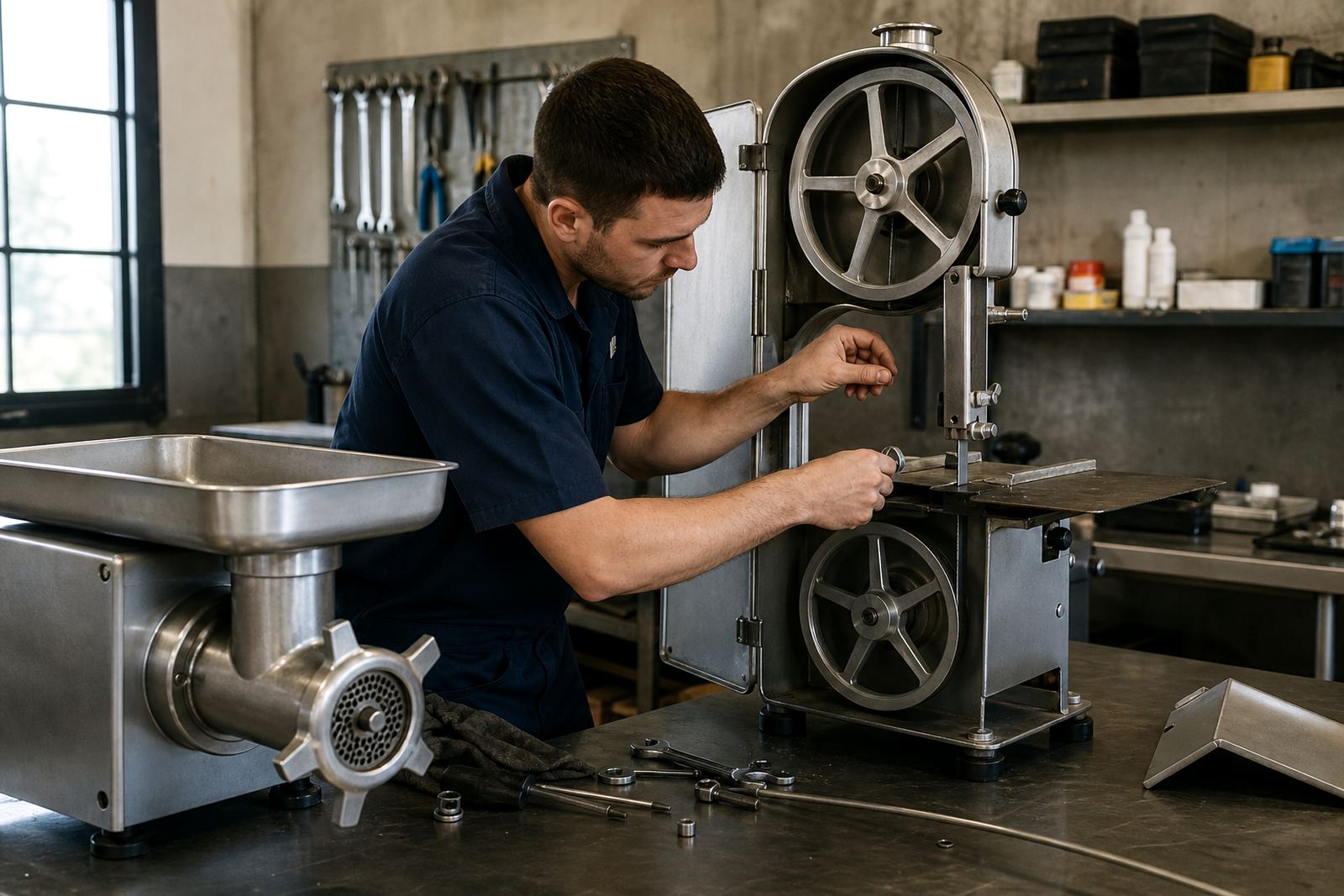
We supplied and arranged the equipment and support needed for a proper butchery training room, with the focus on bandsaw and mincer care rather than production output. The setup included teaching points for blade and plate handling, cleaning demonstrations, routine inspection and correct operator behaviour around moving parts.
We also handled installation support, setup guidance and the practical side of the room so the client could start training without delay. The space was arranged to support live demonstrations, with enough room for the trainer to stand clear and for learners to observe what is being done. That makes it easier to show the right sequence for cleaning and basic operation, which is where many mistakes usually start.
- Installation support for training equipment and work areas
- Demonstration setup for cleaning and basic operation
- Guidance on safe handling of guards and removable parts
- Operator training focused on daily use and cleaning habits
Timeline from first visit to handover
The project ran over a short, practical timeline of three weeks from first review to handover. Week one covered the brief, room layout and the teaching flow. Week two focused on supply, placement and set-up support. Week three was used for checks, cleaning demonstrations and basic operator guidance so the client could start using the room with confidence.
That schedule suited the pace of the site and kept disruption low. It also gave the team enough time to plan how the room would be used after setup, which matters when the same space needs to work for training, cleaning and regular equipment checks. The result was a room that could be used straight away without a long wait.
Results after the room was in use
Once the Wilgehof training room was in use, the client had a calmer space for teaching and showing procedures properly. Staff could be taken through the basics of safe operation, cleaning and inspection without rushing through the process. That usually means better habits, less wear from poor handling and fewer avoidable stoppages later on.
The room also improved how training was organised. Instead of doing quick explanations beside the main work area, the team now has a dedicated place for step-by-step demonstrations. For a butchery business, that kind of setup helps keep standards consistent, especially where different staff members may be using the same equipment on different shifts.
- Cleaner, more organised learning space
- Better control over training sessions
- Safer demonstrations with clearer operator flow
- More consistent cleaning and basic operating habits
What we would do again on a similar project
If we were doing the same kind of project again, we would follow the same practical approach: keep the room simple, plan the movement carefully and make sure the teaching points are easy to follow. In butchery, the best training spaces are usually the ones that are easy to clean, easy to supervise and easy to use every week without special fuss.
We would also repeat the same focus on safety reminders. Guards must stay in place, cleaning should happen with the equipment isolated and staff should be trained in the correct PPE and handling steps. That approach works well for both commercial and home butchers, whether the job is in Bloemfontein, Johannesburg or right through to coastal sites like Cape Town where humidity can make regular cleaning even more important.
For this Wilgehof project, the teaching room did what it needed to do: it gave the client a proper place to train people, keep things orderly and support safe day-to-day use of butchery equipment.
Key facts
| Project location | Wilgehof, Bloemfontein, Free State |
|---|---|
| Project type | Training room for safe demonstrations |
| Core focus | Cleaning and basic operation of bandsaws and mincers |
| Timeline | 3 weeks from brief to handover |
| Base area | Hamilton, Bloemfontein |
| Service scope | Installation support, training, servicing guidance and setup |