
What the Heidedal processing room needed
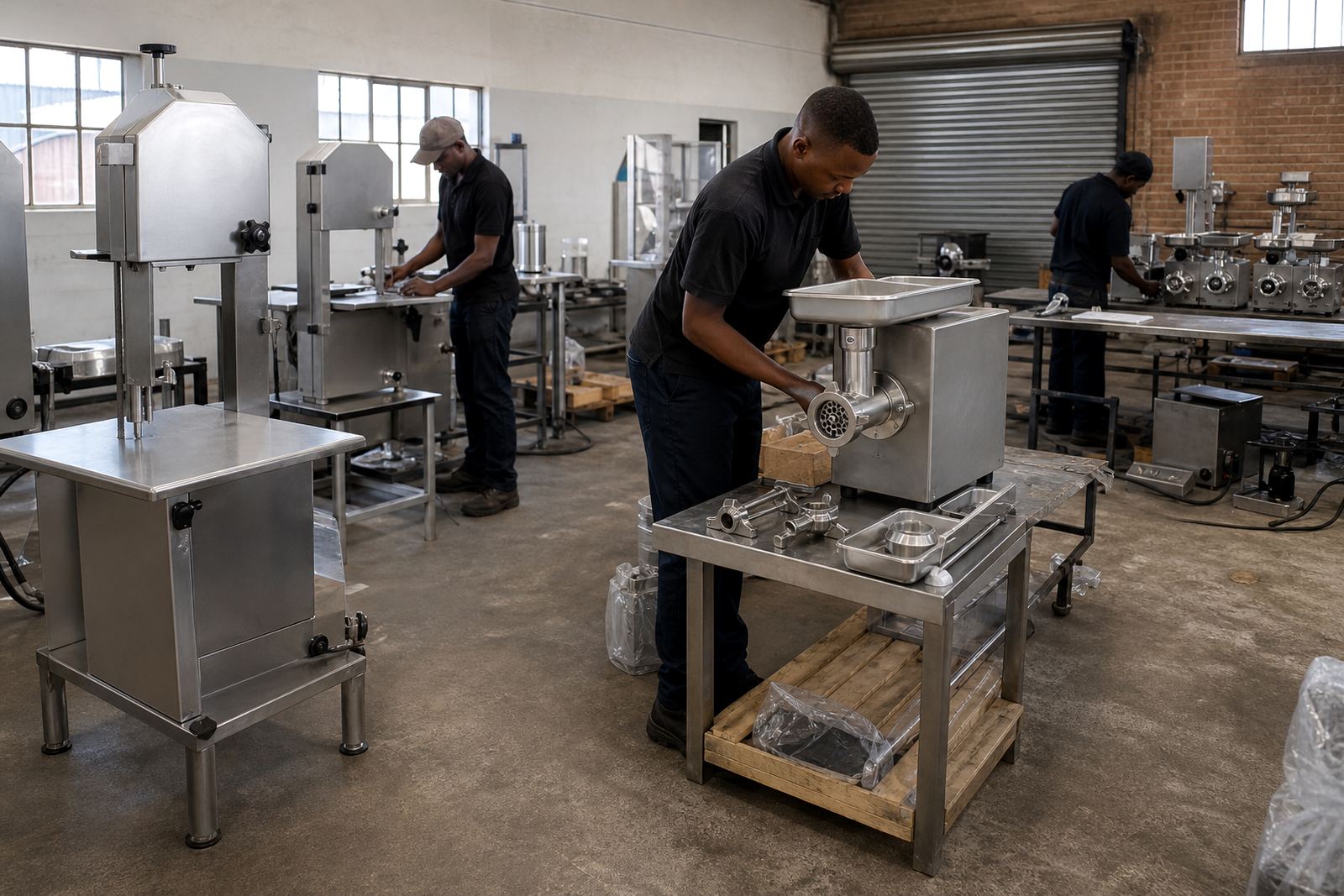
This project came from a community group in Heidedal, Bloemfontein that was setting up a shared processing room for local meat preparation. The space needed equipment that was suitable for controlled, everyday use by more than one operator, with simple cleaning routines and enough durability for a busy schedule. The brief was not about bells and whistles, it was about getting the basics right: safe cutting, reliable mincing, proper guards, and a layout that made cleaning and supervision easier.
The room also had to work for different users over time, which meant the equipment needed to be practical for training and easy to keep in good working order. In a shared space, one person's shortcuts become everyone else’s problem, so the client wanted a setup that supported tidy workflow, hygiene and safe operation from the start.
Constraints we worked around in the site plan
The biggest constraint was that this was a community room rather than a private butcher shop. That changed how the equipment had to be placed, how the power and cleaning points were used, and how the team would move around the room. The space also needed to stay manageable during load-shedding and after hours use, so the final layout had to be practical for interruptions and for cleaning up properly once work was done.
Another issue was that shared rooms tend to see different levels of experience. Some users know meat prep very well, while others need a careful walk-through on guards, hands-clear working habits and safe loading of product. We kept the setup straightforward and made sure the team had clear guidance before the room went into regular use.
- Shared-use operation with multiple users across the week
- Cleaning routines had to be simple and repeatable
- Safety and supervision were non-negotiable
- Equipment had to suit a practical community room, not a high-end showroom
Equipment supplied for cutting and mincing
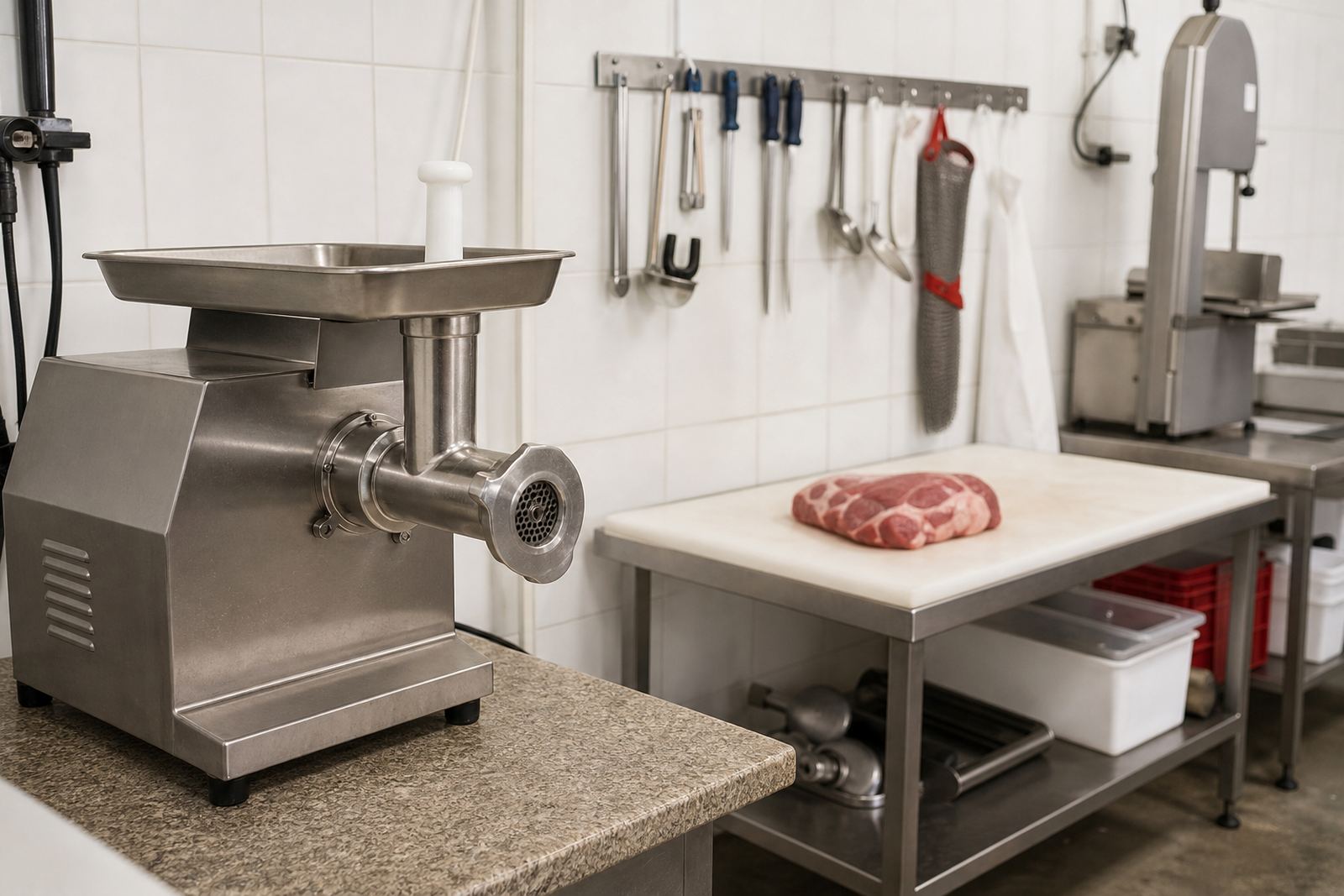
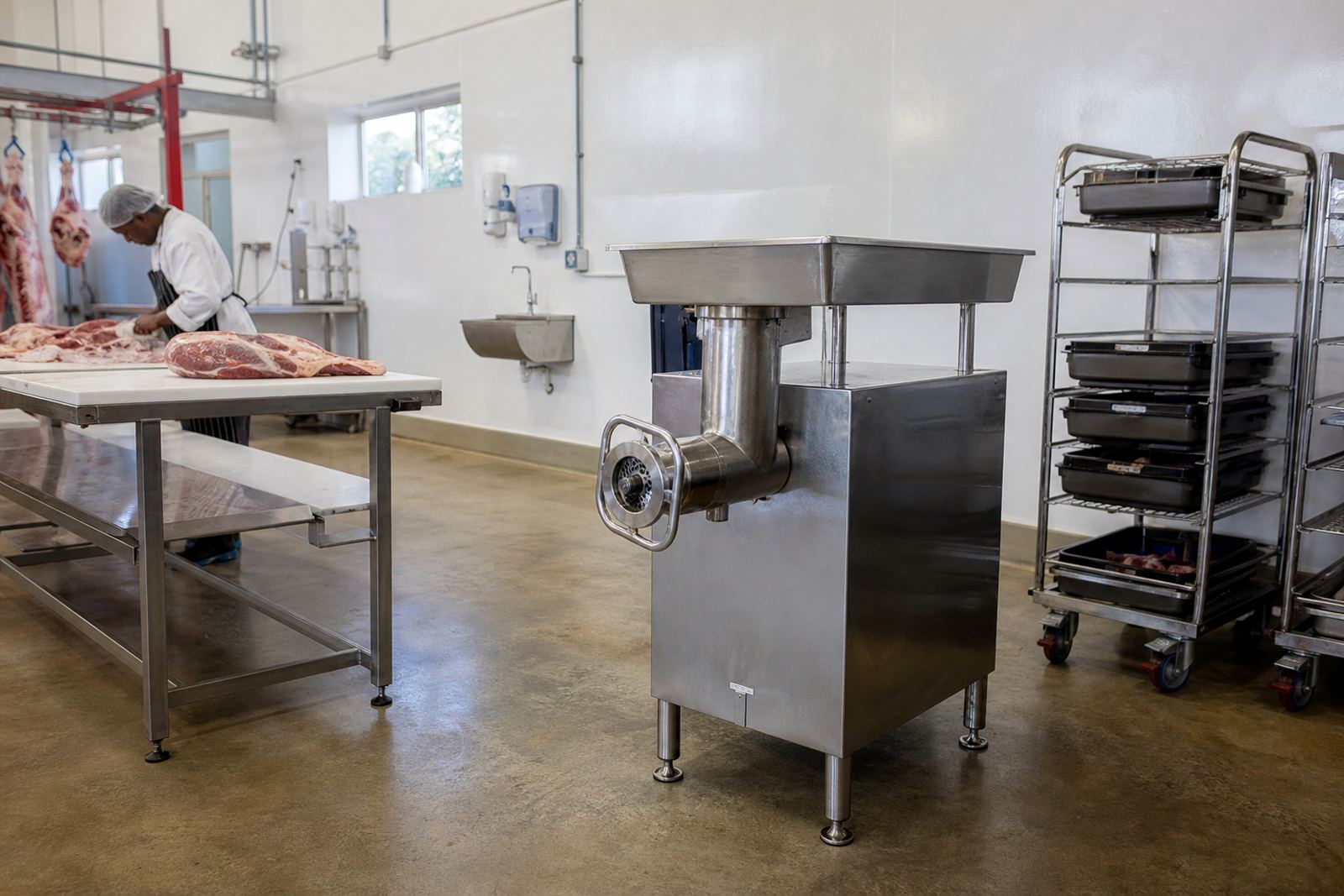
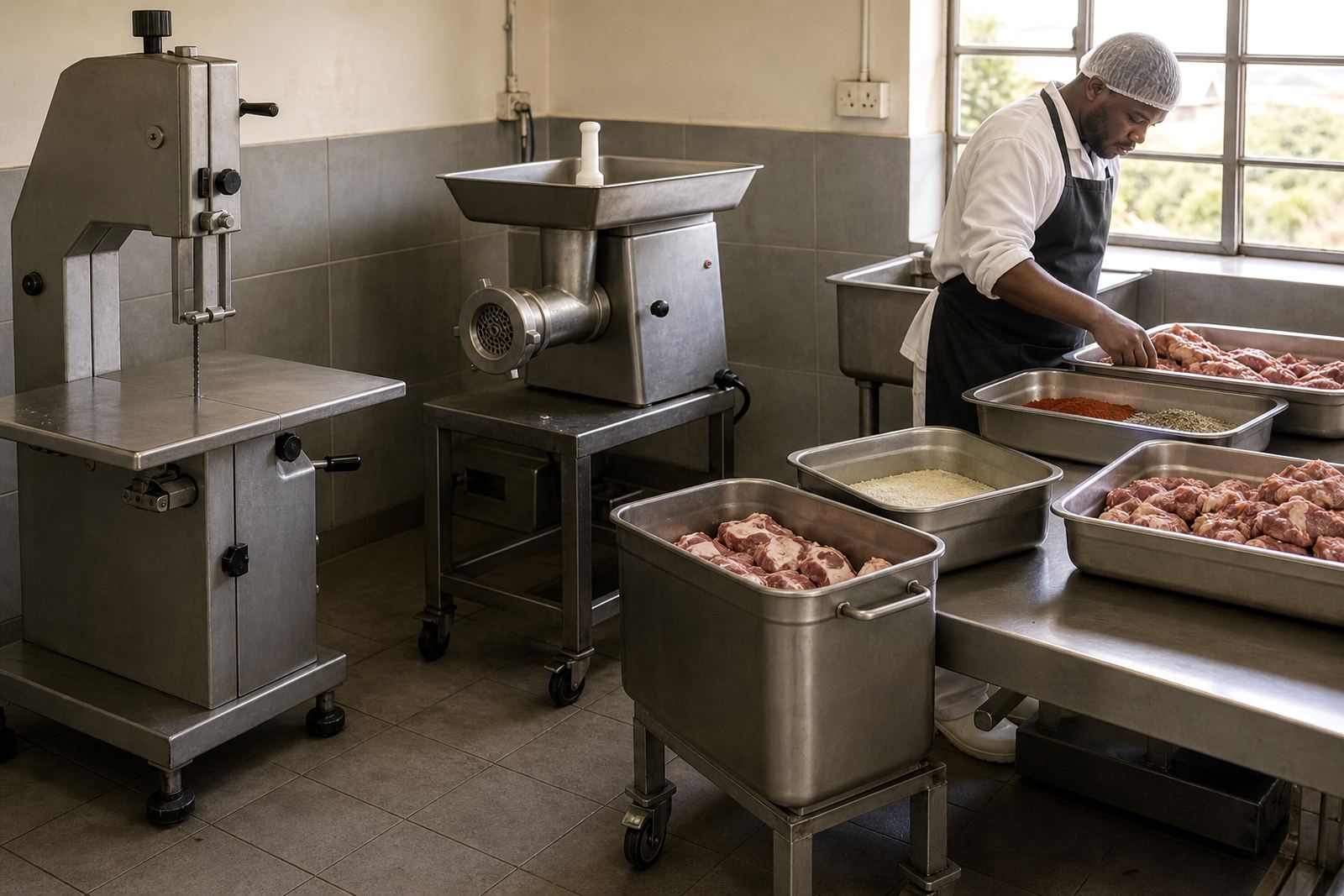
We supplied shared-use butchery equipment for both cutting and mincing work, with care taken to match the room's actual needs rather than overcomplicate it. The cutting side was set up around a bandsaw suitable for meat processing tasks where clean, controlled cuts matter. The mincing side was arranged around a mincer for preparation work that needed a steady, repeatable finish.
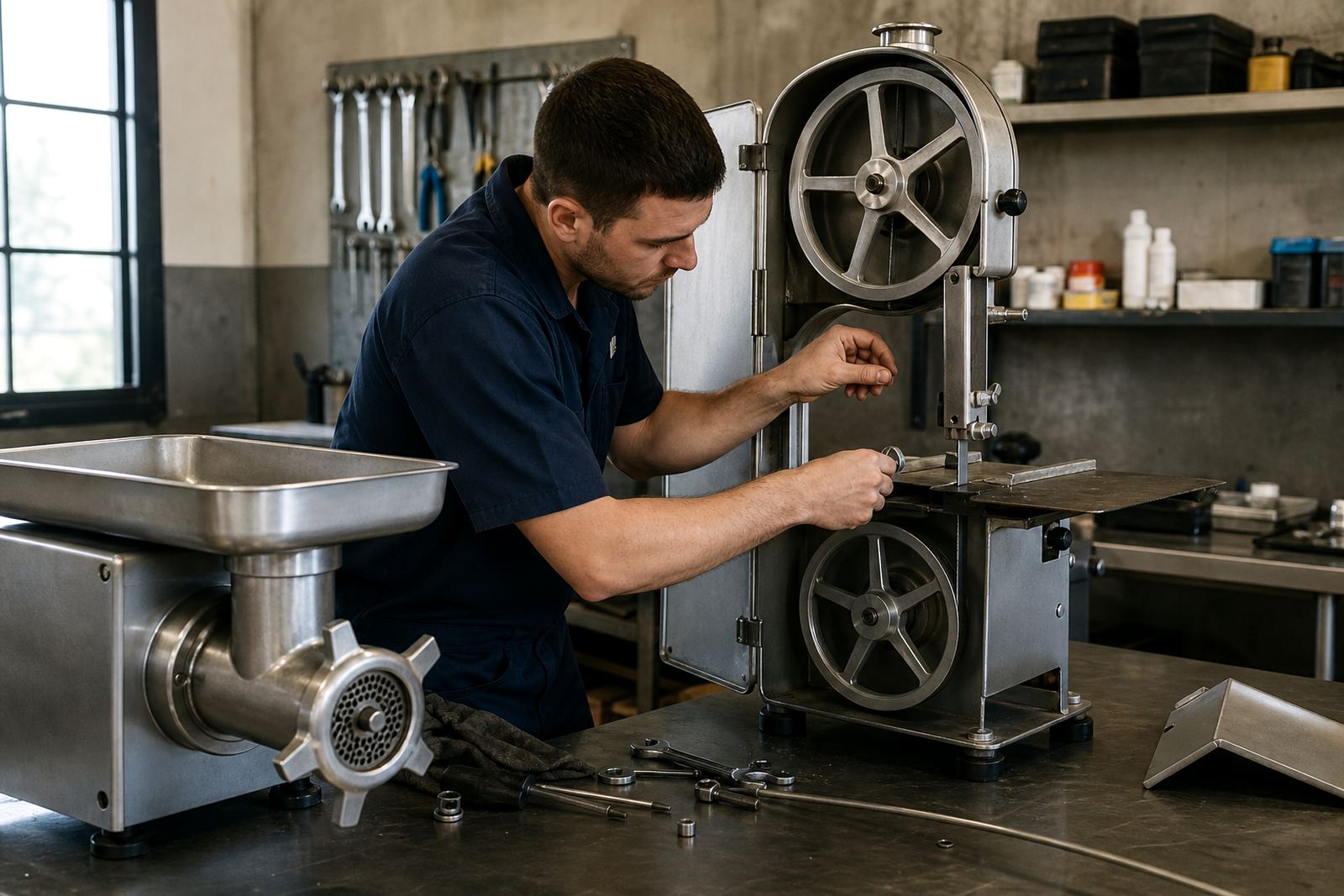
Because this was a community site, we focused on the details that matter in daily use. Guards had to be in place, cleaning had to be easy, and the operators needed to understand the difference between quick wiping and proper strip down cleaning. We also supported plate and knife change procedures, because shared machines do not stay in top shape unless small wear items are dealt with before they become a bigger problem. No shortcuts there, if you want good output later.
- Shared-use bandsaw for controlled meat cutting
- Shared-use mincer for regular preparation work
- Blade replacement support where required
- Plate and knife change support for the mincing side
- Cleaning demonstration for daily and end-of-shift care
Installation, setup and hands-on training
Installation was handled in a way that suited a community room with limited tolerance for downtime. We completed the setup, checked machine positioning, and made sure the workflow allowed users to move safely between cutting, mincing and cleaning areas. Where needed, we added practical guidance on how the room should be used day to day so that the equipment would last and the operators would not be left guessing.
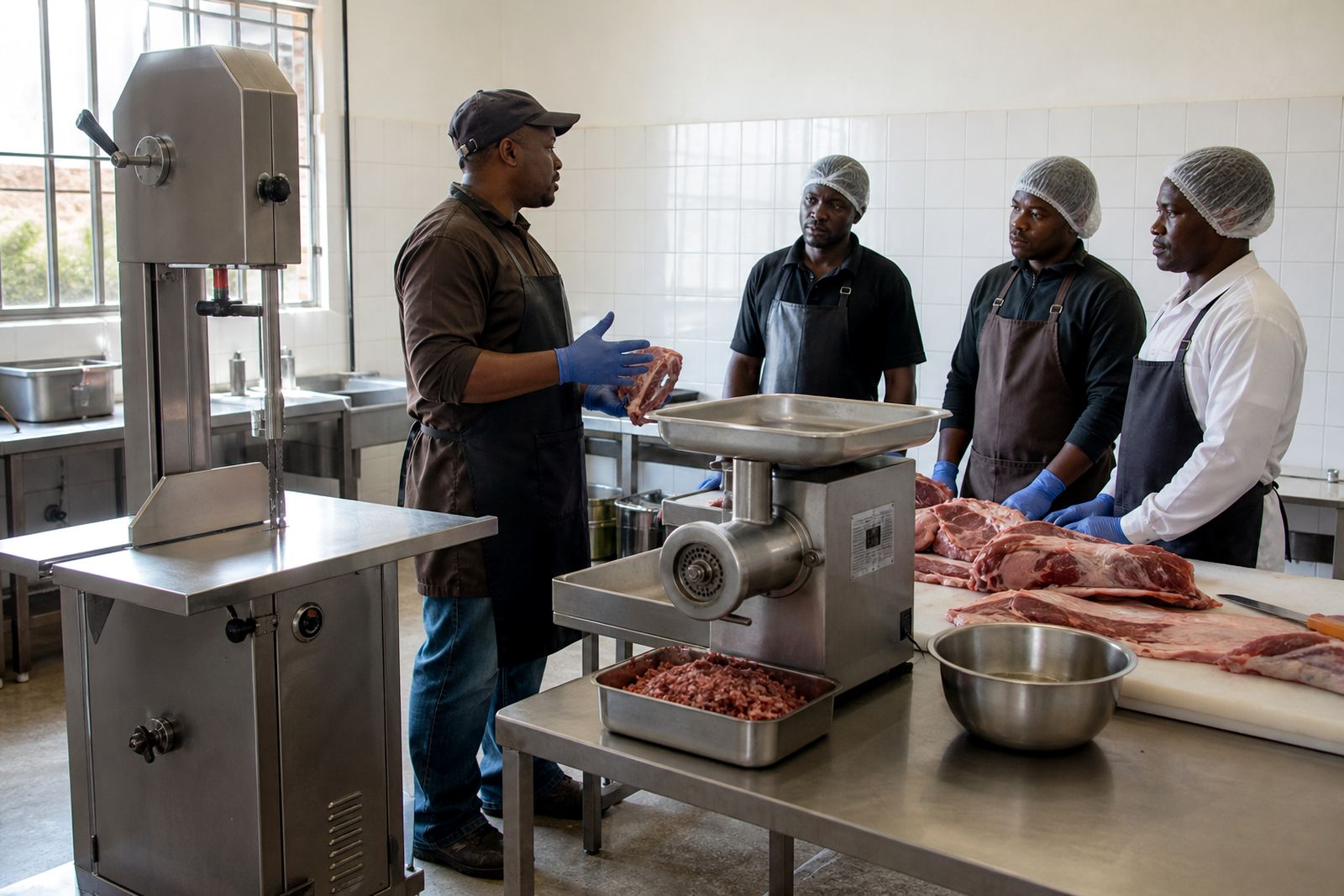
Training was a major part of the handover. We covered safe use of guards, basic PPE, cleaning routines and what to look for if a blade, plate or knife starts to show wear. We also walked the team through first-line care and when to call for help rather than pushing a machine too far. That sort of training matters in a shared room because the machine is only as good as the people using it.
- Bandsaw installation and operational check
- Mincer installation and handover
- Cleaning demonstrations for staff and volunteers
- Operator training with safe loading and guard use
- Practical guidance for shared-use scheduling
Timeline from first visit to sign-off
The project ran over a short, practical timeline of a few weeks. Week one covered the initial site discussion, room requirements and the operating brief. Week two focused on equipment selection and confirming the room layout. Week three covered delivery, installation and the initial training session. The final stage was a follow-up check to make sure the team was comfortable with cleaning routines, safe use and day-to-day upkeep.
That pace worked well because the client needed a room that could open and start serving the community without unnecessary delays. In projects like this, keeping the timeline tight helps keep interest high and avoids the common problem of equipment arriving before the room is ready or after the local schedule has already shifted.
What changed after the room opened
Once the equipment was in use, the main improvement was consistency. The team had a proper setup for cutting and mincing, with safer working habits and a clearer cleaning routine. Shared users could be shown exactly how the equipment should be handled, which reduced confusion and helped keep the room tidy between sessions. The result was a more orderly processing space that could be managed without constant improvisation.
For the community, the value was not only in the machines but in the support around them. Having servicing guidance, parts support and local backup means the room is less likely to sit idle when something needs attention. In a shared setting, that kind of follow-through matters as much as the initial supply.
- Cleaner workflow in the processing room
- Better confidence for users who were new to the machines
- Safer day-to-day operation with guards and PPE reminders
- More predictable upkeep for a shared facility
What we would repeat on a similar community site
If we were doing a similar project again, we would follow the same practical approach: keep the equipment choice focused, keep the training hands-on, and make sure the people using the room understand cleaning and maintenance from the start. For community processing spaces, it helps to design for the realities of shared use rather than assuming one trained operator will always be on duty.
We would also keep the service plan simple and local. That means clear contact through the enquiry form, a sensible parts path, and servicing support that can be scheduled without disrupting the whole room. Based in Hamilton, Bloemfontein, we support clients across Bloemfontein, Johannesburg, Pretoria, Durban, Cape Town, Kimberley, Welkom and Kroonstad, so the same approach can be applied whether the room is in town or further afield.
Key facts
| Project location | Heidedal, Bloemfontein, Free State |
|---|---|
| Client type | Community group operating a shared-use processing room |
| Equipment scope | Bandsaw and mincer supply, installation and handover |
| Support included | Cleaning demonstrations, operator training and servicing guidance |
| Timeline | Completed over a few weeks from site visit to follow-up |
| Service area | Local supply from Bloemfontein with support across South Africa |