

Daily cleaning after every shift
Clean down the machine as soon as the day’s work is done. Meat residue, fat and bone dust harden quickly and make the next run harder on the motor, blades and moving parts. Switch off at the isolator, wait for all movement to stop, then remove loose waste before you wash any surfaces.
Use warm water, a mild food safe cleaner and a separate brush for tight corners. Do not hose electrical parts or soak bearings, switches or plugs. Wipe the machine dry after cleaning, because standing moisture can leave marks and shorten the life of metal parts, especially in humid conditions along the coast.
- Remove scraps from guards, trays and feed areas first.
- Wash food contact surfaces, then rinse and dry them.
- Leave covers open until fully dry where practical.
- Check that no cloth, bone chips or trimmings remain inside the machine.
Bandsaw care for cleaner cuts
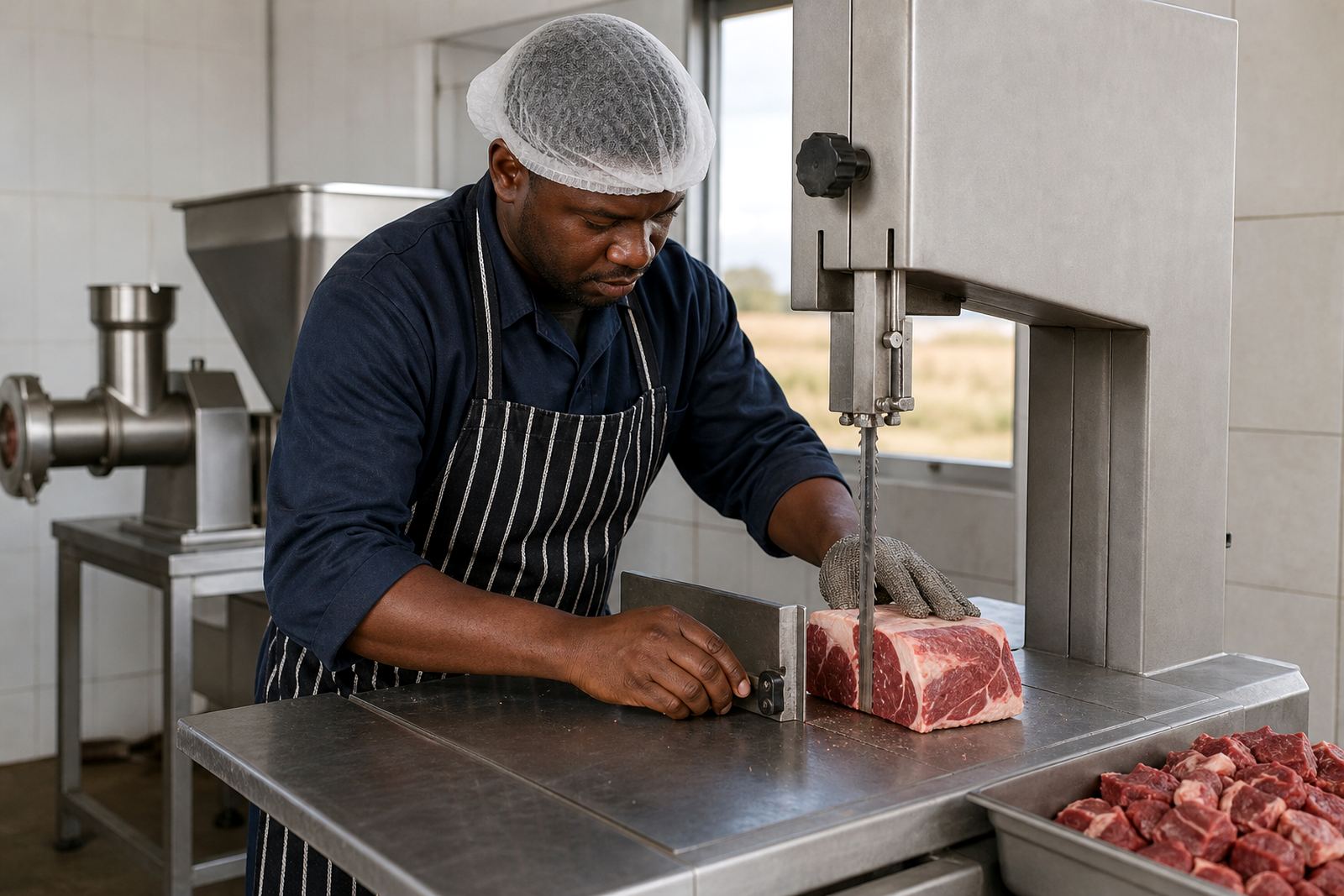
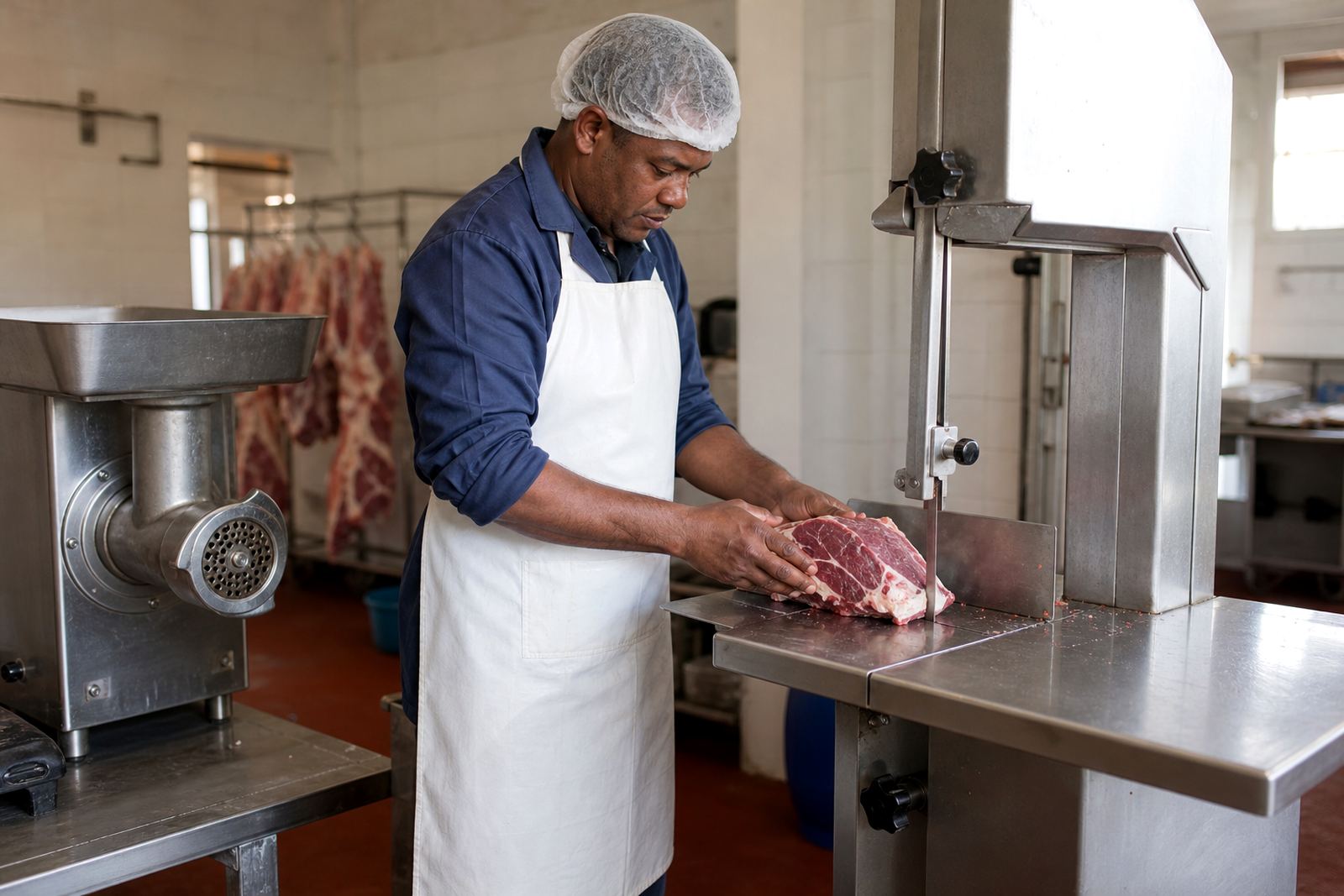
A bandsaw works best when the blade is clean, correctly fitted and running true. If the cut starts drifting, the blade chatters or the finish becomes rough, stop and inspect the blade, guides and tension before carrying on. A worn blade can waste product and put more strain on the machine.
Keep the table, guides and blade area free of fat build-up. This helps the blade track properly and reduces slipping. If the machine has adjustable parts, make sure they are set by someone who understands the unit. Never run it with covers or guards removed. That puts the operator at risk and can damage the machine too.
- Inspect the blade before starting the day.
- Replace blades that are blunt, bent or damaged.
- Keep the feed path clear and use steady pressure.
- Use gloves for cleaning and handling parts, but not near moving blades.
Mincer care for steady output
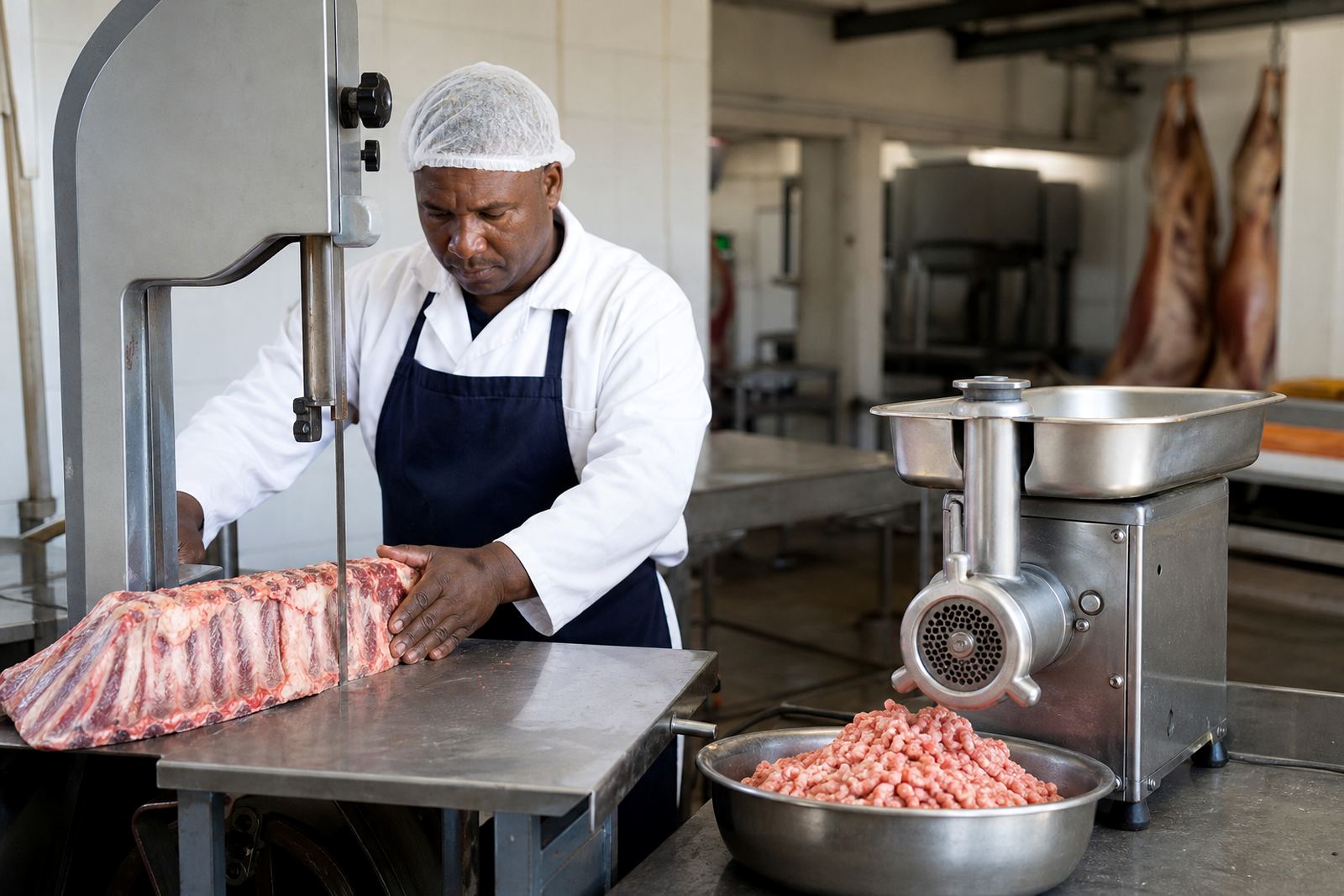
With a mincer, the plate and knife do the hard work, so they need to stay sharp and seated properly. If the mince looks smeared instead of evenly cut, or the machine begins to labour, check the plate, knife and feed hopper. Overloading the throat can cause poor product quality and unnecessary wear.
Strip and wash the working parts after use, then dry them fully before reassembly or storage. Light food safe oil may be used on storage surfaces if suitable for the parts in question. Keep raw and cleaned components apart, and never leave mince sitting in the machine overnight. That creates hygiene problems and makes the next clean more difficult.
- Do not force frozen or oversized pieces into the machine.
- Check the plate and knife for wear before each busy period.
- Reassemble parts in the correct order and tighten properly.
- Keep spare plates and knives clean, dry and wrapped.
Keeping wear parts in working order
Blades, plates, knives and seals are wear items, so they will not last forever. The trick is to replace them before they start causing trouble. A dull blade or worn plate may still run, but it often increases waste, slows the team and gives a poor finish. Parts should match the machine and be fitted carefully.
Store spares in a dry place away from blood, salt water and cleaning chemicals. In places like Bloemfontein and inland towns, dust is a factor. In coastal areas, moisture is the bigger issue. Either way, clean storage matters. If you are unsure whether a part should be changed or sharpened, check before the next busy day, not after the queue builds up.
- Keep a small stock of commonly used wear parts.
- Label old and new parts clearly so there is no mix-up.
- Do not keep using parts with visible chips or deep grooves.
- Ask for guidance if fitting does not feel right.
Service checks that prevent downtime
Regular servicing catches small faults before they become stoppages. It is worth checking belts, switches, guards, fasteners, bearings and general alignment on a planned basis. If the machine vibrates more than usual, runs hot or trips the power, stop and have it checked. Load shedding and power returns can also expose weak electrical connections, so those need attention from time to time.
For commercial butchers, a simple service routine is often better than waiting for a breakdown. Keep a note of noise, cut quality, cleaning issues and any part changes. That record helps when deciding what needs attention at the next service callout. It also makes handover between staff much easier.
- Check guards and covers are in place before use.
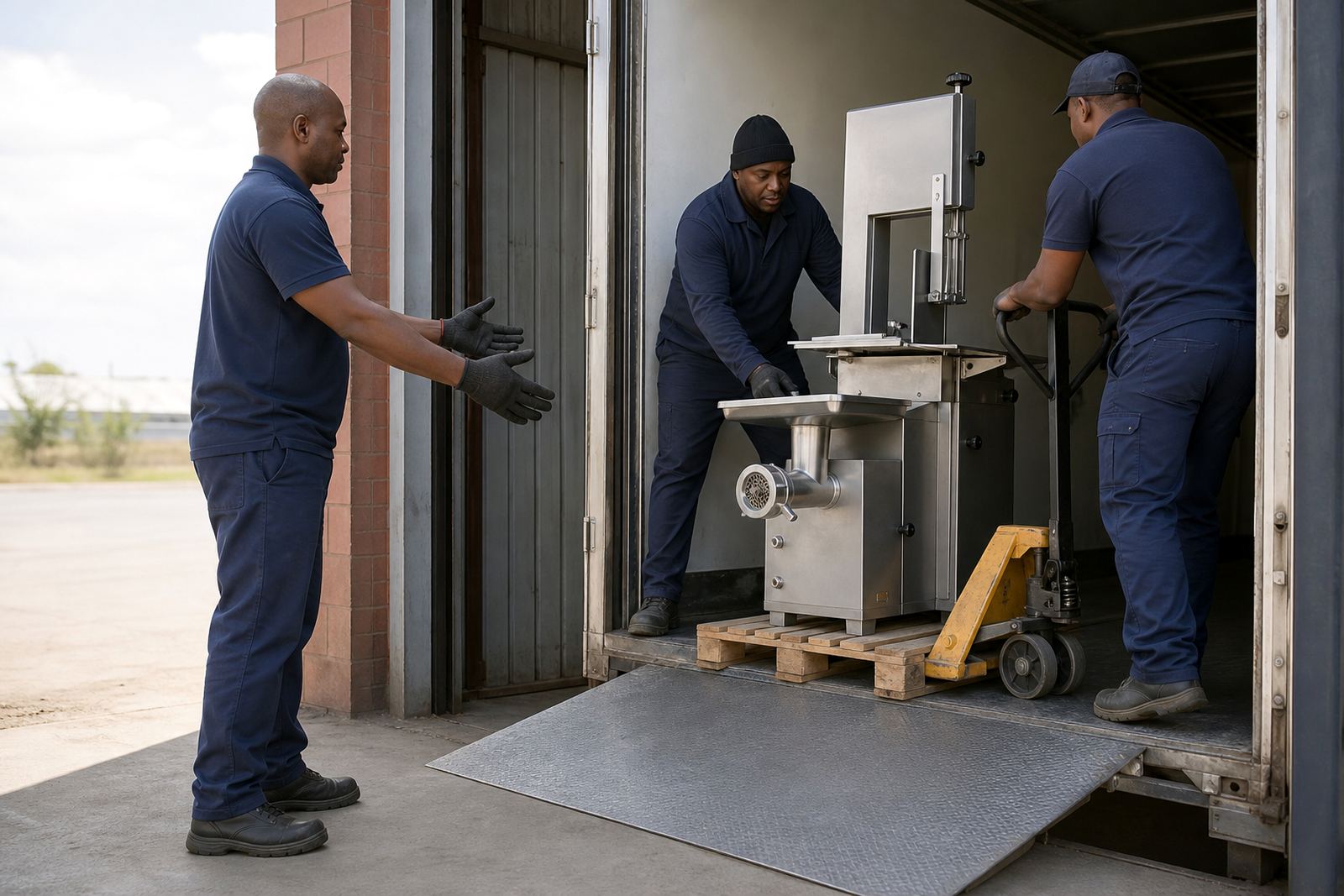
- Look for loose fixings after cleaning or transport.
- Test the machine before a peak trading period.
- Book maintenance early if you notice smell, heat or vibration.
Safe handling for operators and staff
Good care is not only about the machine, it is also about how people use it. Everyone working on the equipment should know the start up, cleaning and shut down steps. Keep hands clear of moving parts, wear suitable PPE and use proper cleaning tools rather than bare hands. Wet floors, slippery fat and hurried work are a common cause of trouble in butchery spaces.
Training matters for new staff and for anyone stepping in during a busy week. A short refresher on guards, blade handling, plate and knife changes and safe cleaning can prevent costly mistakes. If the team is unsure about a fault, do not improvise. Stop the machine and get advice before carrying on.
For support in Bloemfontein, Johannesburg, Pretoria, Durban, Cape Town and surrounding supply areas such as Kimberley, Welkom and Kroonstad, clients can send an enquiry through the contact page and we will assist with the next step.